Playing With Fierce Joy

Featured

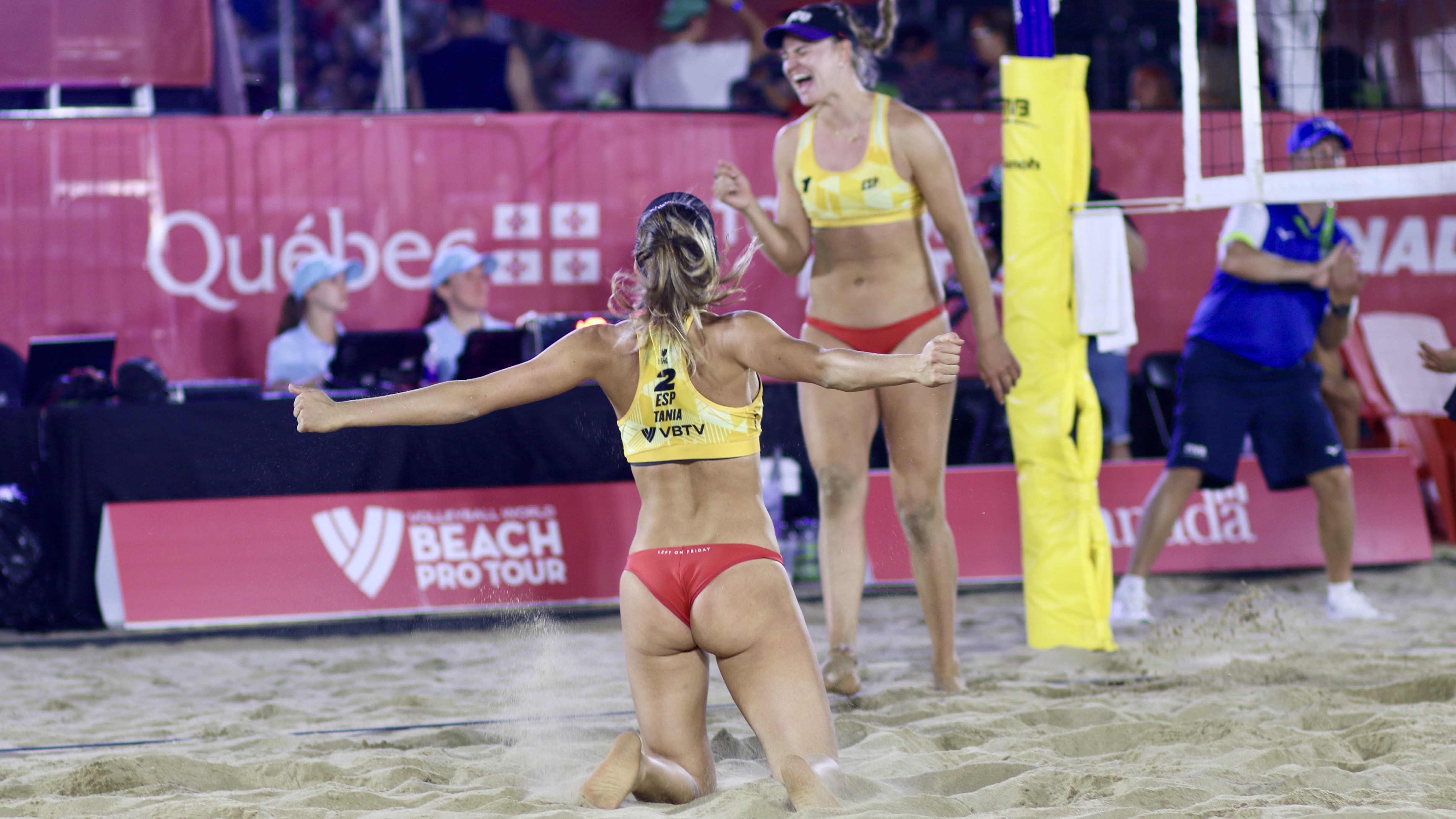
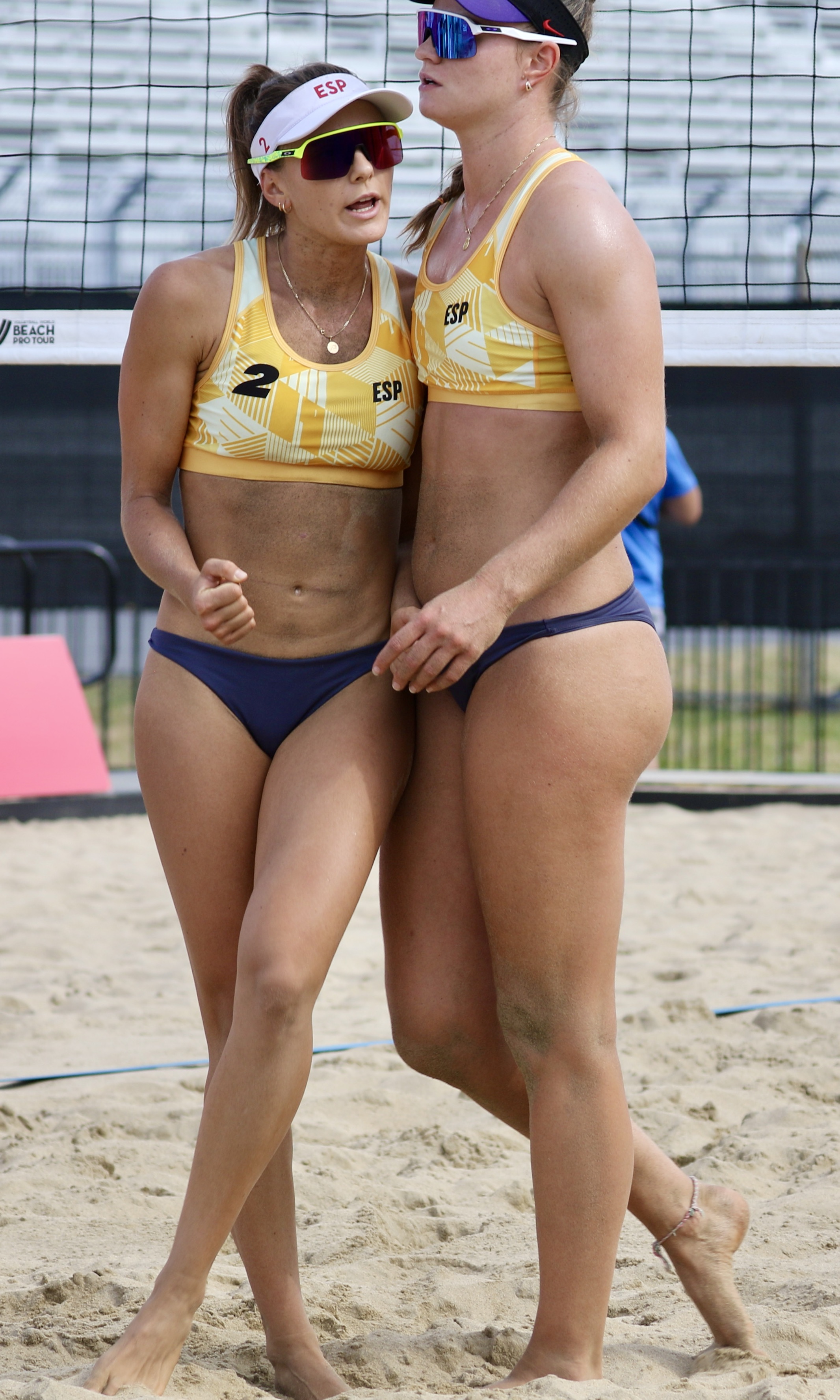
Teams on the rise are easy to root for. In beach volleyball, Spain’s Daniela Alvarez and Tania Moreno fit the bill. Talented enough that it is reasonable to imagine them competing for podiums for years to come, they are not such a sure thing that ultimate glory seems predestined. They will do some serious winning, and there will be some suffering. 
There will be a reward for caring about their results. And a price. 

When it comes to fandom, that’s the sweet spot.

And yet you could say the same about half a dozen up-and-coming teams. Maybe more. You always can. Like the airports in which athletes spend so much of their lives, in sports, someone is always coming. Someone is always going. Anything else is only temporary. 

Neither yet 24 years old, Alvarez and Moreno’s ascent has already taken the talented pair to the Eiffel Tower’s Olympic shadow and an NCAA championship dogpile, to name just two moments. Los Angeles 2028? Brisbane 2032? World Championships? All within reach. Their potential is compelling in its own right. But also not unique. A decade from now, there will be another team on the rise. Maybe Spanish. Maybe Canadian, Dutch or a dozen other nationalities. Maybe they will come through the NCAA system. Maybe not. 

I’m certain of that. Just as certain as I am that Alvarez and Moreno are, in at least one respect, not just the latest iteration of a recurring story.

In a particular tenacious, even fierce joy that is all their own. 

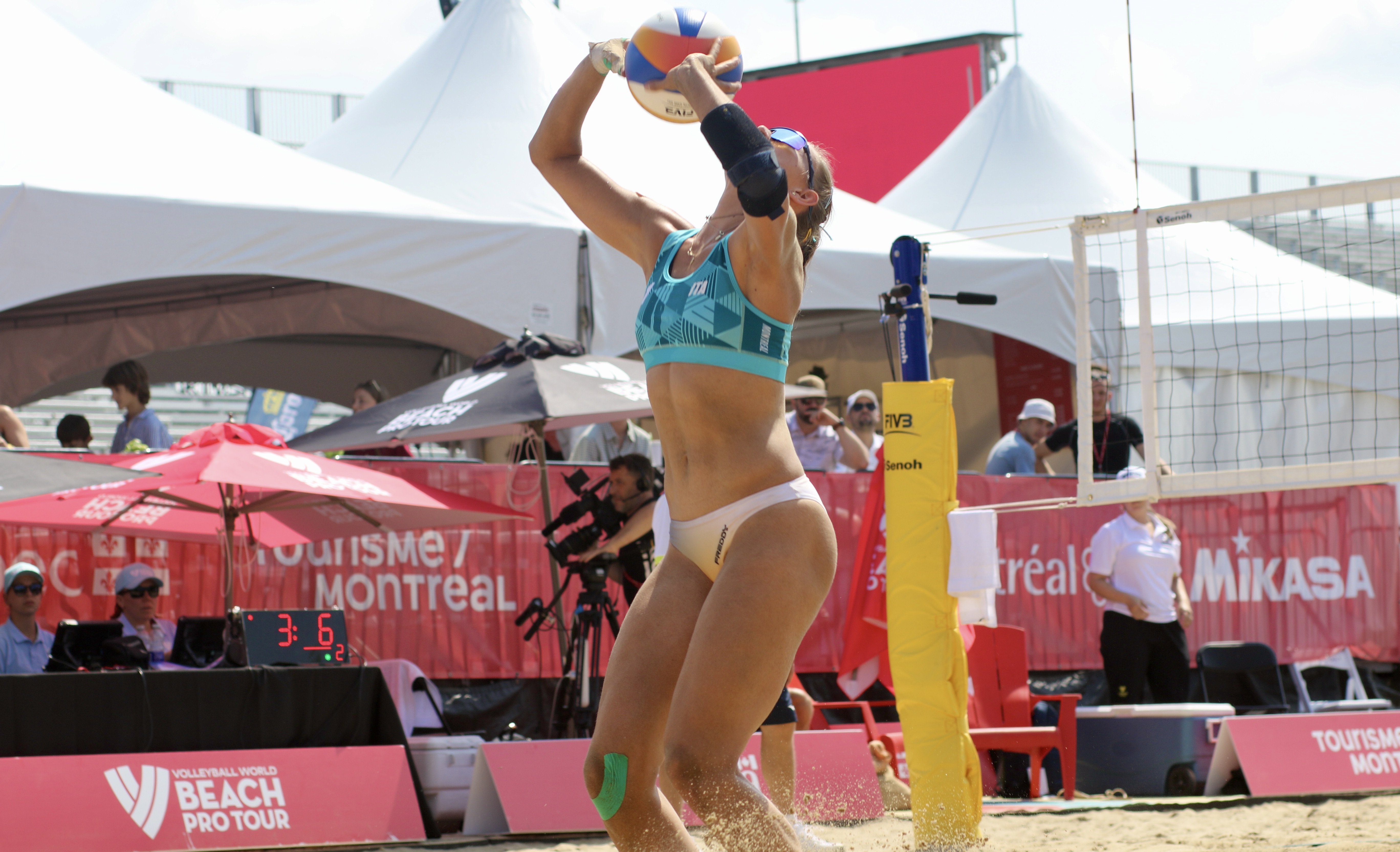
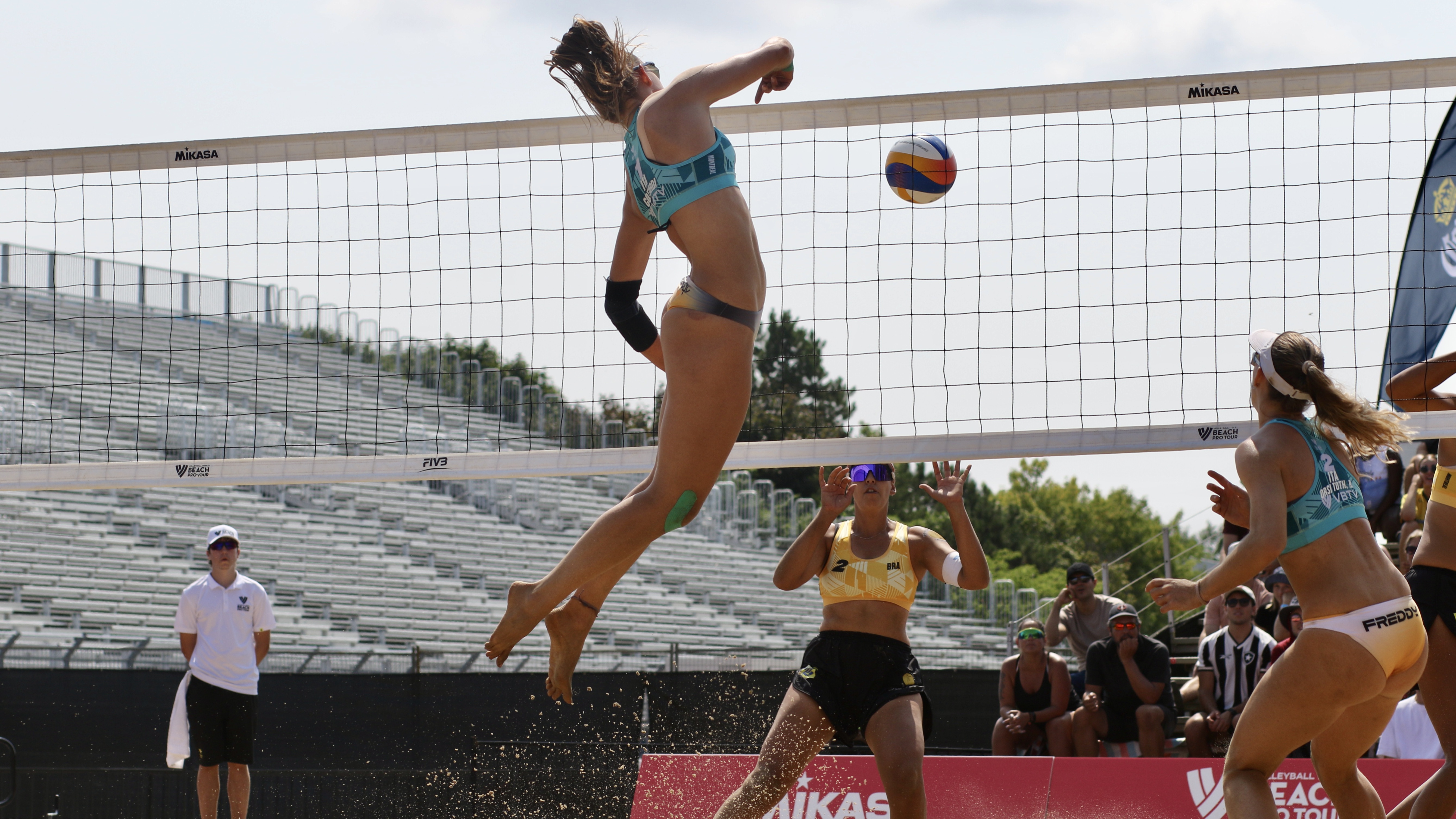
I find myself rooting for these two. Genuine third-set, knot-in-the-stomach stuff. It isn’t just the way Tania launches herself through the air or Dani calmly pulls off yet another a pokey dig. It isn’t just about what they have already achieved and may yet in the future. It is because there is something reassuring in the way they revel in every point together. Watching them compete is like looking through a window at an ever-so-slightly better version of the world.  

Joy can sound like an antiquated word. It’s quaint. Jane Austen characters live in a world where people talk about joy. It’s the story at the end of the newscast, the palate cleanser. You pat joy on the head. In sports, too, it occasionally elicits eye rolls. A moment of joy? Sure, fine. But it’s too soft an emotion to sustain you, immature—childlike joy. As if the notion of it somehow minimizes the hardship and hard work necessary to achieve adult success. 

Yet joy is entirely compatible with sacrifice, even accentuated by it. Made fierce, joy isn’t ephemeral. It’s potent. 

I remember Alvarez speaking on camera after TCU won its first NCAA title this past spring and expressing gratitude that Moreno had the courage to follow the same path she did to the United States—in the midst of a pandemic, no less. Alvarez arrived at TCU in the 2019-20 academic year, a year ahead of Moreno (the two had previously competed together for Spain at age-level events and even in an FIVB four-star event in 2019). 

International athletes coming to the United States for college have always fascinated me. You’ll find profiles about Icelandic basketball players (from TCU, no less), Venezuelan soccer players, French softball players, etc. Although there are plenty of difficult domestic paths to collegiate sports, the idea of choosing to leave behind everything familiar and earn a degree in a second or third language was always a compelling statement of intent. 
Sure, maybe someone is just the adventurous sort. And like Florida State’s soccer program once upon a time, TCU’s beach program certainly knows the infrastructure needed to help international athletes thrive. For goodness sake, the Horned Frogs had more alumni in this year’s Euros than many European countries. But all of this is by way of saying that playing with joy shouldn’t be confused with a lack of ambition or purpose. Or sacrifice. Alvarez and Moreno risked much to seek out the mentorship and environment that would lead to growth. They took the uncommon path. Each has invested a great deal—physically, mentally and quite likely financially—in putting themselves in the best position to succeed. In position to win. To be the best. 

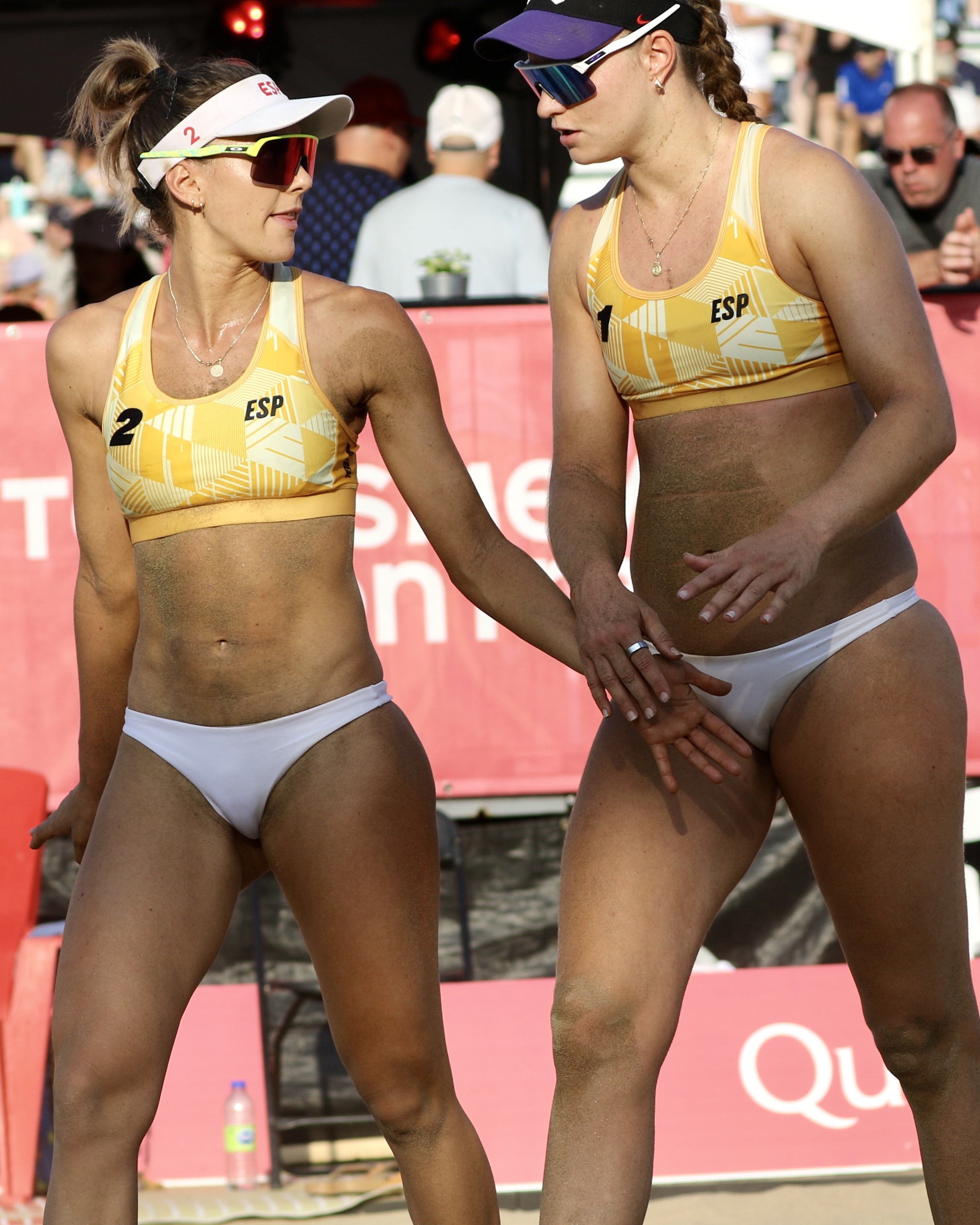
Still, joy rules. Unmistakable joy. Perhaps it’s not as evident in early-morning practices or weightlifting sessions we don’t see. Or when the body hurts, the mind is weary, clean laundry in short supply and you haven’t been home in months. Probably not then. But on the court, when the whistle blows, they seek out those moments when they can celebrate success—and each other—in ways all their own. 

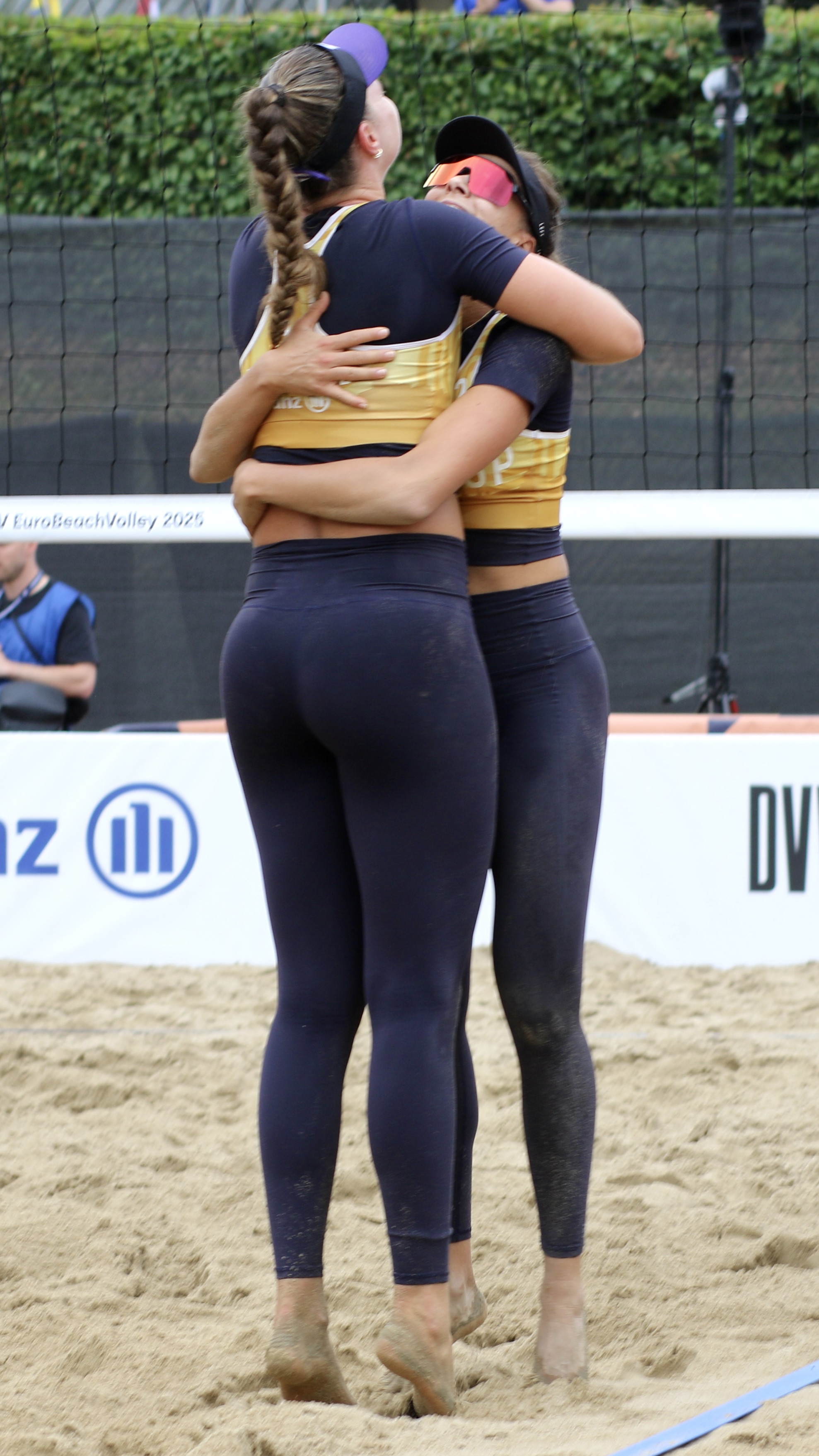
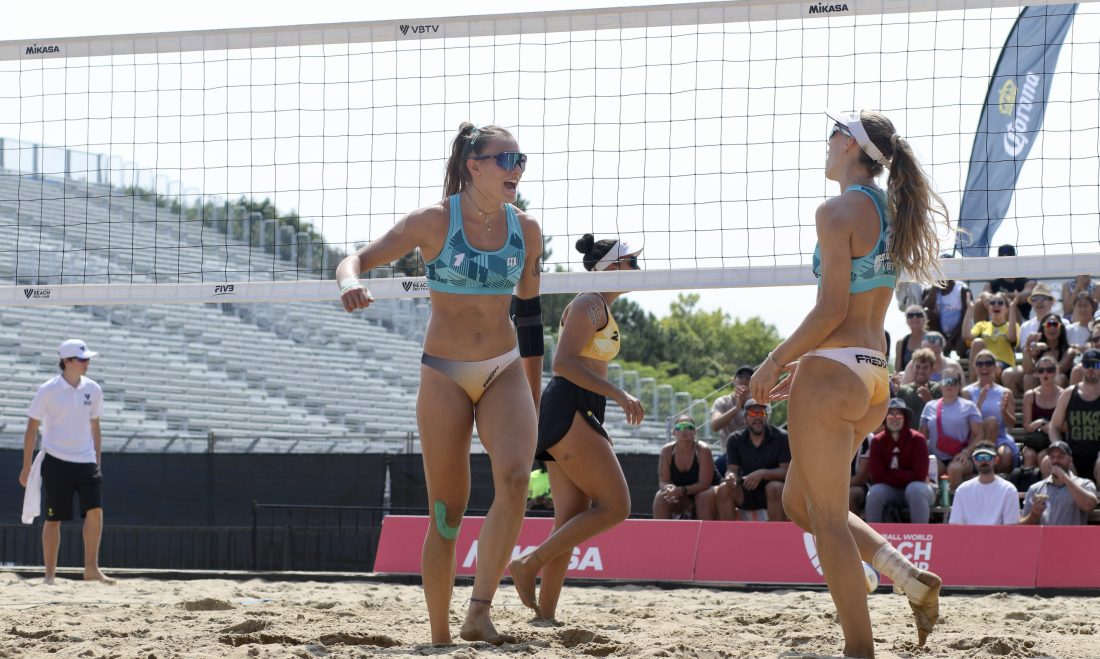
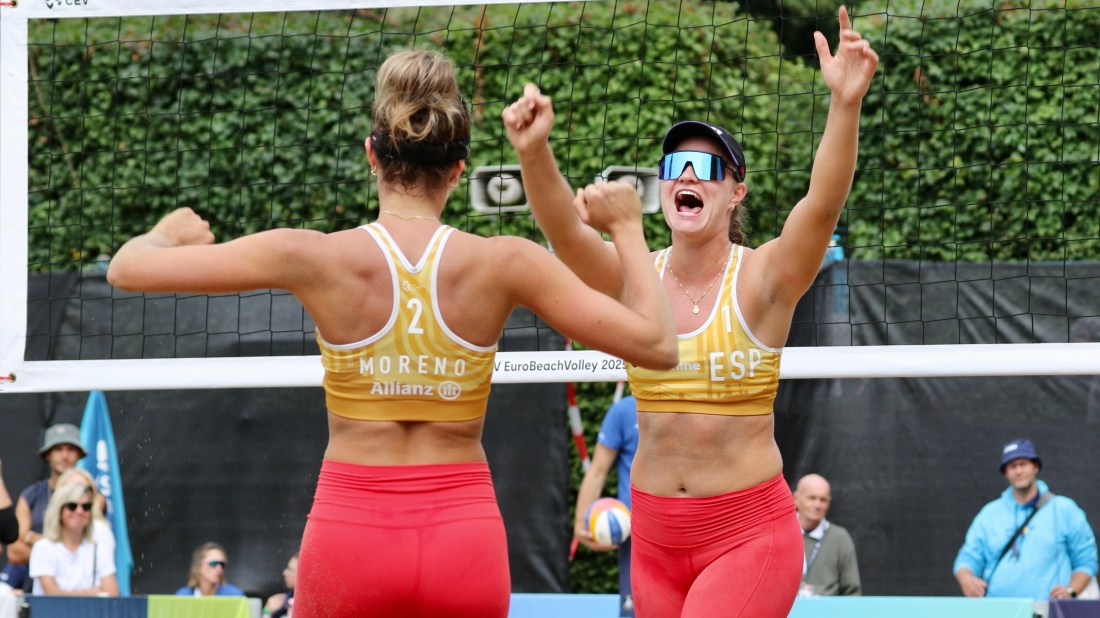
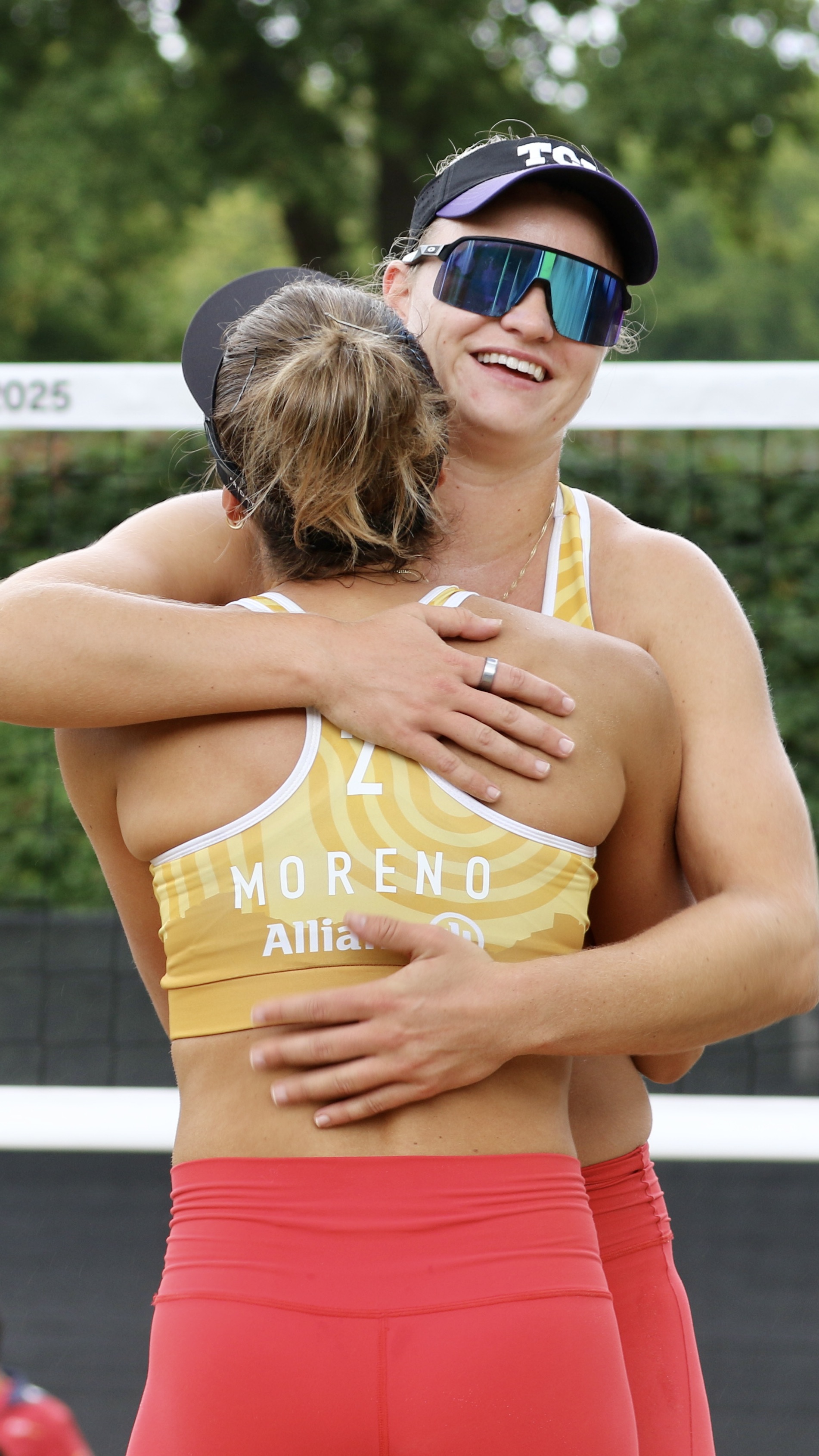
It’s not performative positivity. It’s not a show for fans or showing up opponents. They reset with an embrace. They let loose a spontaneous guttural yell, fist pump or chest bump. Again and again and again, they find confidence, comfort and camaraderie in competing together.

“¡Vamos, Dani!” 

Theirs is a tactile partnership of high fives and hugs—of contact. The gestures are so second nature and form such a drumbeat that they don’t always seem aware of them. Perhaps reminders of each other’s presence, reminders that it’s their collective joy that has power.

They don’t turn their backs on each other. They don’t leave each other alone in the harsh light of failure. In their math, one plus one is not addition but exponential multiplication. 

Together, they seem to genuinely believe, they can do anything. 
One small illustration from our summer paths crossing at a number of tournaments. In trying to pick their poison, opponents most often served Tania. Even my limited volleyball mind grasps the logic. If the serve is good enough to pin Tania, taking a second-ball option out of play, opponents limit their exposure to each Spanish player’s greatest strengths. But with Spain playing for first place in its pool during the recent Elite 16 event in Montreal, Canada’s Bélanger and Monkhouse went after Alvarez with regularity. For a time, the change of routine worked. The Spanish struggled to establish a side-out rhythm and Canada won the opening set with surprising ease.  

The Spanish duo trailed at the technical timeout in the second set, too. But neither the demeanor nor the non-verbal communication changed. Rather than either one playing like she was trying to save a match, focused on the final outcome, they played like they always do—searching for those moments of joy that are only possible together. 

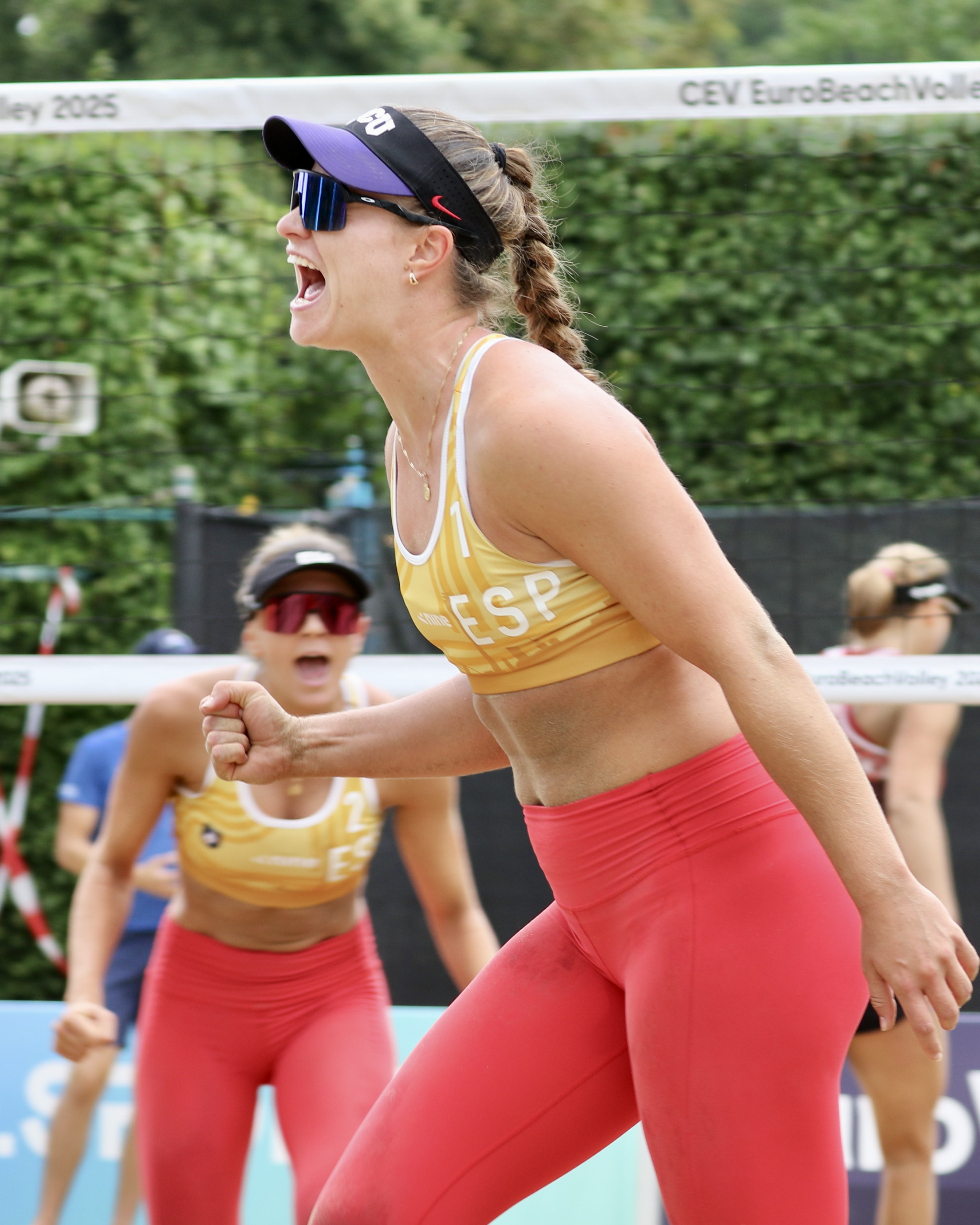
Down 11-10, Dani handled a serve, heard her partner’s call and executed a nifty shot across her body for the point—eliciting a two-fisted shout of encouragement from Tania. 

After serving on the next point, Dani denied Canada a quick answer with a pokey dig, then hammered the ball through the opponent for the point and the lead. This time, Tania exploded with two fist pumps, pointing at her partner with her other hand, and a chest bump. Walking back to serve again, Dani couldn’t suppress a grin.  

A few points later, after her own brilliant one-hand dig and Tania’s deft set while avoiding the net, Dani was skipping across the sand to celebrate again retaking the lead—a lead they never again relinquished in the set en route to a three-set victory. 

Some teams are defined by machine-like efficiency or detached precision. Others by a chip on the shoulder or a showman’s instincts in playing to the crowd. Whatever works for you—whatever is true to who you are. For Alvarez and Moreno, it’s fierce collaborative joy.

This isn’t about a feel-good factor. Joy fuels them to endure and outlast, as they did in winning three consecutive three-set comebacks in Montreal or rallying from a rough first set to win their quarterfinal against Switzerland in the European Championships. 

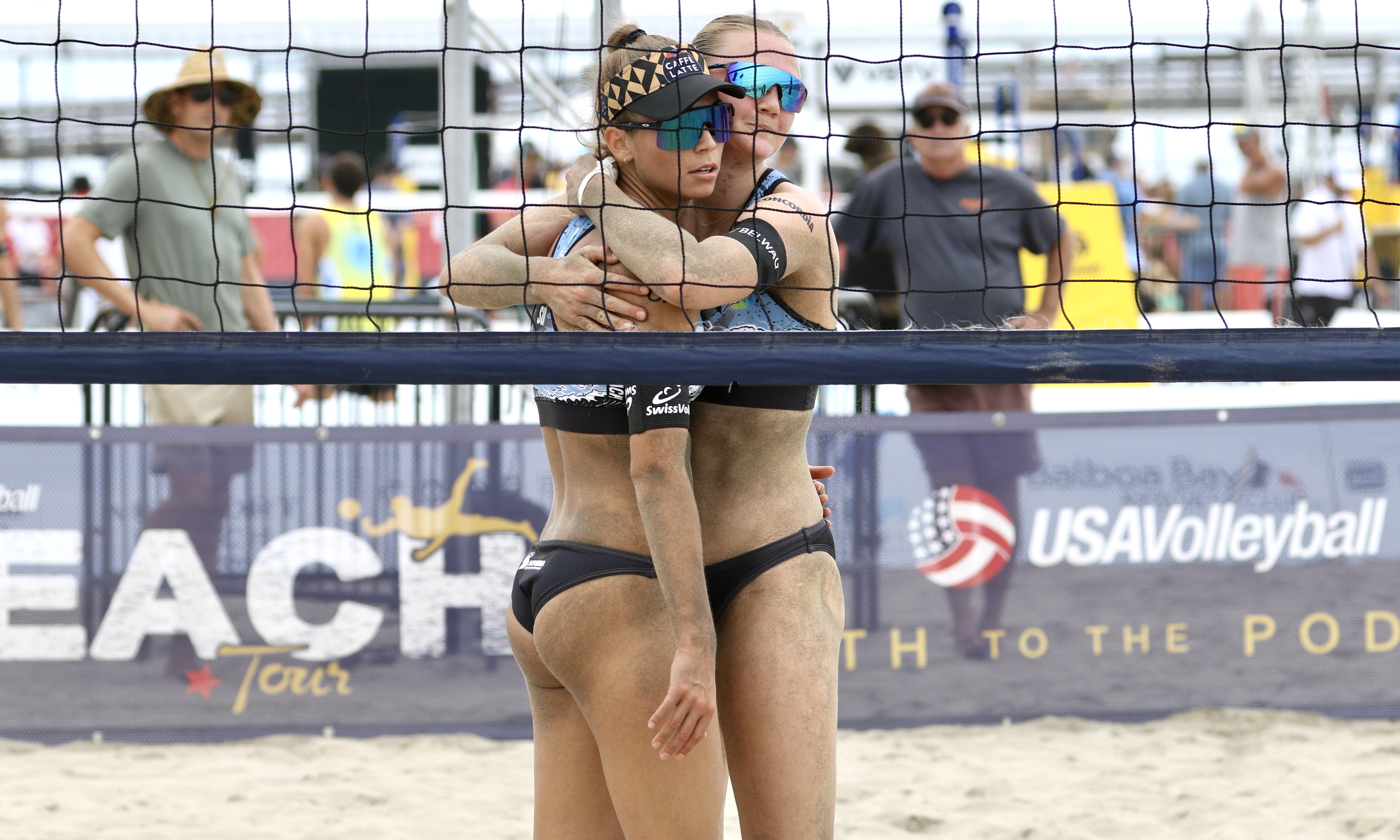
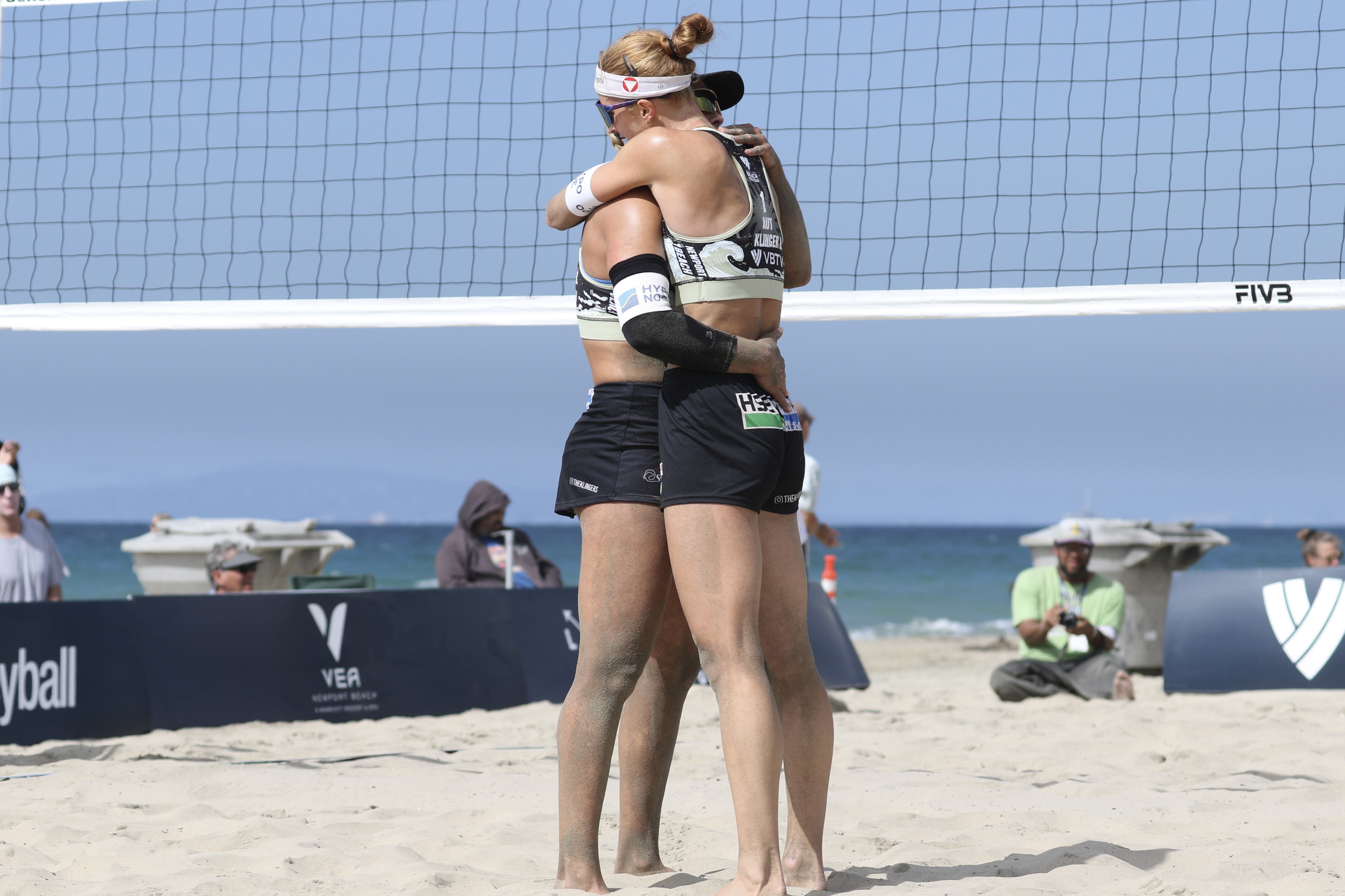
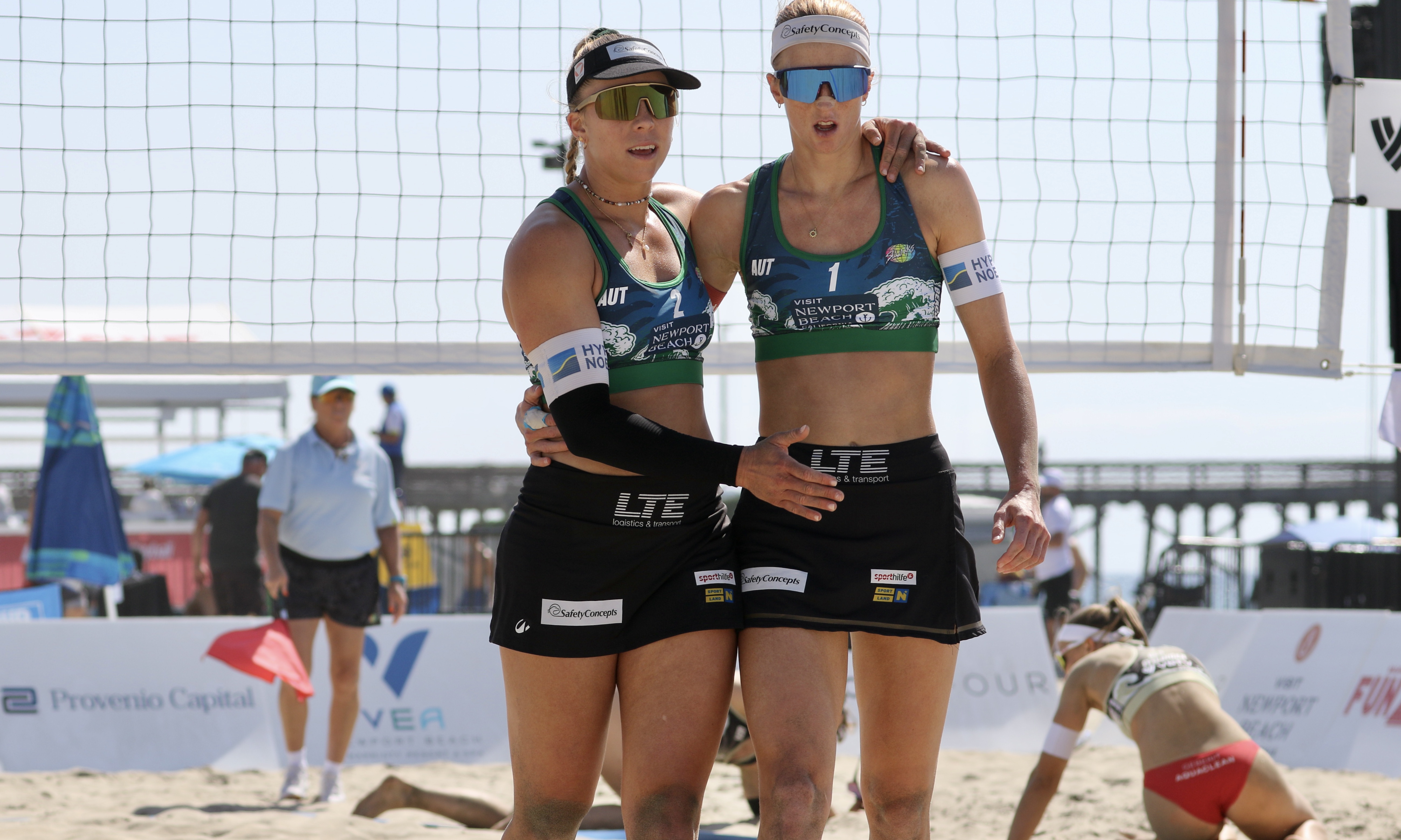
It’s who they are. When their run in Montreal (which included two qualifying wins) finally ended in a 22-20, 22-20 soul-crusher of a quarterfinal against Lativia, they ducked under the net to embrace Tina Graudina and Anastasija Samoilova. Alvarez wrapped her arm around Graudina’s shoulder and the two walked off the court together. It didn’t mean the loss didn’t hurt. It didn’t mean she wouldn’t rue missed chances and review lessons. It just meant there is joy in competing—across a match, across a tournament, across a life. 

To maintain that connection, even at their young age, across so many years and multiple continents is remarkable. The energy it takes—not to mention the strength of character required—is enormous. How that took root must be quite the story.    

Pat Riley famously said there is winning and there is misery, a more contemporary update of the line often attributed to Vince Lombardi that winning isn’t everything; it’s the only thing. Both strike me as sad reductions of life’s complexity to a binary state. A self-defeating binary state, at that. Scarcely less addictive than heroin. And scarcely healthier. 

Sport reflects back the world around us, condensed into games and seasons instead of lifetimes and often simplified into heroes and villains but still recognizable. 

From the youth sports industrial complex to college athletics to professional leagues, the present moment is no exception. Our sports reflect a world changing at breakneck speed. Some of that is unquestionably good—scientific and medical advances that help athletes be faster and stronger, play longer and return from injury sooner. Some is worrying—the all-consuming drive to prioritize profit over product and concentrate wealth. Much is a mixed bag. But even when that reflection is hard to look at, it’s us. 

There’s still room for joy. Despite everything, joy redeems sports. As it redeems us. It means all of this isn’t a story written by a fool, full of sound and fury, signifying nothing. 

It’s just that, more and more, finding it feels like searching for fireflies. A flash of light out of the corner of the eye, vanishing just as quickly amid the darkness.

So two people committed to finding the fierce joy in every point they play together? 

That seems rare enough to be worth rooting for. 

Seeing the Trees for the Forest

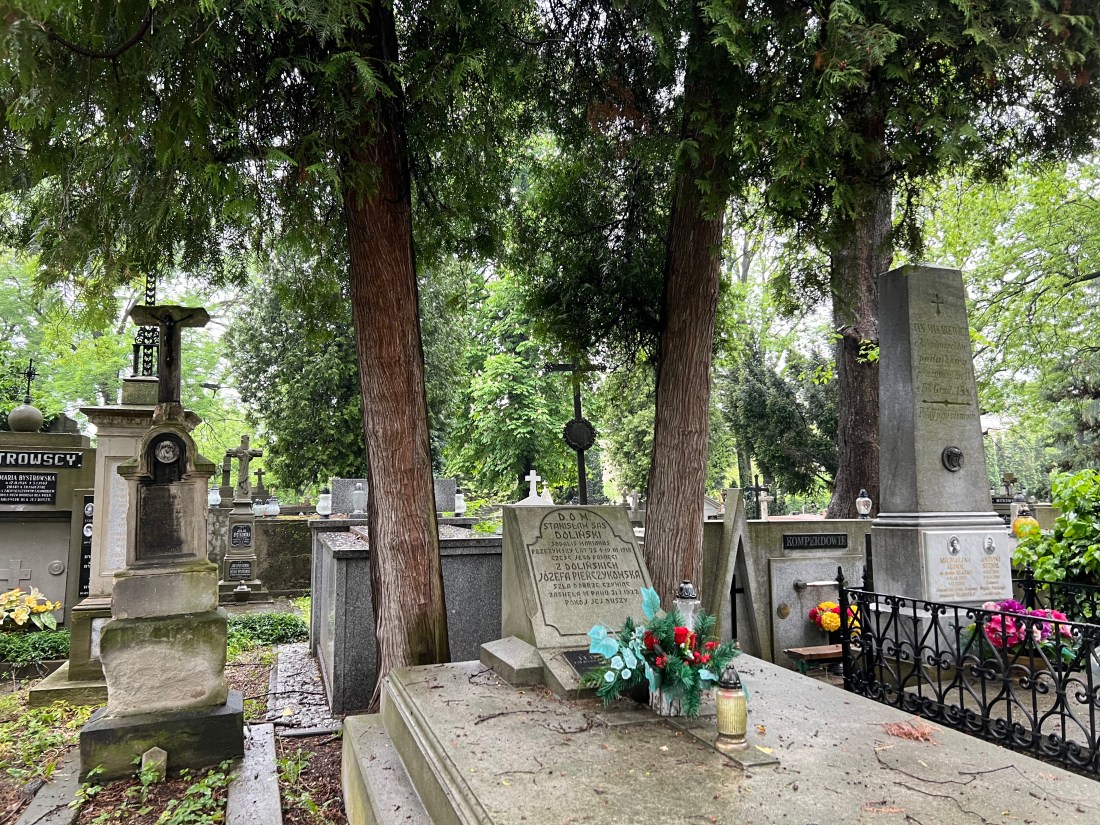
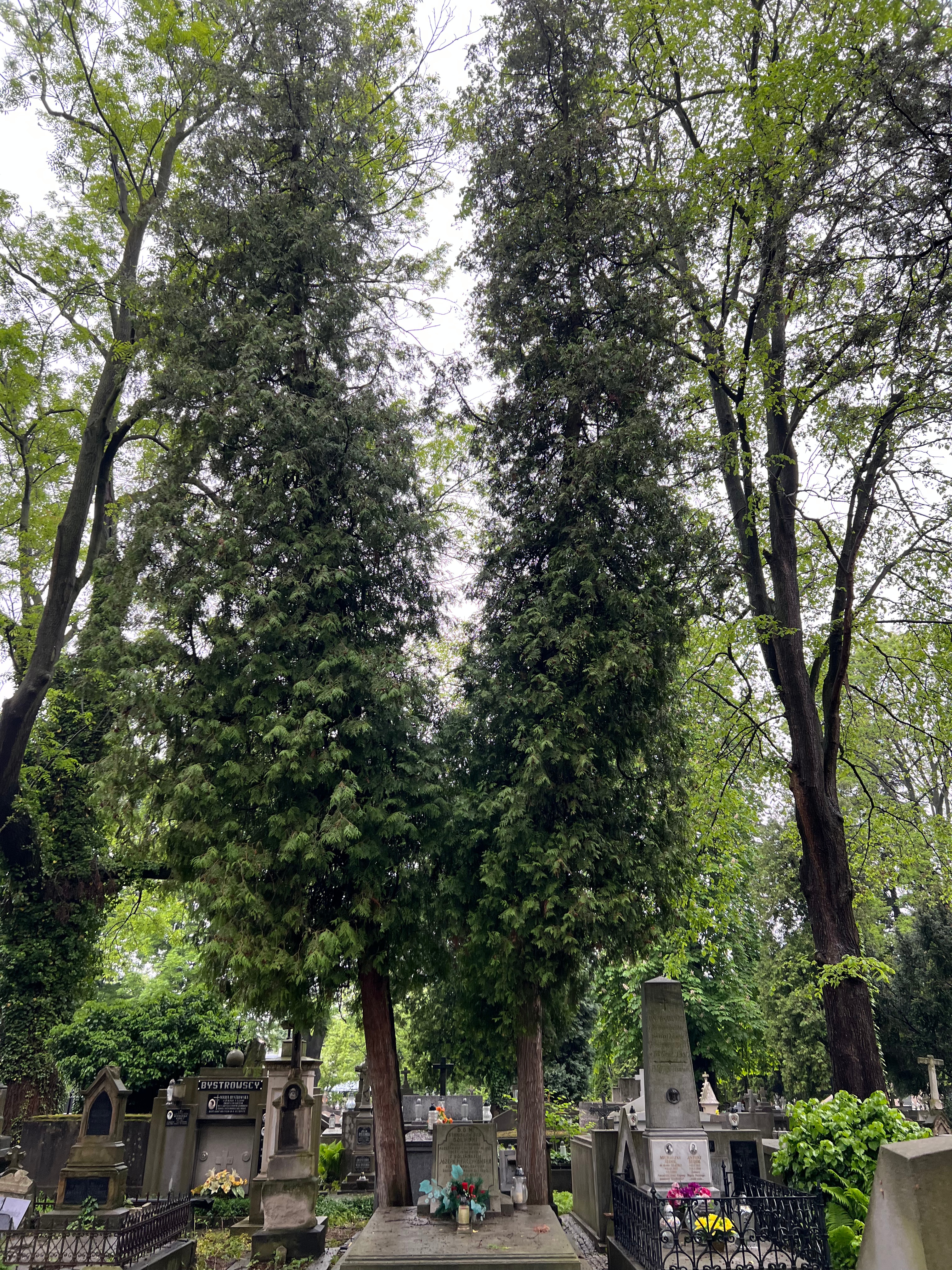
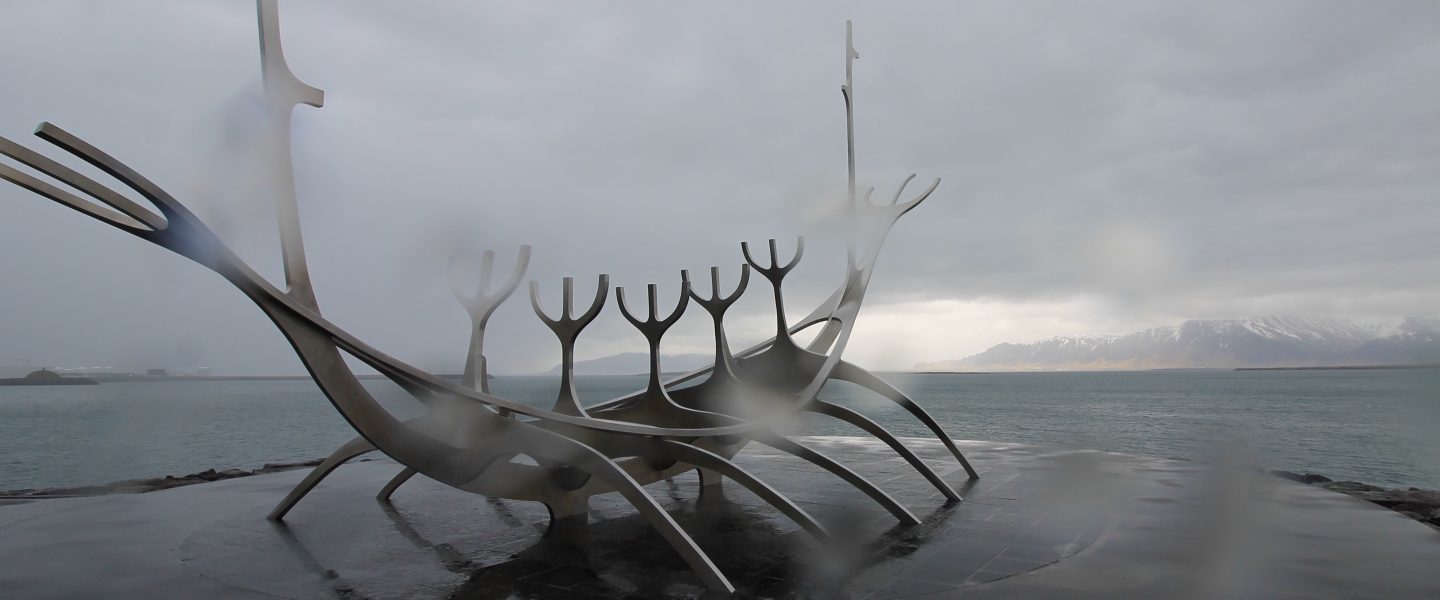
The past 100 years of Polish history have been anything but tranquil. For that matter, Polish history over the last millennium hasn’t exactly been a walk in the park. But it’s the last century, give or take, that’s on my mind. The years that came and went as the twin trees at the top of this post grew in Stary Cmentarz, literally “old cemetery,” in Tarnów, Poland. 

I came upon the tombstone beneath these trees after walking around the cemetery for most of an afternoon. The whole place was an accidental destination (a description of my approach to travel in general), but a rewarding one. Its avenues and alleys of the dead were alive with stories—people perhaps born in the Hapsburg Empire, when Poland had been wiped off the map, but who lived to see the country reborn into independence after one world war and reclaimed from the Soviet influence that followed another. They lived quiet lives in noisy times.

Still, by the time I got to the stones at the center of this story, I was mostly thinking about how to make my way back to the main gate. Except something in the back of my head kept telling me to slow down, that I was missing something. 

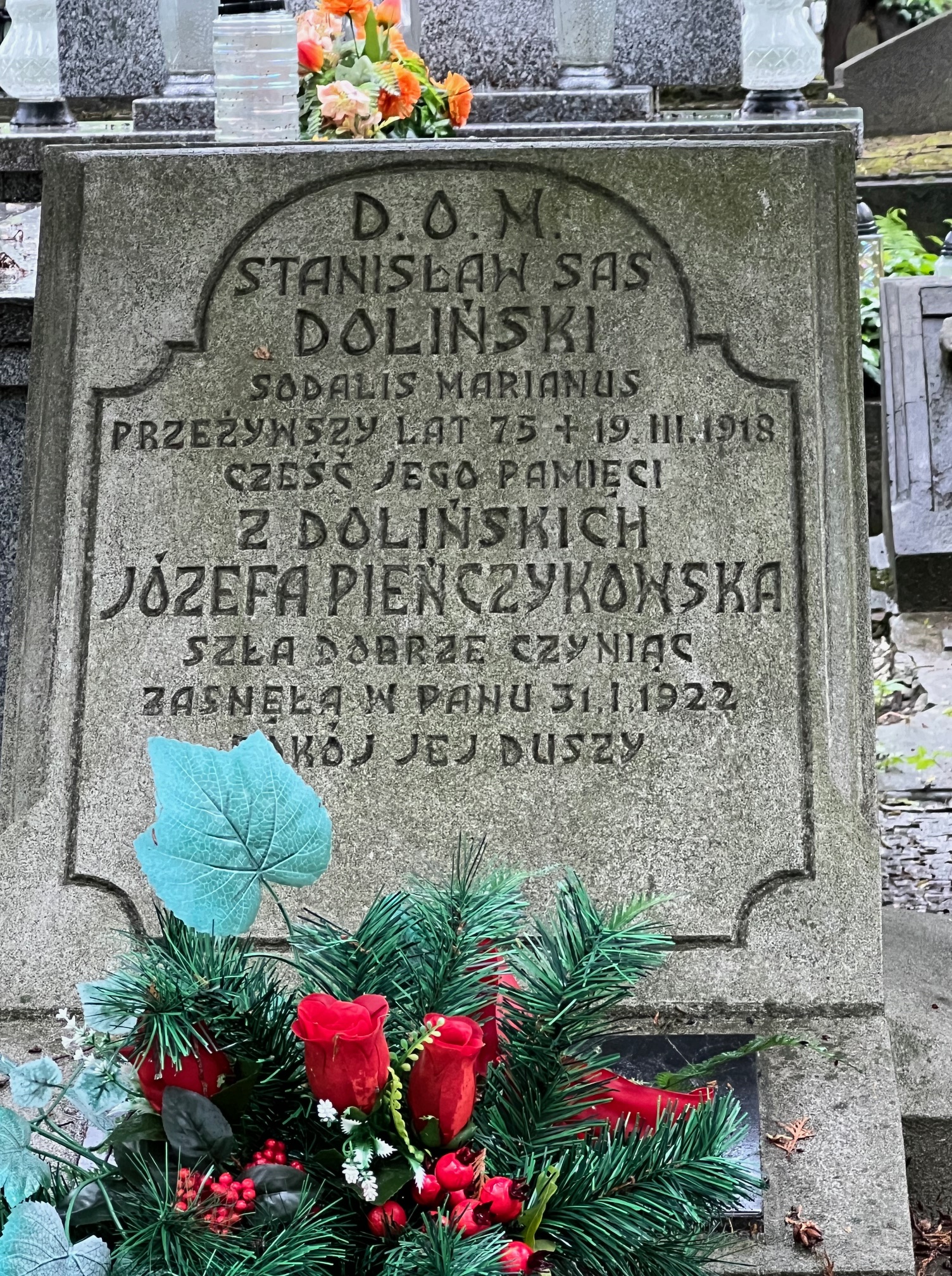
At first, I couldn’t see anything out of the ordinary about Stanislav Sas Dolinski (1918) and Józefa Pienczykowska (1922). Finally, I looked up and understood what some part of my brain had already recognized: the trees. 

There were lots of trees in the cemetery, and the day’s persistent rain sounded like percussion on the green canopy. But they rarely overlapped with the plots the way these two did. They rarely appeared in pairs, for that matter. I’m no arborist, but craning my neck to see the tops, they looked like you might expect trees to look after a little more than 100 years. Like trees that had started to grow around the start of the 1920s.  

Were these trees planted with a purpose? Or was there placement purely a coincidence? 

Running the text on the stones through a couple of translation apps didn’t provide much context. The words seem to suggest Józefa is of the Dolinski family. Was she Stanislav’s wife? The cemetery is full of family tombs, parents and siblings. But later on, I found a few references online to a Józefa Dolinska (Pienczykowska) from the right period, so maybe? 

If he was 75 when he died, as suggested, Stanislav was a boy during the uprisings of the 1840s, when enserfed peasants in and around Tarnow slaughtered many of the same Polish nobles who were trying to use them to throw off the Habsburgs. Sort of a no-win situation for the peasants either way. After Stanislav’s death in the final months of World War I, Józefa would have seen Poland restored to the map, eventually solidifying that independence by fending off the Red Army shortly before her death in 1922. 

For Poland, only more turmoil and greater evil awaited—Hitler and the Holocaust, Stalin and decades behind the Iron Curtain, before the none-to-easy return to democracy and our own increasingly unsettled times. But for Stanislav and Józefa, there was none of that. In the cemetery, there was only quiet. And in a place synonymous with death, two trees grew. 

I don’t know who Stanislav and Józefa were or what linked them. But I’d like to think that whatever that bond was, it still speaks to us today. That it got me to stop and take a step back, that it got me to notice the trees for the forest that surrounded them.

That some things live on. 

Note: For anyone interested in this part of the world and its history, I’ll share some of the titles that resonated with me in advance of this trip (and apologies to the authors for any and all history I got wrong). 

Central Europe: The Death of a Civilization and the Life of an Idea, by Luka Ivan Jukic

Goodbye, Eastern Europe: An Intimate History of a Divided Land, by Jacob Mikanowski

The Reconstruction of Nations: Poland, Ukraine, Lithuania, Belarus 1569-1999, by Timothy Snyder

The Curse of Empire: Ukraine, Poland and the Fatal Paths in Russian History, by Martin Schulze Wessel

Poland: The First Thousand Years, by Patrice Dabrowski

Lost Fatherland: Europeans Between Empire and Nation-States 1867-1939, by Iryna Vushko

The Middle Kingdoms: A New History of Central Europe, by Martyn Rady

Beach Volleyball World Championships Week

I am not in Adelaide this week. I know this because I slipped on the ice while walking this morning. And because I’ll soon be awake to see midnight for the first time in a long time. But with the FIVB Beach Volleyball World Championships beginning in Australia, it seemed a good time to collect these Sandcast features on Valentina Gottardi, Tina Graudina and Anhelina Khmil. Hopefully they provide a little extra depth to the story about to unfold on the sand. In all three cases, their volleyball speaks (and entertains) for itself, but all three also have so much more to say about life, competition and a sport that’s difficult to resist.

Excerpt from Valentina Gottardi: One of the Main Characters

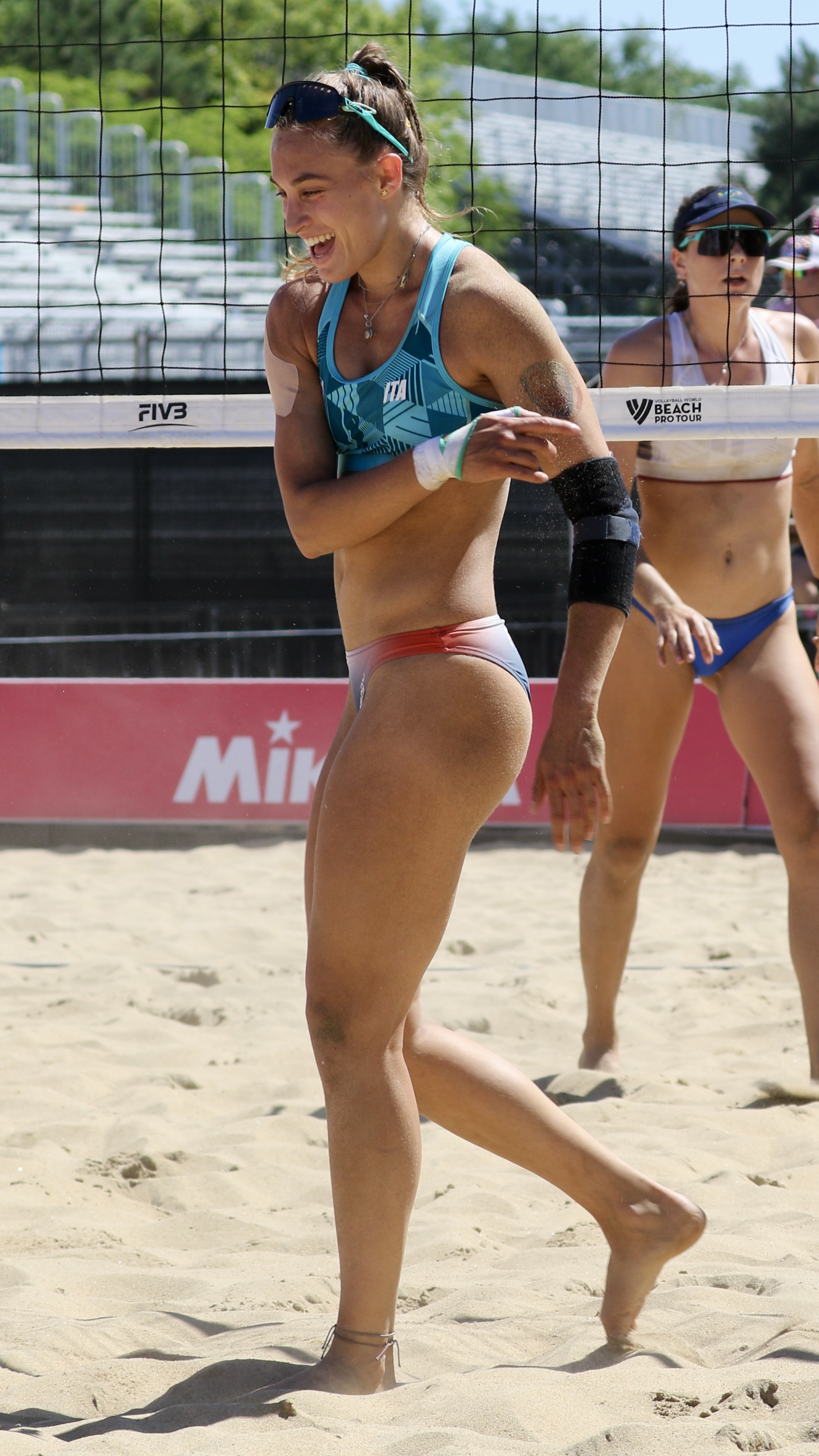
Few who watch her play are likely to forget the experience. Still just 22 years old as she settles into a new partnership with Orsi Toth, Gottardi is one of the sport’s best young players—and “young” may be an unnecessary qualifier. She is also one of any sport’s most distinctive players. Relentless, with a high jumper’s vertical and the body control of the dancer and gymnast she once was, she’s worth the price of admission.

For many athletes, the Olympics are the pinnacle of a career. For Gottardi, playing under the Eiffel Tower last summer was just the opening act. She made it to Paris while much of the world was still wrapping its mind around how good she could be—while she was, too, for that matter. It’s why she plays the way she does, every no-look flick, headlong plunge, and hammered spike an exploration of what’s possible and an expression of who she is. She’s Valentina Gottardi. Never more so than when her feet touch the sand.

“I feel myself on the court,” Gottardi said. “And sometimes I don’t feel myself outside, so when I play, I want to transmit what I feel and what I really am.” … Full story on Sandcast (free)

Excerpt from Anhelina Khmil and a Ukrainian Summer to Remember

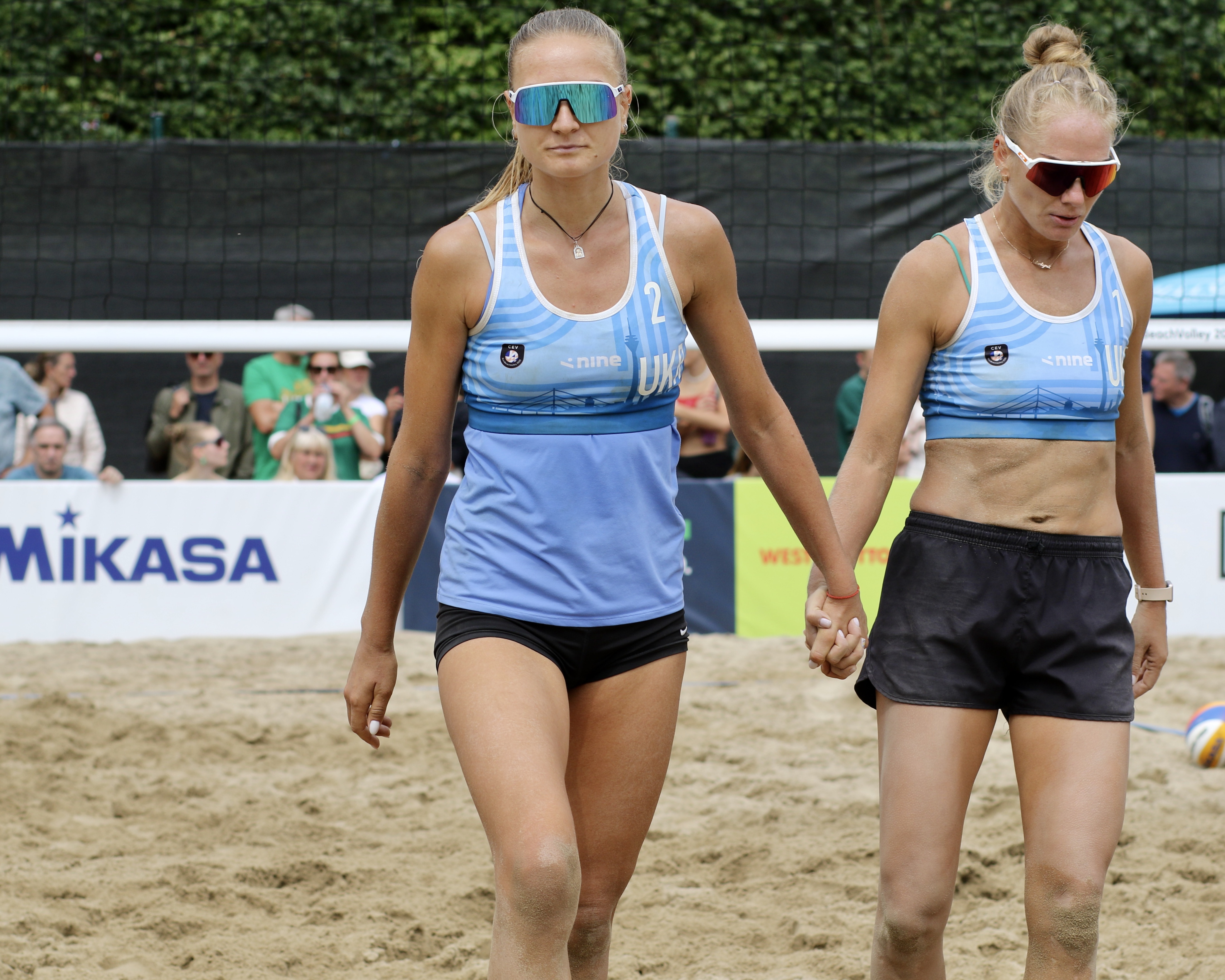
At least as much as the tools to conquer the Big 12 and that will be needed to compete with the Ana Patricias, Brandie Wilkerson and Valentina Gottardis of the world, she also found community as part of a group of women with a shared goal. And in amassing the degree, friendships, connections and memories that come with college, TCU provided the building blocks of a future. Still, when she talks about trying to put everything else aside this year and enjoy the moment—a common throwaway line for seniors—it hits differently. As she puts it, war makes everything else complicated.

“I don’t like to think ahead,” Khmil said. “I don’t think it’s a good idea because as soon as I start thinking ahead and planning all that’s going to happen in six months or a year, it’s never going to be that way. It’s always something different. So I usually just wait and see. You cannot predict, especially right now.”

She follows the news from home. She tracks the alerts on her phone, the ones that tell her whether her hometown—her family—is targeted in the seemingly nightly barrages of drones and missiles. Davidova still lives in Ukraine with her family. All summer, whenever her phone buzzed with alerts, she called home to ensure her two children took shelter. The nomadic lifestyle can wear on every pro. But not like that. Khmil could see the toll it took. She suggested even she can’t fully grasp how that would feel, to be a mother in those moments. And yet, she worries, too, the stress no less real as a daughter and sister. … Full story on Sandcast (free)

Excerpt from Tina Graudina Finds Joy in the Journey

Hardly spendthrift, to the point of packing her own lunches [during an internship at the Latvian Mission to the United Nations], Graudina nonetheless laments how much of her disposable income is directed toward her Kindle. The temptation is just too great when new books are only a click away. She tries to exercise quality control, if not quantity control. Still enamored with fantasy worlds, she matches each fiction title with a title where she will “learn something that makes me smarter.” In recent months, she read Mark Blyth’s Austerity on financial austerity and European Union missteps in the 2008 Euro Crisis, as well as Richard V. Reeves’ Of Boys and Men about the developmental challenges for that gender in modern society.

There is power in understanding the world around us. Knowledge solves problems—it can help a country like Latvia survive and thrive. But there is power in imagination and inspiration, too, in the fictional worlds of novels and characters who discover hidden and marvelous talents. After taking a break in one world, Graudina was ready to return to the other, the one where she and Samoilova can leave schoolkids speechless when they visit classrooms, shine a spotlight on important issues and lift the profile of a country many would struggle to identify on a map. It’s where she wants to be for now. It’s who she is.

“I feel it in my heart that even if I don’t get a single medal for the rest of my life, as long as I feel the same way that I feel right now when I practice, when I play volleyball, I’m happy with this type of life,” Graudina said. “I feel so happy, so full with positive emotions—even when we lose, that anger of losing is directed in a positive direction.

“I really believe that the journey is so important to enjoy and also do properly. Because if you enjoy it and you put all your effort in it, the destination, the medals, they will come by themselves. That’s something that I’m focusing on this year and hopefully every single year from now on.” … Full story on Sandcast (free)

When Genius Shares the Sand

You hear your share of oohs and aahs around a beach volleyball court. That’s all the more true the week of an Elite 16 event, the Beach Pro Tour stops with the smallest fields and greatest concentration of world-class talent. The crowd, as one, gasps or vocalizes their appreciation for athletic dexterity, strength or daring do. That’s sort of the point of it all. 

It’s just that you rarely hear the crowd gasp like that in warm-ups. 

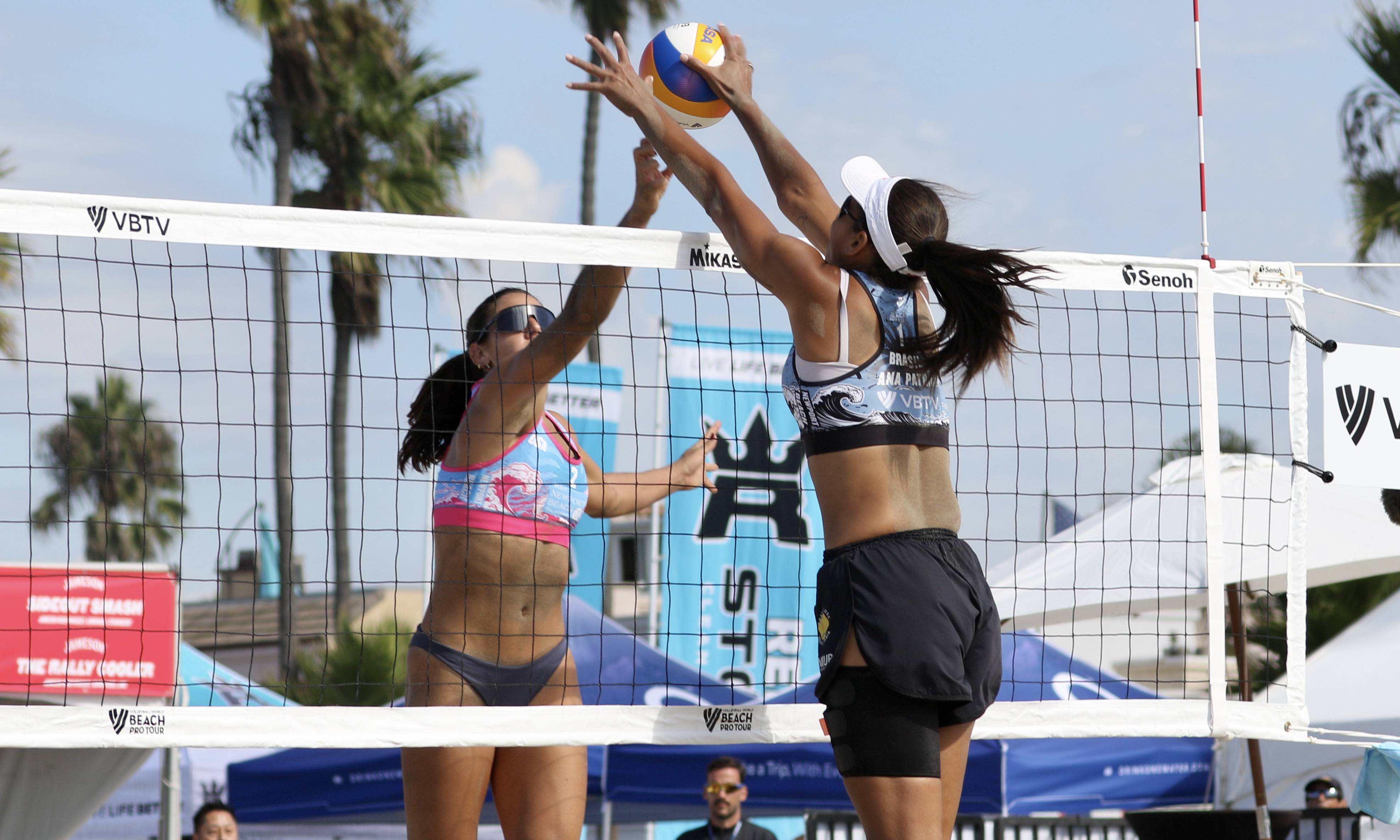
Then again, you players like Valentina Gottardi and Ana Patricia come around rather, well, rarely. Making it all the more special to get them on the same court. Even when it’s Court 2. 

Imagine Shohei Ohtani and Aaron Judge trading swings on a side field next to Dodger Stadium. Or Caitlin Clark and Sabrina Ionescu launching 3-pointers in a practice gym in the depths of Gainbridge Fieldhouse. 

That’s putting Gottardi and Ana Patricia on a side court, as they were Thursday. 

Once you get past the curious scheduling of it all, it’s actually kind of cool. It’s the music legend dropping in unannounced to play a set at the local bar. It’s feeling like you were in the right place at the right moment in time to enjoy something sublime. 

People can argue all day about the best players in the sand. You have your list, I have mine. 

Actually, I don’t—I’m not smart enough. But I do know the players I most enjoy watching. Not the team, mind you, the duos in whose fortunes I’m most invested and for whom I may or may not occasionally even cheer out loud after years of professional neutrality. No, instead these are individuals who rarely go a seven-point end change, let alone a match, without doing something that makes you grin and shake your head. 

Gottardi is the 22-year-old Italian so physically explosive that she might cut to the chase one of these days and leap over the net. Ana Patricia is the 27-year-old Brazilian and reigning Olympic gold medalist, who manages to combine jaw-dropping athleticism with the wily old-soul game of someone a decade her senior. 
To be clear, these aren’t one-woman teams. Woe to anyone who doesn’t give Duda her due, and Reka Orsi Toth is paired with Gottardi for a reason. 

It’s just that Gottardi and Ana Patricia do things that no one else does—whether because the rest of the world lacks the imagination, the athleticism or, frankly, the recklessness. 

They’re glorious. In our age of hyper-efficiency, they play as if to see what’s possible. 

As they warmed up for Thursday’s pool opener, they traded hammer blows that brought the crowd to life—it’s worth noting there usually aren’t even crowds for side-court warm-ups. Maybe they fed off each other in that brief moment. Just a little. They wouldn’t be the first to do so, and plenty of people have suggested Ana Patricia is a star who needs a challenge to hit her stride. 

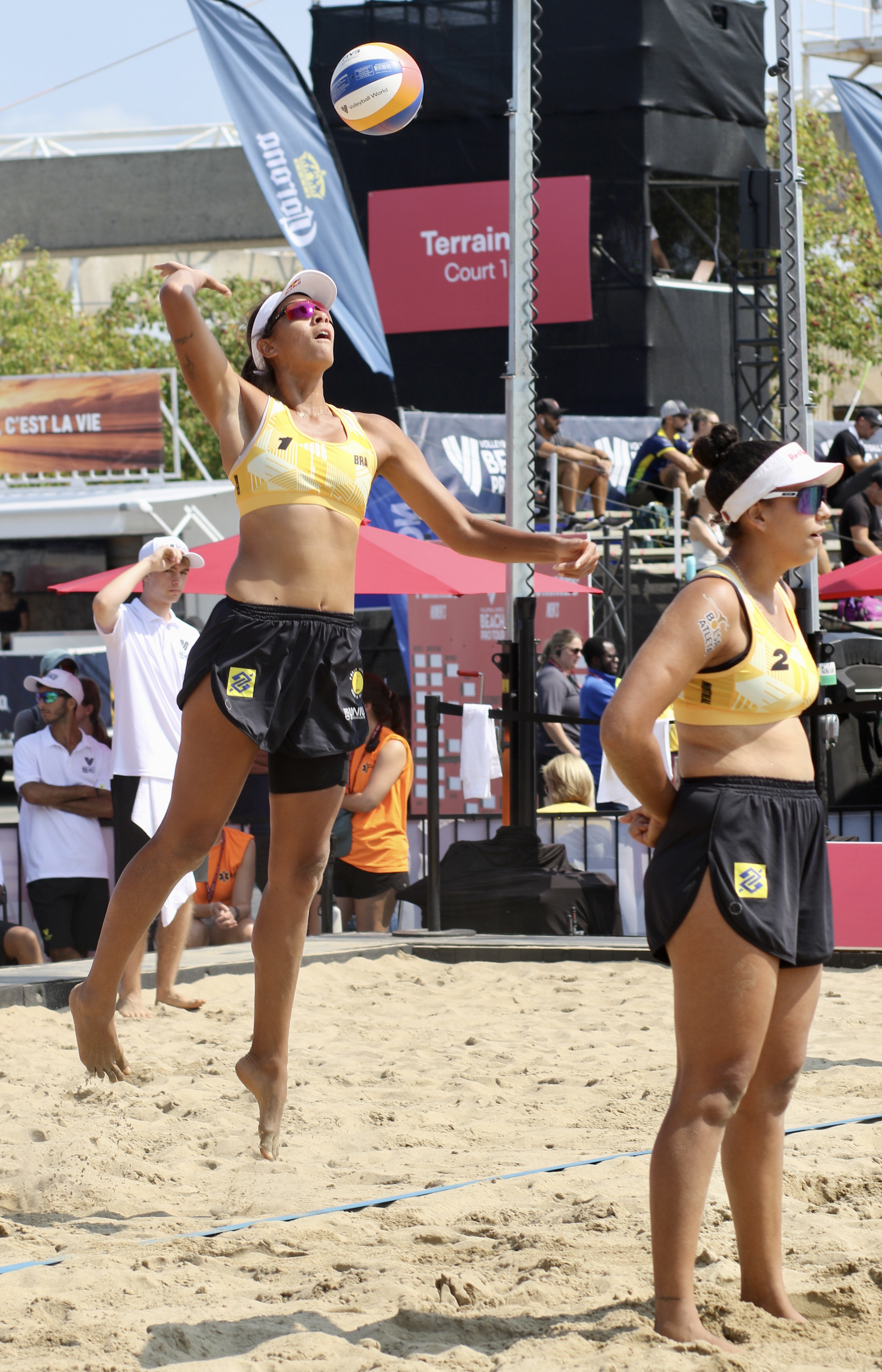
Sadly, the match never quite turned into an epic. Ana Patricia and Duda managed their way to a tight, first set win and then eased to the finish line, 21-17, 21-15. The stakes were as low as they can be in this high-stakes world, the opening match of three for each team in the pool—with 12 of 16 teams advancing to the knockout rounds.   

Center Court gets the pyrotechnics, the music and the “Monster Block” and “Fireball” cues on the sound system. Court 2 generates its own noise. Thursday, it didn’t take a three-set thriller to make it as loud as just about any match on any court over the first two days. 

There was the roar when Gottardi, at something approaching full sprint toward the end line, slowed for the briefest of seconds to blindly set a ball for Orsi Toth at the net. 

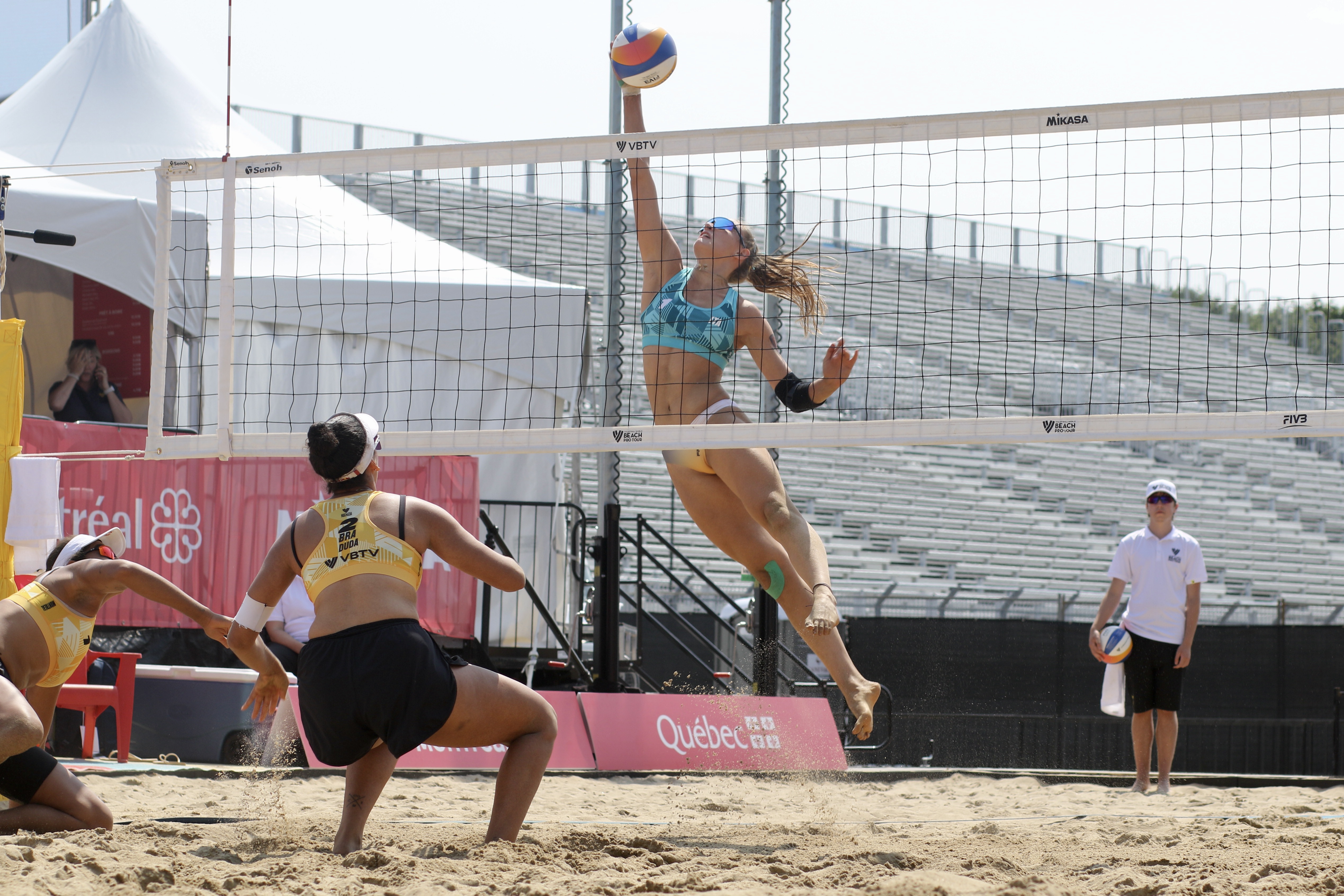
Or when she sprinted to the net after a serve, tipped an attempted block skyward and, falling to her right, contorted her body to sweep the ball into the far corner for a point.

Or the reaction put-away, Ana Patricia’s block caroming off Gottardi’s shoulder and into the net before Orsi Toth set it for what is one of her partner’s trademark moves. Shoulders squarely facing two o’clock, she contorts her upper body and, in one sweeping motion, whips the ball back toward about 11 o’clock—in this case catching even Duda off guard. 

And there were “super spikes” aplenty. There are always super spikes, Gottardi’s vertical and power combining to punish the ball as few peers can. 

Now playing with her peer, Gottardi seems to play with more self-assured command. She still chases everything, sprints to the bench at timeouts and sometimes just bounds up and down in place when she can’t do anything else. But she’s evolving from someone with dreams to someone with goals, real, tangible goals that involve beating a lot of people. 

Someone who has been to places Ana Patricia has visited. The Brazilian might have ceded the spectacular to Gottardi more often than not on this day, but she found answer after answer. Well-timed blocks, perfect sets and ball after ball just drifting out of Italy’s reach. 

When Italy held a three-point lead in the first set and Gottardi went for the no-look option behind her head, there was Ana Patricia to calmly dig it and set up Duda. 

On set point, she blocked Gottardi, starting a sequence that finished with Duda going over on one for the point. 

It was Ana Patricia. Doing Ana Patricia things. Most days there are no ways through that. Even when you’ve got the body, mind and soul to try things no one else would dare. 

And as the noise from Center Court took over and stands emptied, the best show in volleyball came to a close on Court 2.