Beach Volleyball World Championships Week

I am not in Adelaide this week. I know this because I slipped on the ice while walking this morning. And because I’ll soon be awake to see midnight for the first time in a long time. But with the FIVB Beach Volleyball World Championships beginning in Australia, it seemed a good time to collect these Sandcast features on Valentina Gottardi, Tina Graudina and Anhelina Khmil. Hopefully they provide a little extra depth to the story about to unfold on the sand. In all three cases, their volleyball speaks (and entertains) for itself, but all three also have so much more to say about life, competition and a sport that’s difficult to resist.

Excerpt from Valentina Gottardi: One of the Main Characters
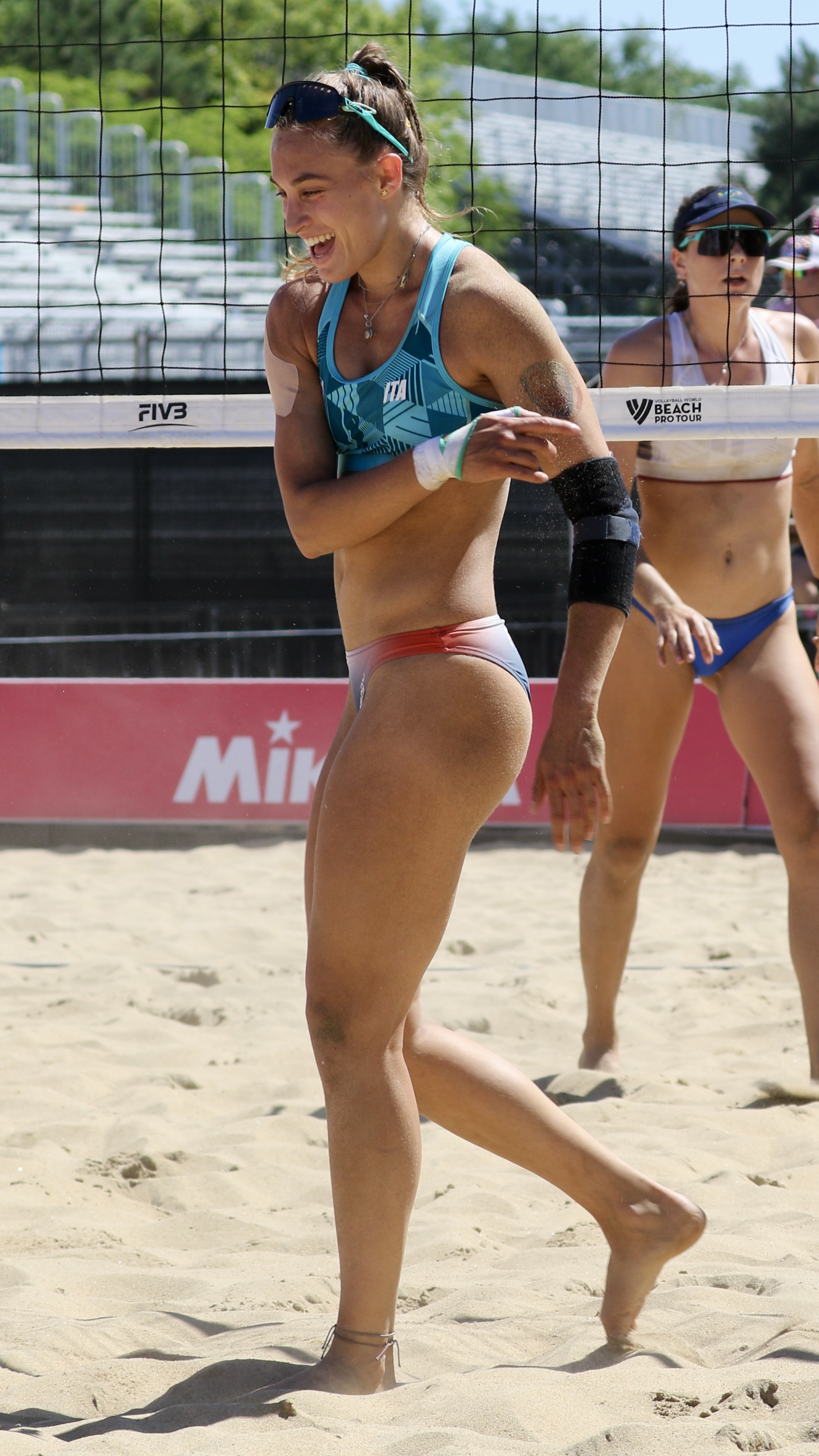
Few who watch her play are likely to forget the experience. Still just 22 years old as she settles into a new partnership with Orsi Toth, Gottardi is one of the sport’s best young players—and “young” may be an unnecessary qualifier. She is also one of any sport’s most distinctive players. Relentless, with a high jumper’s vertical and the body control of the dancer and gymnast she once was, she’s worth the price of admission.

For many athletes, the Olympics are the pinnacle of a career. For Gottardi, playing under the Eiffel Tower last summer was just the opening act. She made it to Paris while much of the world was still wrapping its mind around how good she could be—while she was, too, for that matter. It’s why she plays the way she does, every no-look flick, headlong plunge, and hammered spike an exploration of what’s possible and an expression of who she is. She’s Valentina Gottardi. Never more so than when her feet touch the sand.

“I feel myself on the court,” Gottardi said. “And sometimes I don’t feel myself outside, so when I play, I want to transmit what I feel and what I really am.” … Full story on Sandcast (free)

Excerpt from Anhelina Khmil and a Ukrainian Summer to Remember

At least as much as the tools to conquer the Big 12 and that will be needed to compete with the Ana Patricias, Brandie Wilkerson and Valentina Gottardis of the world, she also found community as part of a group of women with a shared goal. And in amassing the degree, friendships, connections and memories that come with college, TCU provided the building blocks of a future. Still, when she talks about trying to put everything else aside this year and enjoy the moment—a common throwaway line for seniors—it hits differently. As she puts it, war makes everything else complicated.
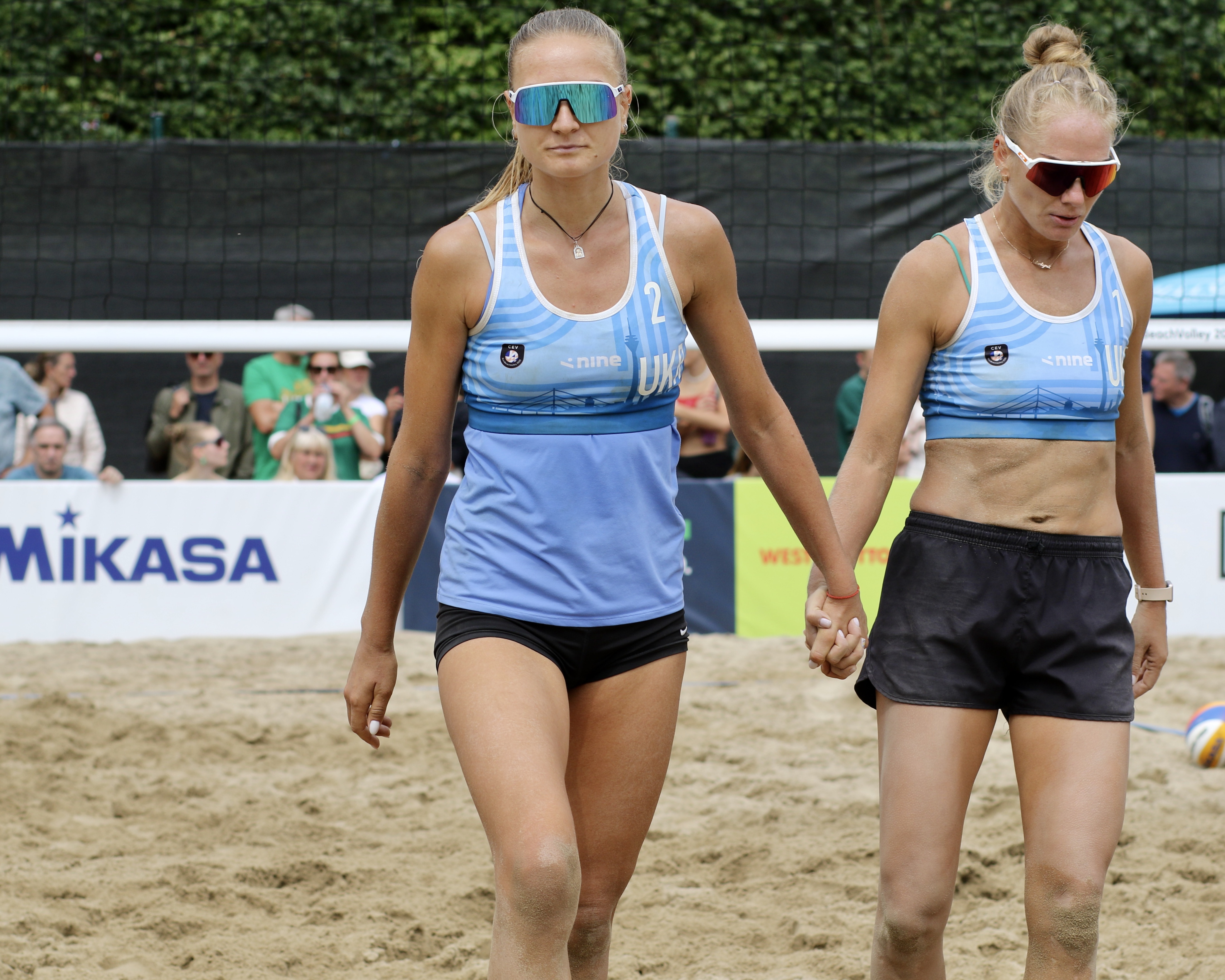
“I don’t like to think ahead,” Khmil said. “I don’t think it’s a good idea because as soon as I start thinking ahead and planning all that’s going to happen in six months or a year, it’s never going to be that way. It’s always something different. So I usually just wait and see. You cannot predict, especially right now.”

She follows the news from home. She tracks the alerts on her phone, the ones that tell her whether her hometown—her family—is targeted in the seemingly nightly barrages of drones and missiles. Davidova still lives in Ukraine with her family. All summer, whenever her phone buzzed with alerts, she called home to ensure her two children took shelter. The nomadic lifestyle can wear on every pro. But not like that. Khmil could see the toll it took. She suggested even she can’t fully grasp how that would feel, to be a mother in those moments. And yet, she worries, too, the stress no less real as a daughter and sister. … Full story on Sandcast (free)

Excerpt from Tina Graudina Finds Joy in the Journey

Hardly spendthrift, to the point of packing her own lunches [during an internship at the Latvian Mission to the United Nations], Graudina nonetheless laments how much of her disposable income is directed toward her Kindle. The temptation is just too great when new books are only a click away. She tries to exercise quality control, if not quantity control. Still enamored with fantasy worlds, she matches each fiction title with a title where she will “learn something that makes me smarter.” In recent months, she read Mark Blyth’s Austerity on financial austerity and European Union missteps in the 2008 Euro Crisis, as well as Richard V. Reeves’ Of Boys and Men about the developmental challenges for that gender in modern society.
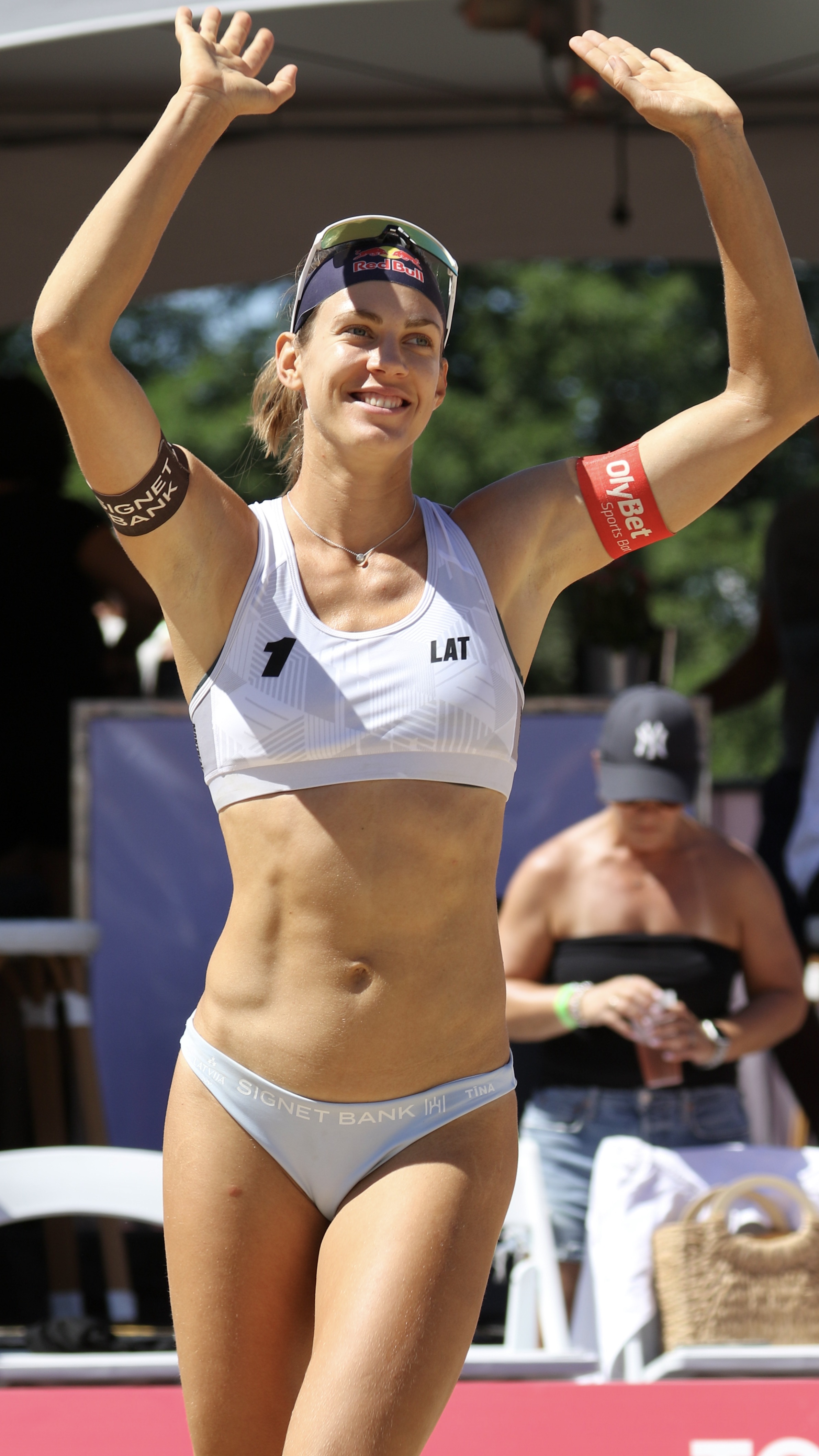
There is power in understanding the world around us. Knowledge solves problems—it can help a country like Latvia survive and thrive. But there is power in imagination and inspiration, too, in the fictional worlds of novels and characters who discover hidden and marvelous talents. After taking a break in one world, Graudina was ready to return to the other, the one where she and Samoilova can leave schoolkids speechless when they visit classrooms, shine a spotlight on important issues and lift the profile of a country many would struggle to identify on a map. It’s where she wants to be for now. It’s who she is.

“I feel it in my heart that even if I don’t get a single medal for the rest of my life, as long as I feel the same way that I feel right now when I practice, when I play volleyball, I’m happy with this type of life,” Graudina said. “I feel so happy, so full with positive emotions—even when we lose, that anger of losing is directed in a positive direction.

“I really believe that the journey is so important to enjoy and also do properly. Because if you enjoy it and you put all your effort in it, the destination, the medals, they will come by themselves. That’s something that I’m focusing on this year and hopefully every single year from now on.” … Full story on Sandcast (free)

Ukrainian Resolve Makes Euros History

Beach volleyball is a niche sport. I get that. For some, it’s of interest once every four years, a summer spectacle set against increasingly grand Olympic backdrops. For others, it’s no more relevant than equestrian events or cricket are to me—I respect that people love them but they are foreign languages that I have neither the time nor patience to learn. 

That’s the way the world works. It’s a crowded place. What keeps me glued to streams week after week, and too occasionally for my liking sends me trekking across oceans, is the almost unique way the sport challenges an athlete’s mental commitment. It’s Shakespeare with feats of athleticism, Cirque de Soleil with a plot. 

An infielder who makes an error in a key moment feels the eyes of the world on him or her, but in reality, the next ball is more likely to go to any of eight other players on the field. A tennis player who makes an unforced error isn’t responsible for derailing anyone but him or herself if they let the mistake fester until it ruins a game, a set and a match. 

A beach volleyball player lives squarely in the middle. With the exception of aces, or if you were playing with Laura Ludwig, you’re involved in every play. There is no retreating into anonymity for a few plays to gather yourself. You are simultaneously entirely responsible for your team’s fate and entirely dependent on your partner accepting the same burden. 

It’s at once individual and collaborative. 

Without diminishing the tactics and strategies I grasp with only rudimentary expertise, my hunch is this is why beach volleyball matches are often such roller coasters. A match can shift from a seemingly never-ending exchange of side outs into a rout in the blink of an eye, one team suddenly unable to gather its confidence and at the mercy of its opponent. Then, just as suddenly, focus slips and the pendulum swings back the other way. 

I believe it’s VBTV analyst Travis Mewhirter who loves to cite the adage that a team that loses a set by double digits will inevitably win the next set. I covered women’s basketball for decades. When Geno Auriemma’s UConn Huskies made one of their trademark runs, the other team stayed beat. In beach volleyball, among elite teams, that’s rarely true. At some point, you will be on top of the world. At some point, you will feel the weight of the world on your shoulders. In the same match. The sport is how you respond in those moments. 

Which brings me to Ukraine and a Euro Beach Volley final for the ages (my editors over the years had a point about it taking me a long time to get to the, well, point). 

Leading 20-15 in the first set of the Euro Beach Volley final, Maryna Hladun and Tetiana Lazarenko could surely see the finish line. One more point and they would be in firm control of the biggest match of their lives—certainly their beach volleyball partnership. 

Scarcely five minutes later, they trudged off the court after losing eight of the next nine points and playing their part in France’s miraculous comeback to win the set 23-21. 

In a world of writing deadlines, this is when I would have started thinking about how to frame what a title meant for France. I would have sketched out a lede to have ready. 

But that’s not beach volleyball. Hladun and Lazarenko gutted through an inconsistent start to the second set, eventually gathering momentum and winning 21-18 to force a third set. 

Six years earlier, without the crowd or the stakes, I’d seen a different story unfold. 

The Gstaad tournament is a bucket list must for beach volleyball fans, one I thankfully achieved a couple of days after the end of a long month covering the 2019 Women’s World Cup in France (great sporting experience, miserable professional experience). 

The main court in the middle of the village in the Swiss Alps is all atmosphere, loud and rollicking. The side courts are more sedate, a 10-minute walk to a local tennis club. That’s where I first saw Hladun play, and it surely wasn’t a day she would want to be reminded of. 

A tough day in Gstaad in 2019.

She and her then-partner lost their opening qualifying match to a Thai team they probably should have handled. Their Gstaad stay was over almost before it began. The aftermath featured, shall we say, a frank exchange of views followed by some frosty silence. That’s hardly uncommon in any sport. In beach volleyball, especially on the side courts, it just plays out in front of anyone and everyone on hand. Still, it has remained lodged in my brain as the standard by which I judge teammate volatility and negative body language. Was it as tense as that afternoon in Gstaad?

As best I can tell, Hladun and that partner, Diana Lunina, didn’t play together again after that year. That, too, isn’t necessarily much of a tell. They did have four World Tour podiums in smaller events early in 2019. For every team that stays together for a decade, there are probably 10 that don’t last more than a year or two. It’s not always chemistry. (Case in point, I was sure body language in that tournament foretold the end of the Swiss partnership between Anouk Vergé-Dépré and Joana Mader. They went on to win Olympic bronze two years later. Shows what playing psychologist gets you.) 

I don’t think I had seen Hladun play in person since then, In Dusseldorf, I was struck from the outset by how much she seemed to enjoy playing with Lazarenko, who was all of 15 years old and far from the picture on that day in Gstaad in 2019. Success helps, of course, and the pair had already turned heads by winning a Beach Pro Tour Challenge event in Poland and earning more podium finishes than Hladun had in the preceding decade. 

Life changes, too. Just 26 when I saw her endure a day to forget in Gstaad, she is now 32. She married and had a second son, whose birthday ironically falls during or around the annual stop in Gstaad. From Sumy, a city just miles from the Russian border, she’s also endured a war brought on by that country, like millions of her fellow Ukrainians. Lazarenko is from Zaporizhzhia. Along with all of the typical social media content they share in common with their peers, Ukrainian athletes often also share videos and images of missiles and drones raining down on the cities they call home—homes that now take days to return to by bus and train. 

Experiencing life off the court, the joys of family and the sorrows of war, doesn’t necessarily correlate to anything on the court. Being a great athlete and a grounded person are far from synonymous. A cynic might even argue they are at odds more often than not. Still, watching Hladun alternately mentor and lean on her young teammate, I couldn’t help but see an appreciation to still be living this life and making the most of this opportunity. 

Perspective doesn’t preclude bad moments or bad tournaments. It doesn’t preclude blowing a 20-15 lead in one of the biggest matches of your life. It does provide resolve, which is no less important than Lazarenko’s blistering serve or Hladun’s sneaky vertical. 

I couldn’t help myself after the first set. I thought France was bound to win. I thought losing the first set the way Ukraine lost it, giving it away when they seemed in control, would break them. But after nine errors in the opening set, Ukraine made just two errors in the second set and three in the fraught final set—half as many as France across those sets. 

When France successfully challenged a net touch that turned an apparent three-point lead in the final set into a one-point lead, the Ukrainians just kept going, siding out and winning a point as Lazarenko’s served pinned France out of system. 

France challenged again as Ukraine reached 14-13, this time unsuccessfully. Vieira and Chamereau staved off the first championship point, tying the set 14-14 and forcing extra time in the win-by-two format. Ukraine again sided out to earn its second championship point, handing the serve back to Lazarenko. 

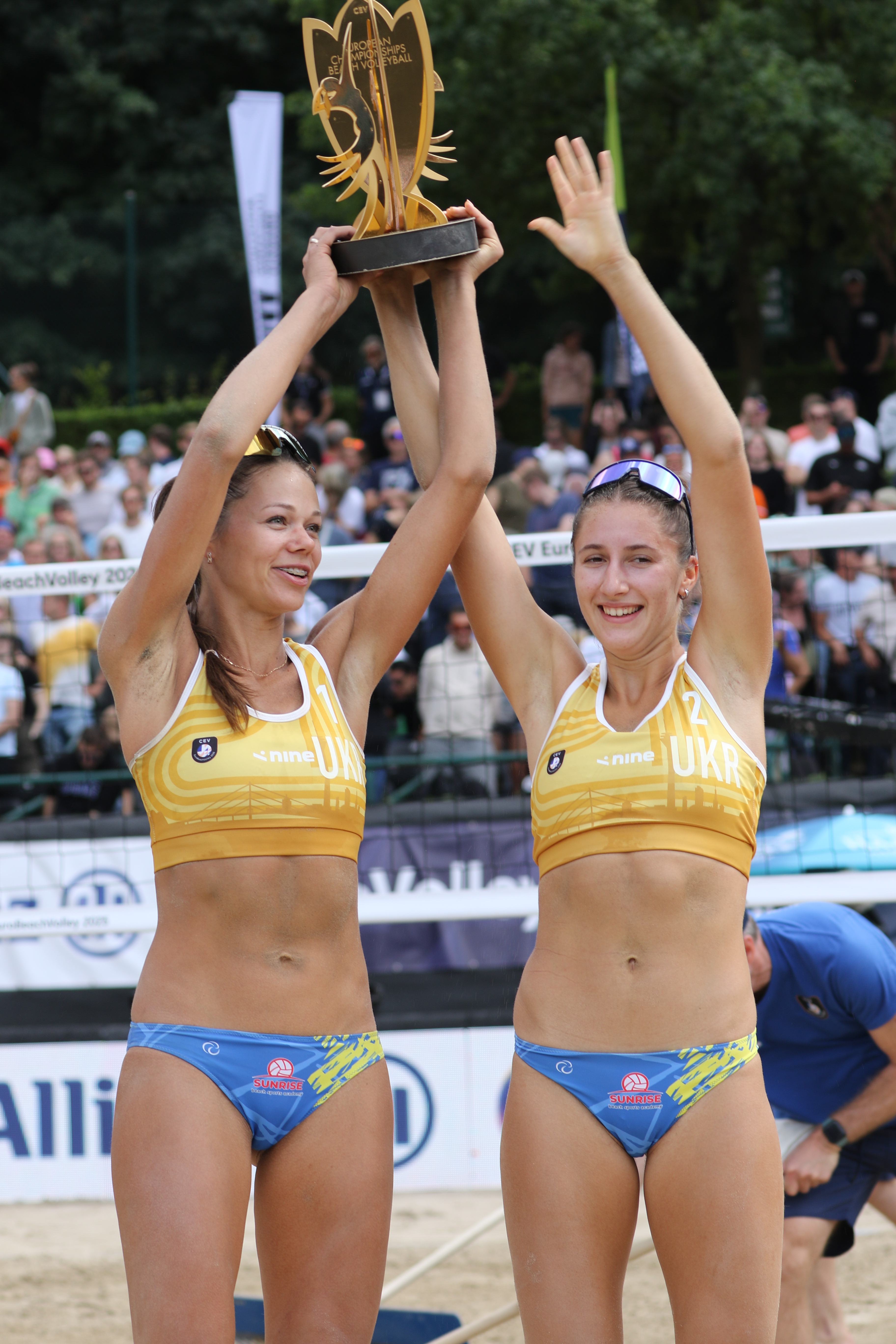
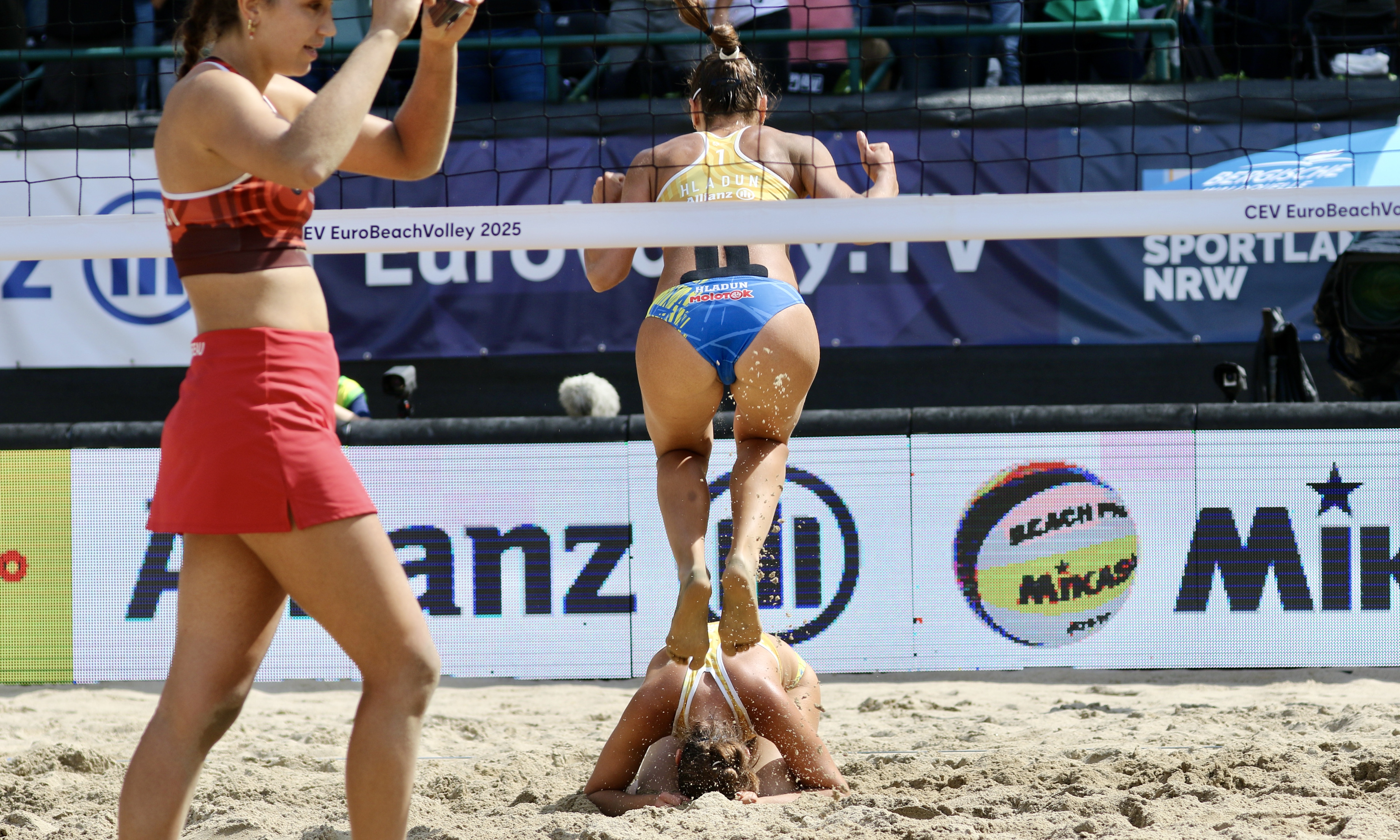
And then it was over, Lazarenko dropping to the sand and Hladun leaping into the air after the first European beach volleyball title for any Ukrainian women: 21-23, 21-18, 16-14. 

If I’m honest about the weekend, I was rooting for Spain’s Daniela Alvarez and Tania Moreno, the engaging NCAA champions and three-time Euro semifinalists who Ukraine eliminated in another three-set thriller in this year’s semifinals. But that only makes me more certain that what I saw unfold will remain among my favorite sporting memories. As I tried to focus through the viewfinder after the final point, surely a piece of sand responsible for the slight mistiness in my eye, I couldn’t have wished to witness any other result.

Beach volleyball tests who you are. Maryna Hladun and Tetiana Lazarenko answered as emphatically as they knew how. They are Ukrainians. And they are champions.