Maybe more than most of us, athletes grow accustomed to believing their fate rests in their own hands. Their talent. Their will. Their confidence. Maybe more than most of us, they also understand deep down that such control is forever an illusion.
They don’t control injuries. They don’t control a bad call in a big moment. They don’t control an unfavorable draw. They don’t control a pandemic. In beach volleyball, where a career can be defined by where someone is from, they don’t control who else in their age cohort happens to share a passport, complementary skills and compatible personalities.
All they really control, and it’s no small task to do so, is their own sense of self.
For Esmée Böbner, that meant the courage to walk away at 24 years old. For Laura Ludwig, that meant the grace to walk away after one more afternoon in the (proverbial) sun. And for Marta Menegatti, at least for another week and another round, it meant finding the drive to continue. All within the span of roughly 24 hours this weekend.
Saturday morning, early enough that bakeries were still doing brisk business for breakfast shoppers, Italy’s Marta Menegatti and Valentina Gottardi were already deep in the third set against Finland in Hamburg. At stake was a place in the quarterfinals of the Elite 16 event, the reward for an unrelenting schedule that few peers undertook—the Olympics, European Championships and Elite 16 in successive weeks.
As they had in the Euros in the Netherlands, Menegatti and Gottardi lost their opening match in Hamburg—dropping a 19-21 third set marathon against Brazil. As was also the case en route to a silver medal in the Euros, they recovered and still made it out the pool. But against Finland, Italy flirted with disaster, losing 21-11 in the second set and then trading point for point in a third set that stretch beyond regulation. Match point after match point slipped away until Menegatti served at 18-17 to try and close it out for a fifth time.
Having celebrated her 34th birthday shortly before Hamburg, Menegatti is closer to two decades than one into a pro career spanning four Olympics. She picks her moments, the wisdom of all those points, sets and years—decidedly non-artificial intelligence— allowing her to calculate what’s worth chasing and how to finagle a few extra seconds of recovery time.
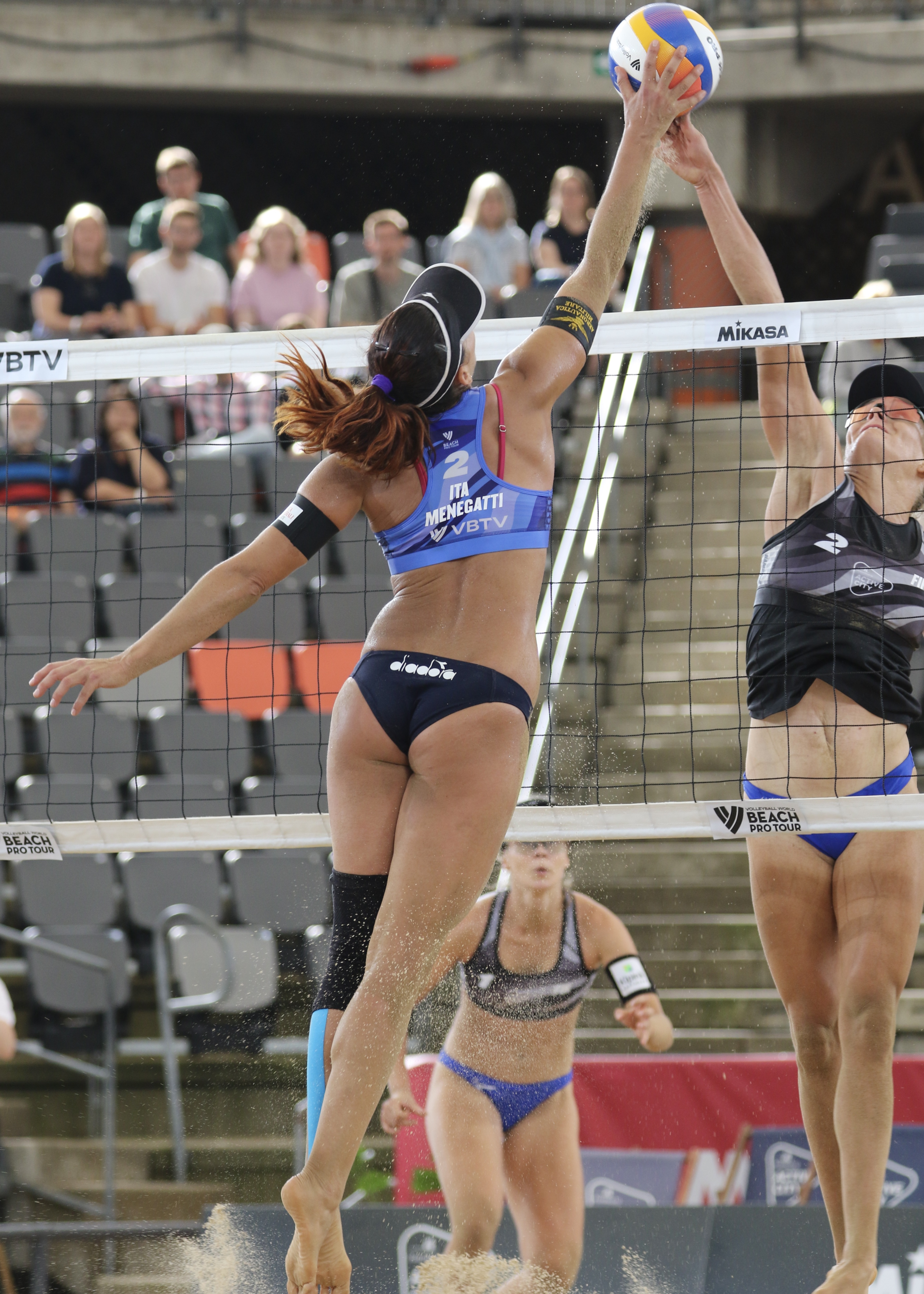
On match point No. 5, Menegatti served and had to move quickly toward the net, diving to defend a Finnish cut shot. After chasing down that dig to keep the point alive, Gottardi then got a fingertip on an attempted block when Finland tried again to end the point. The ricochet left Menegatti no choice but to launch her body at the ball for the second time in the point, this time propelling herself toward the sideline on the other side of the court.
The ball and the point still improbably alive, Gottardi somehow kept her bearings as she flicked the ball over her head for the winning point.
Sprawled on the sand where she had landed, Menegatti didn’t move. She just grinned—telling enough from someone who rarely wastes energy on such on-court frivolities.
Just a few hours later, under an unforgiving sun on far and away the hottest day of the week, the Italians outlasted the Dutch duo of Katja Stam and Raisa Schoon in three sets to reach the semifinals. As in the Euros, this one ended with Menegatti jumping up and down for joy.
For all I know, this could be Menegatti’s valedictory tour, culminating with the upcoming Italian Championships. Los Angeles, certainly, feels a long way off. At the same time, after something of a rotating cast of partners and a stretch of years as she neared 30 in which podiums were hard to come by, there must be something invigorating about playing with arguably the most talented young player in the world in 21-year-old wunderkind Gottardi.
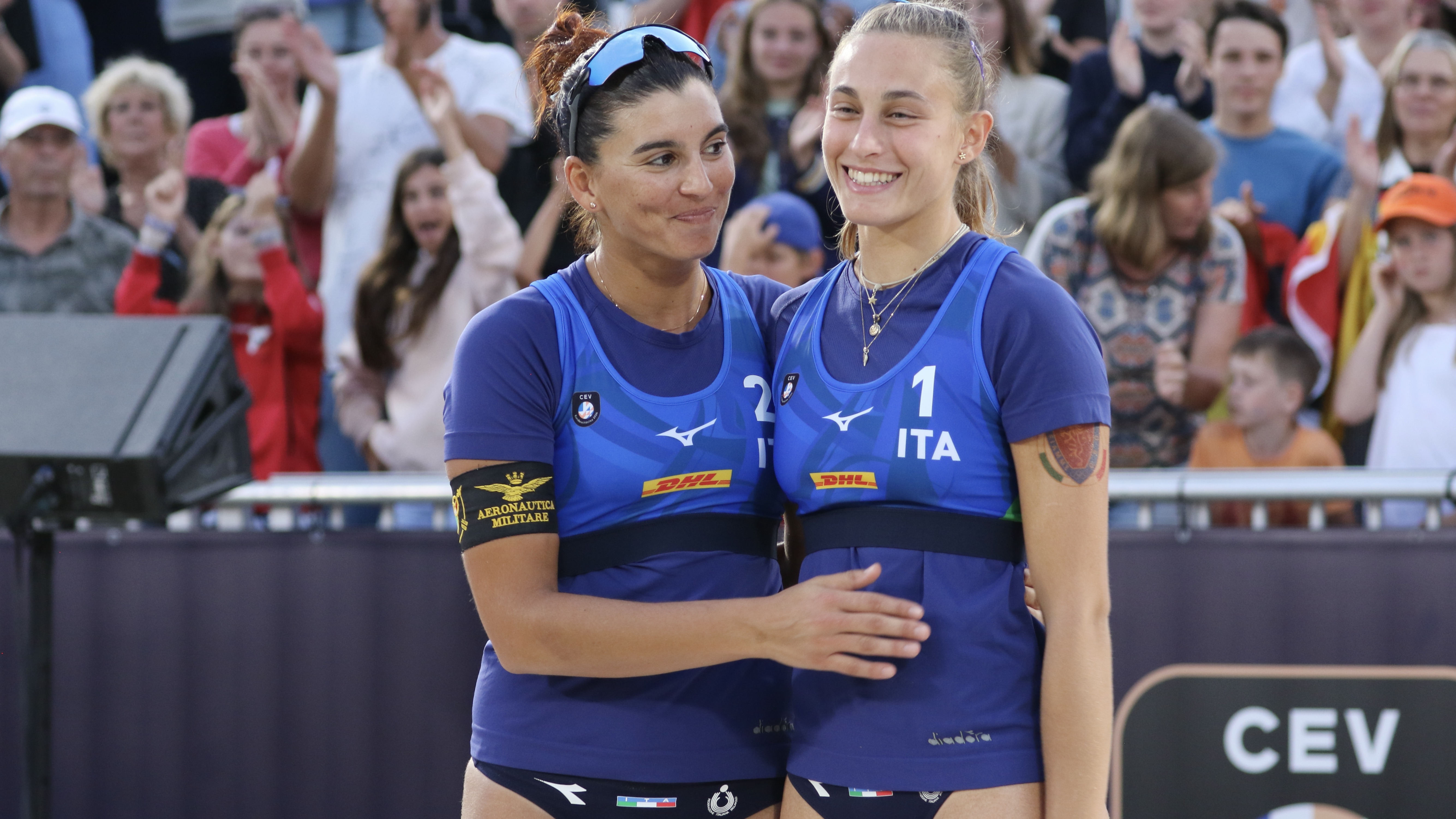
The Euro silver was her first medal in that competition since winning it in 2011. The World Tour Challenge event she and Gottardi won last year was her first in five years. A medal of any sort in Hamburg would be her sixth on the world tour in the past three seasons with Gottardi. Menegatti’s long career has already been more than a tad star-crossed. Gottardi’s arrival on the scene offers her a tempting opportunity for a Hollywood ending.
Or as Menegatti put it on Instagram after the Euros, quoting Paolo Coelho, “It’s the possibility of having a dream come true that makes life interesting.”
She will have to decide, or far more likely already knows, if her next dream involves sand.

Meanwhile, Laura Ludwig’s life—certainly her biography—has been interesting since the beginning. She was born in a city and country that officially no longer exist—East Germany and East Berlin, three years before the fall of the Berlin Wall. It’s a short train trip from Hamburg to the capital these days. It was the other side of the world when she was born.
It’s strange to think of her as part of a past that feels so distant, mostly because she’s for so long helped define the present. Decades changed, world tours changed, partners changed, rules changed. Ludwig was always just there. She was named FIVB Most Improved Player in 2007, the same year Birgit Prinz led Germany to its second consecutive Women’s World Cup title and just five years after the likes of Gottardi and Spain’s Tania Moreno were born.
I remember watching her in the qualifying rounds in Gstaad in 2019, seemingly incongruous surroundings for the Olympic champion just three years earlier and world champion just two years prior. But with a new on-court partner, Margareta Kozuch, and a new child off court, she willingly retreated down the ladder to begin anew. Two years later, having outlasted even a pandemic, she was back in the Olympic quarterfinals.
It was the same story when I saw her again in Edmonton last year, the great champion again grinding her way through qualifying at a Challenge event. Again, she had a new partner, indoor great Louisa Lippmann.
It isn’t easy to get to a North American latitude more northern than Hamburg, but there she was deep into Alberta, surrounded by a tournament field that collectively struggled to match her trophy case. With her son whizzing around the courts on a scooter and her partner in life Morph Bowes alongside, she coaxed, corrected and coached up Lippmann—celebrating with her when they won their qualifying matches to reach the main draw. A year later, they were there under the Eiffel Tower in Paris for Ludwig’s fifth Olympics.
So many aging athletes understandably seem to be trying to hold onto something. The field of play is where they’ve enjoyed their greatest success and felt most alive. As the end nears, they want to turn back the clock, to be who they were. Up to the final points she played Saturday in Hamburg at 38 years old, Ludwig was never hanging on. Something propelled her forward. She didn’t play or carry herself as if she was looking for that 2016 or 2017 version of herself. She was driven to discover what she could do next.
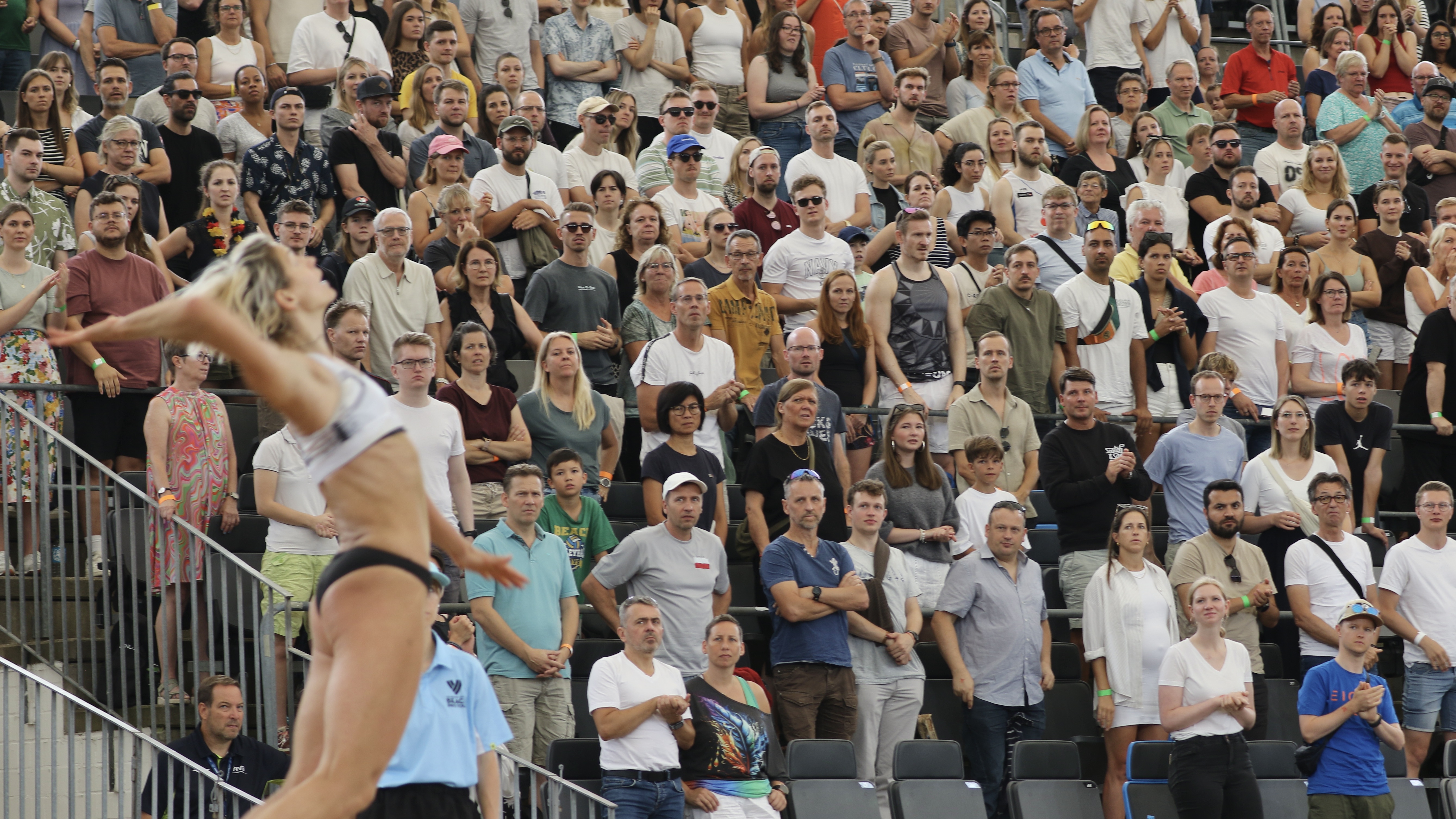
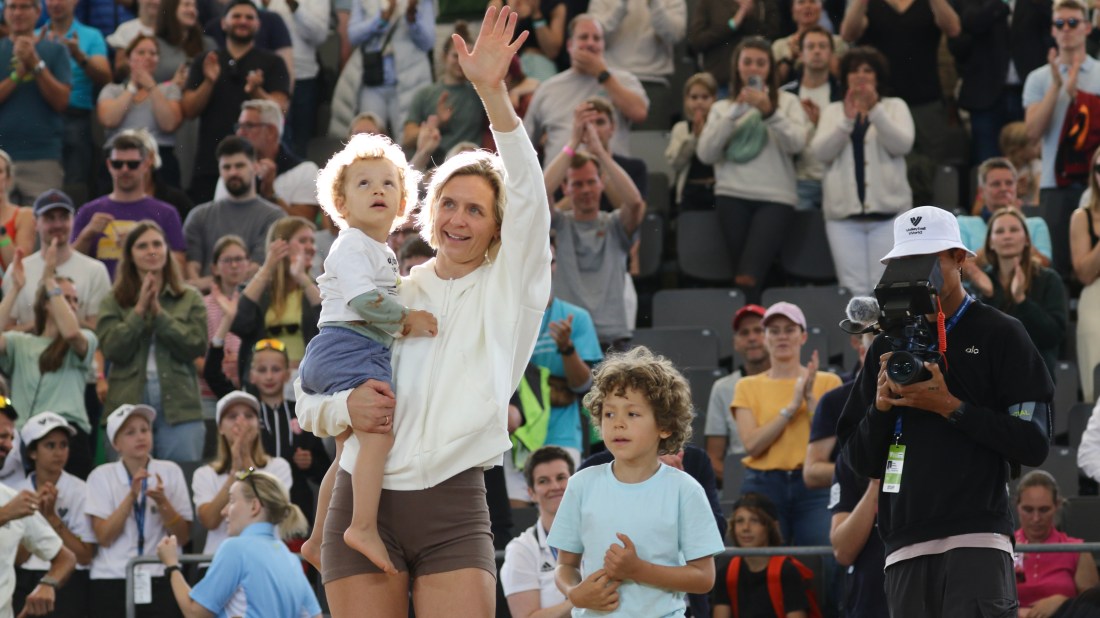
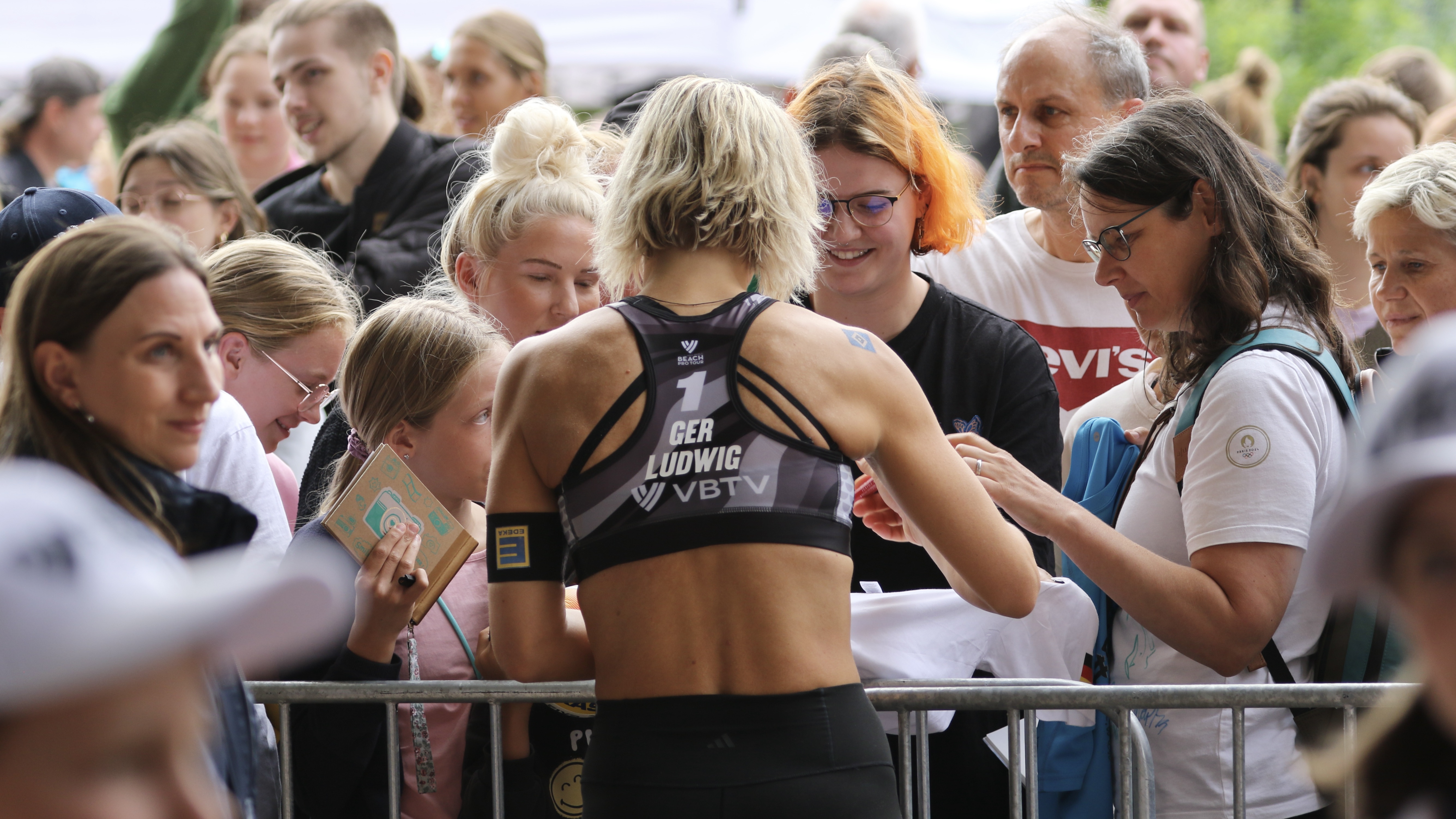
People came to see her for her final tournament. The crowds thronged the warm-up court before her matches. They forced organizers to reconfigure the mixed zone to stave off the crush of well-wishers seeking photos, selfies or simply to stand in her presence. They filled the lower bowl of the modified tennis arena the same way they would have for Steffi Graf all those years ago. And she acknowledged it, not exactly basking in the attention but clearly appreciating the affection and going along with the occasion with a smile and a wave.
But facing elimination after losing her first two matches in pool play, she also won back-to-back matches to reach the quarterfinals, pulling out plenty of her trademark on-one Ludwigs along the way.
She had more past than anyone. She was better than everyone at living for the present.
It isn’t easy to keep playing volleyball, physically, emotionally or financially. But in any walk of life, it’s sometimes easier to keep doing what you’ve always done. It’s the path of least resistance. Perhaps the most remarkable thing about Ludwig at the end, and it’s a lengthy list, is that she still seemed to know exactly who she was and why she did what she did.
It’s no less remarkable to know yourself well enough at 24 to walk away from potential greatness in the thing that has defined so much of your young life. That’s the third part of the weekend triumvirate, the only one that left me staring at my phone in astonishment.
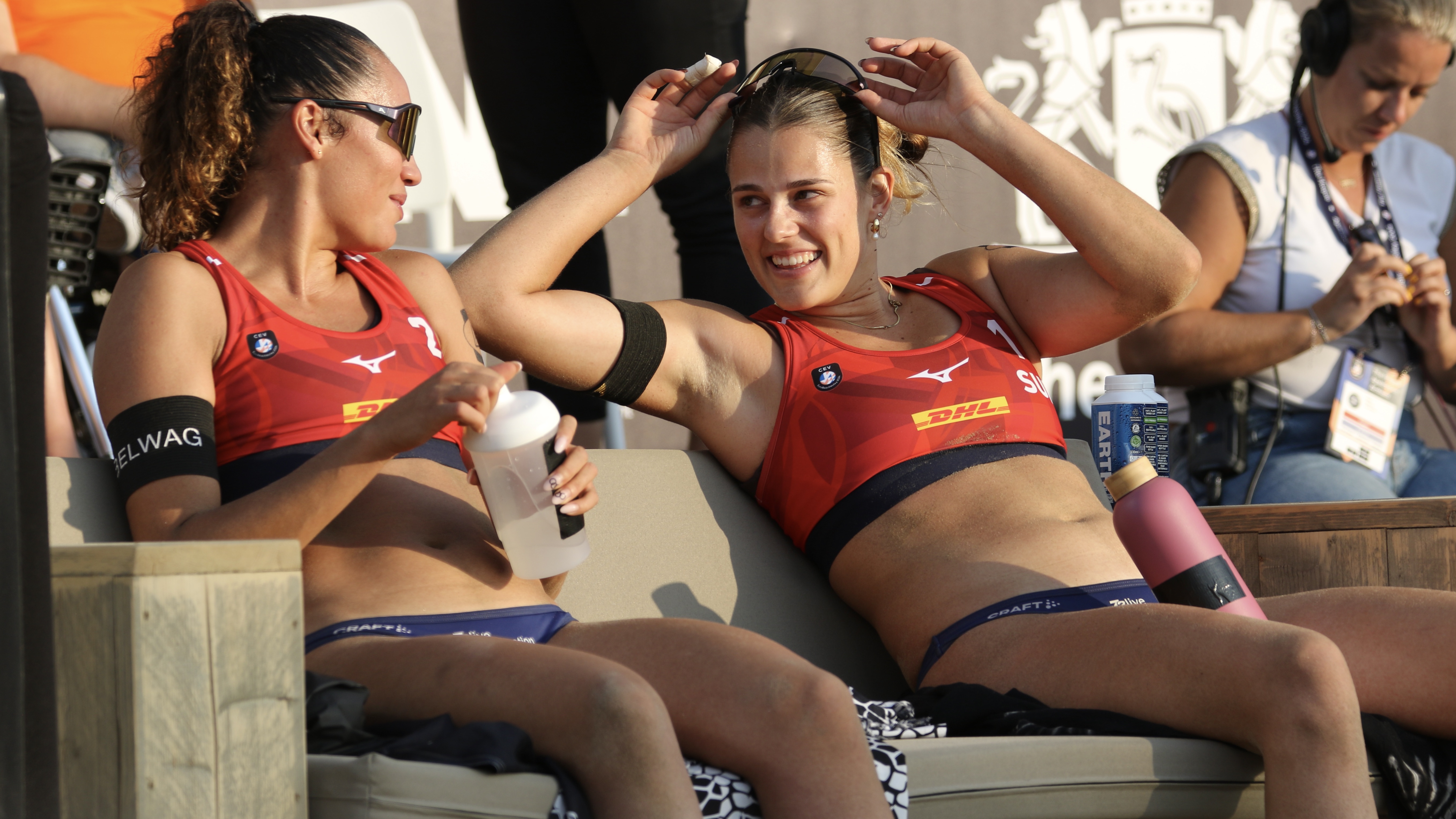
At 24, coming off the Olympic quarterfinals and a bronze medal in the Euros, Esmée Böbner retired. In an Instagram post, she described a growing realization over past weeks and months that she wanted something else. Elite beach volleyball players see more of the world than almost any of their peers, traveling from continent to continent. Yet in their own way, they also live in the confined space marked out by the tape on a sand court. It must be all too easy for the latter to begin to dominate the former, to want a world that is geographically more limited but emotionally more expansive and explorable.
Speaking briefly with Böbner in Edmonton last year, she put that in perspective that sounds almost prophetic in hindsight.
“For me, it’s not the traveling,” Böbner said. “That’s cool, but I also like to be at home. It’s the passion you can give to something. It’s important to me to keep that passion. As long as I’m having fun doing it, I think I’m the best part of myself.
“That’s really important. It’s what I enjoy about beach volleyball.”
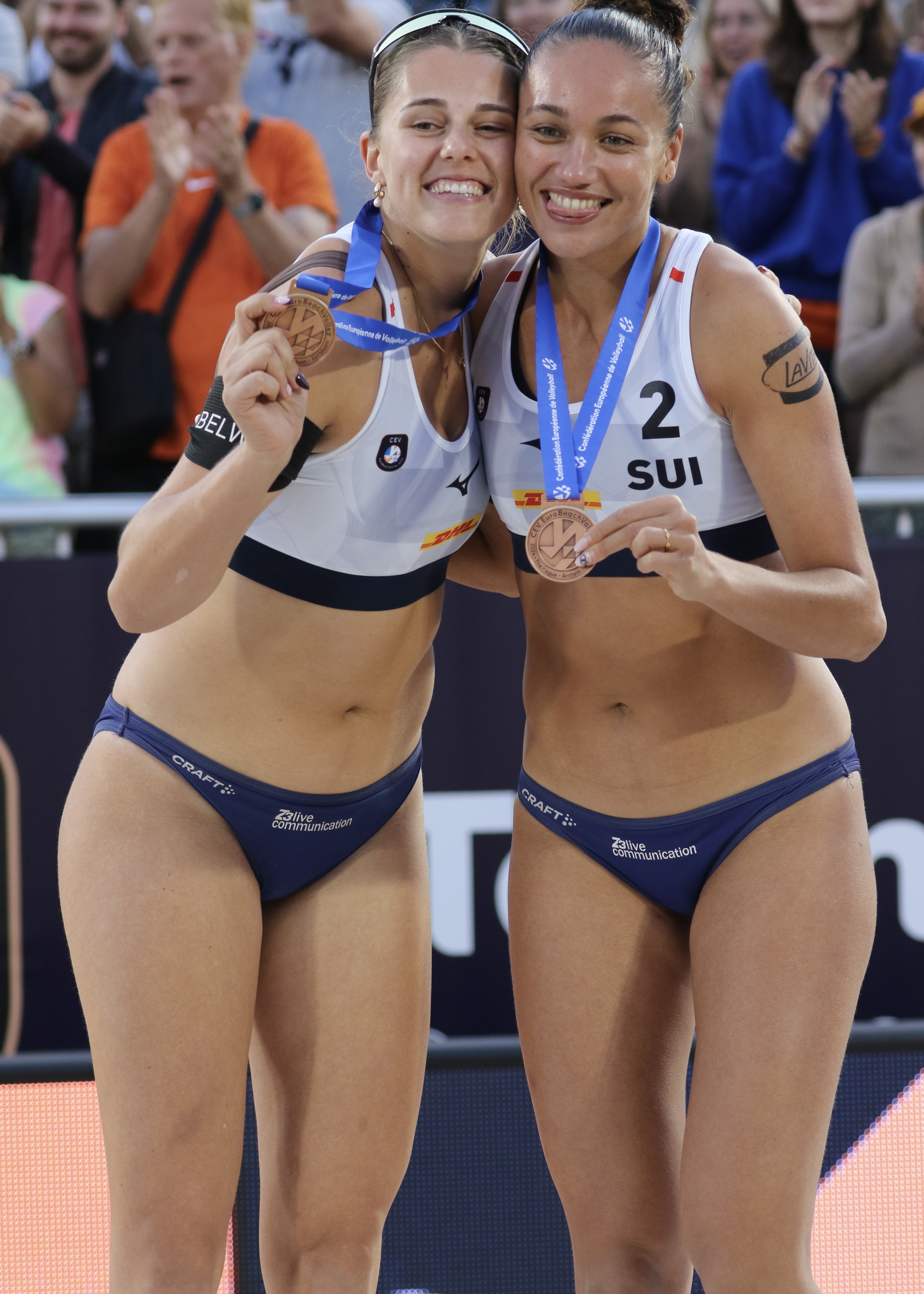
From almost that moment on, Böbner and partner Zoé Vergé-Dépré were a rocket ship, hurtling toward the elite of the elite in the sport. You couldn’t watch a broadcast without an announcer describing them as the most improved team or the best young team—and all for good reason. Böbner was a brilliant server—go back and look at how much she did to win the pair’s first world tour title with her serve in Mexico last year. And she had a knack for coming up with runs of blocks in big moments.
The young pair, by their own and all other accounts good friends off the court, beat out former bronze medalists Joana Mäder and Anouk Vergé-Dépré for the second Swiss Olympic spot. They excelled in Paris. There was every reason to believe that they would grow into gold medal contenders in Los Angeles and even Brisbane, just as Nina Brunner and Tanja Hüberli had between the Tokyo and Paris Olympics.
How many athletes keep playing long past when their love for the game has faded, simply because they were addicted to chasing the success that was already in Böbner’s grasp?
How easy would it be to feel you owe it to someone else to keep going?
Far harder is to never lose sight of, as she put, what she enjoys about beach volleyball—about life, because that’s what it becomes.
At 24, she’s allowed to change her mind someday. And perhaps, after the toll of the past year fades, that passion might return. But Böbner didn’t express herself in a manner that suggested a decision impulsively made. She sounded like someone with a remarkably mature understanding of self.
Knowing when to go. Knowing when to push on. It’s only possible by knowing yourself.
As Esmée Böbner, Laura Ludwig and Marta Menegatti reminded this weekend, that knowledge—and the courage to act on it one way or another—is the rarest of qualities.
 Graham Hays