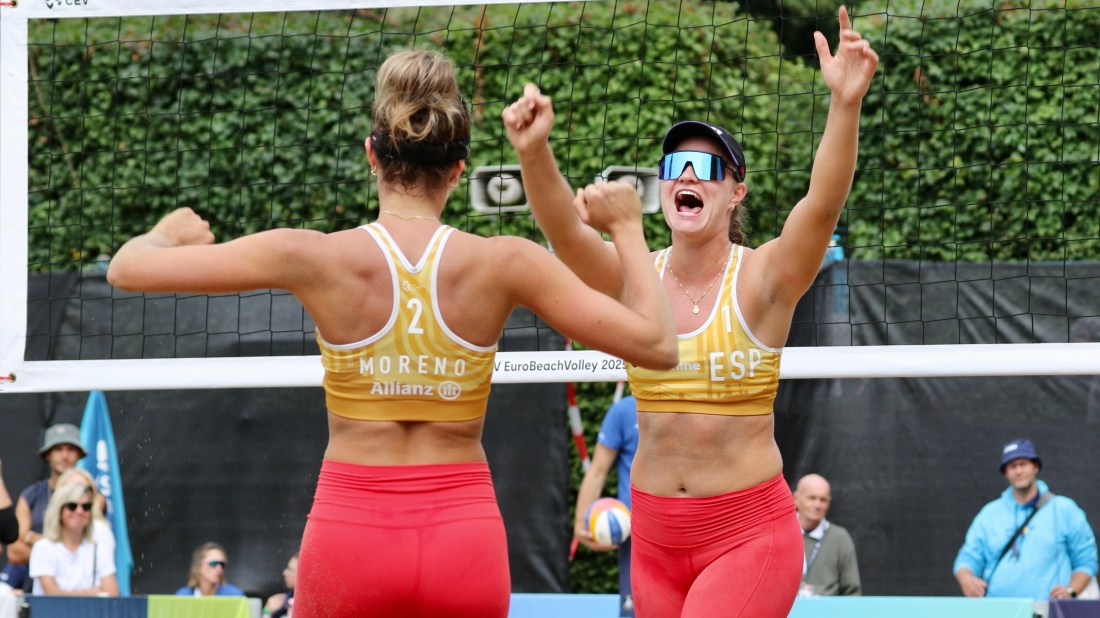
Teams on the rise are easy to root for. In beach volleyball, Spain’s Daniela Alvarez and Tania Moreno fit the bill. Talented enough that it is reasonable to imagine them competing for podiums for years to come, they are not such a sure thing that ultimate glory seems predestined. They will do some serious winning, and there will be some suffering.
There will be a reward for caring about their results. And a price.
When it comes to fandom, that’s the sweet spot.
And yet you could say the same about half a dozen up-and-coming teams. Maybe more. You always can. Like the airports in which athletes spend so much of their lives, in sports, someone is always coming. Someone is always going. Anything else is only temporary.
Neither yet 24 years old, Alvarez and Moreno’s ascent has already taken the talented pair to the Eiffel Tower’s Olympic shadow and an NCAA championship dogpile, to name just two moments. Los Angeles 2028? Brisbane 2032? World Championships? All within reach. Their potential is compelling in its own right. But also not unique. A decade from now, there will be another team on the rise. Maybe Spanish. Maybe Canadian, Dutch or a dozen other nationalities. Maybe they will come through the NCAA system. Maybe not.
I’m certain of that. Just as certain as I am that Alvarez and Moreno are, in at least one respect, not just the latest iteration of a recurring story.
In a particular tenacious, even fierce joy that is all their own.
I find myself rooting for these two. Genuine third-set, knot-in-the-stomach stuff. It isn’t just the way Tania launches herself through the air or Dani calmly pulls off yet another a pokey dig. It isn’t just about what they have already achieved and may yet in the future. It is because there is something reassuring in the way they revel in every point together. Watching them compete is like looking through a window at an ever-so-slightly better version of the world.
Joy can sound like an antiquated word. It’s quaint. Jane Austen characters live in a world where people talk about joy. It’s the story at the end of the newscast, the palate cleanser. You pat joy on the head. In sports, too, it occasionally elicits eye rolls. A moment of joy? Sure, fine. But it’s too soft an emotion to sustain you, immature—childlike joy. As if the notion of it somehow minimizes the hardship and hard work necessary to achieve adult success.
Yet joy is entirely compatible with sacrifice, even accentuated by it. Made fierce, joy isn’t ephemeral. It’s potent.


I remember Alvarez speaking on camera after TCU won its first NCAA title this past spring and expressing gratitude that Moreno had the courage to follow the same path she did to the United States—in the midst of a pandemic, no less. Alvarez arrived at TCU in the 2019-20 academic year, a year ahead of Moreno (the two had previously competed together for Spain at age-level events and even in an FIVB four-star event in 2019).
International athletes coming to the United States for college have always fascinated me. You’ll find profiles about Icelandic basketball players (from TCU, no less), Venezuelan soccer players, French softball players, etc. Although there are plenty of difficult domestic paths to collegiate sports, the idea of choosing to leave behind everything familiar and earn a degree in a second or third language was always a compelling statement of intent.
Sure, maybe someone is just the adventurous sort. And like Florida State’s soccer program once upon a time, TCU’s beach program certainly knows the infrastructure needed to help international athletes thrive. For goodness sake, the Horned Frogs had more alumni in this year’s Euros than many European countries. But all of this is by way of saying that playing with joy shouldn’t be confused with a lack of ambition or purpose. Or sacrifice. Alvarez and Moreno risked much to seek out the mentorship and environment that would lead to growth. They took the uncommon path. Each has invested a great deal—physically, mentally and quite likely financially—in putting themselves in the best position to succeed. In position to win. To be the best.
Still, joy rules. Unmistakable joy. Perhaps it’s not as evident in early-morning practices or weightlifting sessions we don’t see. Or when the body hurts, the mind is weary, clean laundry in short supply and you haven’t been home in months. Probably not then. But on the court, when the whistle blows, they seek out those moments when they can celebrate success—and each other—in ways all their own.
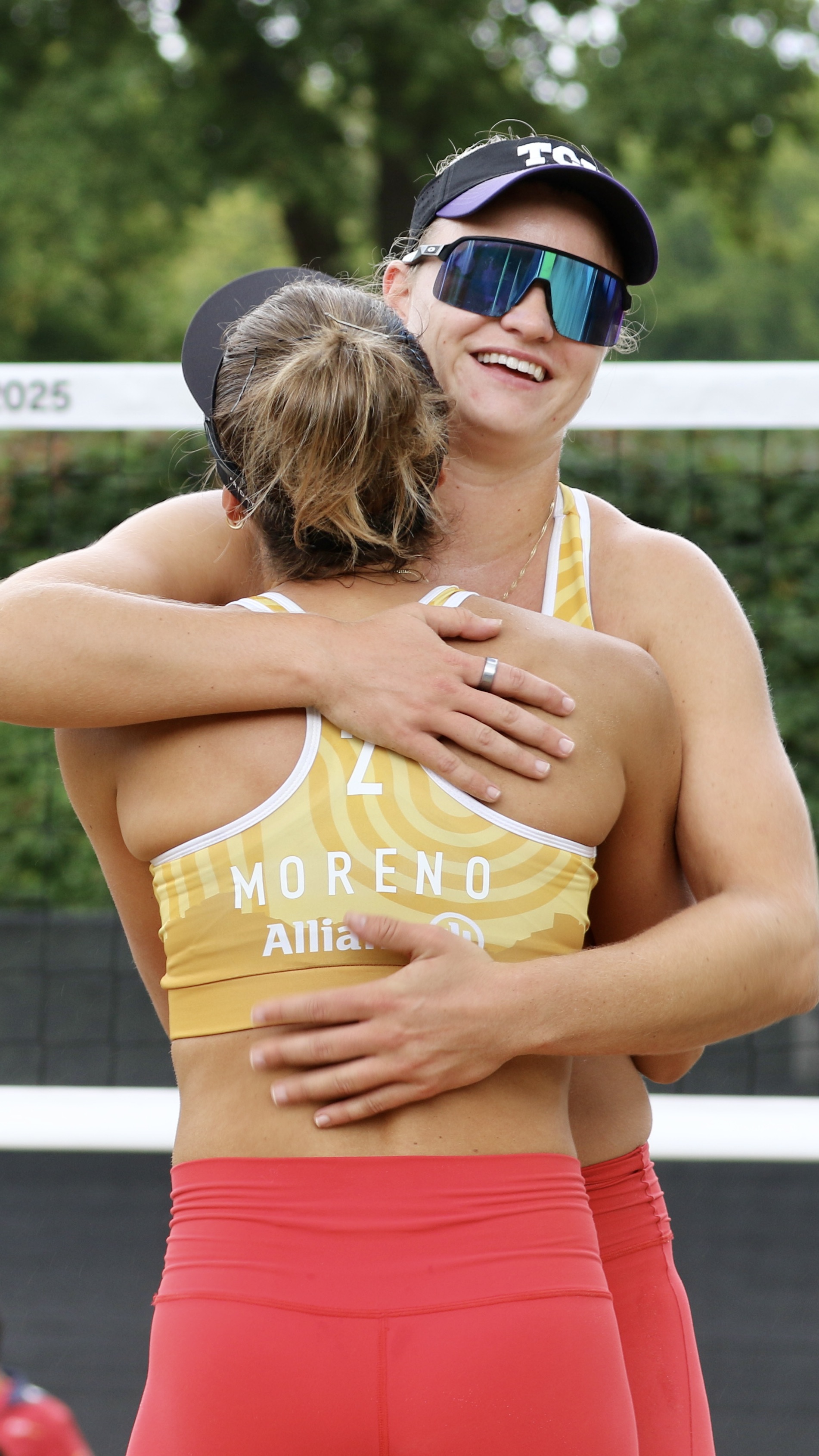
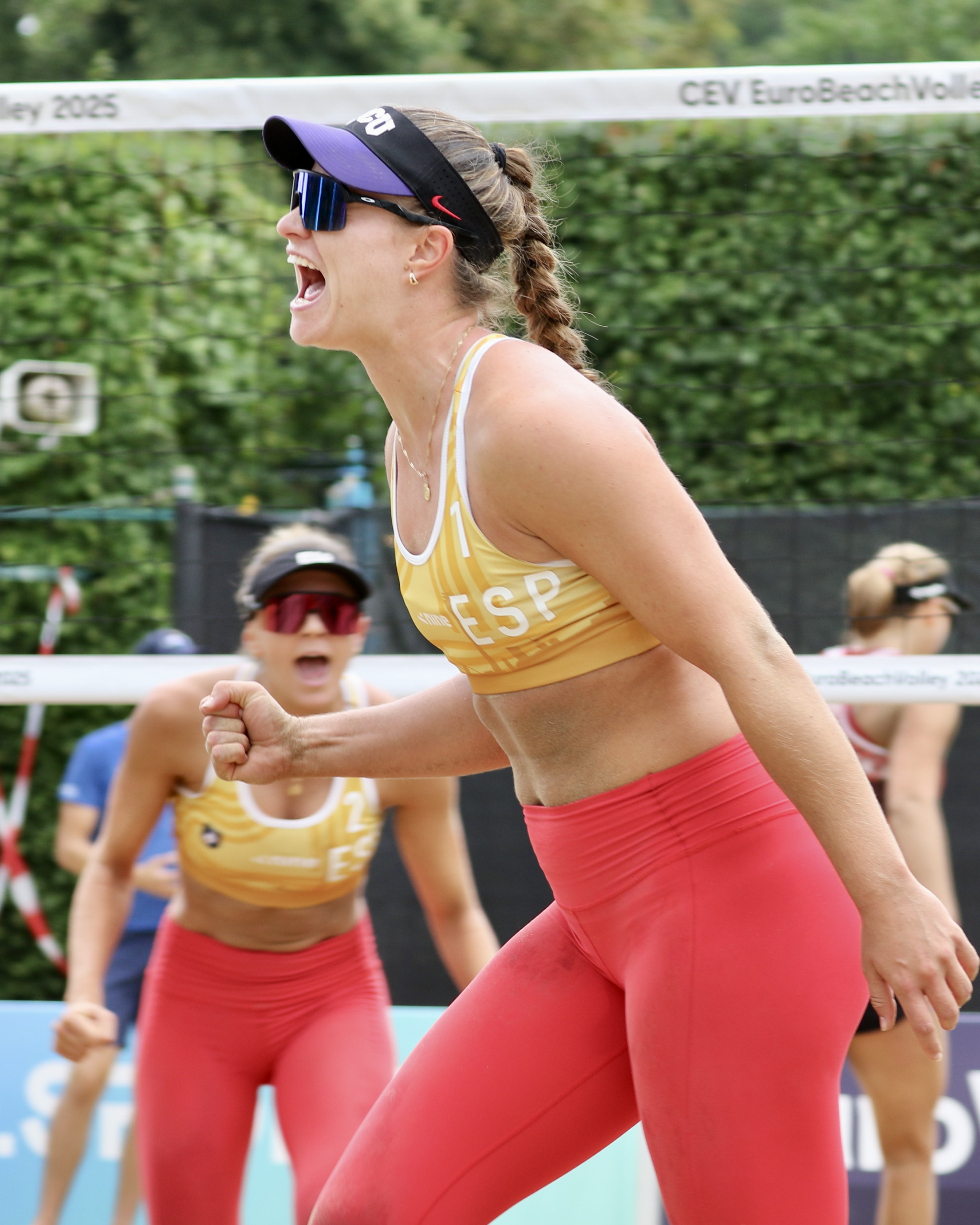
It’s not performative positivity. It’s not a show for fans or showing up opponents. They reset with an embrace. They let loose a spontaneous guttural yell, fist pump or chest bump. Again and again and again, they find confidence, comfort and camaraderie in competing together.
“¡Vamos, Dani!”

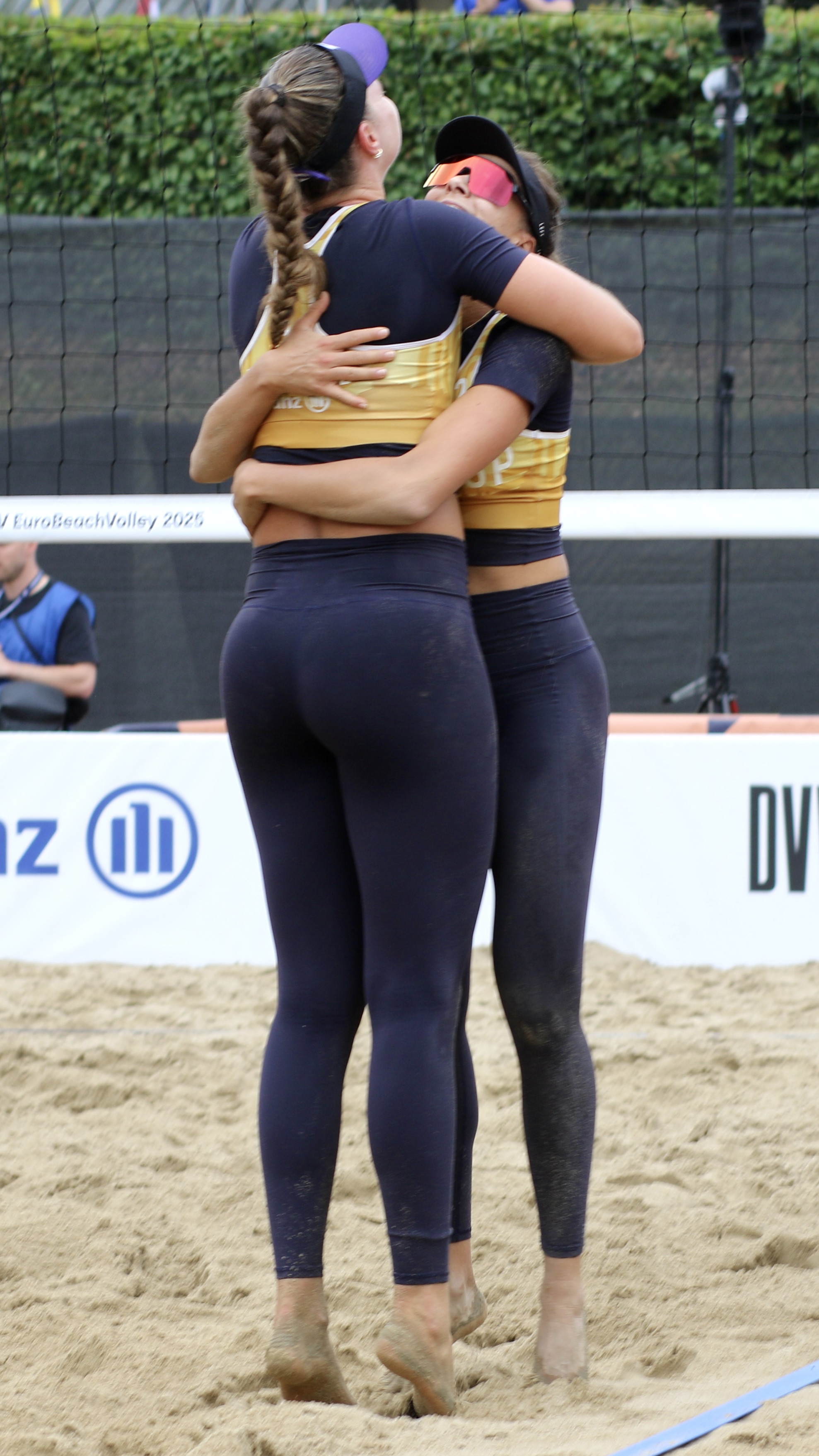
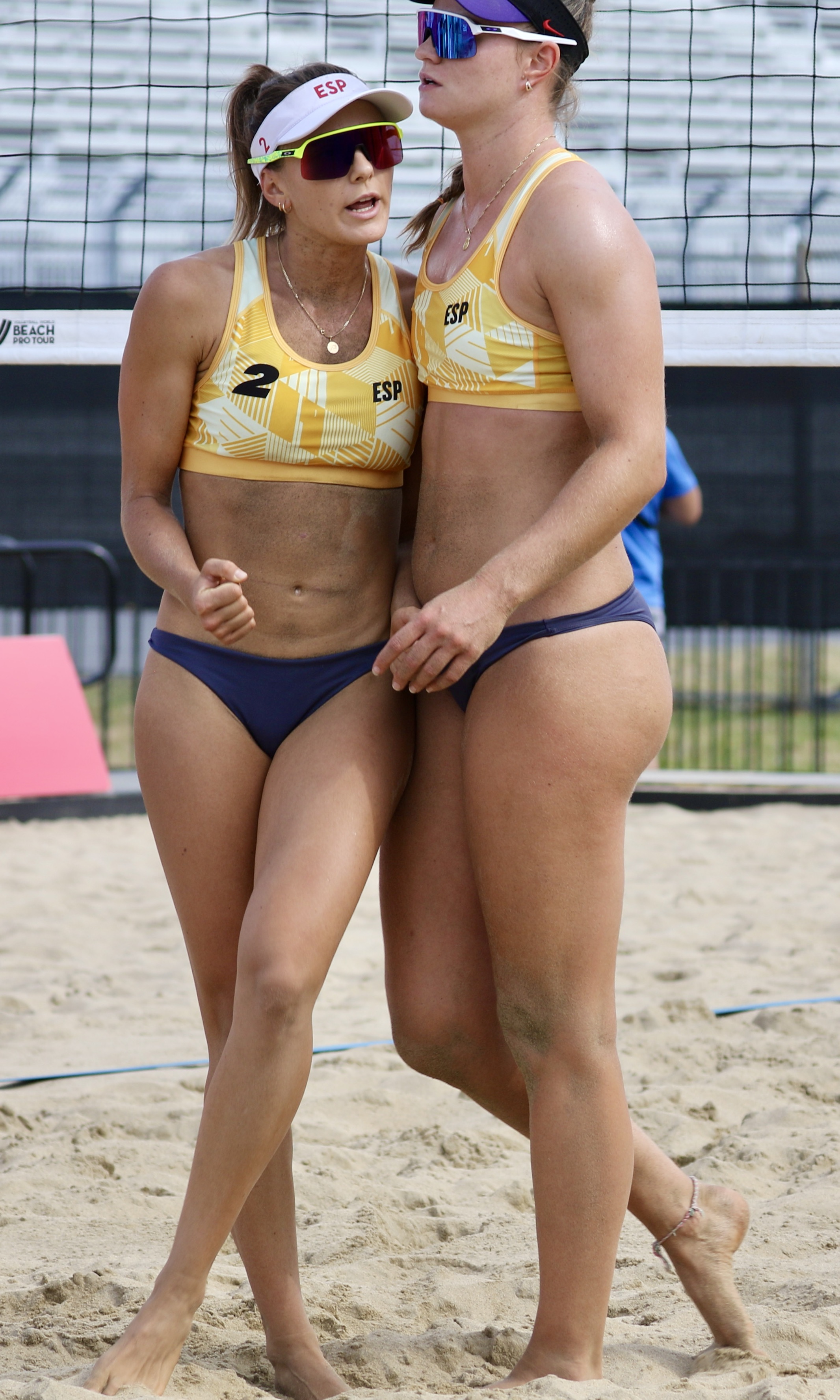
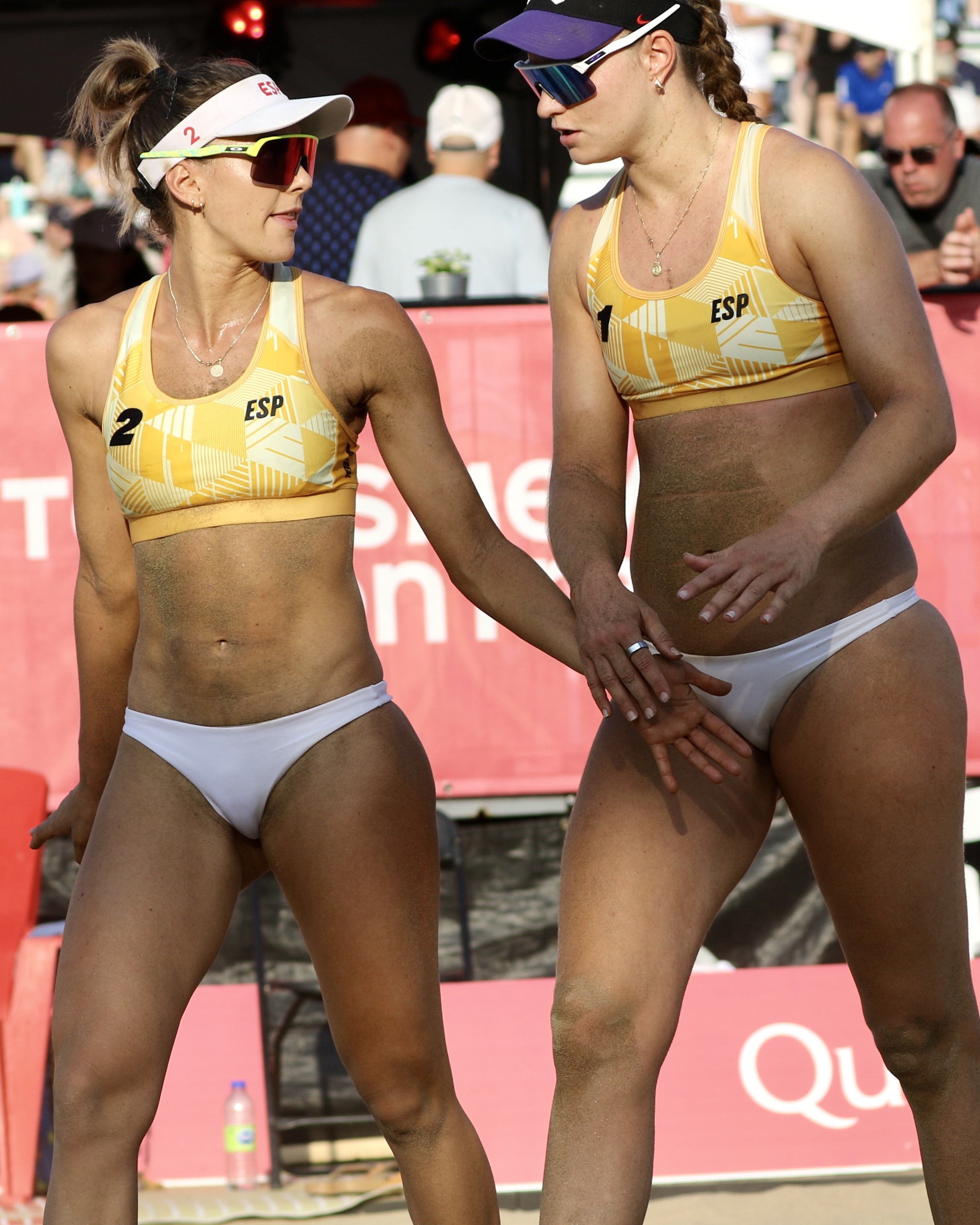
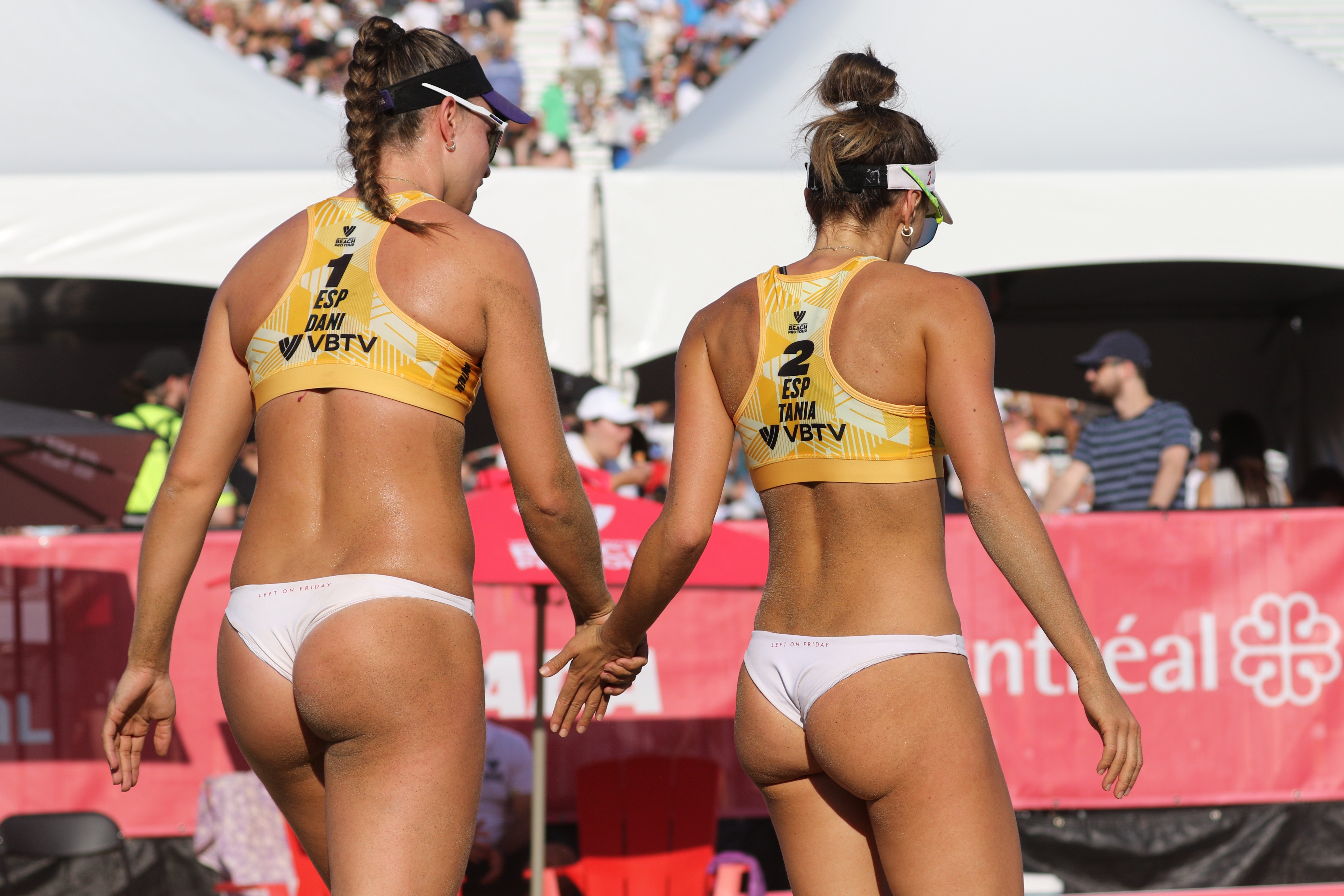
Theirs is a tactile partnership of high fives and hugs—of contact. The gestures are so second nature and form such a drumbeat that they don’t always seem aware of them. Perhaps reminders of each other’s presence, reminders that it’s their collective joy that has power.
They don’t turn their backs on each other. They don’t leave each other alone in the harsh light of failure. In their math, one plus one is not addition but exponential multiplication.
Together, they seem to genuinely believe, they can do anything.
One small illustration from our summer paths crossing at a number of tournaments. In trying to pick their poison, opponents most often served Tania. Even my limited volleyball mind grasps the logic. If the serve is good enough to pin Tania, taking a second-ball option out of play, opponents limit their exposure to each Spanish player’s greatest strengths. But with Spain playing for first place in its pool during the recent Elite 16 event in Montreal, Canada’s Bélanger and Monkhouse went after Alvarez with regularity. For a time, the change of routine worked. The Spanish struggled to establish a side-out rhythm and Canada won the opening set with surprising ease.
The Spanish duo trailed at the technical timeout in the second set, too. But neither the demeanor nor the non-verbal communication changed. Rather than either one playing like she was trying to save a match, focused on the final outcome, they played like they always do—searching for those moments of joy that are only possible together.
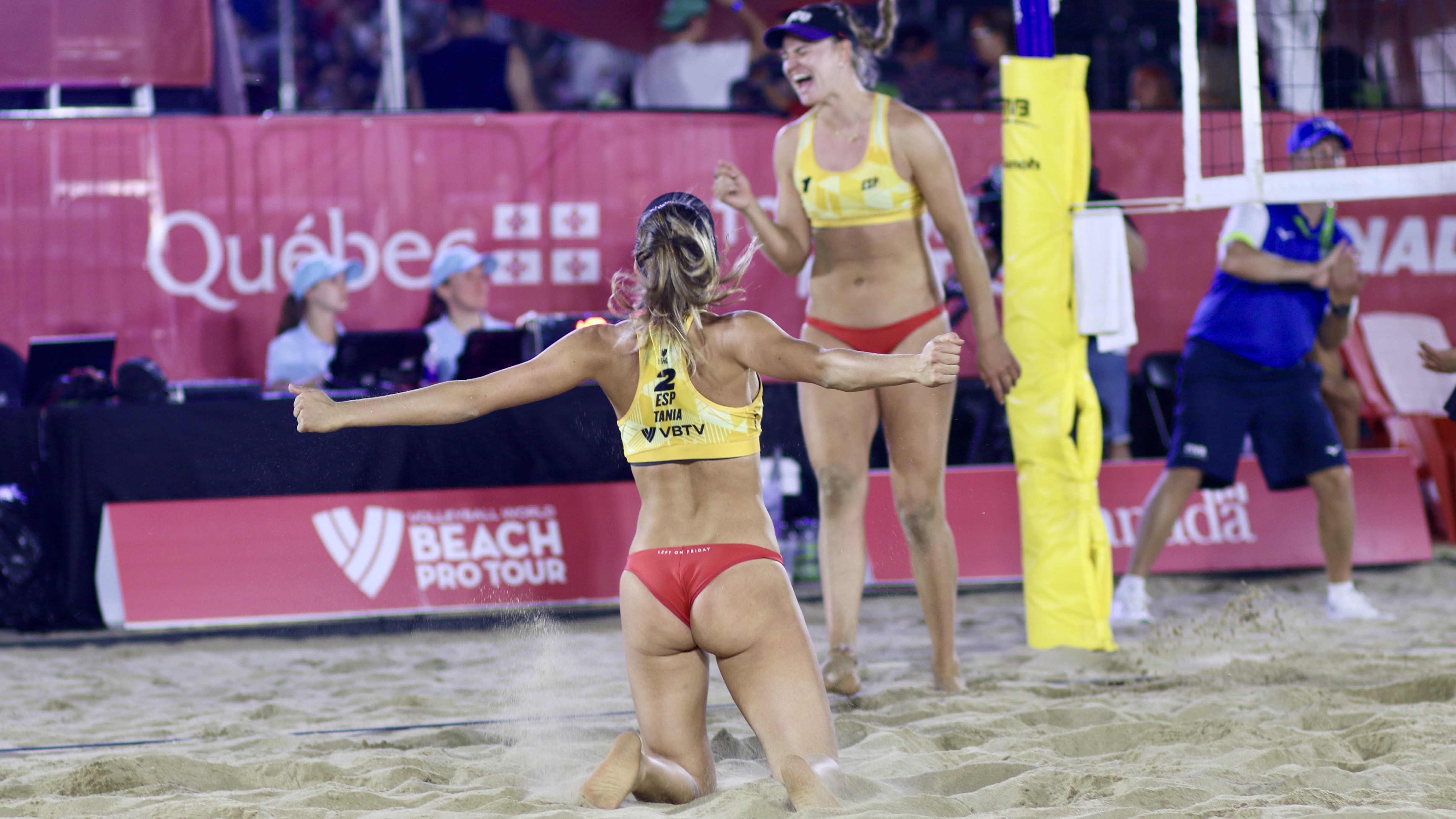
Down 11-10, Dani handled a serve, heard her partner’s call and executed a nifty shot across her body for the point—eliciting a two-fisted shout of encouragement from Tania.
After serving on the next point, Dani denied Canada a quick answer with a pokey dig, then hammered the ball through the opponent for the point and the lead. This time, Tania exploded with two fist pumps, pointing at her partner with her other hand, and a chest bump. Walking back to serve again, Dani couldn’t suppress a grin.
A few points later, after her own brilliant one-hand dig and Tania’s deft set while avoiding the net, Dani was skipping across the sand to celebrate again retaking the lead—a lead they never again relinquished in the set en route to a three-set victory.

Some teams are defined by machine-like efficiency or detached precision. Others by a chip on the shoulder or a showman’s instincts in playing to the crowd. Whatever works for you—whatever is true to who you are. For Alvarez and Moreno, it’s fierce collaborative joy.
This isn’t about a feel-good factor. Joy fuels them to endure and outlast, as they did in winning three consecutive three-set comebacks in Montreal or rallying from a rough first set to win their quarterfinal against Switzerland in the European Championships.
It’s who they are. When their run in Montreal (which included two qualifying wins) finally ended in a 22-20, 22-20 soul-crusher of a quarterfinal against Lativia, they ducked under the net to embrace Tina Graudina and Anastasija Samoilova. Alvarez wrapped her arm around Graudina’s shoulder and the two walked off the court together. It didn’t mean the loss didn’t hurt. It didn’t mean she wouldn’t rue missed chances and review lessons. It just meant there is joy in competing—across a match, across a tournament, across a life.
To maintain that connection, even at their young age, across so many years and multiple continents is remarkable. The energy it takes—not to mention the strength of character required—is enormous. How that took root must be quite the story.
Pat Riley famously said there is winning and there is misery, a more contemporary update of the line often attributed to Vince Lombardi that winning isn’t everything; it’s the only thing. Both strike me as sad reductions of life’s complexity to a binary state. A self-defeating binary state, at that. Scarcely less addictive than heroin. And scarcely healthier.

Sport reflects back the world around us, condensed into games and seasons instead of lifetimes and often simplified into heroes and villains but still recognizable.
From the youth sports industrial complex to college athletics to professional leagues, the present moment is no exception. Our sports reflect a world changing at breakneck speed. Some of that is unquestionably good—scientific and medical advances that help athletes be faster and stronger, play longer and return from injury sooner. Some is worrying—the all-consuming drive to prioritize profit over product and concentrate wealth. Much is a mixed bag. But even when that reflection is hard to look at, it’s us.
There’s still room for joy. Despite everything, joy redeems sports. As it redeems us. It means all of this isn’t a story written by a fool, full of sound and fury, signifying nothing.
It’s just that, more and more, finding it feels like searching for fireflies. A flash of light out of the corner of the eye, vanishing just as quickly amid the darkness.
So two people committed to finding the fierce joy in every point they play together?
That seems rare enough to be worth rooting for.
 Graham Hays