Stranger in a familiar land: Biathlon and community in the Wasatch Back 

“Toooooo-lii Toooooo-mingas”

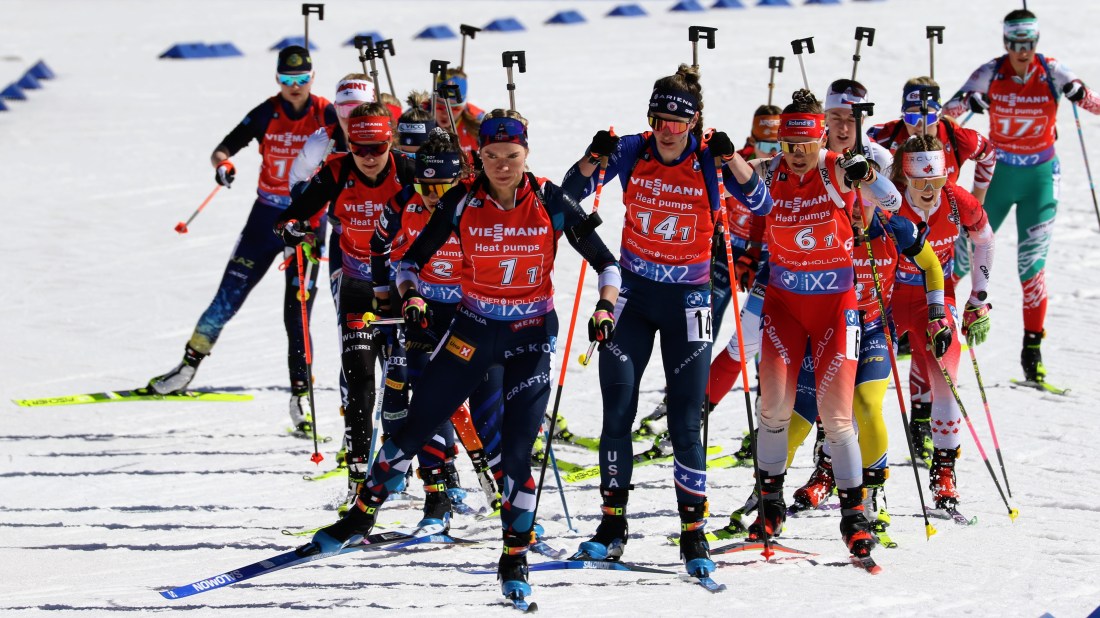
Tuuli Tomingas might have been the only person more surprised than I was to hear the delightfully alliterative vowels ring out in the Utah afternoon. The Estonian biathlete was several thousand miles away from home, after all, well away not just from her continent but the epicenter of her sport. The International Biathlon Union’s World Cup stop at Solider Hollow Nordic Center in Utah was an outlier. It was one of only two North American stops on a tour that is often exclusively contested in Europe, not infrequently in front of tens of thousands of flag-waving, cowbell-ringing, merrymaking fans. 

Skiing across the course at a leisurely pace toward the shooting range to warm up before her first race of the weekend, Tomingas appeared briefly taken aback to hear the unmistakably American-accented voice bellow her name. In the context of a sport at all its levels, not to mention the macro lens of human population, Tomingas is among the best who has ever lived at what she does. But in the reality of world-class biathlon, she’s just another name, good enough to finish in the top 20 but rarely the recipient of much camera time or a contender for the podium. Accorded a star’s greeting, even without a bib number or the distinctive Estonian colors visible under a warmup top, she waved hesitantly toward the stands. As if not expecting to feel at home here in the Wasatch Range foothills about 20 miles south of Park City. 

She wasn’t the only one. 
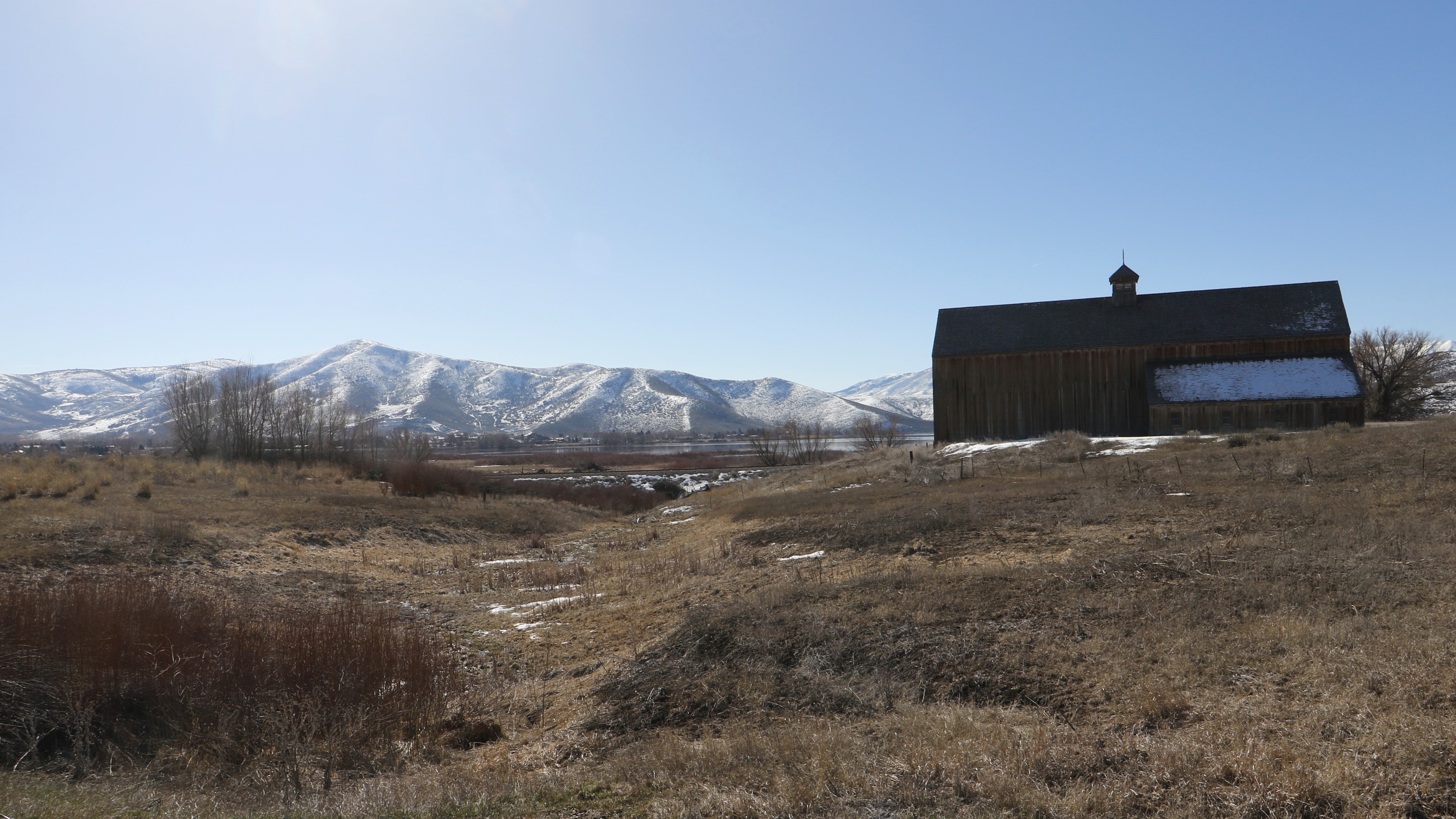
Near the Soldier Hollow Nordic Center in Midway, Utah.

As I’ve written here before, my relationship with biathlon grew from quadrennial curiosity during the Olympics to full-blown fanatic status about six years ago. Dig down and the timing probably isn’t a coincidence, rooted in foreboding about the winds of change with regard to ESPN’s mission and some sense of my own increasing lack of agency therein. I covered the sports I covered because they were passions, not as assignments or lines on a resume. So, when a job ends after a couple of decades, it’s difficult to disentangle professional from fan identity. I no longer really remembered how to enjoy an NWSL or NCAA basketball game as a fan. Watching now sometimes left me edgy. Fan muscles atrophy. Rehabbing them takes time. 

All of which is to say that biathlon, like beach volleyball, was a refuge. A sport I had previously been intrigued by but never (or rarely, in volleyball’s case) covered. Of course, the psychology of it all takes place separate from conscious thought. In real time, it’s just a familiar feeling that draws you in. It’s the routine of competitive sports. The event-to-event, week-to-week routine of a season. Learning the characters—first the names and skill sets, then the histories and personalities, finally the future possibilities. 

But without seeing it in person, at least once, there was something missing. I don’t need to be in a packed arena to watch a basketball game. Considering traffic, parking, tickets and the rest, I’d rather watch on television most of the time. But I know what it feels and sounds like in that arena. I know what the game looks like in person. Biathlon remained an entirely virtual viewing experience. I had a sense the Oberg sisters were tall (as it turns out, sort of) and Teraza Vobornikova was a pint-sized dynamo (confirmed), but it was all relative. What did they look like amongst other people? What happened on the course during all that time the cameras focused on the shooting range? How steep were the climbs, really? What did a ragged volley of two dozen .22 rifles sound like echoing off mountains? 
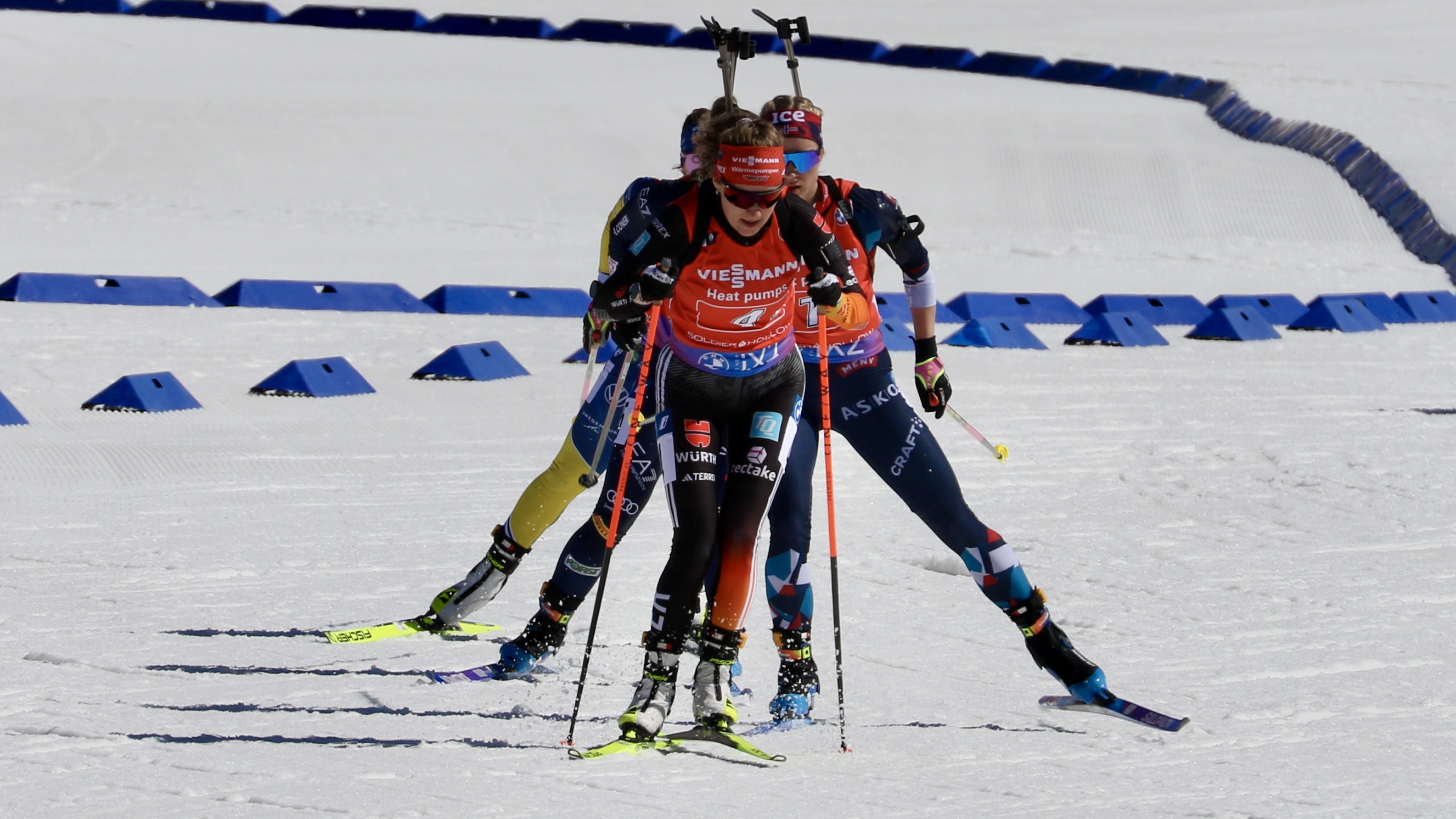
This year’s World Cup schedule featured a stop in Soldier Hollow, the first American stop since before the pandemic. And while some of the classic European stops, with packed stadiums and raucous atmospheres, had appeal as an adventure, Utah felt like a more manageable entry level effort. With only minimal equivocating, and likely without the necessary regard to the impracticalities of taking a long weekend in Utah in the middle of the busy season of two jobs, I decided to find out what it felt like in person and booked a flight to Salt Lake City.  

That others might make the same calculations never really crossed my mind. At home, I watch races alone—sometimes wondering if there is literally anyone else in the state of Indiana streaming a particular race from Ostersund, Sweden, or Ruhpolding, Germany. Even after parking, waiting in line for the gates to open and strolling around the course, I unconsciously assumed the people around me must be either locals willing to partake in anything that came to town, especially on a mild, sunny afternoon, or general winter outdoor enthusiasts, taking a break from their own skiing or snowshoeing endeavors. Anything but biathlon junkies.

Then the voice recognized Tomingas, no casual feat without a bib number and with the distinctive Estonian blue racing suit muted by warmup clothes. 

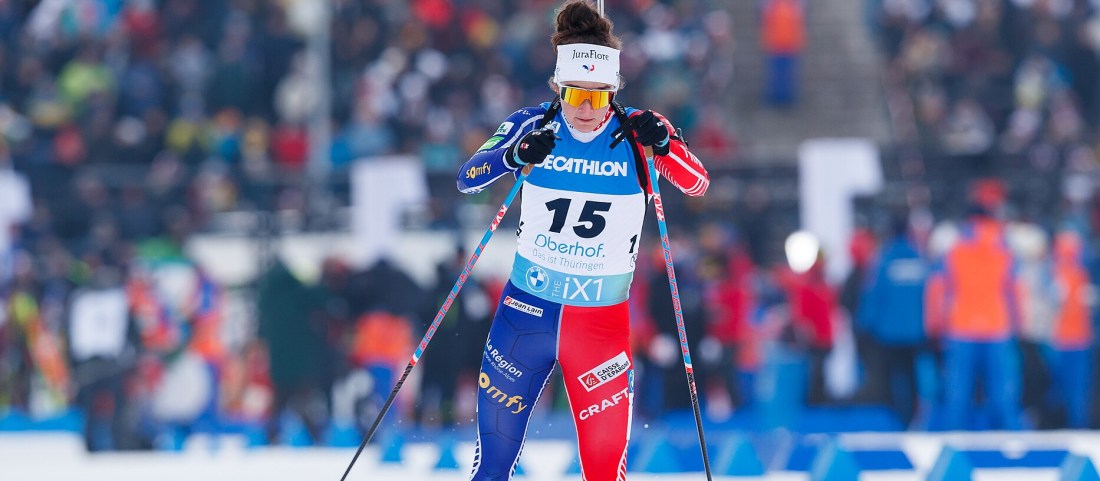
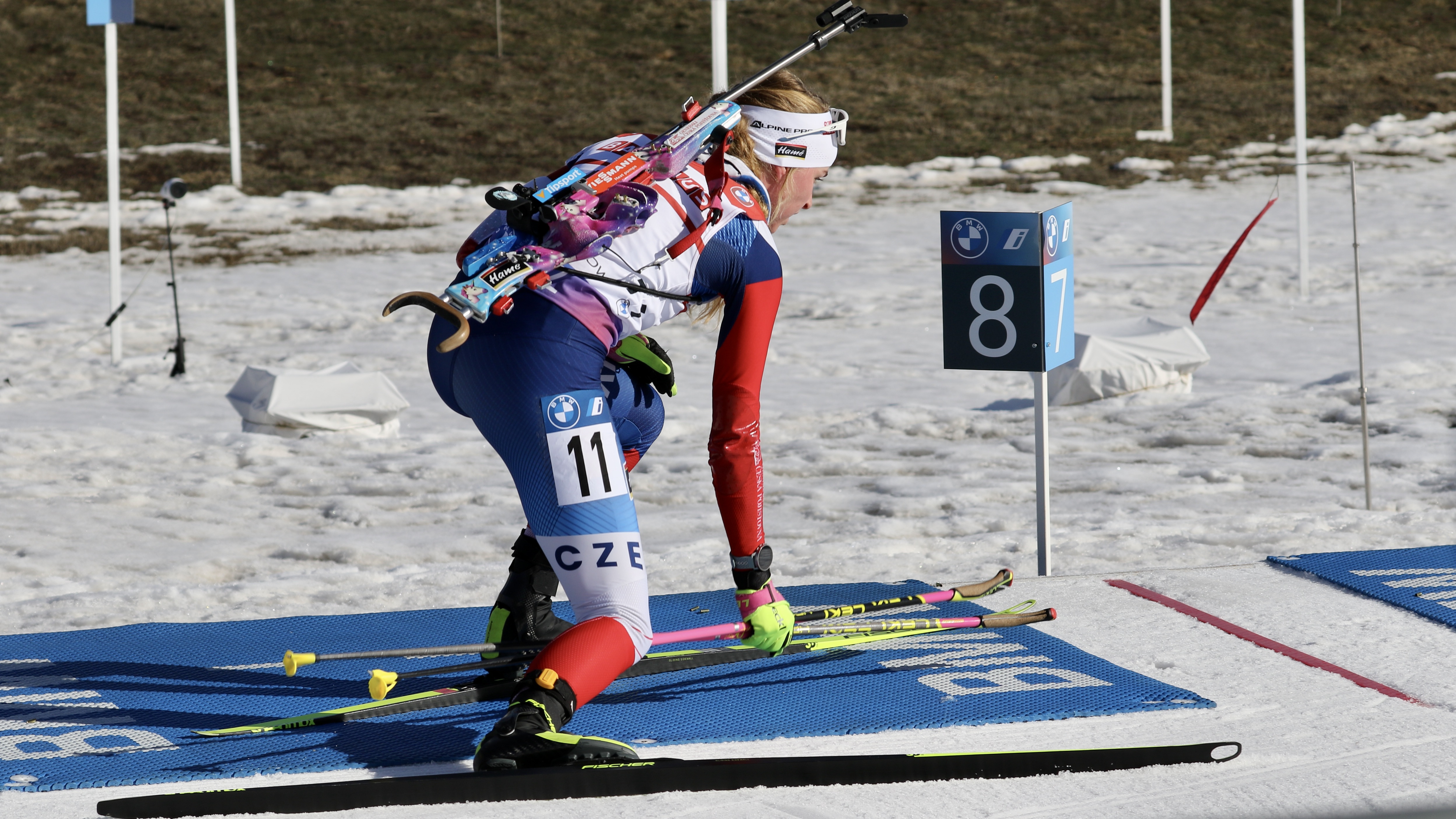
Then came the cheers for Switzerland’s Lena Hacki-Gross and France’s Lou Jeanmannot, the mellow, tattooed rising star who has brought such good vibes to the intense French camp. They welcomed the Czech Republic’s Marketa Davidova—even if they were too far away to recognize the soft-spoken amateur equestrian’s pink unicorn-decorated rifle (much like Nikola Jokic, it’s never entirely clear if Davidova is happier competing for world championships or spending time with her horses in the offseason). 
A few feet up the course from where I stood, a guy about my age and carrying an Italian flag started chatting with an elderly local. The flag-carrying 40-something was from Charlotte, not Cremona. He had started watching biathlon during the Olympics within the past decade and caught the bug. He talked about seeking out the Eurovision and IBU online streams, a routine I know well since NBC dropped the domestic broadcast rights after the 2022 Olympics. 

He talked about cheering for the Italians, most of all Lisa Vittozzi, partly born of following Vittozzi’s struggles with a career-threatening case of the yips. World-class biathletes routinely hit the target 90 percent of the time or better from the prone position, statistically the easier of the two shooting positions (while the target is smaller, laying prone lends more support to a body exhausted by the lap of skiing just completed). The fastest skiers, those who make the transition from cross-country, might be able to survive at 80 percent. During the worst of her yips, which lasted essentially a full season, Vittozzi would regularly miss three or four of the five targets from the prone position. It was painful to watch. 

Vittozzi’s prone shooting woes are a thing of the past.

A few years younger and long in the shadow of countrywoman Dorothea Wierer, who was not just a world champion but the tour’s glamour paragon and an endorsement magnet, Vittozzi was a promising talent who just needed a break. Instead, she appeared in danger of losing her career, not to Wierer or another competitor but the complexities of the brain.  

Not exactly overnight, and in all likelihood with a great deal of recalibrating routines, mental mechanisms and soul searching, Vittozzi emerged from her prone shooting woes. In fact, she’s enjoying the best season of her life. In Sunday’s pursuit, she would race France’s Lou Jeanmannot to the finish line, settling for second by inches. With one tour stop remaining after Utah, she remains in contention for the overall world title. And with Italy set to host the 2024 Olympics, when she will still be in her prime at 31 years old, she could be on the verge of the sort of storybook reversal that help make sports so enthralling. 

Skiing past on a warm-up lap before the 7.5 km sprint in which she narrowly missed the podium in a fourth-place finish, she, too, looked surprised to hear the fan with the deeply resonant voice bellow her name from the stands as others cheered. Next to me, my compatriot from Charlotte waved his Italian flag and added his encouragement.
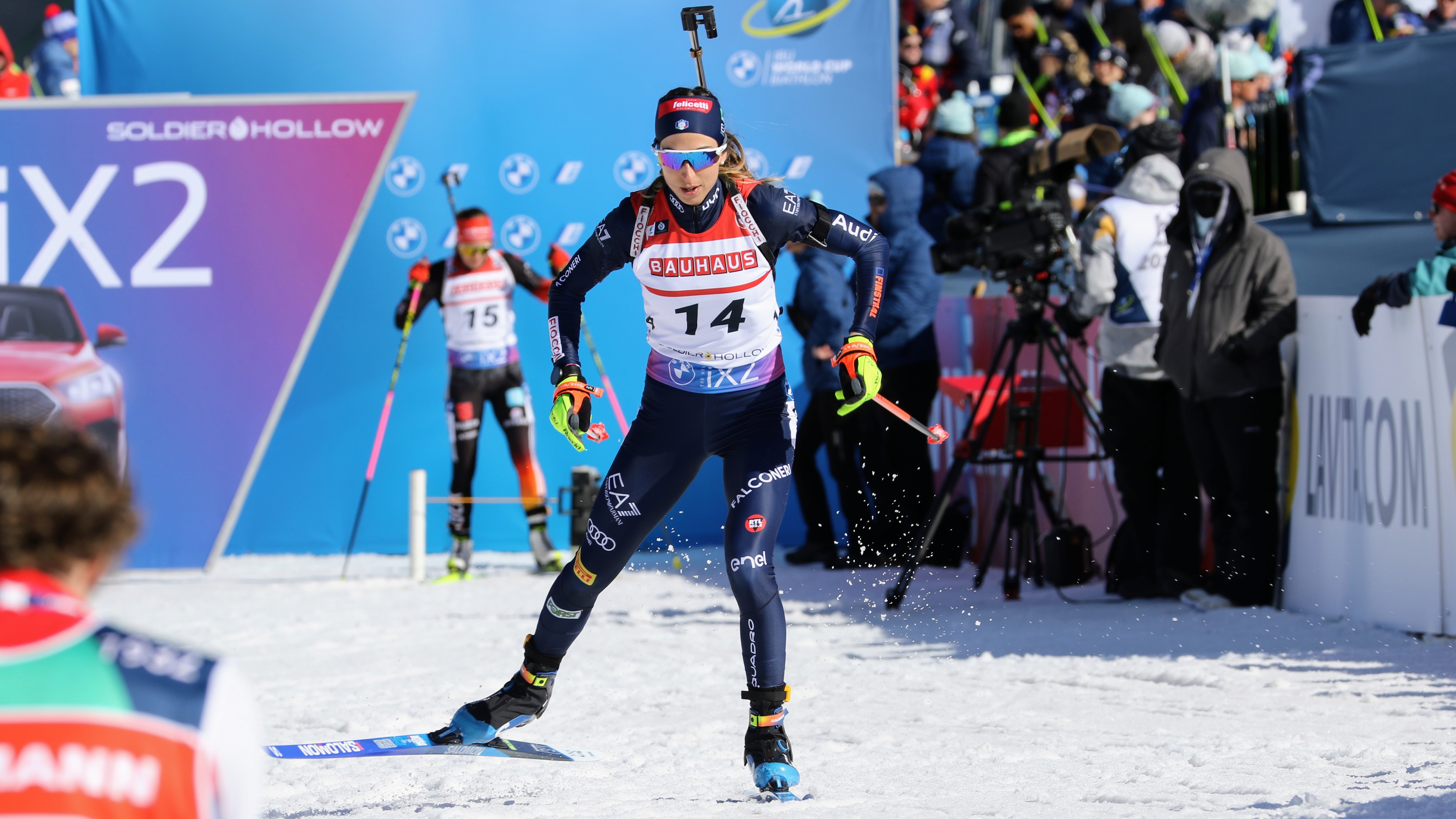
Vittozzi finished fourth in the sprint and second in the pursuit, leaving Utah in second place in the World Cup overall standings.

My camera is something of my talisman, or maybe security blanket, at events. I enjoy photography. That isn’t to say I’m any good at it, or understand many of its subtleties, but I like the challenge of finding the right shot. Something with some artistry that also captures the athleticism and action of the moment. I like editing the photos and letting them run on a digital frame at home. But bringing it with me also goes back to the simple truth that I feel out of place without something to do. I don’t miss deadlines, even the slightly more malleable sort of online writing, but I feel at loose ends without something to do, without purpose. 

So, as the athletes continued to warm up for the sprint, I slipped away from the Italian fan to reclaim a good spot I had scouted during the men’s relay. Out beyond the temporary stands, with an open view of the starting gate for the women’s sprint, it felt like a grey area for access. Would I get moved along? But I wasn’t alone. As they had been during the earlier race, another middle-aged man was there with what their conversation made clear was his son—late elementary school age. My first guess was that one or both didn’t want to waste an afternoon of spring break here, hence the self-imposed isolation. First guesses are often wrong. 

Throughout the earlier men’s relay, the son had kept an eager eye for the Norwegians, currently on a streak of dominance akin to Oklahoma softball. In this race, one of the Norwegians would have as disastrous a performance on the range as it’s possible to have, leaving the team far back in the pack after one leg. They still ended up winning easily. They’re just that much better than everyone else (I enjoy the men’s side of the tour and following it more closely is one of many reasons I look forward to retirement). 

When the son made his way back toward the main body of the crowd at one point, I started talking to the dad. Previewing what became clear soon enough, he told me that as excited as his sons (the other son and their mother joined them for the women’s sprint) were about seeing the Norwegian men, the women’s race was the main attraction. 

Both sons had gotten swept up watching biathlon in the Olympics, infecting the dad in the process. The younger generation gravitated toward the women’s side of the tour, then and even more now the tour with greater parity and competition (and considering Germany’s Vanessa Voigt is more accurate on the range than anyone in the world, man or woman, arguably the greater excellence). For the sons, the day in Soldier Hollow was all about seeing Ingrid Landmark Tandrevold in person. A forgotten Tandrevold banner led to a momentary family crisis. And they greeted each sighting of “Tandy,” as they called her, the same way I reacted to seeing Eric Dickerson or Dominique Wilkins at their age. 

If casual American sports fan have any memory of Tandrevold it’s probably from images of her forcing herself, Zombie-like, to finish a race during the 2022 Olympics before collapsing at the finish line and requiring medical assistance. Collapsing at the finish line is par for the course in biathlon, where athletes push themselves to the physical limit. But the frightening scenes of Tandrevold forcing herself to continue after her body had shut down, followed by a collapse that brought fellow competitors rushing to her side were decidedly out of the norm. 
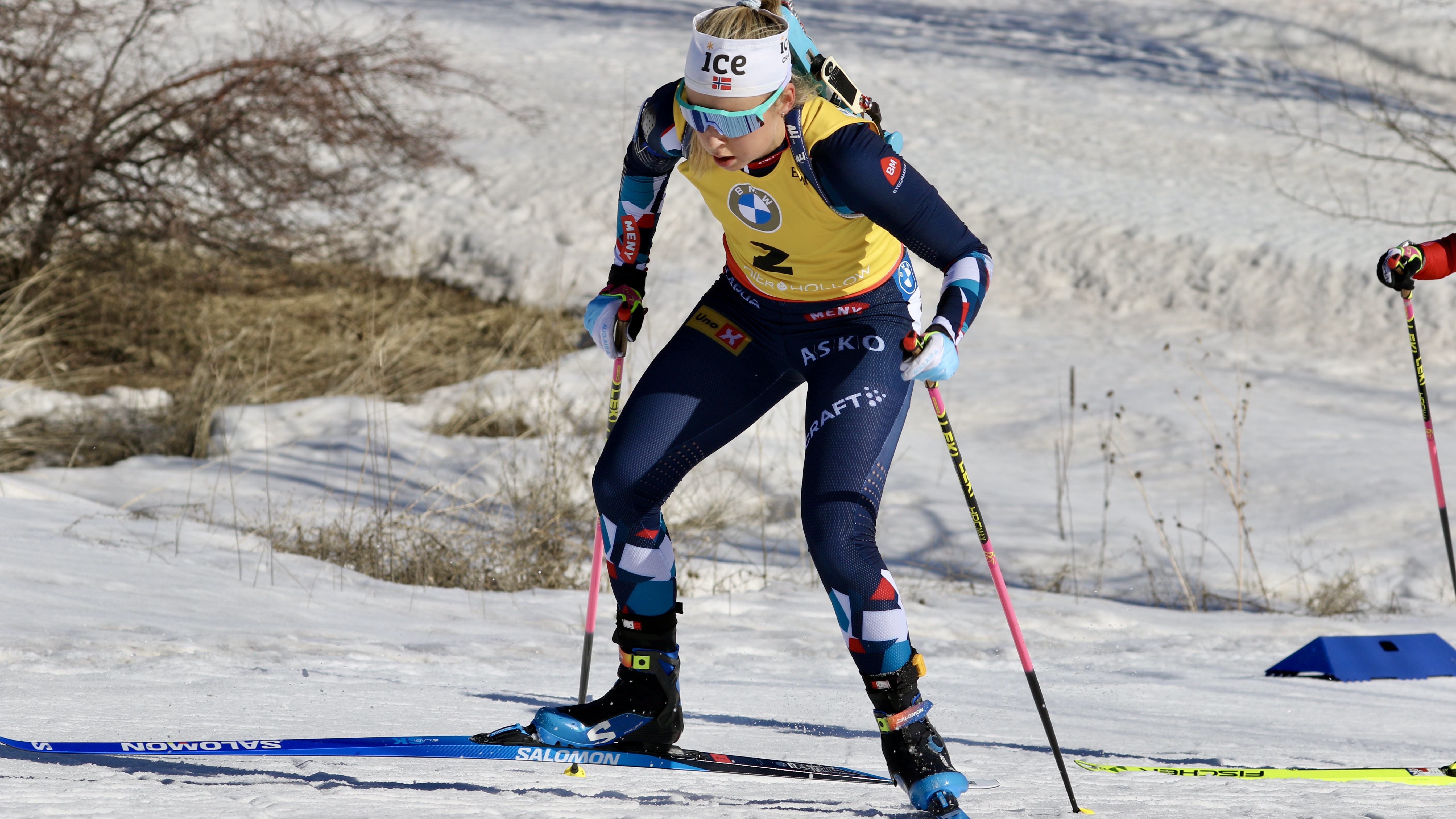
Wearing the yellow bib of the overall World Cup leader, Tandrevold makes her way uphill.

That she would be a favorite for kids is easy to understand. She is every sports narrative wrapped up in one person. She’s a smiling assassin, her charming social media vlogs and easygoing pre-race demeanor belying ruthless competitive instincts once the race begins. She is both Goliath, the No. 1 racer for Norway, and David, thrust into that No. 1 role after languishing as understudy to Tiril Eckhoff, her friend and mentor, and Marte Olsbu Roiseland, the all-time greats who both retired somewhat abruptly prior to this season. 

At 27, even as she enters next week’s season finale atop the World Cup standings, she’s trying to shake off the same sort of skepticism that greeted an athlete like Caroline Wozniacki when she ascended to No. 1—that she’s very good and very consistent but not truly great. Not as dazzling on the range as Julia Simon when the Frenchwoman is at her best, nor as elfin on the skis as Justine Braisaz-Boucher, another Frenchwoman. 

But to two kids from Utah, she was a god among mortals, every approach accompanied by “Here comes Tandy” as soon as she came into view far down the course and every shot on the range punctuated by leaps of joy or pained groans. She settled for second in the sprint, unable to match a dazzling skiing performance from Braisaz-Bouchet but progressing steadily toward the overall world title.

The next morning, after getting scolded by an IBU official for, as best I could discern, not looking sufficiently sophisticated to have access to the spectator portion of the shooting range, I set up shop behind the Czech and Italian encampments. Covering some portion of the final hour before the start of a race, “zeroing” is essentially range practice that allows the athletes a final opportunity to adjust their rifles to wind and atmospheric conditions. It’s only slightly more exciting than that sounds, like watching shootaround before a basketball game (not involving Steph Curry). But it is a good opportunity to take photos of shooters in action and observe interactions between teammates and coaches from a few feet away.  
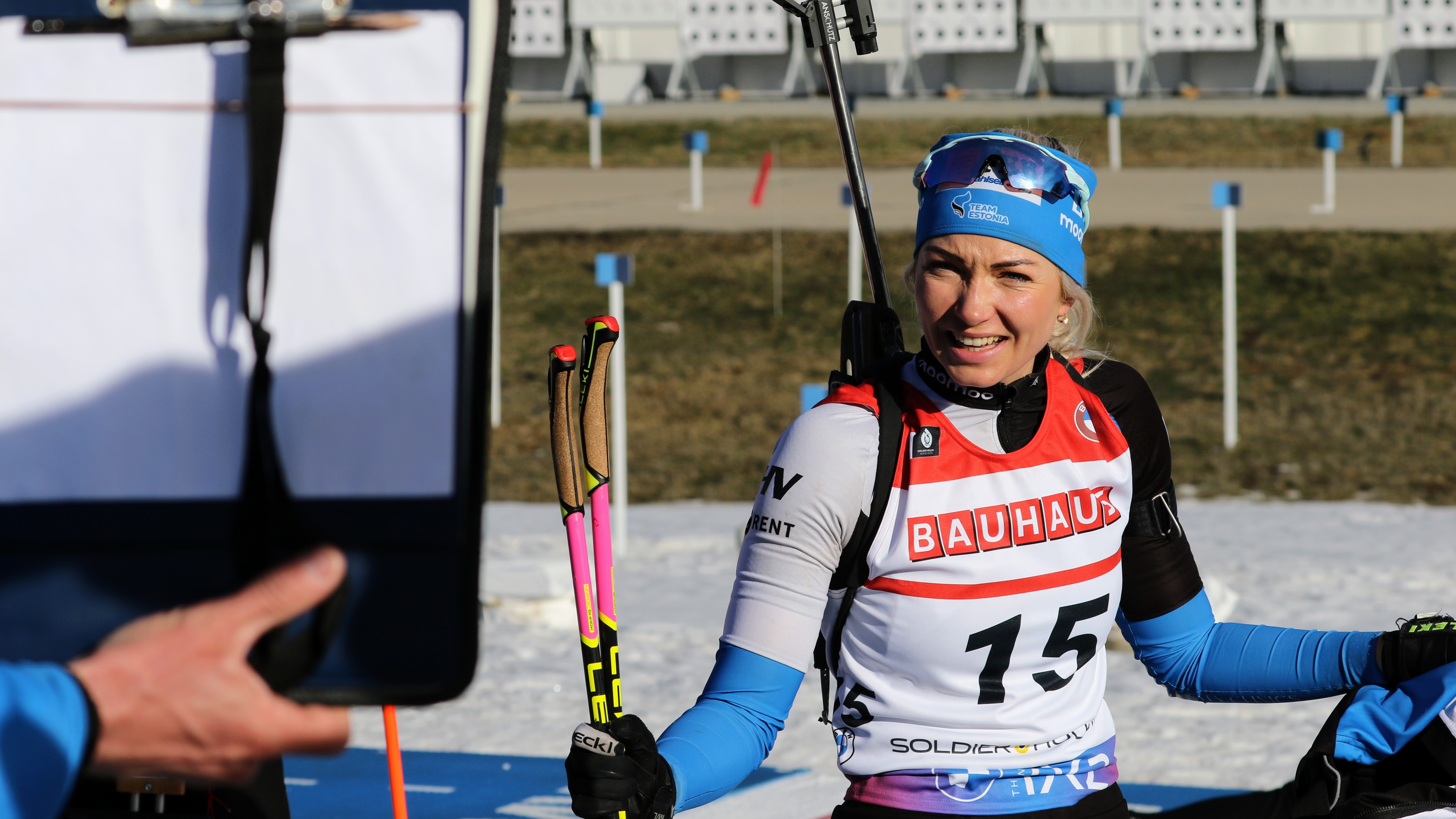
Estonia’s Regina Ermits studies a coach’s board showing her shots during zeroing.

While waiting for the whistle that announced the range was open, another fan with a camera (finally someone slightly older than me, welcome proof that this was still possible) claimed an empty space alongside me. Having missed Friday’s races, he was eager for information on the venue layout and photo opportunities. 

We got to chatting about biathlon—his son, now an adult, had competed in the sport growing up. I picked his brain about costs and entry barriers (not surprisingly, it’s not cheap, although perhaps more affordable than downhill skiing). At my urging, he attempted to impart some knowledge about the waxes used on the skis. I proved a poor student. 

He had driven down from Idaho, missing out on Friday’s races during the drive and begging for no spoilers when I started to mention how good Braisaz-Bouchet had been in winning the sprint despite missing one of her 10 shots (a difficult feat that requires supreme speed on the skis to make up the lost time). He was disappointed to learn the Italians hadn’t included Vittozzi on the start list for the second day’s women’s relay, resting her during the condensed three-day schedule. The clear takeaway from this trip: everyone roots for Vittozzi.

The final day’s early start time compounded by turning the clocks ahead the previous night, Sunday arrived with the same feeling I always had by the end of covering tournaments—that the real fun had been in the early rounds, settling the championship almost a matter of bookkeeping. But as was often the case, whether courtesy of Carli Lloyd, Arike Ogunbowale or Taryne Mowatt, the final act always has the potential to take on a life of its own. So it was, watching from the top of one of the major climbs as Vittozzi and Jeanmannot raced down the final straightaway in a rare sprint to the finish line.
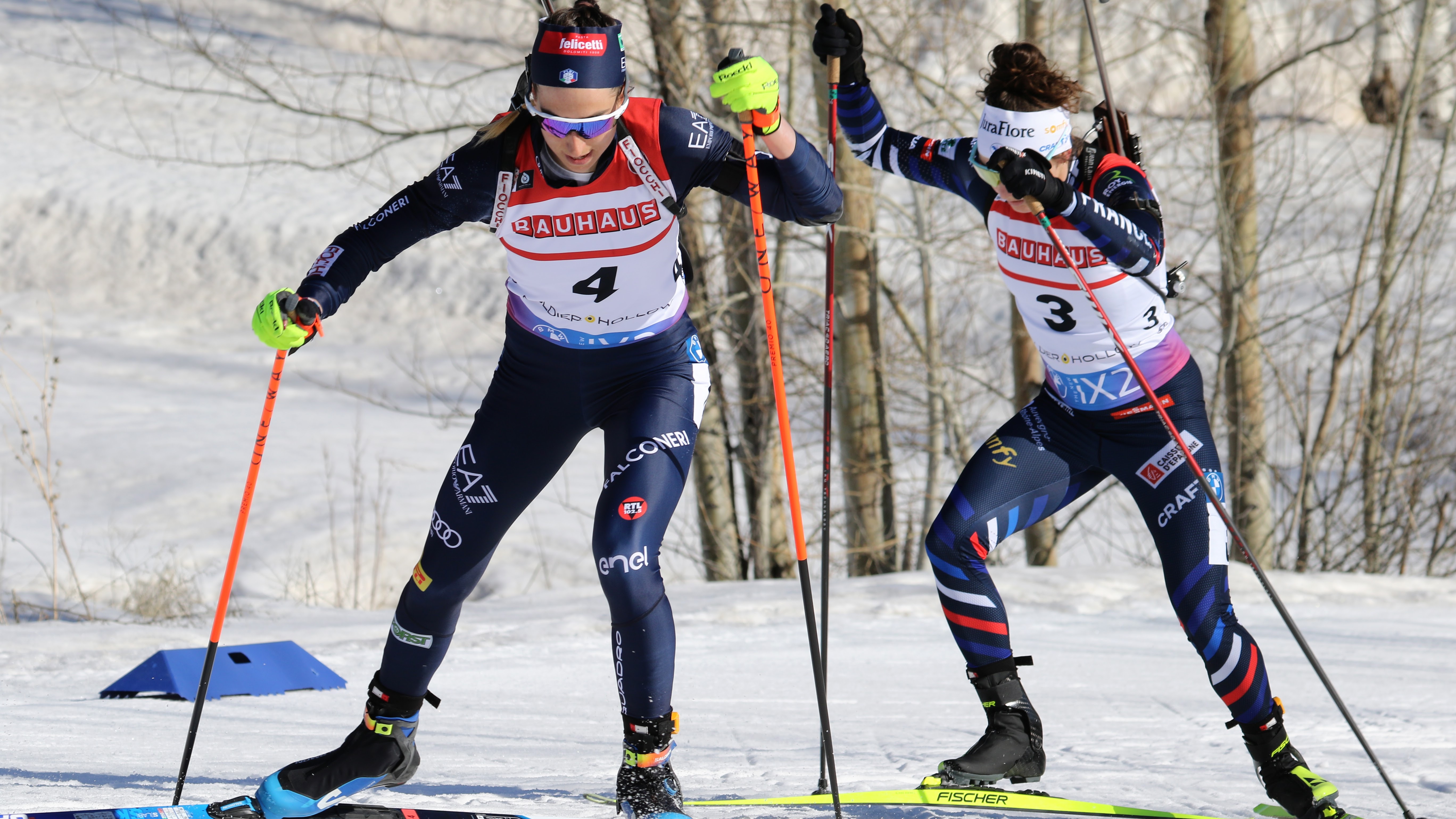
Vittozzi (4) and Jeanmannot (3) battle for first place on as ascent during the final lap of the pursuit.

Making my way back down to the center of things for the awards ceremony, I assumed that was where the story would end, Jeanmannot inching ahead to claim victory. Watching the stream, it would have ended there. But here, one more memory awaited. 

It would make for a good narrative if the rich, baritone voice that rang out from the other side of a post on the second-floor deck during the awards ceremony was the same voice I had heard Friday afternoon. It sounded familiar. Sadly, reporting ruins all the fun. The owner of the voice had not, in fact, been out on the course Friday. Still, it might have sounded familiar to someone else, too. As the awards ceremony wound to a close, the elongated vowels caught the attention of the day’s surprise sixth-place finisher (the top six are honored, three on the podium and three off). 

The tall figure looked up in search of the voice and waved, this time not surprised to hear it. 

“Toooooo-li” 

It didn’t matter that it was Utah. She was among people who understood.
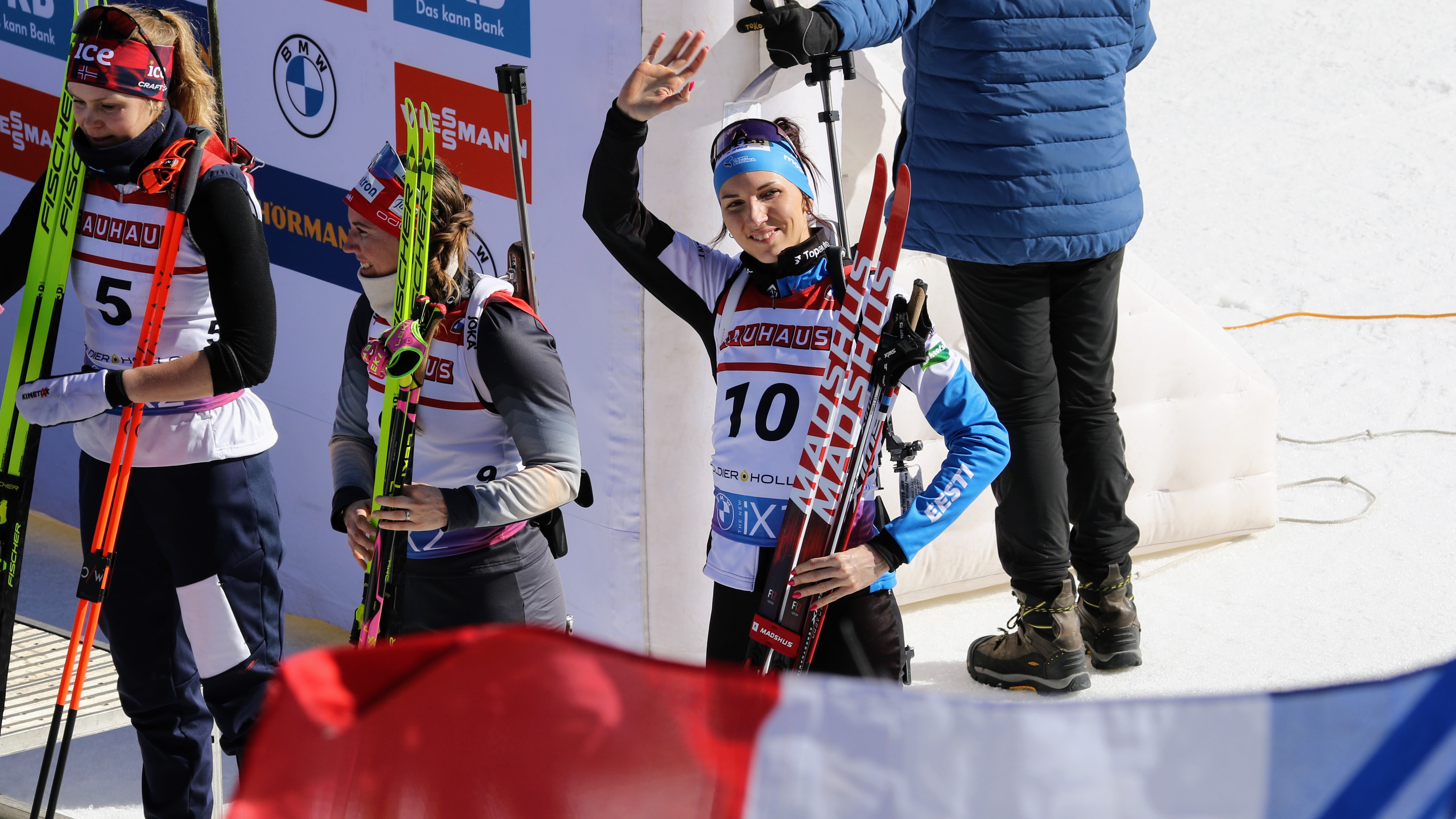
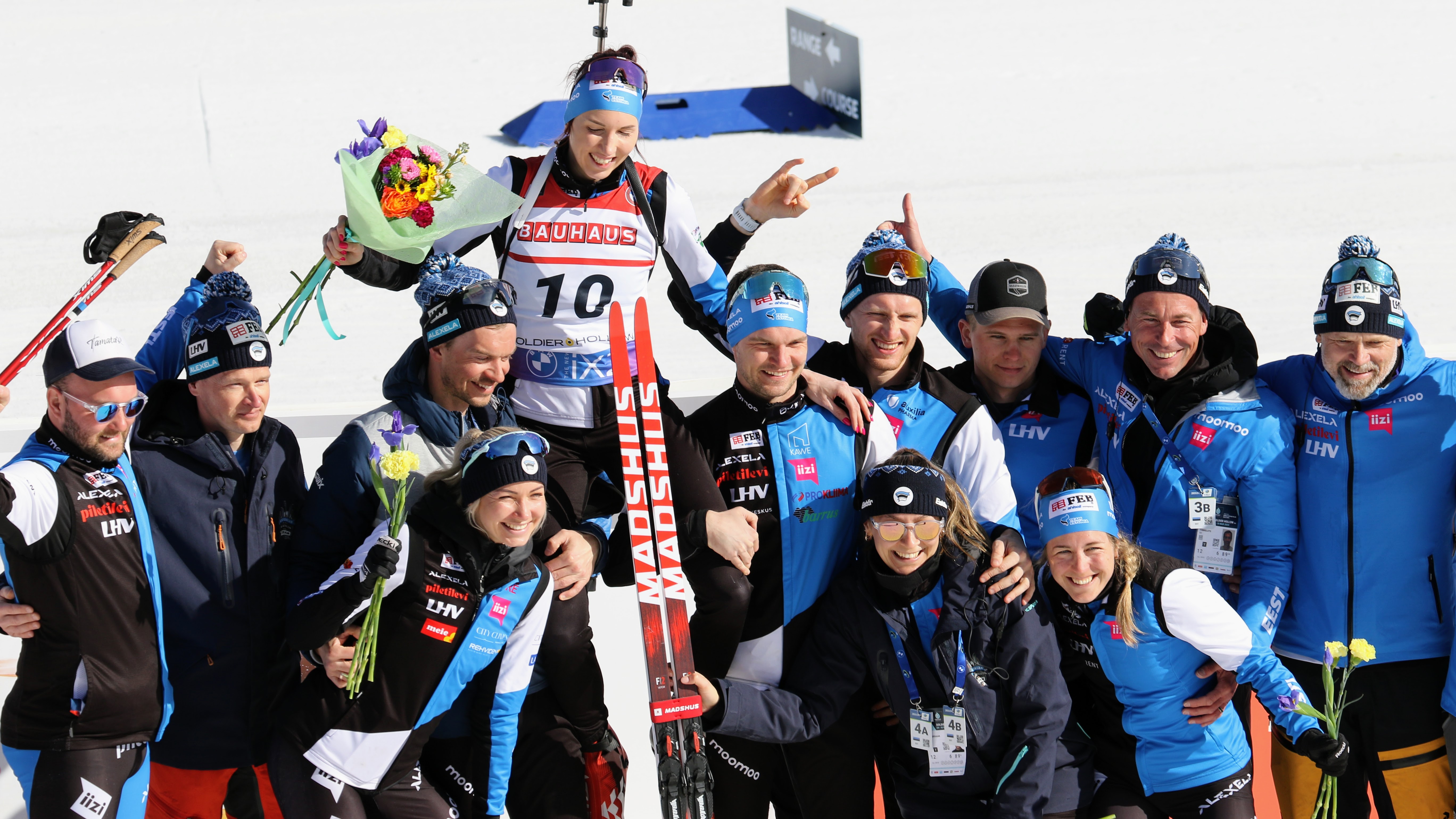
What does sixth place mean? When it’s a career-best finish, it means an opportunity for Estonia to celebrate.

A Sunday Sprint

(Photo credit: Steffen Prößdorf)

There was a time when the playoff debate in college football would have consumed my Sunday morning. That it’s a time in the past isn’t meant to judge those busy debating the merits of Texas beating Alabama in Tuscaloosa, a potential playoff without the SEC and other matters.

I don’t even know that they missed anything Sunday that they would have enjoyed.

I just know I’m happier for knowing more about Lou Jeanmonnot than I did when I woke up. And I’m thankful for a final lap and a sprint to the finish in Ostersund, Sweden, that raised at least one heart rate on a sleepy Sunday morning in far away Indiana.

Jeanmonnot is a 25-year-old French biathlete, if you were wondering. Most people wouldn’t have much reason to know her name. I barely knew it before last year, when she finished a solid 11th in the IBU World Cup overall points race. Entering this week’s season-opening events in Sweden, truth be told, I barely knew anything about her beyond her name. Hers was just another name that popped up on the leaderboard from time to time, not one of stars who an admittedly casual biathlon fan followed more closely from race to race.

But several of those stars have stepped away since the last Winter Olympics, Norwegians Tiril Eckhoff and Marte Olsbu Roeiseland and German Denise Hermann-Wick prominent among them. Continuity always ebbs and flows in sports. Short careers, relative to lifespans, mean we watch generation after generation rise, peak and eventually be replaced. Sometimes that’s more discombobulating than others—as with a U.S. women’s national team moving on from the generation of Carli Lloyd, Megan Rapinoe and Alex Morgan or men’s tennis gradually moving on from Roger Federer, Rafael Nadal and Novak Djokovic. Yet the more unsettled the times, the greater the opportunity for something or someone to introduce themselves.

Friday, Jeanmonnot seized her opportunity by wining the 7.5 km sprint in Ostersund.

The sprint is three laps around the course, interspersed with two stops on the shooting range—five shots from a prone position on the first stop and five shots from the standing position on the second stop. A handful of the fasted skiers might be able to win with one miss (each miss means an extra loop around a 150-meter penalty oval), but for the most part, you don’t win without hitting the target on every shot. Jeanmonnot didn’t miss—and skied well enough to finish 8.5 seconds ahead of Norwegian Karoline Offigstad Knotten.

The sprint is purely a race against the clock, like a time trial in cycling. The field of more than 100 starts one skier at a time, a staggered start. Jeanmonnot started 27th, meaning she knew by the time she crossed the finish line that she was the fastest to that point—but she wouldn’t know for sure that she won until the other 70-plus competitors crossed the finish line.

Sunday’s event was different. The 10 km pursuit is a race against people—first one across the finish line wins. By virtue of her win in the sprint, Jeanmonnot started first in the pursuit, given an 8.5 second head start on Knotten. Each successive skier then started according to the time she finished behind Jeanmonnot in the sprint. But 8.5 seconds is nothing in a race spanning five laps and four rounds of shooting. By the end of the first lap, Jeanmonnot was just one part of a lead pack of six skiers who entered the shooting range at the same time.

She hit all five shots from the prone position, but so did four others in the lead pack.

She hit all five shots after the next lap, again prone, but so did German Vanessa Voigt and Norwegians Juni Arnekleiv and Ingrid Landmark Tandrevold from the lead pack.

She hit all five shots after the third lap, this time shooting from the more challenging standing position. But so did Arnekleiv and Voigt. And as those three embarked on the fourth lap skiing around the two-kilometer course of ups and downs, Voigt and Arnekleiv began to pull away from Jeanmonnot. One announcer wondered aloud if the Frenchwoman might be intentionally falling back, saving her energy and managing her breathing to be ready for the final round of shooting. Maybe. Mostly, she just looked tired and cold amid temperatures near 0 Fahrenheit.

Whether strategy or not, Voigt and Arnekleiv each missed early in the final round of five shots from the standing position and set off on their penalty laps. Taking her time—agonizingly so in a sport in which there is a fine balance between giving away seconds on the range in hopes of avoiding them on the penalty loop—Jeanmonnot once again hit all five shots. Between the Friday’s sprint and Sunday’s pursuit, she went 30-for-30 on the range.

Jeanmonnot began her final lap about six seconds ahead of German Franziska Preuss, whose strong skiing had largely erased the deficit of an earlier penalty loop. The Germans had been fast on their skis all week, perhaps winning the weekly wax war that is also a part of the sport. It seemed inevitable that Preuss would now catch her quarry. Sure enough, by the halfway mark of the final lap, Preuss had dominated the climbs and not only taken the lead but opened up a gap of several seconds.

Jeanmonnot’s best hope—and perhaps her strategy all along, if she’s indeed a tactical savant—was to rely on her weeklong strength on the downhill portions near the end of the course. Sure enough, at the course flattened for the final time with the finish line only a couple of hundred meters away, she had closed the deficit and pulled level with the German.

Now it wasn’t about shooting accuracy, ski technology or strategy. Now it was a sprint to the finish line and finding some untapped reservoir to feed oxygen-starved muscles.

Even when the format allows for them, sprint finishes are rare. The outcome is usually settled before those final few meters. Earlier in the final lap, one announcer mused he couldn’t recall ever seeing the 29-year-old veteran Preuss in a one-on-one sprint to the finish. Certainly no one had seen Jeanmonnot at the World Cup level. But here they were.

The final straightaway is divided into lanes. Coming off the final turn toward the straightaway, Jeanmonnot had to go wide to attempt to pass Preuss. As the meters vanished, she inched ahead, first by the tip of a ski and finally by about half a ski length—0.3 seconds at the line.

It was heartbreaking for Preuss, who earlier in the week lost the 15 km individual event by 0.1 second to Italian Lisa Vittozzi (whose own comeback from the yips on the shooting range over the past two years is a story worth its own post). At least that wasn’t a head to head finish, just a race against the clock out of Preuss’ hands in the end.

But the depth of the heartbreak also provided the height of Jeanmonnot’s elation—at least once the Frenchwoman regained any breath after initially collapsing in an exhausted fetal curl on the snow, skis still attached.

It sometimes feels as if the world spends as much time talking about sports—and the dramas, controversies and personalities adjacent to sport—as it does watching competition. That’s hardly a sin. Sports are drama. Narratives engage us, characters entertain us.

And maybe that’s as it ever was, more visible only because of improved communication.

But I can’t help but wonder if the balance isn’t out of whack. Because I don’t know what sports are for—really for—if not the increased heart rate and knot in the stomach of watching someone turn for home and wondering if she will find the will to get there first.

I do know more about Jeanmonnot than I did when I woke up Sunday. I look forward to seeing how she fares next week in Hochfilzen, Austria, as a new season takes shape.

And for that, I’m grateful to stll love sports this Sunday morning.

Two Roads in Vienna: Swiss Win Euros as Spain Arrives

Already down a set and 7-0 after the first change of ends in the second set of Saturday’s European final, Daniela Álvarez could only laugh when she finally spiked a ball that Switzerland’s Tanja Hüberli couldn’t block and Nina Brunner couldn’t parry.

On this court, she knew. On this day, it wasn’t meant to be.

Vienna belongs to the Brunner and Hüberli. Again. As a result, so does Europe, no small detail a year ahead of an Olympics on European soil.

But the future? Something in that smile suggested Álvarez now knows her day is coming.

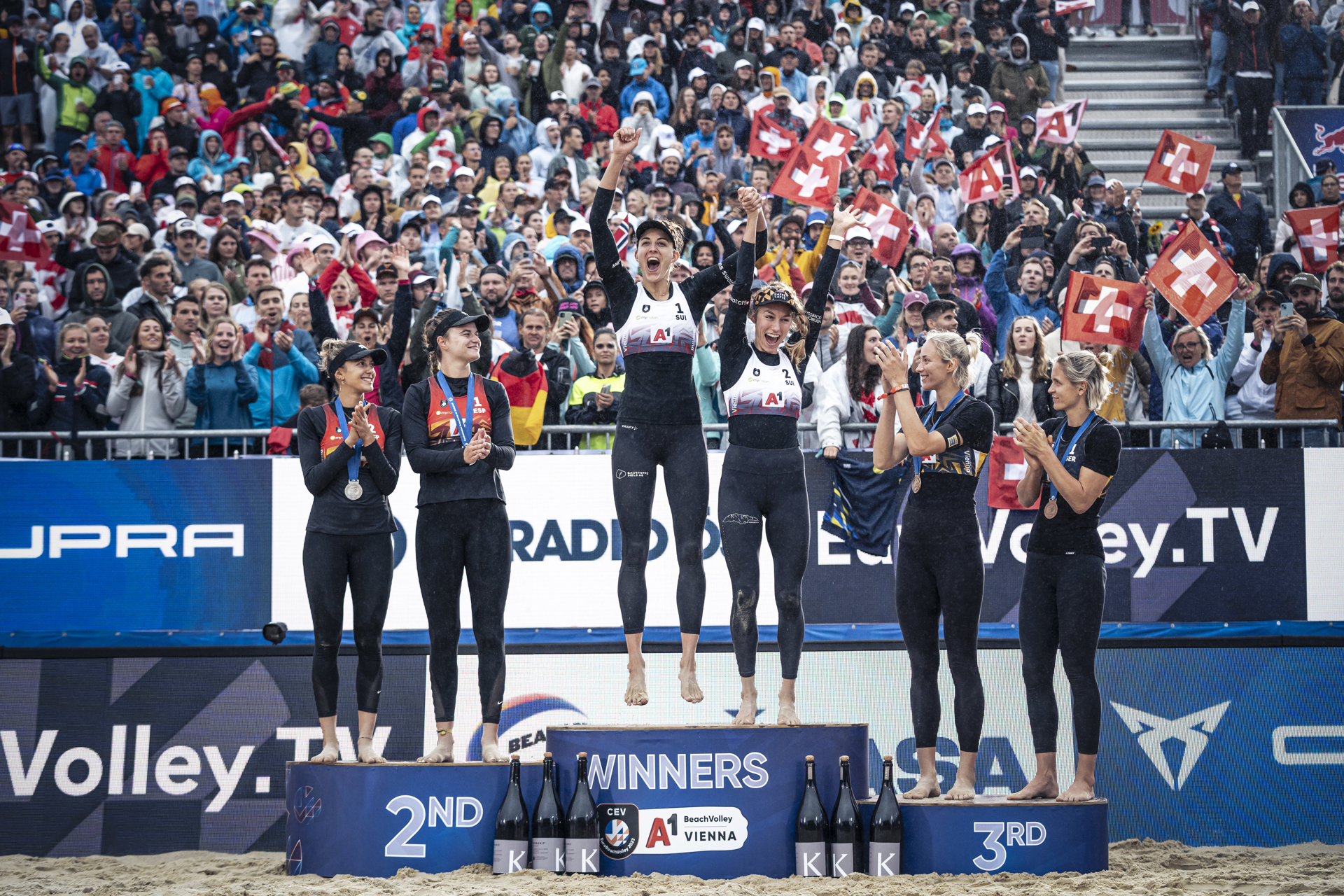
Brunner and Hüberli routed Álvarez and Tania Moreno 21-12, 21-13 to win the Beach Volleyball European Championship. In their third consecutive appearance in the final of the annual showcase event, the Swiss pair won their second European title—both in Vienna.

Credit: CEV/Martin Steinthaler-Acts

On the same day when Spain eliminated Switzerland from the FIFA Women’s World Cup in a 5-1 shellacking on the other side of the world, what went down on a rainy, grey day in the Austrian capital was no less lopsided. After a pair of epic, three-set semifinals earlier in the day, the Swiss won the final by the most lopsided margin in the entire knockout round (24 matches).

I’m not impartial when it comes to the Swiss. Brunner and Hüberli are my team. They are one of the only sporting entities who results still steer my mood. It just about ruined my summer when they skipped the two North American tour stops in Edmonton and Montreal. The loyalty is born of investment. I’ve followed them almost from their beginning, intrigued by Hüberli’s unassuming demeanor and Brunner’s preternatural rise now more than a decade ago, winning junior world titles at 15 and 16 year old—competing against future Olympians as old as 20.

Seven years. It’s a long time. For some.

Seven years ago, they were a team on the rise, promising but unproven. It felt like a fairytale when they reached the European final in 2018, losing to the Dutch pair of Sanne Keizer and Madelein Meppelink that played the tournament on home soil. Keizer and Meppelink were the veterans, multiple-time Olympians and, in Keizer’s case, a former European champion.

It was still difficult to think of the Swiss as proven contenders by the time the pandemic-delayed Olympics arrived in 2021. They won their pool in Tokyo but lost a heartbreaking round of 16 match against countrywomen Anouk Vergé-Dépré and Joana Mäder. It was a three-set classic played in brutally hot conditions, but no one remembers round of 16 matches. Vergé-Dépré and Mäder went on to win bronze. Brunner and Hüberli went back to the fringes of acclaim.

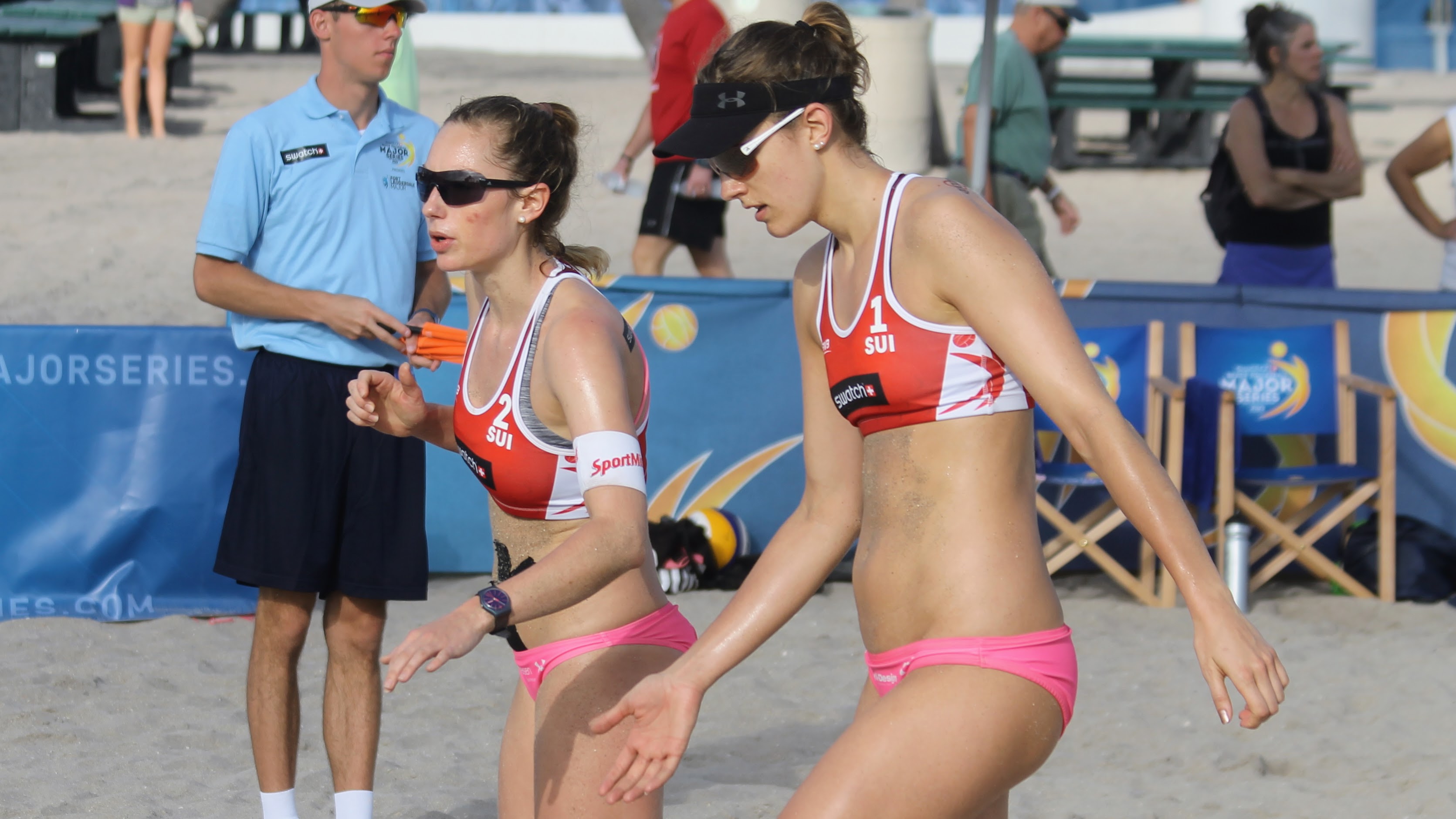
Brunner (left) and Hüberli (right) in 2017 when they were 21 and 24, respectively.

For all of two weeks. Just a fortnight after losing in the Olympics, Brunner and Betschart were crowned European champions in Vienna. They beat the Dutch pair of Katja Stam and Raïsa Schoon in a final that felt like something of a referendum on the young team that had arrived. Or at least the primary challenger to Latvia’s Tina Graudina and Anastasija Samoilova for that label.

Somewhere along the way, Brunner and Hüberli grew up, for lack of a better phrase.

One of the reasons that sports are so compelling is they really do hold up a mirror to the world—for better and, on a day when greed and conference realignment rule the headlines, often for worse. But it’s also a funhouse mirror in some respects. We see competitive lives unfold on fast forward, prospects entering their peaks and slipping into decline and retirement in less time than many of us hold onto a car. I still wear clothes that I had seven years ago. I still sit on the same couch, cook with the same pans.

Seven years isn’t a long time. Except in sports. In sports, it’s half a lifetime.

Saturday, that was inescapable. Brunner and Hüberli aren’t old, by any stretch. So precocious at such a young age, Brunner is still just 27. And even at 30, Hüberli was nearly a decade younger than Germany’s indomitable Laura Ludwig, who along with ridiculously impressive indoor-convert Louisa Lippmann pushed Switzerland to the limit in a 21-19, 19-21, 16-14 semifinal. But if the Swiss aren’t old, they also aren’t young anymore. They’re in the sweet spot.

Anomalies like Ludwig notwithstanding, athletic careers are defined by the intersection of two lines going in opposite directions on a graph. One is experience, wisdom, athletic IQ—a line that rises as years and competitions accumulate. The other line is athleticism—descending as those same years and competitions take a toll on joins, ligaments and various and sundry parts of the body. At some moment, those lines intersect. That might last a summer or it might last several years. It might not even mark the period of your greatest success. But you’re never better equipped to succeed than you are when those lines meet. That’s where the Swiss reside.

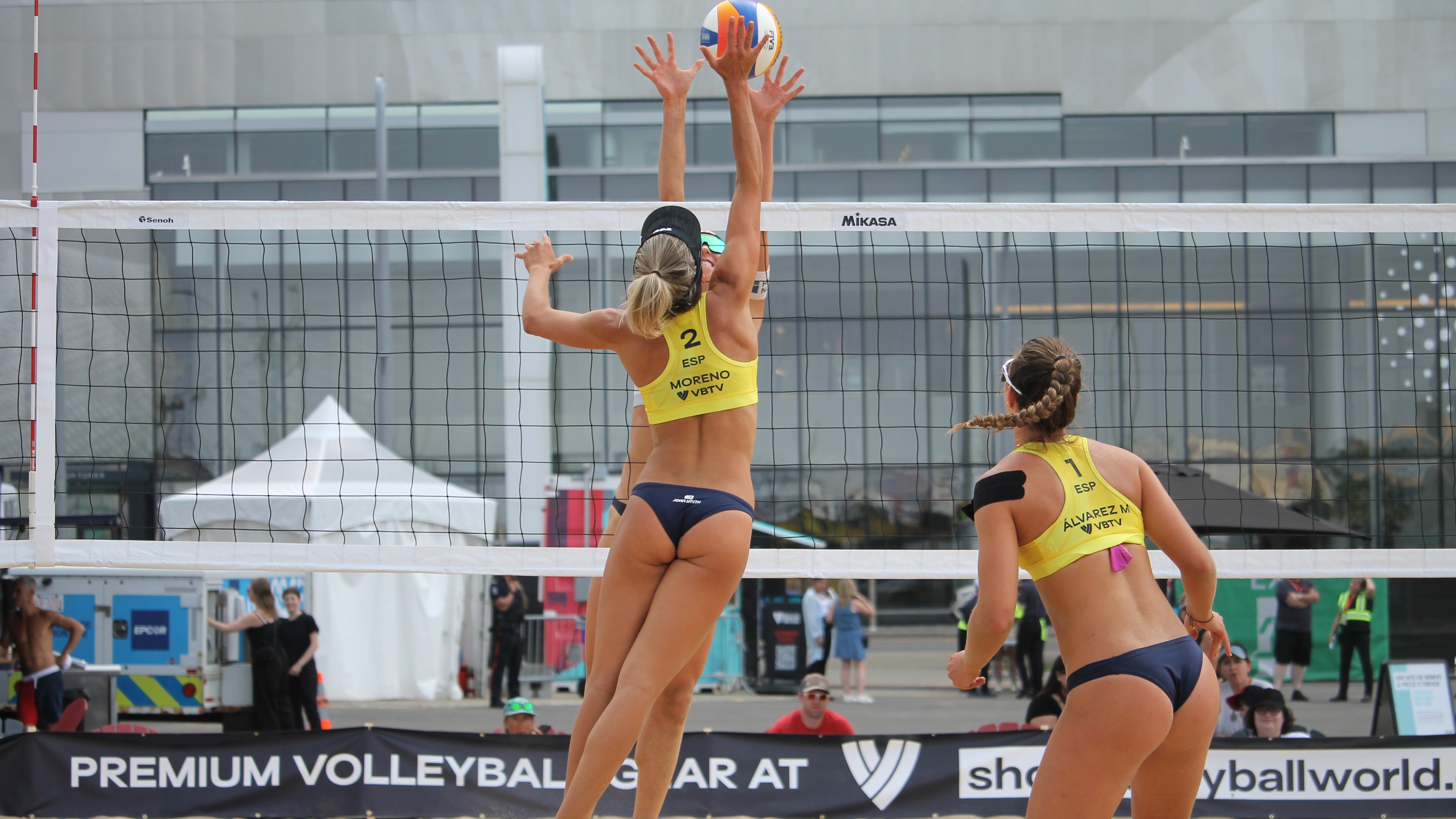
Moreno at the net during tour stop in Edmonton.

They entered the Euros with no momentum whatsoever. They suffered a profoundly disappointing pool play exit in Gstaad in July, one of the biggest tournaments of the year for every team but all the more for Swiss teams playing on home soil. This week, Hüberli, who has dealt with injuries in recent seasons, could barely even celebrate a pool play win, crumpled on the sand and in need of treatment from trainers.

“Of course we were thinking about medals,” Hüberli said of expectations this week. “But we were also a little bit unsure [because of] the last tournament.”

Brunner echoed the sentiments in her German-language interview (as best I could tell with some translation assistance).

None of it mattered. It didn’t matter because the Swiss long ago learned how to deal with the inevitable setbacks that are part of any sport—the random weeks when luck isn’t on your side you simply play like crap. And Hüberli’s ailment notwithstanding, their bodies are still in good enough condition to push through some wear and tear. Lord knows that doesn’t necessarily mean it’s easy to get out of bed the morning after a tournament. But it’s manageable.

So, the Brunner and Hüberli weren’t troubled when they fell behind 6-1 in the opening set of Friday’s round of 16 match against Spain’s Liliana and Paula. They held off a three-set challenge from rising countrywomen Zoé Vergé-Dépré and Esmée Böbner in a quarterfinal later the same day. They outlasted the Germans. And when Brunner was called for a lift on the opening point of the final and Hüberli followed with an error on the second point? They shrugged and rolled to dominant performance.

Perhaps because it was such a rout, and perhaps because it ended on an anticlimactic service error, the immediate celebration after clinching the title felt subdued. By the time they got their hands on the trophy a few minutes later, the celebratory dances and trophy lift spoke to plenty of joy. But there was something to that first reaction. This wasn’t their first title. This wasn’t a surprise—to them or anyone else. The joy came, but for a second, it seemed mixed with relief.

More than seven years after playing their fist match together, this was less a dream than the expectation that they devote their lives to achieving. The sense of perspective was even there when the on-court host asked Brunner if it “was easy to play against this Spanish team.”

“A final is always a hard job,” Brunner said, parrying an inelegant question as easily as she defused the Spanish attacks. “I think the Spanish team did a very good job in this tournament, we knew that. We only played them twice so far. They’re a young team, and we knew they’re going full.”

It must have felt like looking in a mirror.

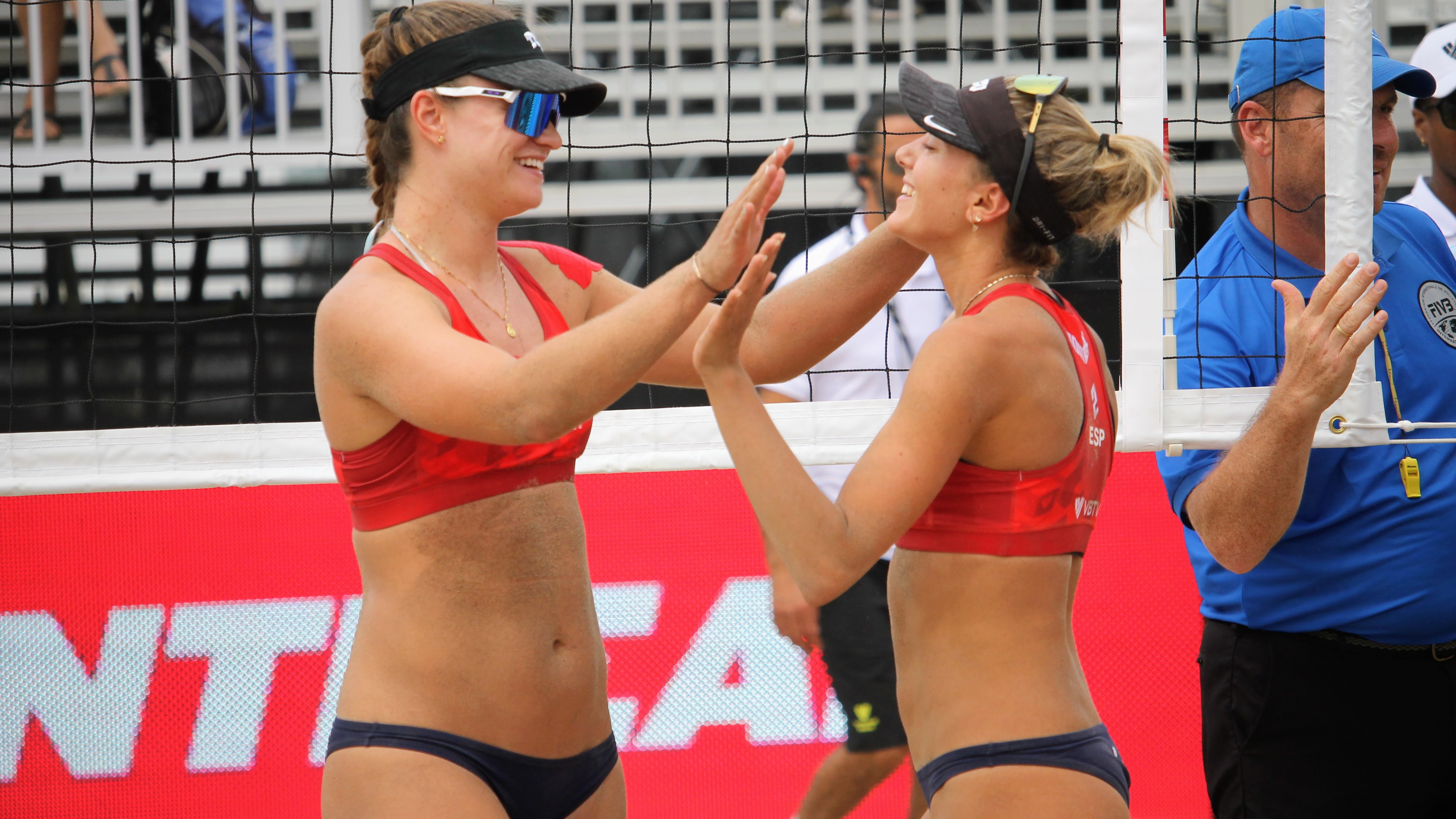
Alvarez (left) and Moreno (right) during July’s tour stop in Montreal.

The 2022 European Under-22 champions, Álvarez and Moreno are still in the midst of their college careers at TCU (they led TCU to the semifinals of this past spring’s NCAA tournament).

When Brunner the wunderkind won her first junior world title in 2011, Álvarez and Moreno were 9 years old. When the Swiss pair set out on the pro tour together in 2016, Álvarez was just deciding to give up tennis and get serious about beach volleyball.

For them, Saturday arrived in a hurry.

Not that they took any shortcuts to the final. They beat two recent former champions en route, eliminating two-time European champions and reigning Olympic silver medalists Graudina and Samoilova in the round of 16 and former European champions and reigning Olympic bronze medalists Vergé-Dépré and Mäder in a thrilling semifinal. They lost the opening set in that semifinal 27-25, trailed late in the third set and still had the mettle to win.

When Moreno, the darting, acrobatic, seemingly spring-loaded defender, saw Brunner reading every angle and digging every ball in the final, she might well have seen a reflection of her future, polished self. Yet she could have said much the same thing about three-time Italian Olympian Marta Menegatti—who she eliminated in straight sets in a quarterfinal.

Moreno in action in July’s tour stop in Edmonton.

The Spanish team was in no way out over its skis. They were capable of winning. On a different day (like any of the previous three days of this tournament), they might have. It’s just that when you’re young, you have a few too many of these days—especially against the best.

All of which helps explain why Álvarez could only laugh when she and Moreno finally got their first point in the second set—after Brunner nearly saved the point with a miraculous, reaction one-arm fling to keep the ball in play.

Not long after, Álvarez was smiling again, this time after Spain’s best moment of the match. During an extended rally, Moreno made one of her familiar full-extension, over-the-head blind saves, somehow putting the ball right where it needed to be for Álvarez to react and complete an athletic spike. The point cut the deficit to 10-8.

It was as close as Spain would get but also a show of resolve from a team that left defeated but not embarrassed.

As a Swiss fan, there was something bittersweet watching the final. To be sure, the end isn’t nigh. A second Euro title cements Brunner and Hüberli’s place as Olympic contenders in 2024. It also sets them up for this fall’s World Championships in Mexico. These are good times. Beyond the immediate future, Brunner, certainly, has every opportunity to be around for Los Angeles 2028. Hüberli would be far from the oldest Olympian, if she chose to continue playing that long.

And still, time is unbeaten. Pessimistic as the thought may be, there is only one chapter left after the peak. There is only decline. Many more days like Saturday may lie between now and that reality, but it is inevitable.

Somehow, seeing the Swiss at their best only underscored that. It’s the same feeling as reaching the later episodes of a brilliant series. It has been everything you hoped. It has entertained and inspired. And it will end.

Paradoxically, it’s the team that lost decisively that buoyed me Saturday. Spain’s story is just beginning. The potential still seems limitless, the characters still emerging. And the opening scenes, in person in Edmonton and Montreal and from afar in Vienna, promise great things.

Saturday, the Swiss and Spanish occupied the same sand in soggy Vienna. But not the same moment in time. The Swiss road led to Vienna. The Spanish road leads from it.

A reflection of life. Always a reflection of life.

Vous Travaillez Ici

While I was sitting alone in the media room at a volleyball tournament in Montreal, someone wearing a volunteer shirt entered the room and asked “vous travaillez ici?”

Fiddling with my camera, I felt the swell of irrational pride born of grasping the most mundane interaction in a foreign language. It was the same swell felt navigating the metro station earlier in the morning (the ubiquity of English training wheels everywhere notwithstanding).

In France, my French is, at best, survival level—adequate to (mostly) read signs, order things, ask questions, understand enough of a brief direct response to guess at the rest … and that’s about as far as it goes. In Quebec, it descends even further, to mostly useless.

But I understood this question! I was indeed working here, to a given value of “work.”

I smiled and replied “Oui, je travaille,” aware that this likely wasn’t the most grammatically nimble response but not confident enough in the conjugation (je suis travaillé?) of anything else.

Her brow furrowed slightly and she pointed at the floor and said … something. My run of comprehension ended abruptly. She beckoned me over, pointed again at a small puddle of water on the floor and repeated herself. I offered the universal helpless smile of ignorance.

Was she accusing me of spilling the water? It felt that way. J’accuse! After a morning in the hot sun, I could have assured her I valued every drop of water in my cup (although I would have struggled to assure her that in French).

“Mop,” she pantomimed in English.

Then she harrumphed, turned and left the room. A bit rude, I thought.

At which point it dawned on me that my shirt was the same light blue as those worn by the volunteers on site.

One domino tumbled into another.

If I asked someone “You work here?” I would almost certainly not be asking if they were, at that moment, engaged in the act of working in that space. I would be asking if they were employed there. Obviously.

But suffering from the heady combination of happiness to be at the tournament and understanding an unprompted question in French more complicated than “Ca va?” I had interpreted the words in the most literal manner possible.

It was a media work room, I was, more or less, media. I was working.

In reality, to her, I appeared to be a volunteer being a slacker in an empty room.

Vous travaillez ici, indeed.

I went back out to the courts. When I returned a few hours later, someone had mopped the puddle. Merci.

As You Were

I don’t like writing in the first person. I’m more comfortable turning the words on strangers, peeling away the layers and, for better or worse, inevitably finding something familiar.

It’s just that in traveling to Edmonton for a few days of beach volleyball, the stranger I found was me.

In the days before departing for Alberta, I began to doubt the wisdom of going. At least for me, it’s all to easy to confuse travel with time travel. I’m constantly tempted to return places. Part of it is rational. It’s nice to already know where to find a good cup of coffee or a good sunset. Layering exploration atop exploration allows a deeper understanding of a place or people. But part of the urge is distinctly irrational, a hope of returning to a place as it was. And as I was.

I love beach volleyball events. I love the ear-worm melodies that follow the circuit from stop to stop — “monster block” chants and endless snippets of “Fireball.” I love the way an event fits into the landscape, courts stretching along the helpfully built-in sand along the beach in Fort Lauderdale or tucked next to a nearly ice cold mountain stream in the Swiss Alps. Or even in the most recent case, a decidedly less lyrical vacant lot next to the home of the Edmonton Oilers.

A tournament is a world within the wider world, which has always been my favorite kind of story. In books, movies and series, let me sink into a place. Give me a good enough map and let me explore its side streets and history, even if only in my own imagination. Beach volleyball offers all of that, in the literal on-site grid of courts and the figurative side streets, hidden trails and cul-de-sacs of its recurring characters. It’s where I’m happiest, where I feel a purpose to explore, learn, chronicle. Not for any editor or employer. Just because it’s there.

It’s a feeling I’ve missed in the four years since standing on a train platform leaving Gstaad, listening to the crowd roar a short distance away. The few opportunities to catch that feeling in more recent times, mostly involving softball, have been fleeting, rushed and constrained by other commitments. Losing myself in work used to sounds like an oxymoron. The work was me.

These days, while I’m fortunate in many ways, that phrase sounds different to my ear.

It’s never wise to try and travel back in time, but it felt good to encounter that stranger in Edmonton.

Maybe we’ll run into each other again one day.

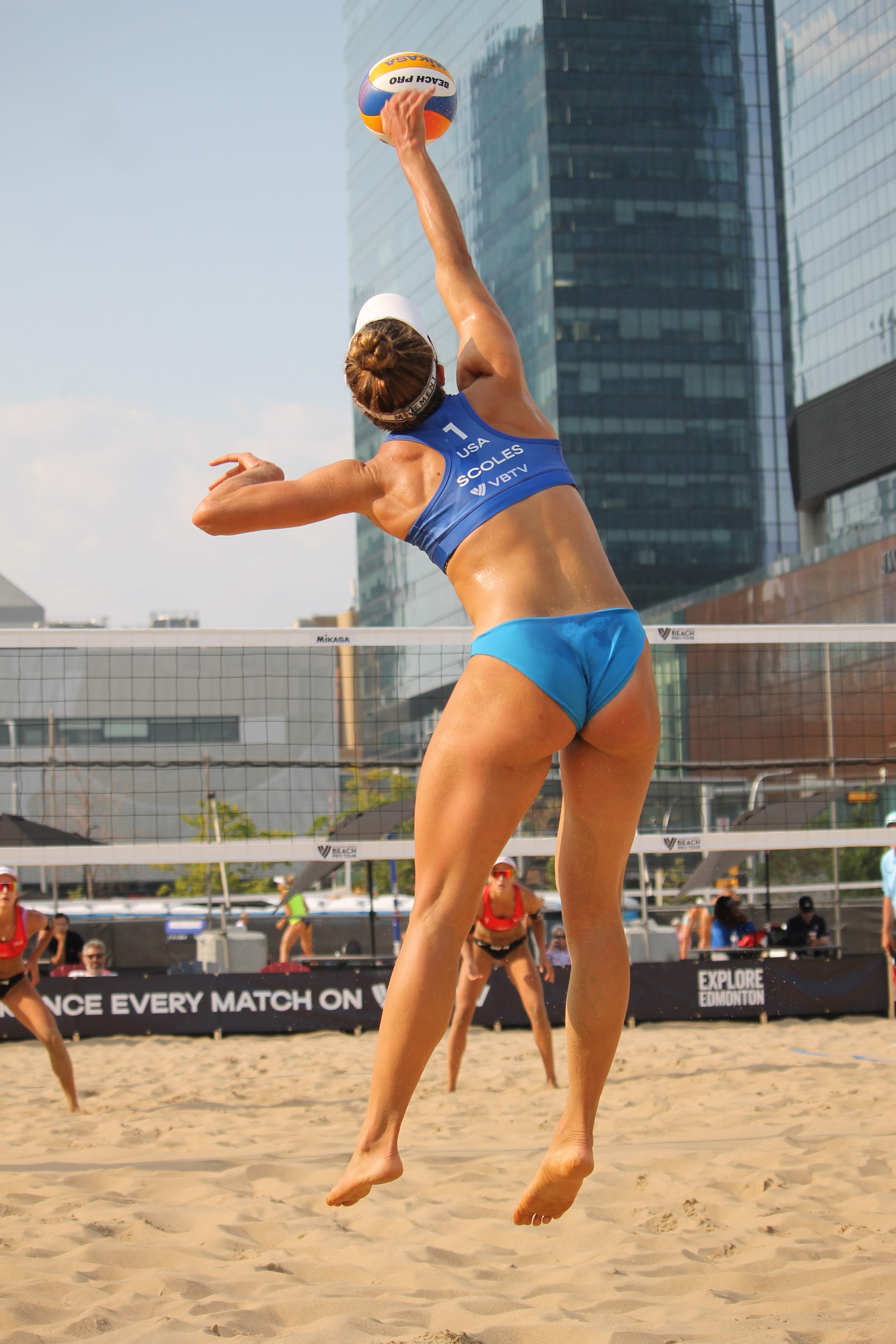
USA’s Julia Scoles serves.
Switzerland’s Zoé Vergé-Dépré takes in the quarterfinal.
A border battle between Italy and Austria.
Italy’s Marta Menegatti serves in pursuit of a fourth Olympic bid.
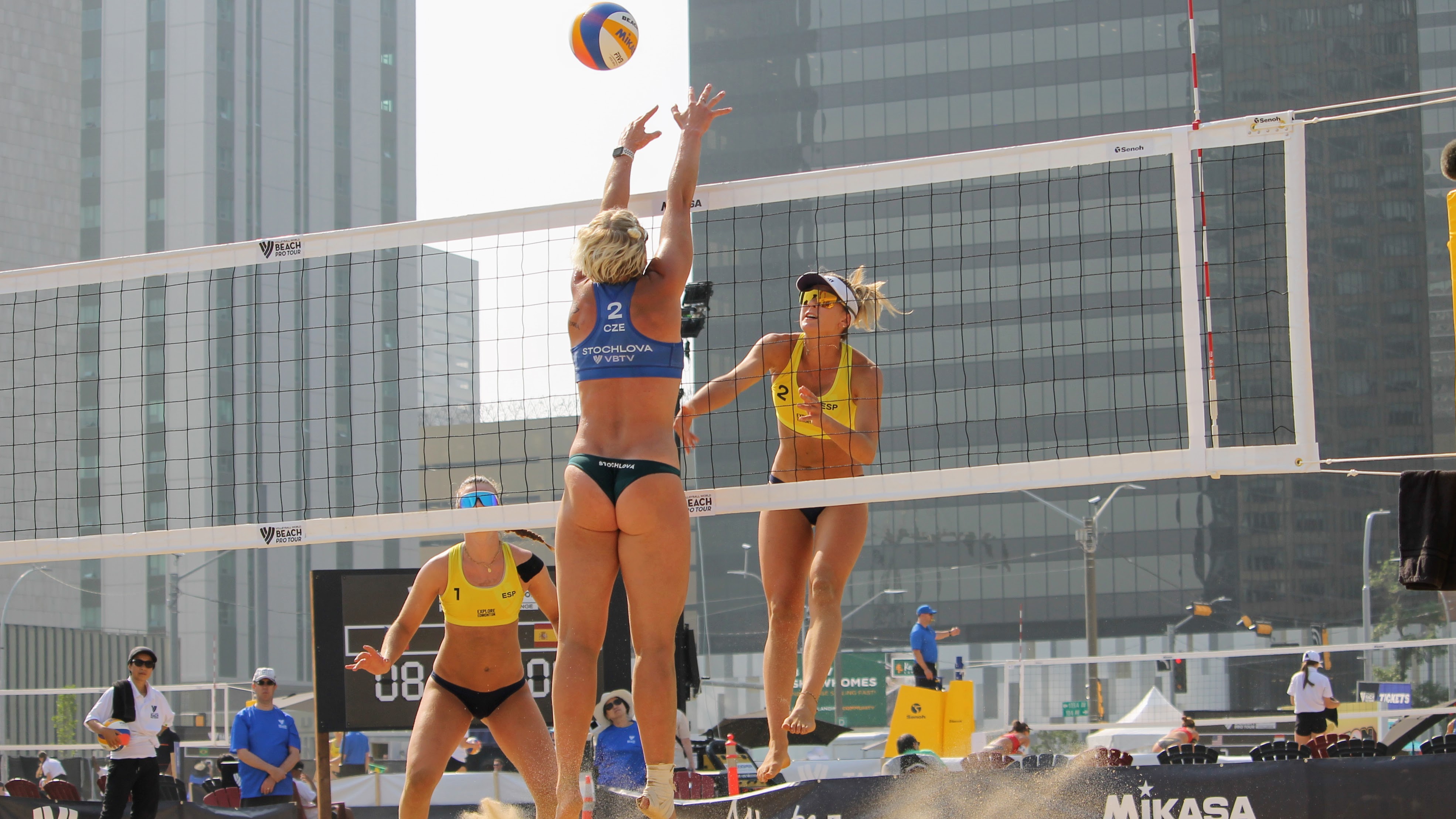
Spain (and TCU) partners Tania Moreno and Daniela Alvarez duel the Czechs.
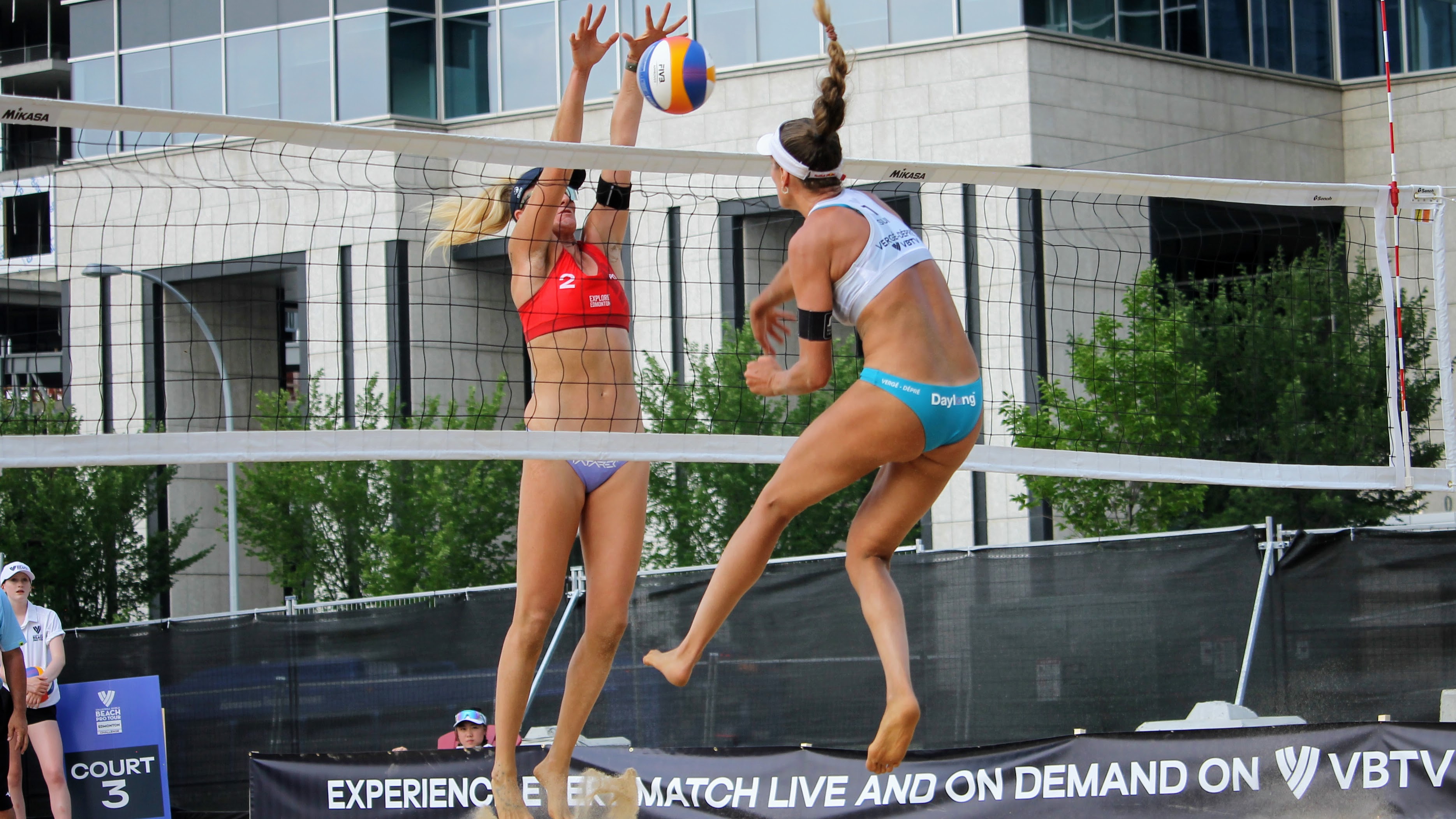
Anouk Vergé-Dépré against Poland.
The ageless Laura Ludwig greets Anouk Vergé-Dépré.
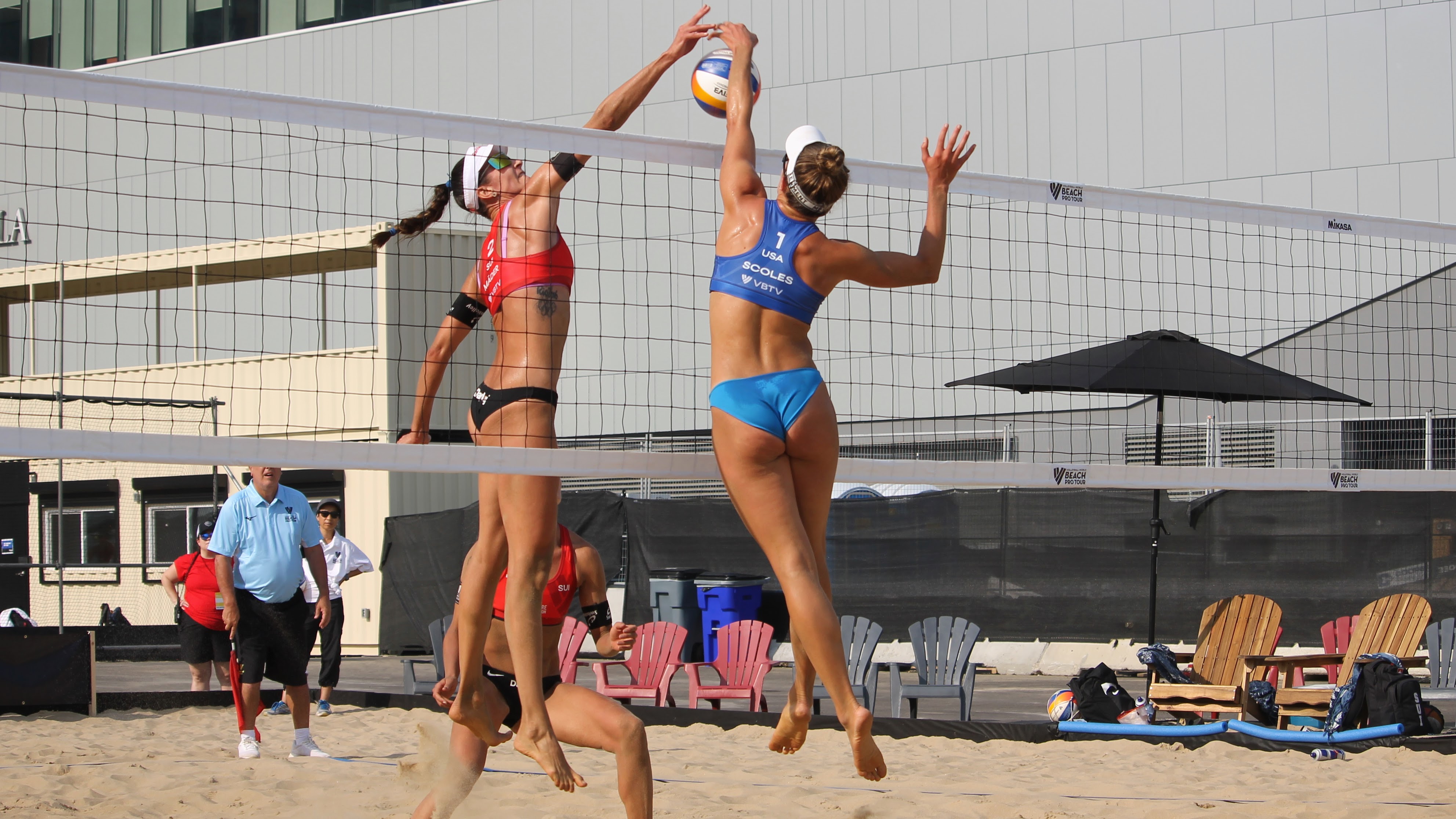
Switzerland’s Joana Mader battles USA’s Julia Scoles.
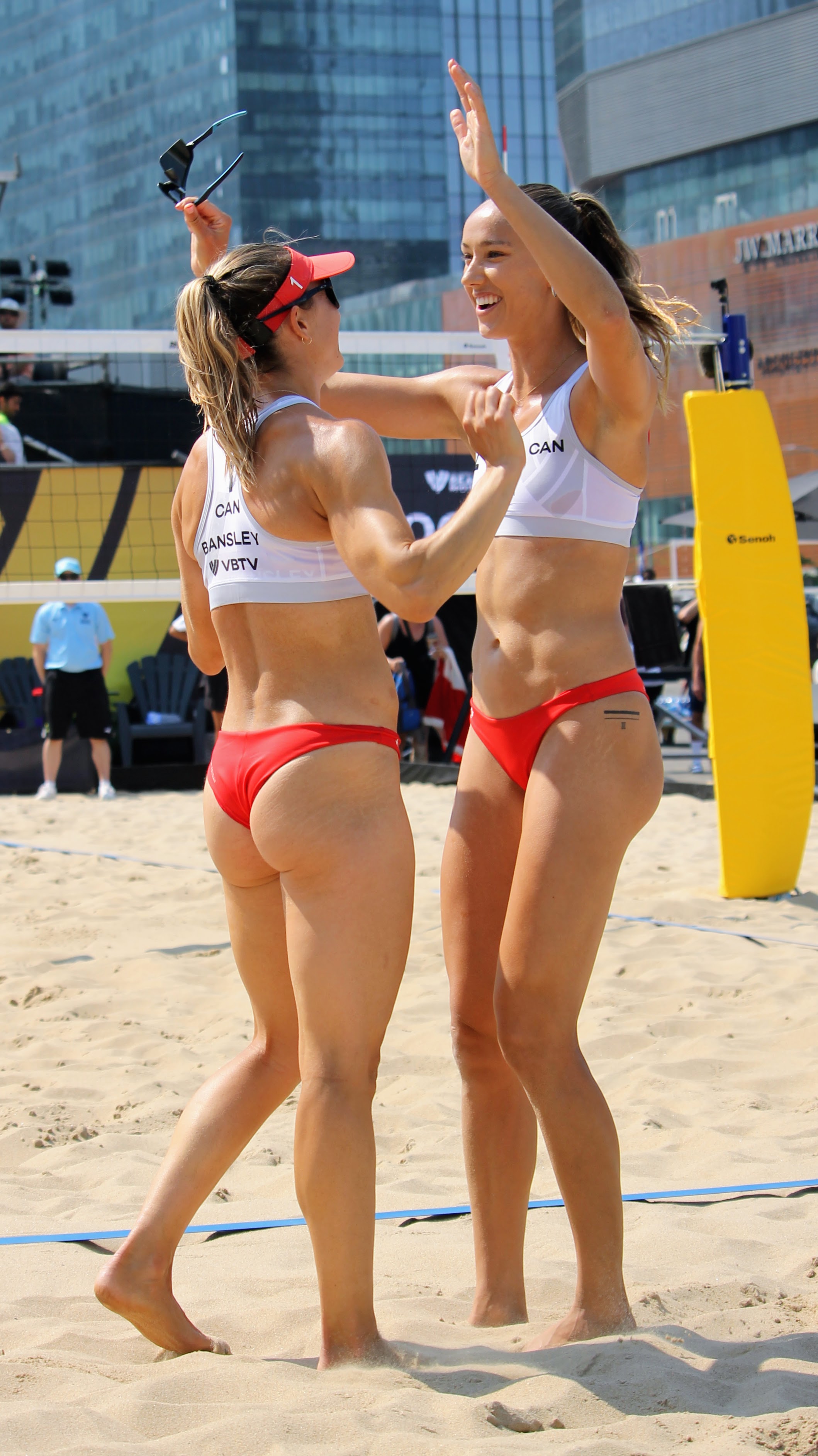
Canadians Heather Bansley, left, and Sophie Bukovec, right, on center court.
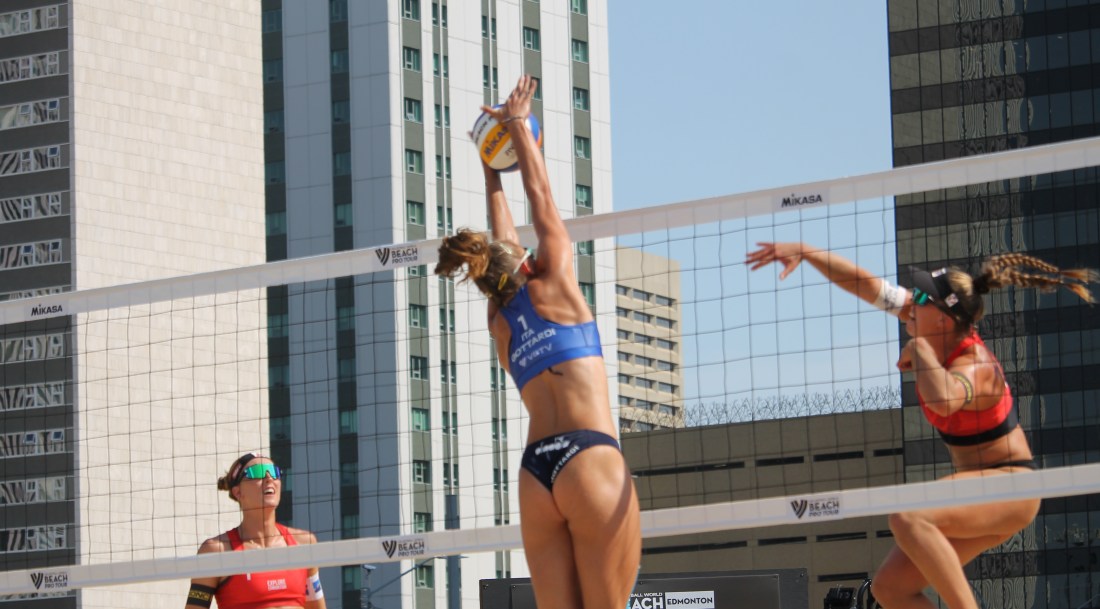
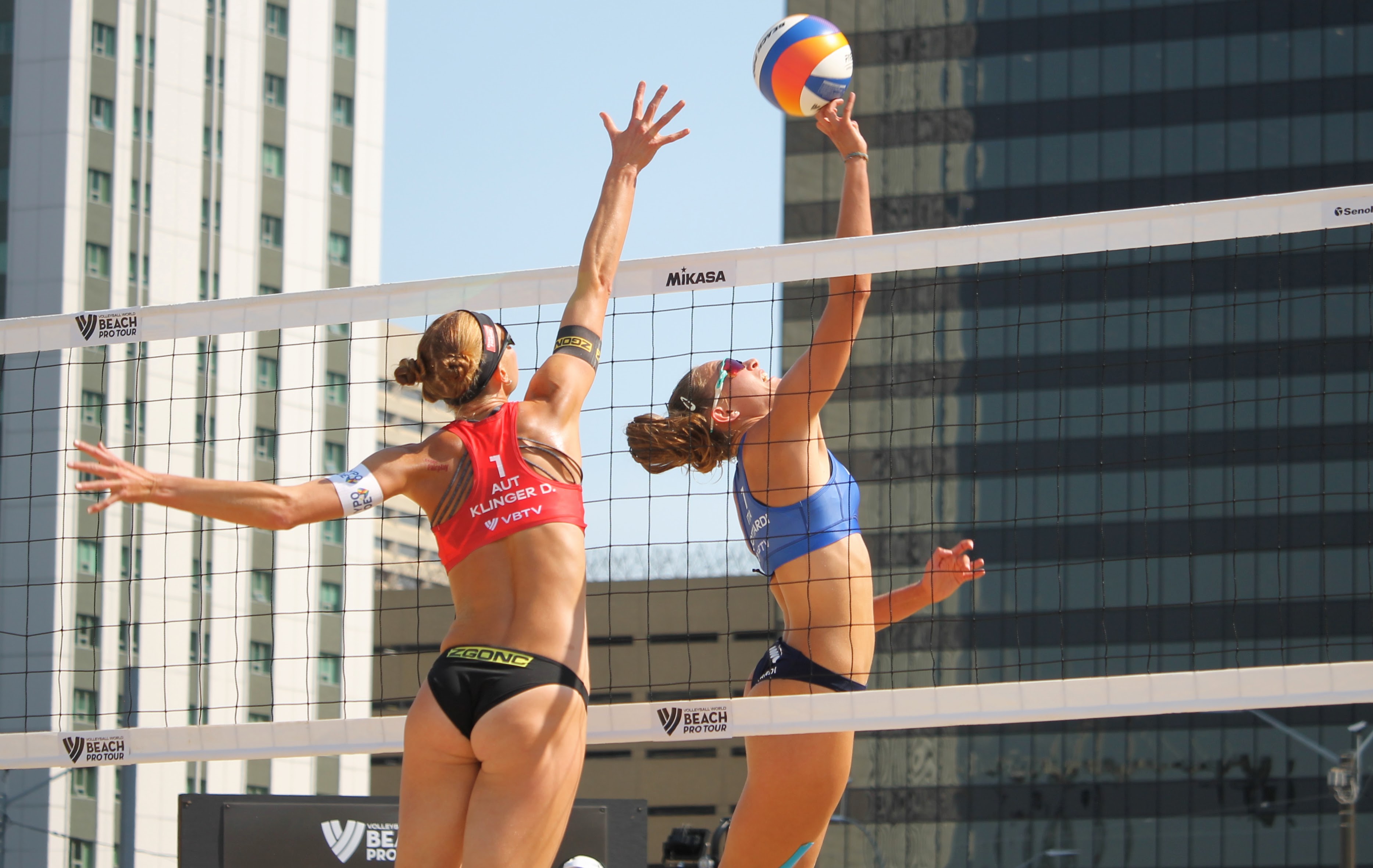
Rising Italian star Valentina Gottardi chases a ball off the court to save a point
And finds it a price worth paying en route to a silver medal.
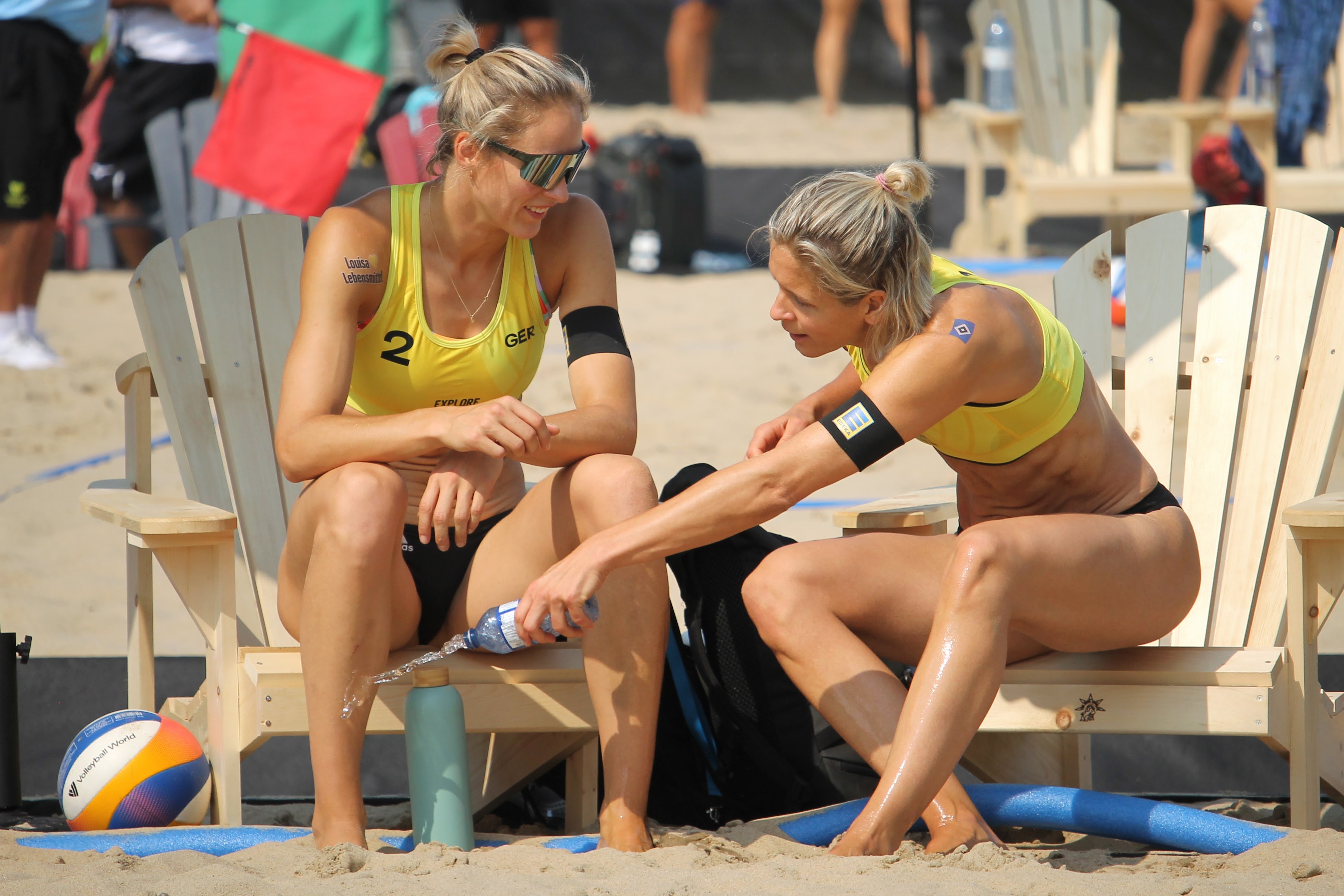
Laura Ludwig and new partner Louisa Lippmann came through qualifiers to make a 2024-sized impression.
Still fresh out of retirement, Heather Bansley, 35, had a week to remember.