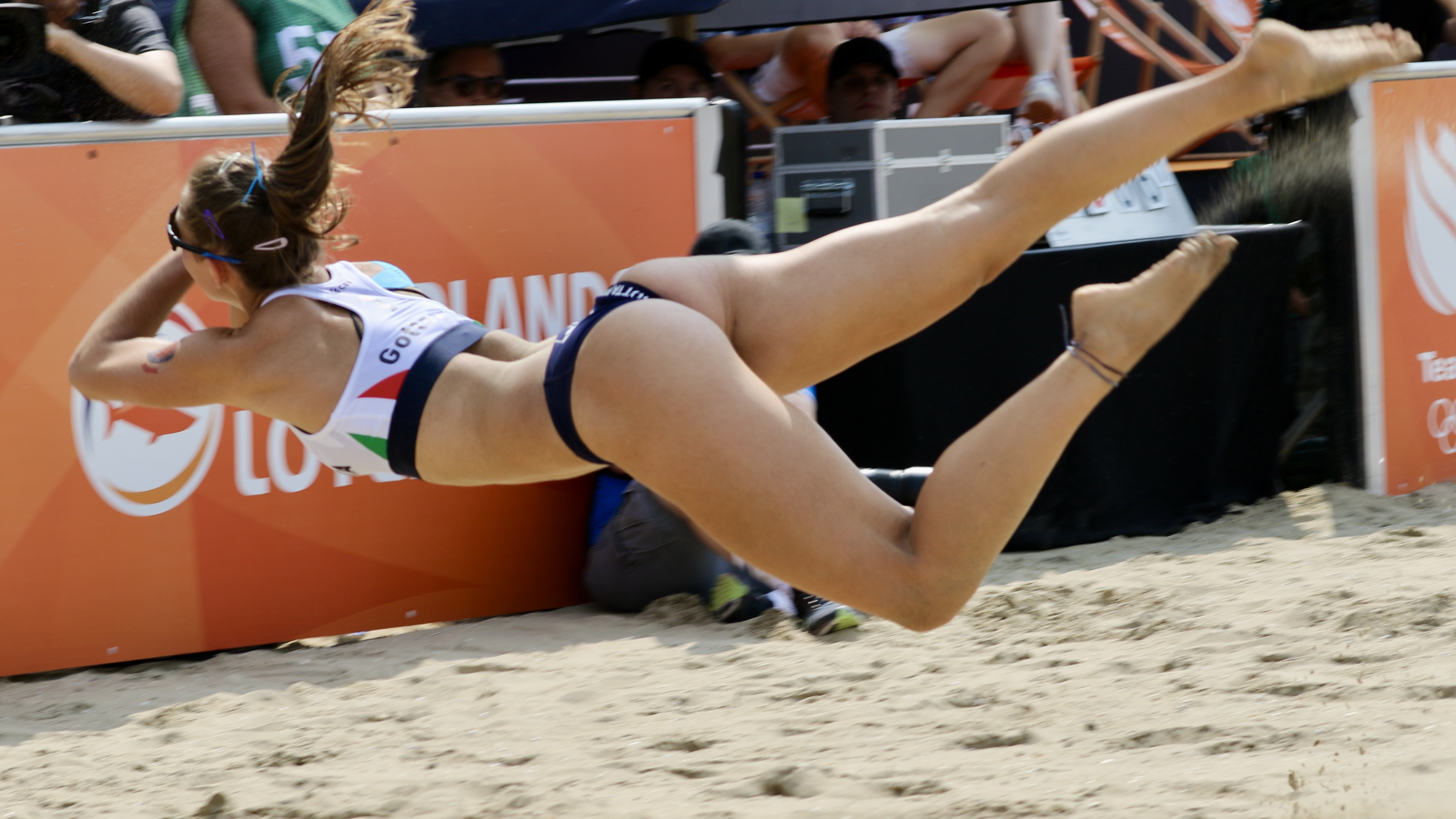
One of the first times I saw Valentina Gottartdi play in person, she ran through the advertising boards, off the raised court and into metal barricades below in pursuit of a ball. She managed to keep it in play before disappearing into the abyss. After a short medical timeout to patch her up, she kept playing—and diving after everything she could that afternoon in Edmonton.
Sometimes people just play the game differently.
It’s one of the wonderful things in sports, when an athlete at the highest level manages to stand out as something different. It’s not necessarily about dominance, although the two aren’t mutually exclusive. Katie Ledecky, Femke Bol, Sydney McLaughlin-Levrone—and in those long ago days when she was just getting started, Marta. They stood out from the start, partly because they were usually so far out in front.
But an athlete doesn’t have to dominate to captivate. Not right away. Allen Iverson was simply different in how he played the game. Not necessarily better than the best of his peers but unmistakably mesmerizing. The same for Rose Lavelle in her days on the soccer field at Wisconsin or Angel McCoughtry on the basketball court at Louisville.
To me, no expert, the epitome of this in volleyball is Brazil’s Ana Patricia. Watch her play a match and you’re almost guaranteed to see something you won’t see anyone else try. Usually, but not exclusively, that works out to Brazil’s benefit.
Any sport at the elite level breeds conformity. Even more in the age of data, there is an efficient way to play, a right way to play. There is flexibility only within that spectrum. To borrow an analogy from the world of wine, you can choose what kind of pinot noir you want to be. You can’t choose to be a gewürztraminer. On the other hand, Ana Patricia’s size, skills and languid creative genius allows her to play a game all her own.
In a quite different way, so, too, does Gottardi’s unbridled and unrelenting energy.
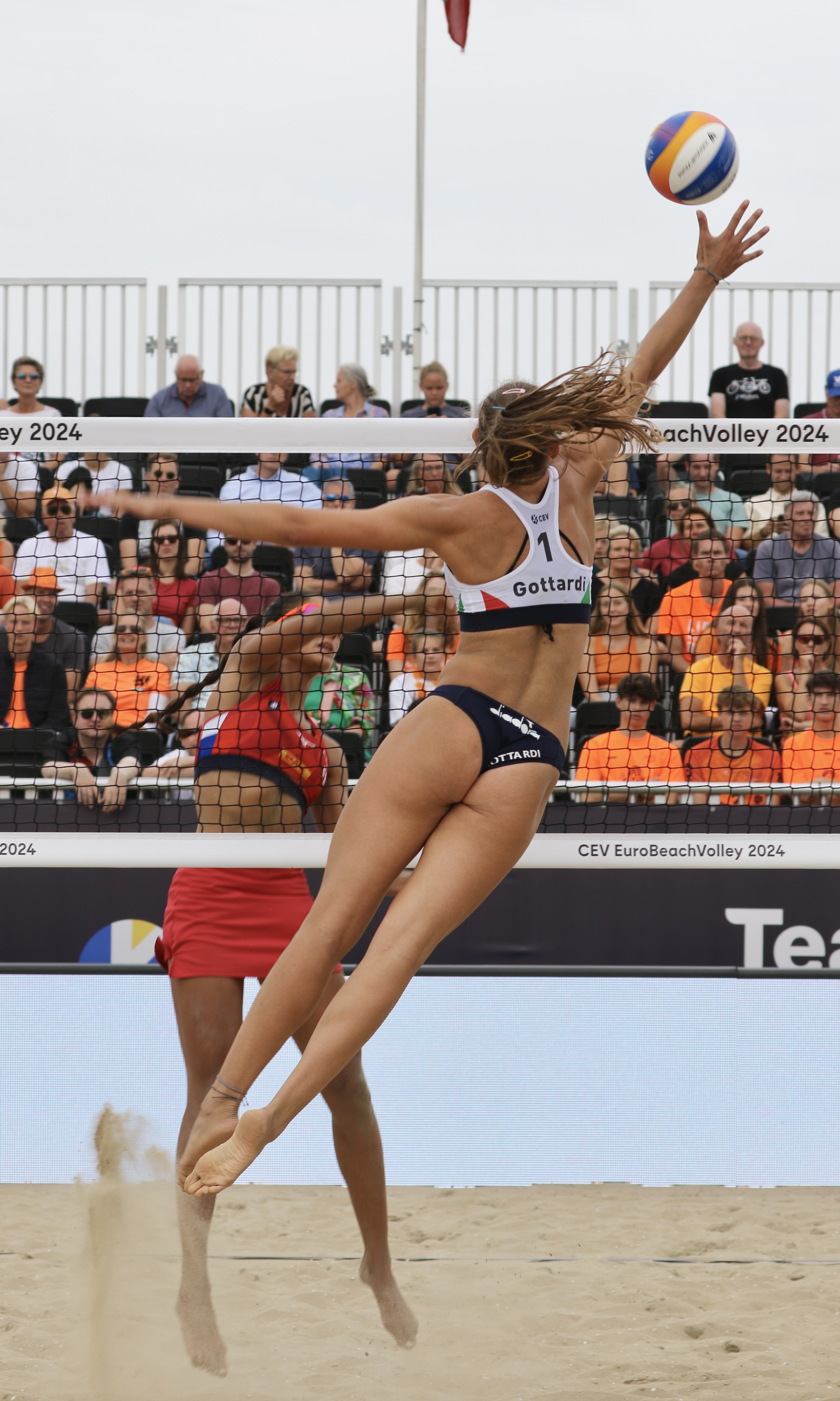
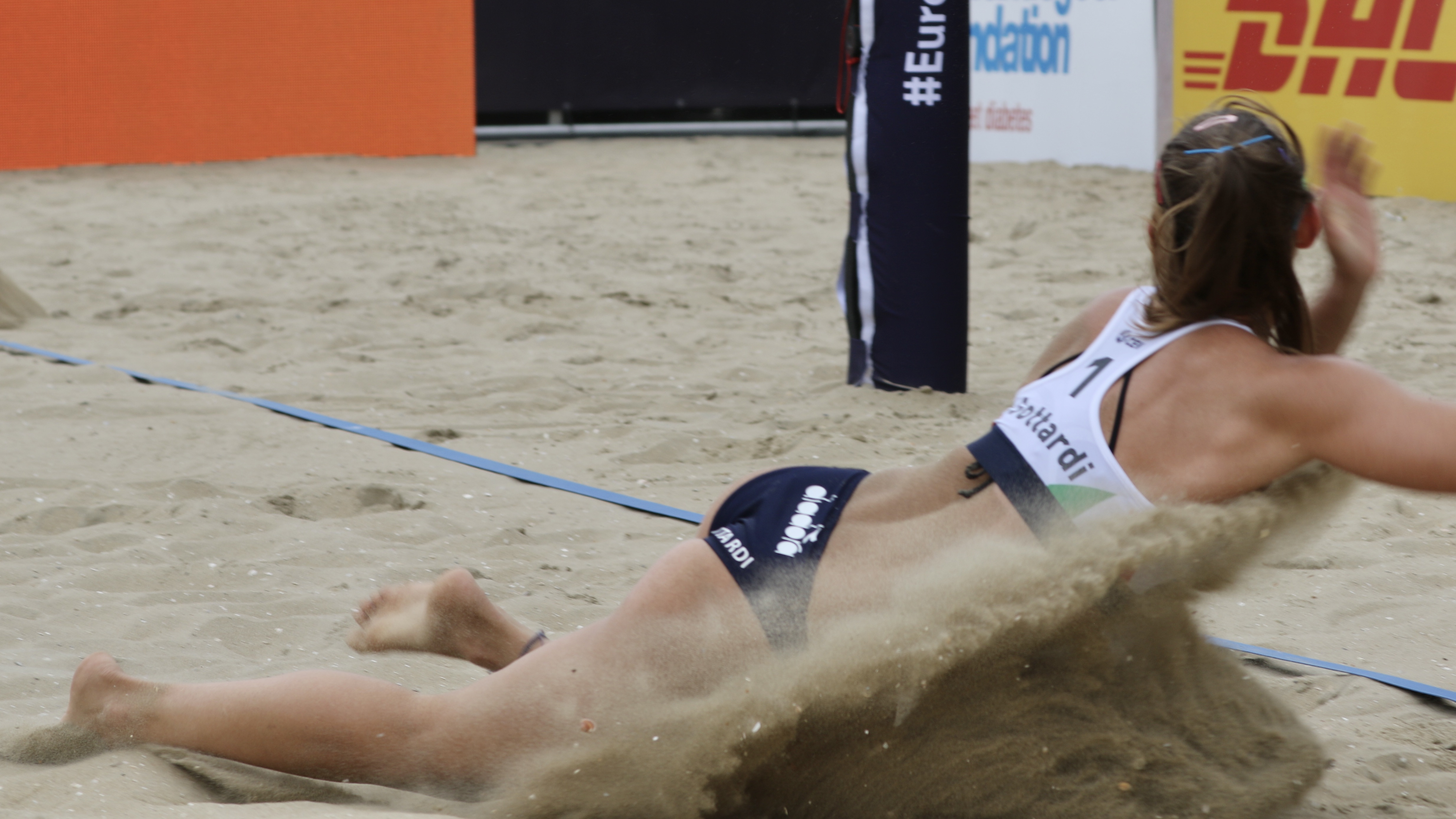
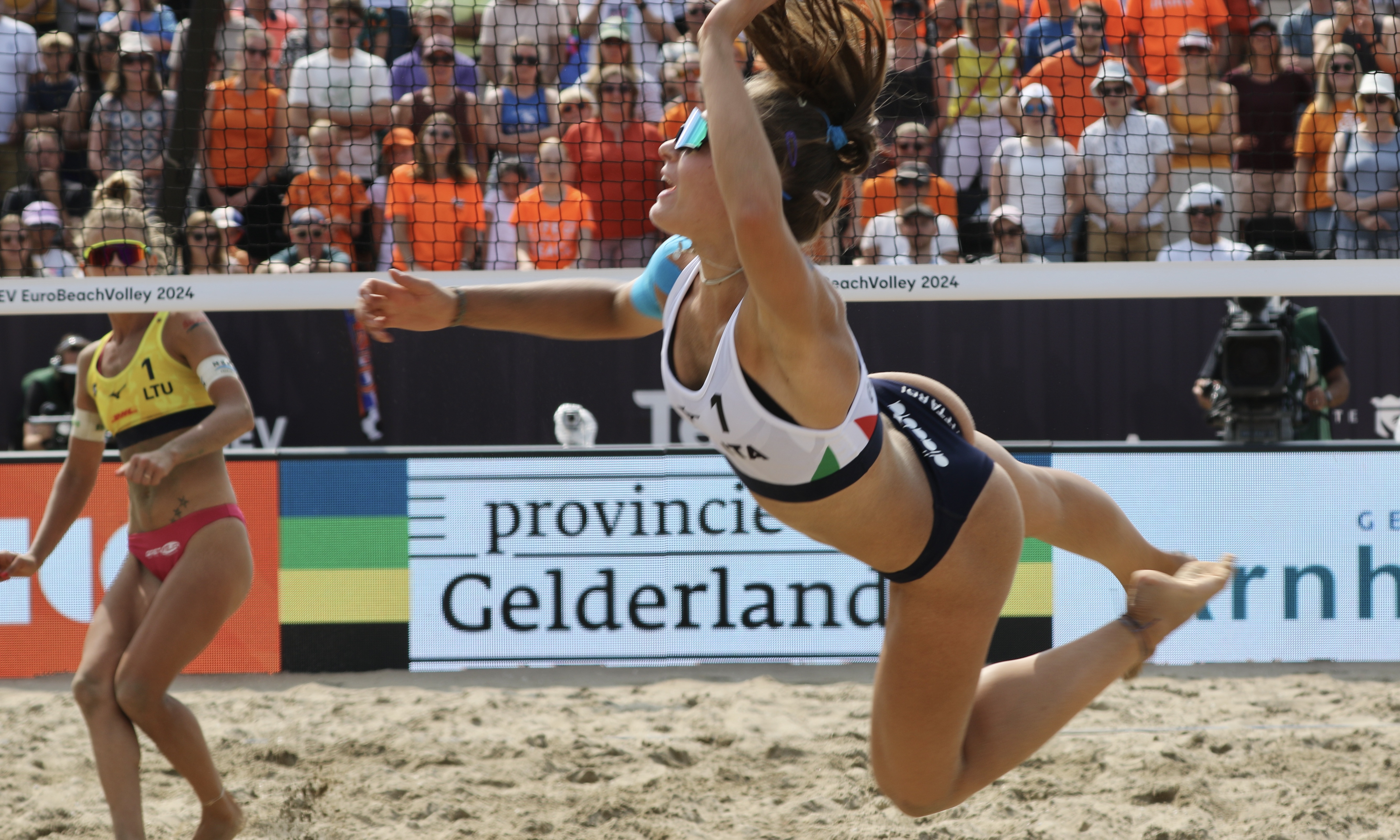
Gottardi will chase the ball into harm’s way. She’ll sprint under the net and dive almost to the opponent’s bench in pursuit of keeping the point alive. Where other players land on the sand when they dive, Gottardi comes back to ground with such force that sand explodes around her. She climbs higher for a kill and drives the ball harder and flatter with her serve. Everything that happens on a volleyball court happens a little bit more when she’s involved.
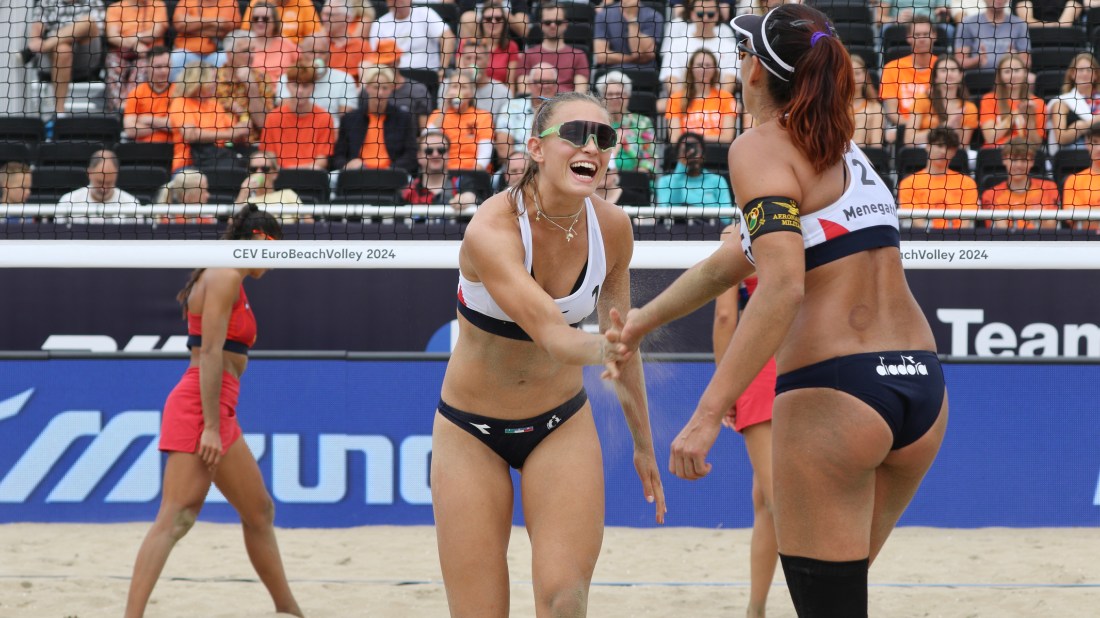
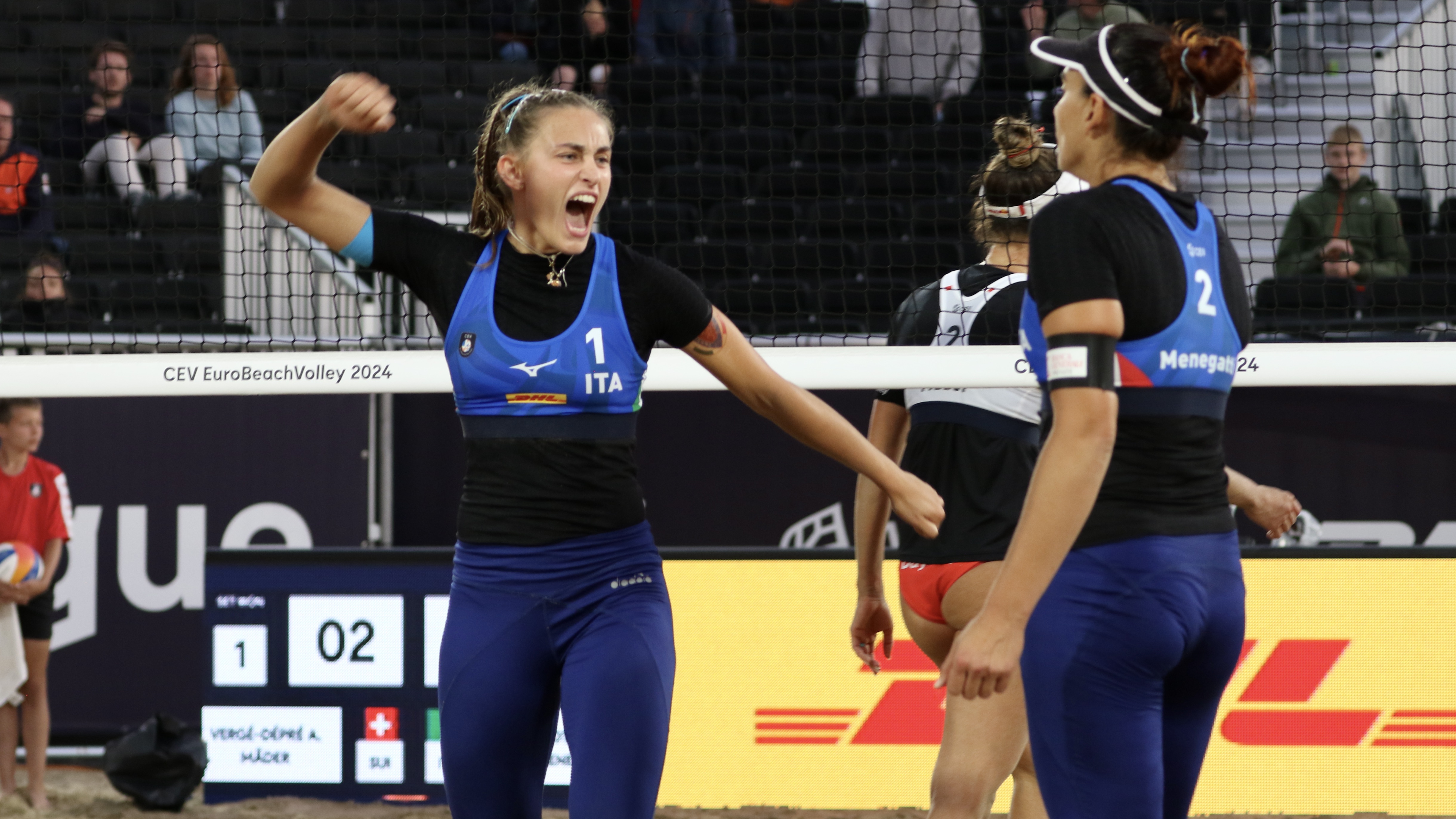
In the 21-year-old Italian’s case, some of this might come down to youth. Again, people who know the sport far better than I do may say that, however well intentioned, there’s really no need to chase a ball to the bench on the far side of the net. Save your energy. It’s all the more striking watching Gottardi play alongside four-time Olympian Marta Menegatti. At 34 and in occasional need of “magic spray” for her knee during breaks in play, Menegatti has turned the acts of wiping off sunglasses, bickering with referees and challenges into art forms in pursuit of a few extra seconds of rest. She’s all about controlled movement.
In the most complimentary way possible, Gottardi is like a young golden retriever bounding after her partner, wanting nothing more than to play. She jogs to the bench for timeouts. Her energy bubbles over after big points, released in primal screams of intensity or joy.
With time, maybe Gottardi will begin to play a bit more like everyone else. But I hope not.
Two sisters travel the world together. Raised in a volleyball family, the daughters of parents who competed internationally, they crisscross continents pursuing a shared lifelong passion.
That’s one sort of story.
Now tweak the wording ever so slightly. Two sisters follow each other around the world, each chasing a prize that can only come at the other’s expense.
That’s a very different story.
One of the most compelling Olympic competitions will be over by the time the world turns its attention to Paris this summer. When beach volleyball begins quite literally in the shadow of the Eiffel Tower, either Anouk Vergé-Dépré, 32, Zoe Vergé-Dépré, 26, will be in the sand representing Switzerland. But not both. With time running out, they continue circling the globe—from Brazil to Mexico to China and back to Brazil in recent weeks—in an effort to qualify at the other’s expense.
Against all odds, Switzerland is a beach volleyball superpower. I’ll go to my deathbed muttering that the hows and whys of this geographic oddity deserves a book of their own, but it’s indisputable. At least on the women’s side, after Brazil and the United States, Switzerland is as good as anyone. Three Swiss teams are ranked among the top 19 in the world. And that’s the problem for the Vergé-Dépré clan. Each country is limited to a maximum of two teams in the Olympics. It doesn’t matter how good you are. If you’re third in your country, you miss out.
Reigning European champions Nina Brunner and Tanja Huberli are the top-ranked Swiss team and have amassed what is an almost insurmountable lead in qualifying. That leaves Anouk and partner Joana Mader, bronze medalists in the delayed 2020 Olympics, competing against Zoe and partner Esmée Bobner for the other Olympic berth.
Sister against sister. It wasn’t always so.
I had the opportunity to sit down with Anouk in 2018 while reporting a story on Kerri Walsh-Jennings’ new and ultimately short-lived domestic tour (since restyled as a futures tour for younger athletes). Mader was recovering from surgery that summer and fall, and needing high-level training, Anouk went to California to train and play with Walsh-Jennings in the debut event in San Jose.
Earlier that year, with her regular partner out, Anouk and Zoe played together in the European Championships. It was a lark. Zoe was only 20 at the time, still rising through junior competitions and minor tour stops—what are now the Futures events on the Volleyball World Beach Pro Tour. For Anouk, playing with Zoe even meant moving back to blocker, the role she played when she competed in the 2016 Olympics but which she largely gave up when she teamed with Mader in 2017.
Anouk described feeling lost as that summer began, so familiar with the routine of a volleyball life that she didn’t know how to process a calendar without competitions. But it’s entirely possible that all that followed, including an Olympic medal, owes some measure of debt to that year and the time it allowed for self-discovery. Among other things, exploring her family’s Caribbean connections, she went to Cuba to take dance lessons for two weeks. And she played in the Euros with her sister, not for career advancement or even really a title. Just to enjoy the game with someone she loved.
“It opened up a lot of very unique opportunities,” Anouk said of he year. “To play with my sister, it’s something I never imagined would happen so early. It was so fun because you know the person so well off the court and now you’re standing on court with her. So we had a lot of fun. We had good humor on court.”
Jump ahead to more recent times. Mader was again out of action entering 2023, meaning she not only had to regain rhythm and form upon returning but the team had to go through qualifying rounds for most of the major events. Only a limited number of spots in the main draw are reserved for teams at the top of the rankings. That, in turn, unlatched a door that Zoe and Esmée kicked wide open, emerging as one of the best young teams on the circuit. Instead of taking the torch from her older sister for the 2028 Olympics, Zoe was competing for 2024.
Bobner, left, and Zoe in Edmonton last year, where they reached the semifinals.
The sisters appear to go their own ways at competition sites. Cameras rarely catch one in the stands watching the other. When both teams were in Edmonton, I never spotted them pausing more than briefly to observe one another. They can’t afford to. With two matches a day in often hot conditions, every free minute is given over to recovery, rest, eating, treatment and scouting. They may well talk regularly throughout the events, who knows. But they carry themselves like everyone else, generally cordial competitors vying for the same real estate.
Sisters competing for the biggest prizes isn’t new, as tennis fans will be the first to point out. But at least Serena and Venus Williams had four potentially career- and legacy-defining competitions every year in the Grand Slams. And each was assured entry in the field.
For a beach volleyballer, winning a world championship or even the annual Tour Finals is a big deal, an achievement that demands the respect of your peers and the rest of the sport. But Anouk and Joana could win multiple world titles and still not receive the acclaim or opportunities that winning a single Olympic medal in 2021 afforded them.
In terms of how the world—and more specifically, your country—perceives you, the Olympics are everything.
Anouk, at the net, and Joana in Edmonton last year.
In Guadalajara, Mexico, the second week of April, Anouk and Joana came out flat in qualifying, couldn’t buy a break and thudded to a defeat without even making the main draw. That was damaging enough, but the misery only deepened when Zoe and Esmée went on a run and won the entire tournament—their first title in an event in one of the world tour’s top two tiers.
That was enough for Zoe and Esmée to leapfrog Anouk and Joana in the qualifying standings. Suddenly, the youngsters were in. The veterans were out.
From there, both teams traveled to Tepic, Mexico, for another event, then across the Pacific to Xiamen, China, an island a stone’s throw from Taiwan. All in successive weeks.
In Xiamen, Zoe and Esmée couldn’t get past the Round of 16—scuttling a potential quarterfinal against Anouk and Joana. The latter two nearly failed to capitalize. Trailing 11-6 in the third set to former Olympic champion Laura Ludwig and Louisa Lippmann, Anouk and Joana rallied for a remarkable 15-12 win. Another miraculous comeback against the Spanish (and TCU) duo of Tania Moreno and Daniela Alvarez earned a place the final and the accompanying points haul.
Even settling for the silver medal, Anouk and Joana made up significant ground on Zoe and Esmée. Enough, in fact, to move back ahead of the younger duo.
Currently, Anouk and Joana are 15th in the Olympic rankings with 7,440 points, while Zoe and Esmée are 17th with 7,360 points. (The young Spanish team that had Anouk and Joana on the ropes in Xiamen is sandwiched between them at No. 16.)
Zoe and Esmée in last year’s Elite 16 event in Montreal.
Now, it’s back to South America for this week’s Elite 16 tournament in Brasilia. At the top tier event, neither team is among the 12 guaranteed a place in the main draw. That list includes Brunner and Huberli, whose strong position meant they could comfortably skip Xiamen.
Jet lag, physical and mental fatigue notwithstanding, Anouk and Zoe each needs to win twice in Wednesday’s qualifying to have any hope of improving her standing.
As Anouk said in an Instagram post, “yes unhealthy, expensive & unsustainable, but what can we do!?”
Olympics points are determined by a team’s best 12 finishes during the qualifying period. The top 17 in the rankings qualify automatically for Paris, as long as there aren’t two higher-ranked teams from your country (again, the Swiss conundrum—although the races for Canada and Germany, in particular, are similarly unsettled, with Zoe and Esmée playing their first qualifier against similarly desperate Canadians Sarah Pavan and Molly McBain).
All of this comes to an end in early June. After Brasilia and two weeks off, teams have three more opportunities at events in Portugal, Poland and, finally, the Elite 16 in Ostrava, Czechia.
After circling the globe for more than a year, one sister will come up 800 miles short of Paris and a lifelong dream. The other will have the opportunity of a lifetime under the Eiffel Tower.
Only in Paris, finally and perhaps bittersweetly, success for one sister won’t come at the expense of the other.
Update May 7: Sports are brilliant. And cruel. But mostly brilliant.
If you want a challenge, go to a travel booking site like Orbitz and search flight options from Xiamen to Brasilia. Zoe Vergé-Dépré and Esmée Bobner apparently made the trek in under 30 hours, according to VBTV announcers. I never did find an itinerary under 40 hours (connecting through Amsterdam or Madrid and Sao Paulo), so clearly, my travel agent skills have lapsed.
After completing that trip, the final leg of a three-week Mexico-China-Brazil odyssey, Zoe and Esmée put together the week of their young volleyball careers. The week that may well lead them to the Olympics. Playing nine matches in five days, the youngest of the top Swiss teams won bronze medals in Brasilia. Two weeks after winning their first big tournament at the Challenge event in Guadalajara, they again made it to the podium—this time at the highest level of competition outside of the World Championships, Olympics or Tour Finals.
So, once again, ownership of the all-important second Swiss place in the Olympic rankings will change hands. Maybe for good this time.
Anouk and Zoe each won their opening qualifying matches on May 1. But with the Swiss teams playing their next qualifiers one after another on adjacent courts, Zoe and Esmée advanced to the main draw while Anouk and Joana lost to Brazil’s Agatha and Rebecca (a qualifier in which three of the four players were former Olympic medalists and all played in the 2020 Olympics).
Advantage Zoe and Esmée. But they were just getting started.
After losing their first match in pool play, they beat Germany’s Laura Ludwig and Louisa Lippmann 24-22 in the third set of their next match—a win they knew they likely needed to have any realistic chance of getting out of pool play.
They lost to Americans Taryn Kloth and Kristen Nuth in their final pool match, 23-25, 19-21, but they did enough to slip through as one of the last teams into the knockout round. The prize for advancing? The world’s No. 4 team: Canadians Melissa Humana-Paredes and Brandie Wilkerson.
The Swiss duo had yet to beat the Canadian team. Down 17-20 in the final set, that didn’t appear likely to change. Switzerland had to side out and then win back-to-back points on its serve, not exactly a common sequence in the best of times in an Elite 16 event. But that’s exactly what they did, Zoe putting away three balls on three consecutive points to pull level.
From there, fending off three more match points seemed easy by comparison. The Swiss took the second set 25-23 and went on to win the third set to advance.
Two more wins, in the quarterfinals against the same Brazilian team that eliminated Anouk and Joana, and in the bronze medal match against the Netherlands, earned a podium finish. More importantly, at the moment, it earned Zoe and Esmee enough points to take a lead of more than 400 points on Anouk and Joana.
In perhaps the biggest tournament of her life, Bobner had 29 aces. No one else in the field had more than 13. Zoe had 83 digs. No one else had more than 66.
The moment is everything in sports. It’s their redeeming virtue.
It’s the tradeoff for the soap opera and scandal. It makes it worth putting up with the hot take industrial complex and overhyped snoozefests. Sports can still squeeze the past and future out of the picture and slow down a present that otherwise never seems to stick around very long.
We watch athletes try to remain in the moment, try to harness its energy. Every now and again, they find the sweet spot between the certainty of expectations—of what should happen—and the overwhelming realization of what might happen. Keep both at bay and that’s when remarkable things actually happen. In the moment.
Nina Brunner (photo courtesy Volleyball World).
Nina Brunner and Tanja Huberli first played together in an international pro event, the equivalent of the current Beach Pro Tour, in April 2016. Huberli was 23 years old and Brunner 20. They finished tied for 17th. Within little more than a year, they made it to the podium with a third-place finish at a major event in Porec, Croatia.
A few more third-place finishes followed, as well as a semifinal appearance in the 2019 World Championship. Over the past two years, they finished second in Elite 16 events—the highest level in current iteration of the pro tour—in Hamburg and Doha. They played in the delayed 2020 Olympics, narrowly missing out on the medal round. And, of course, they made history as the first Swiss women to win multiple European Championships, in 2021 and 2023 (nearly the first women’s team from any country to win three in a row, settling for silver in 2022).
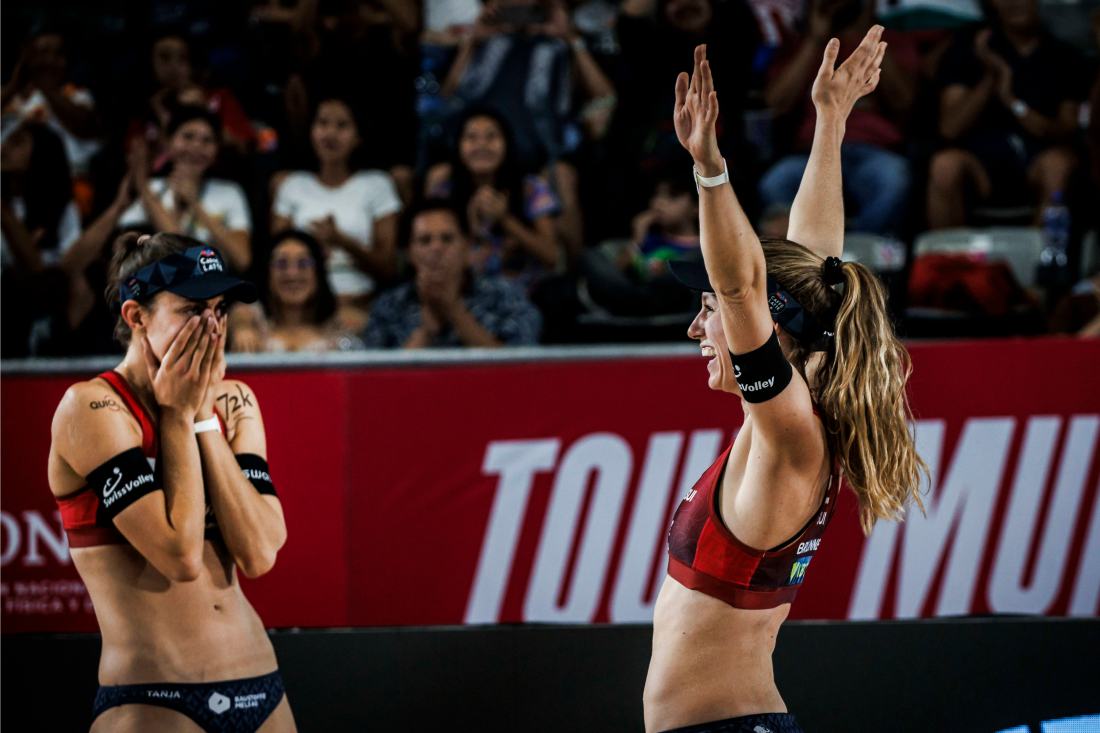
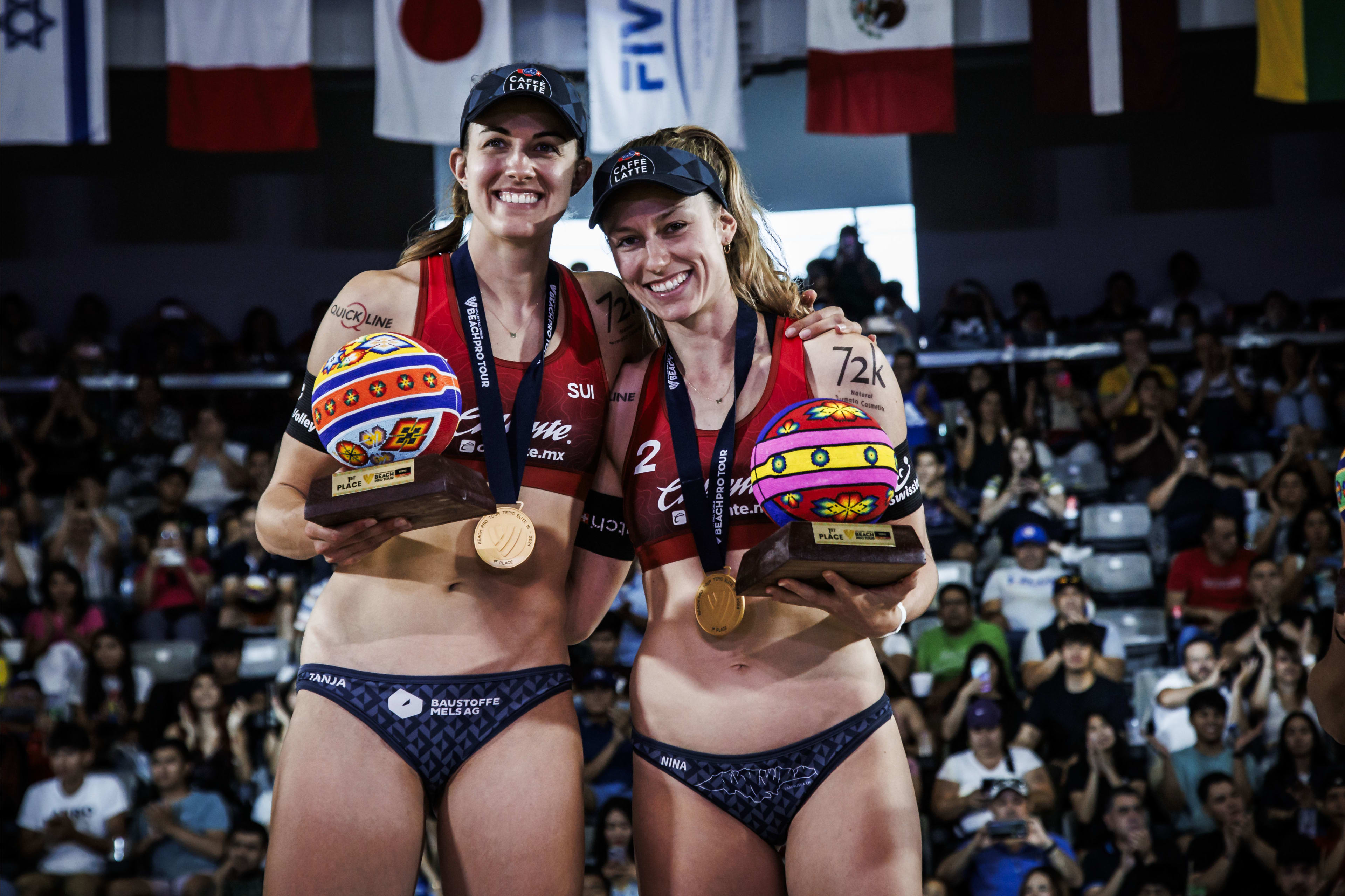
But across eight years, 19 countries and nearly 100 events together, they never won a title on the international pro tour. Until Sunday in Tepic, Mexico, when they defeated the Dutch team of Katja Stam and Raisa Schoon, 21-14, 19-21, 19-17, to win the year’s second Elite 16 event.
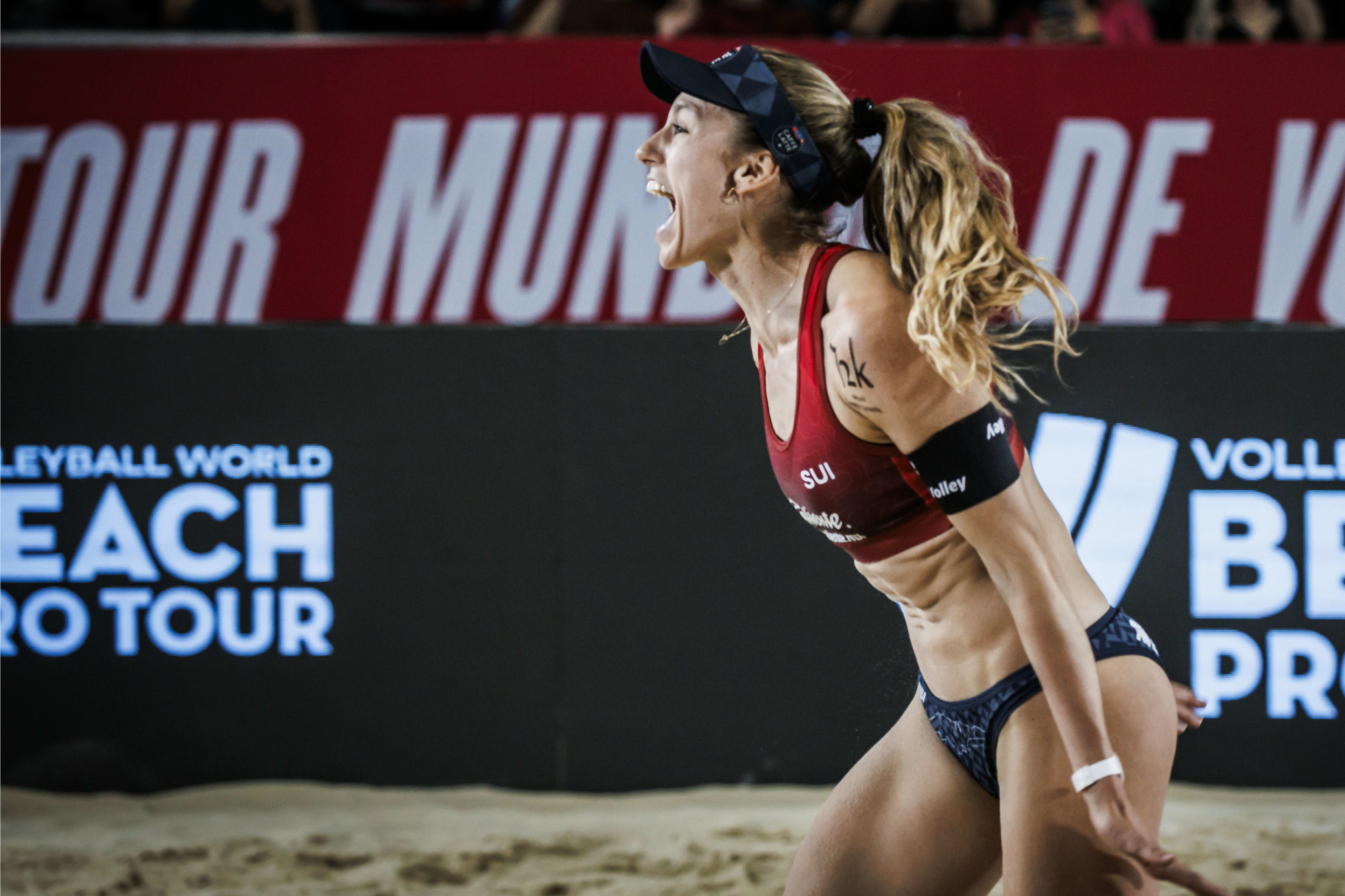
For four days, the Swiss were brilliant. Huberli led the field in blocking. Brunner hit cut shots at impossible angles and reacted on defense as if everyone else was playing on a delay—never tipping her hand but somehow always just where the opposing player tried to hit. In six matches, they beat five of the eight teams seeded ahead of them. They didn’t lose a set until the final. And when it was over, the reaction said everything.
Match point in Tepic.
Entering the reckless speculation portion of this post, I’ve wondered quite a bit about whether or not the Paris Olympics might be the end of the road for one or even both of the partners.
They haven’t played much over the past year and half compared to many in their peer group. Granted, they haven’t needed to—in a three-way race for two Swiss Olympic spots, their success when they do play means they maintained a steady and largely untouchable lead throughout that time. They didn’t need to trek to Challenge events in India, the Philippines or, much to my chagrin, Edmonton. But Huberli has also visibly battled foot issues for some time—at least twice in Tepic, she had to stop mid-match and re-tape toes. It might be a manageable annoyance. Athletes manage plenty of them as years of competition take their toll. But maybe second only to bad backs, foot woes can rapidly degrade your entire quality of life.
On the other side of 30 years old, with two European Championships and two Olympics to her credit, would she really want to keep putting in hundreds of hours in the sand and leaving family and friends for volleyball’s arduous, expensive and nomadic lifestyle?
If not, would Brunner want to take on a new partner? On one hand, she’s in the prime of her athletic life and the peak of her talents. From afar, she appears driven to play the sport to a degree that would make it difficult to walk away. On the other hand, as something of a youth prodigy who won a junior world title at 16 years old, she’s already been doing this for more than a decade. Unless one of Anouk Vergé-Dépré or Joana Mader also retired after this year, splitting up that Swiss team, there’s no obvious new partner if Huberli leaves—not at the level to which Brunner is accustomed. Would she set her sights on LA 2028, when she would be 32? Beach volleyball produces some impressively long careers, but it’s not as if it comes with the opportunity to accrue generational wealth.
Again, it’s all idle speculation. And as something of a pessimist, likely born of nothing more than me worrying my favorite team won’t be around forever. The way they’re playing right now, they would be among the top contenders to win any Elite 16 event they entered, along with World Championships and World Tour Finals, for at least the next two years. The Olympics are a big prize, but one quadrennial tournament doesn’t determine everything in a volleyball career. There are other goals to play for.
That’s a hyper-specific look at possible future scenarios in the careers of two Swiss volleyball players that most people haven’t heard of. It’s also an inherently universal theme. Not just in sports—where Bayer Leverkusen supporters, even amid current joy, must wonder how much time they have left with Xavi Alonso and Florian Wirtz—but life.
Future concerns always intrude on the present. For athletes. For the fans who watch them. What’s coming down the road? What if a company downsizes to please investors? What if a house’s plumbing needs replacing? And it’s not always about dread. Job opportunities, relationships, spending splurges, people stand at mini-crossroads every day, trying to figure out what awaits down one path over another. Living in the present feels like a luxury, almost irresponsible. But it’s where life happens.
The Swiss entered Tepic ranked ninth in the world (photo courtesy Volleyball World).
That’s where my mind went during the tense third set, thinking about these two individuals with so much history behind them, the same uncertain future that we all confront and, here, suddenly, the opportunity of a lifetime if they could just stay in the moment.
As mentioned, Brunner and Huberli didn’t drop a set in their first five matches. They were in control—in the zone, in sports parlance. And then the second set slipped away. The Swiss didn’t play all that poorly in the second set. Huberli’s serve got away from her a few too many times. Brunner’s seemingly unerring accuracy hitting shots down the seam suddenly erred. But mostly it was just a really good Dutch team rising to the occasion in the sort of back-and-forth set that turns on a couple of points—the normal run of things at the back end of a major tournament.
The Swiss took a 5-1 lead in the third set, forcing the Dutch to take their only timeout to regroup. And regroup they did. Schoon got to everything, Stam met Huberli at the net, and the lead slowly but methodically evaporated. In a race to 15 in the final set, the Netherlands took its first lead at 11-10 and again at 13-12. Had Huberli’s subsequent high line shot over Stam drifted a few inches wide instead of smacking off the line, the Dutch would have had two match points.
Instead, it was 13-13 and Betschart’s sensational defensive read and arcing high line shot on the next point gave Switzerland its first match point.
Match point after match point then came and went, the tension rising with each opportunity. The Dutch sided out again and again to prevent the Swiss from getting the two-point margin needed to claim the set. In turn, any slip when it was Brunner and Huberli’s turn to side out—and the Dutch allowed opponents to side out less than 40 percent of the time en route to the final—would have put them on the brink.
Finally, after two great digs from Betschart—time seemingly standing still as Huberli sprinted across the court to keep one of them alive—they found the winning point.
The Swiss stayed in the moment. And for an hour and change on a Sunday evening, I was right there with them. Past and future forgotten, savoring only the present.
I don’t like writing in the first person. I’m more comfortable turning the words on strangers, peeling away the layers and, for better or worse, inevitably finding something familiar.
It’s just that in traveling to Edmonton for a few days of beach volleyball, the stranger I found was me.
In the days before departing for Alberta, I began to doubt the wisdom of going. At least for me, it’s all to easy to confuse travel with time travel. I’m constantly tempted to return places. Part of it is rational. It’s nice to already know where to find a good cup of coffee or a good sunset. Layering exploration atop exploration allows a deeper understanding of a place or people. But part of the urge is distinctly irrational, a hope of returning to a place as it was. And as I was.
I love beach volleyball events. I love the ear-worm melodies that follow the circuit from stop to stop — “monster block” chants and endless snippets of “Fireball.” I love the way an event fits into the landscape, courts stretching along the helpfully built-in sand along the beach in Fort Lauderdale or tucked next to a nearly ice cold mountain stream in the Swiss Alps. Or even in the most recent case, a decidedly less lyrical vacant lot next to the home of the Edmonton Oilers.
A tournament is a world within the wider world, which has always been my favorite kind of story. In books, movies and series, let me sink into a place. Give me a good enough map and let me explore its side streets and history, even if only in my own imagination. Beach volleyball offers all of that, in the literal on-site grid of courts and the figurative side streets, hidden trails and cul-de-sacs of its recurring characters. It’s where I’m happiest, where I feel a purpose to explore, learn, chronicle. Not for any editor or employer. Just because it’s there.
It’s a feeling I’ve missed in the four years since standing on a train platform leaving Gstaad, listening to the crowd roar a short distance away. The few opportunities to catch that feeling in more recent times, mostly involving softball, have been fleeting, rushed and constrained by other commitments. Losing myself in work used to sounds like an oxymoron. The work was me.
These days, while I’m fortunate in many ways, that phrase sounds different to my ear.
It’s never wise to try and travel back in time, but it felt good to encounter that stranger in Edmonton.
Maybe we’ll run into each other again one day.
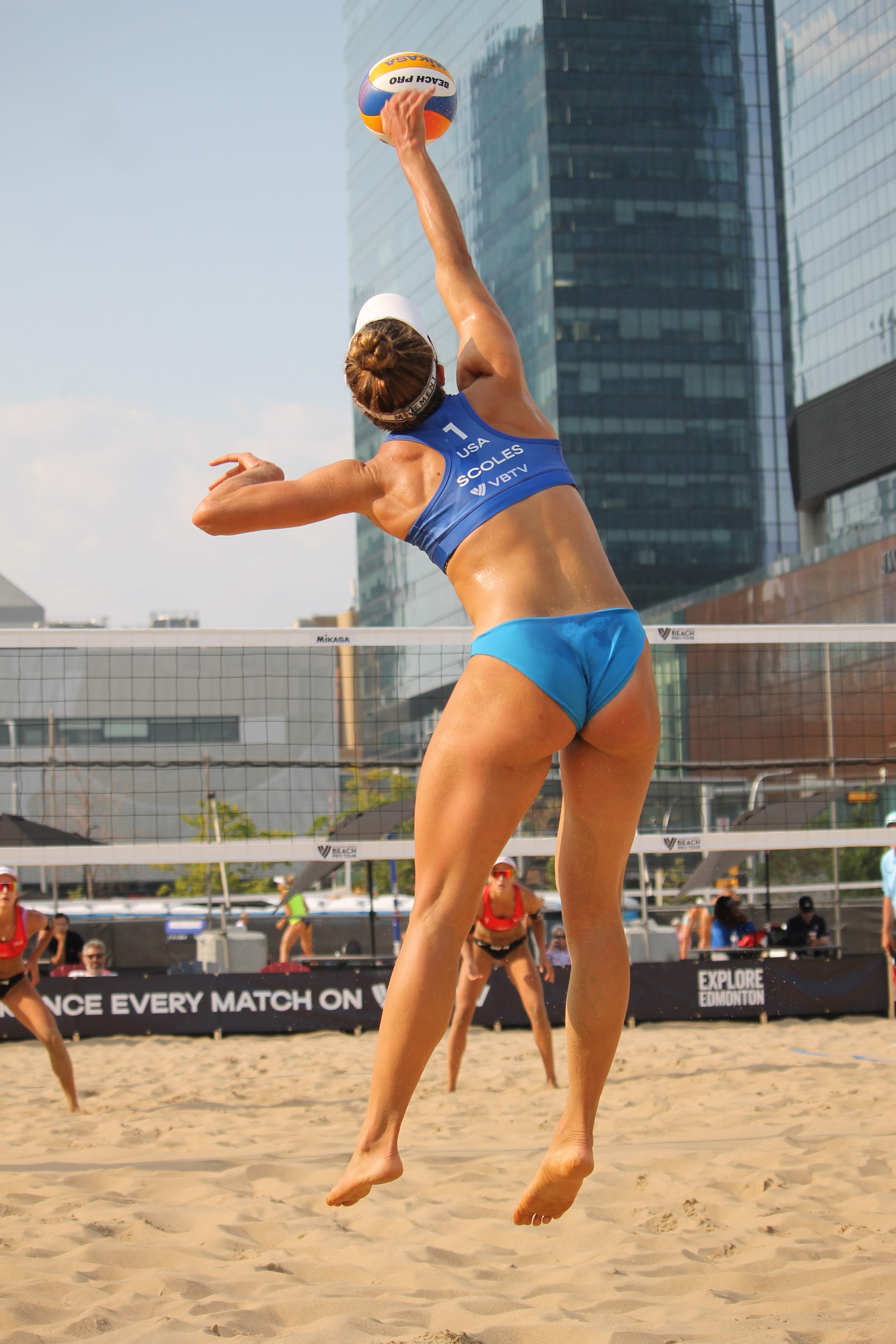
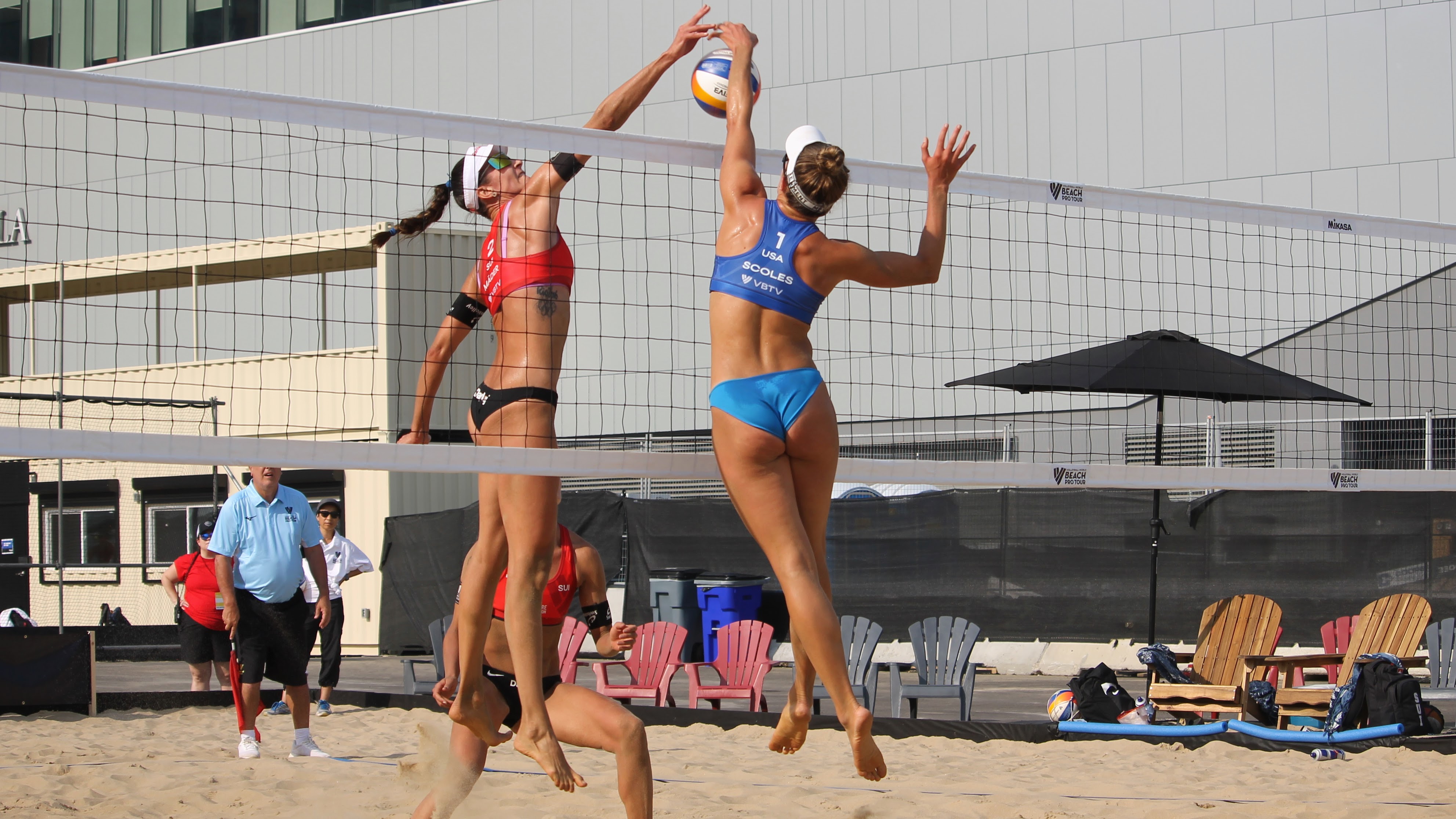
USA’s Julia Scoles serves.
Switzerland’s Zoé Vergé-Dépré takes in the quarterfinal. A border battle between Italy and Austria.
Italy’s Marta Menegatti serves in pursuit of a fourth Olympic bid.
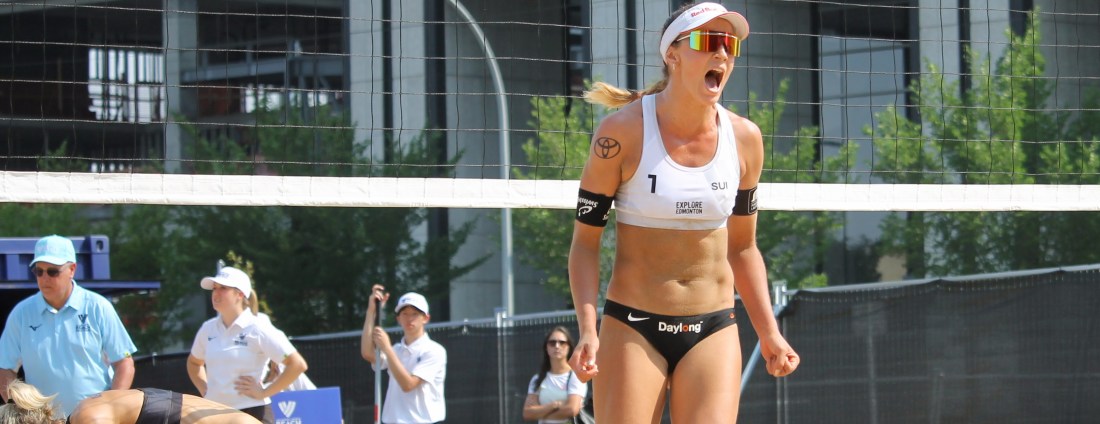
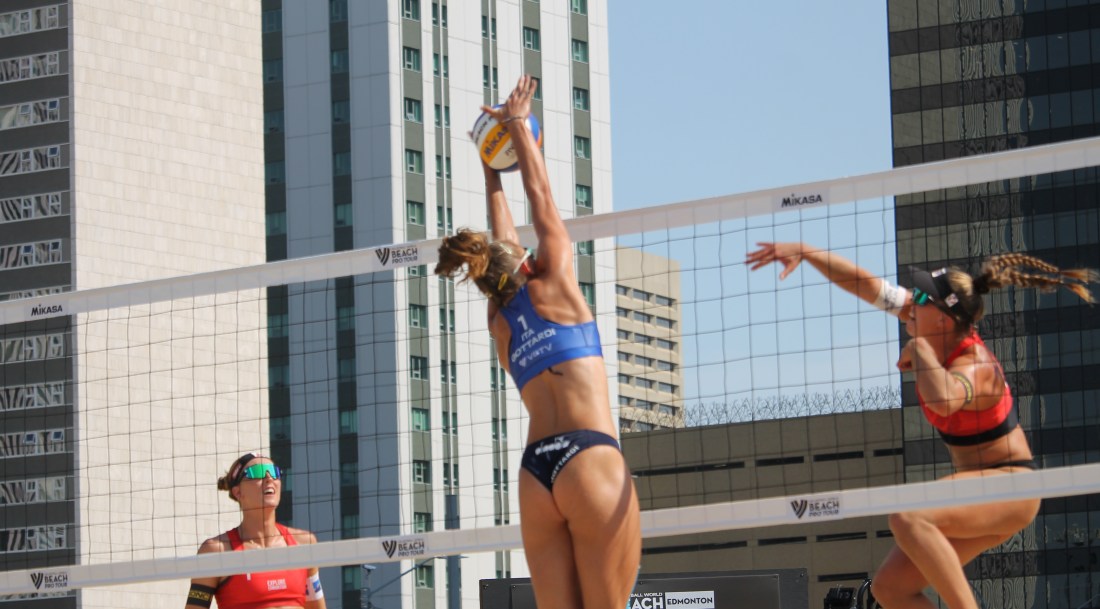
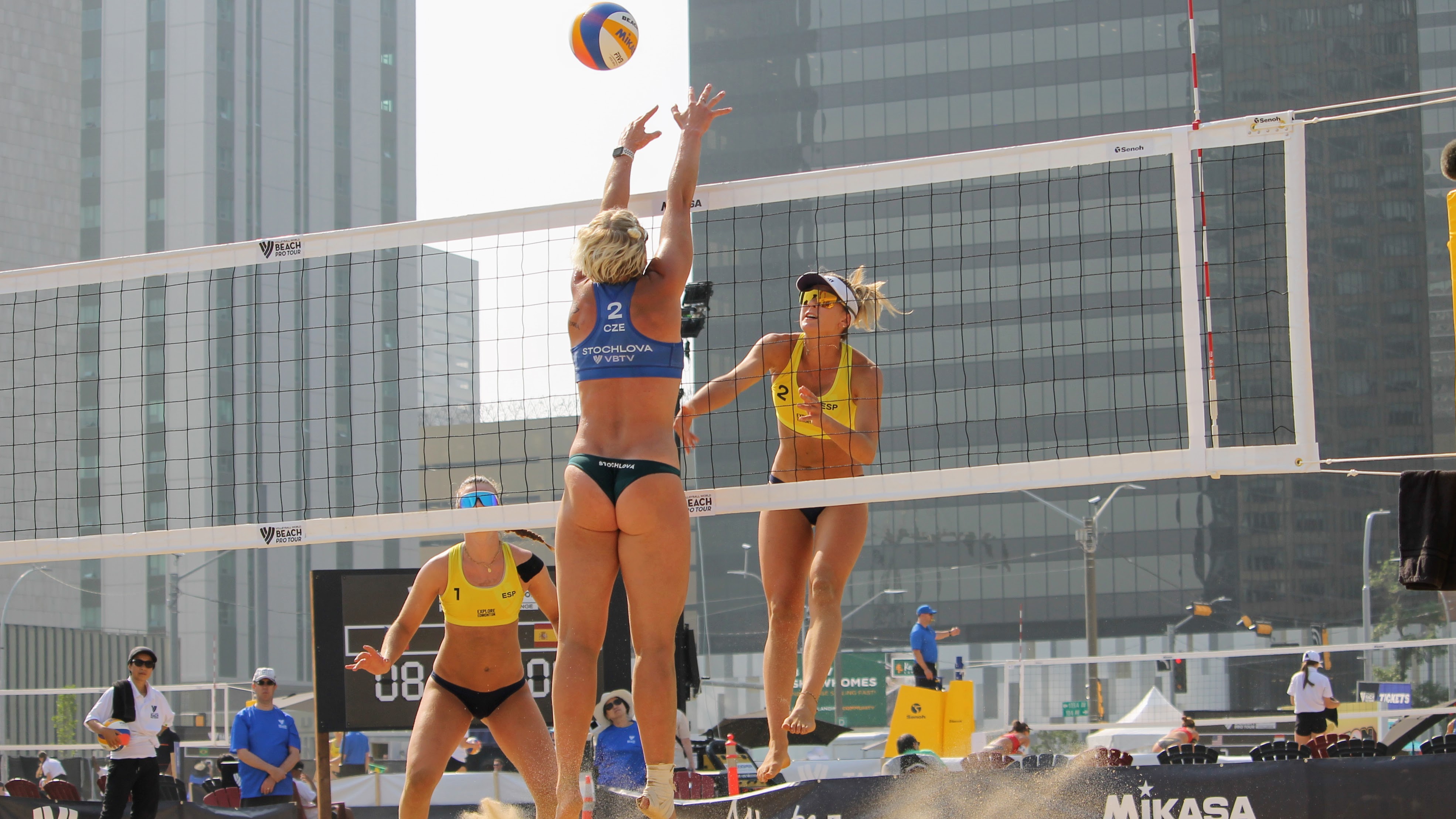
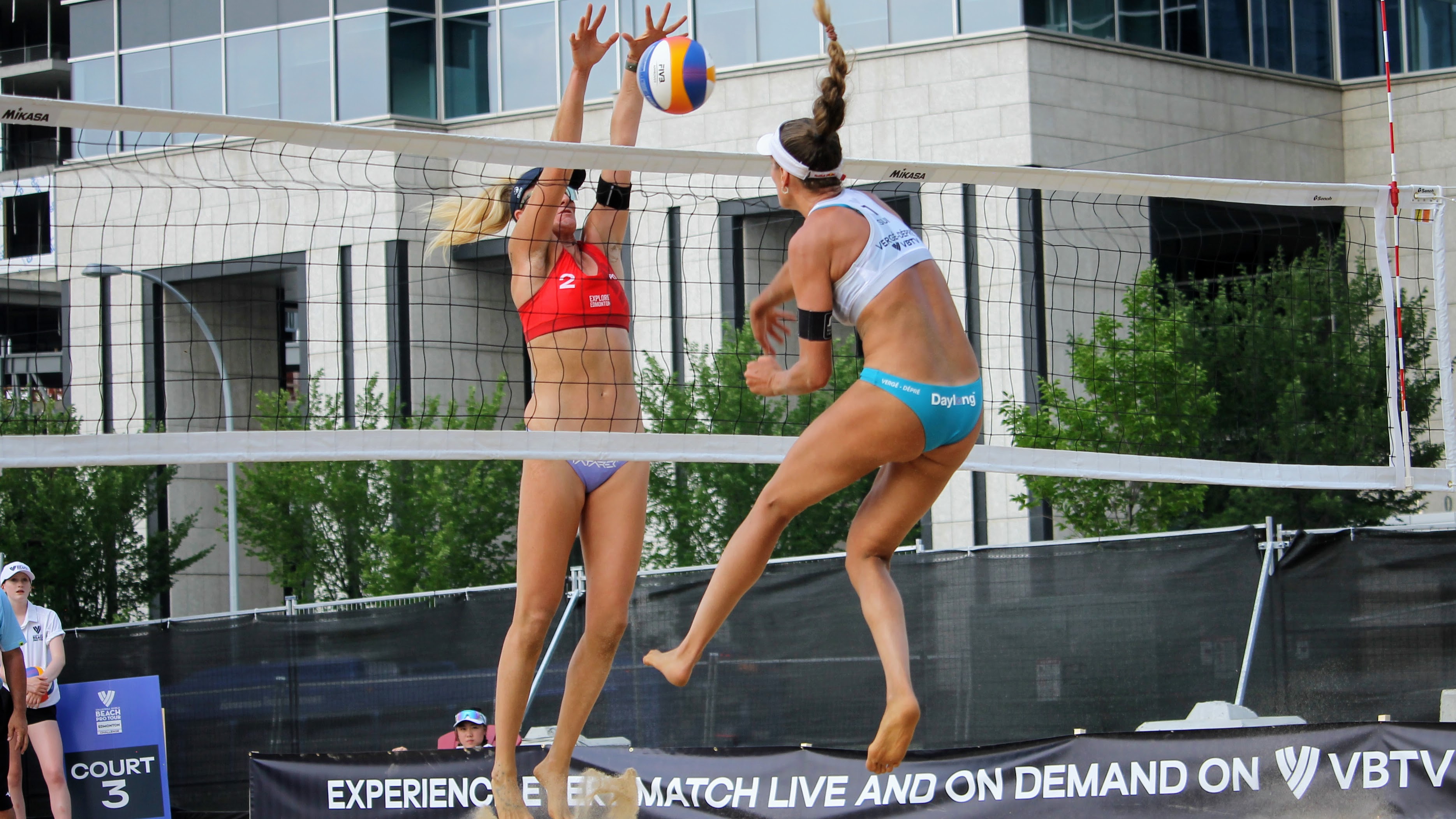
Spain (and TCU) partners Tania Moreno and Daniela Alvarez duel the Czechs.Anouk Vergé-Dépré against Poland.The ageless Laura Ludwig greets Anouk Vergé-Dépré.Switzerland’s Joana Mader battles USA’s Julia Scoles.
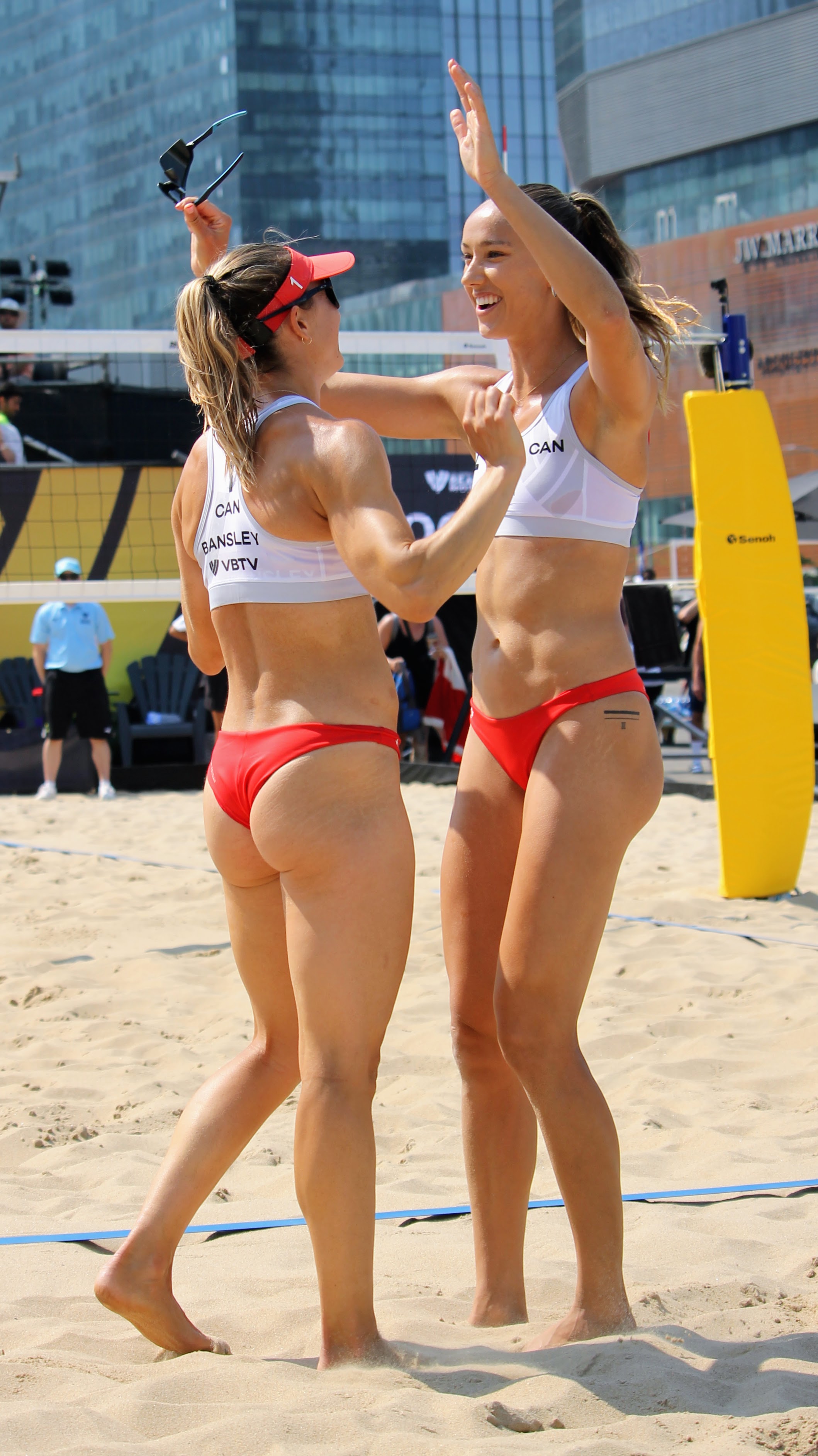
CanadiansHeather Bansley, left, and Sophie Bukovec, right, on center court.
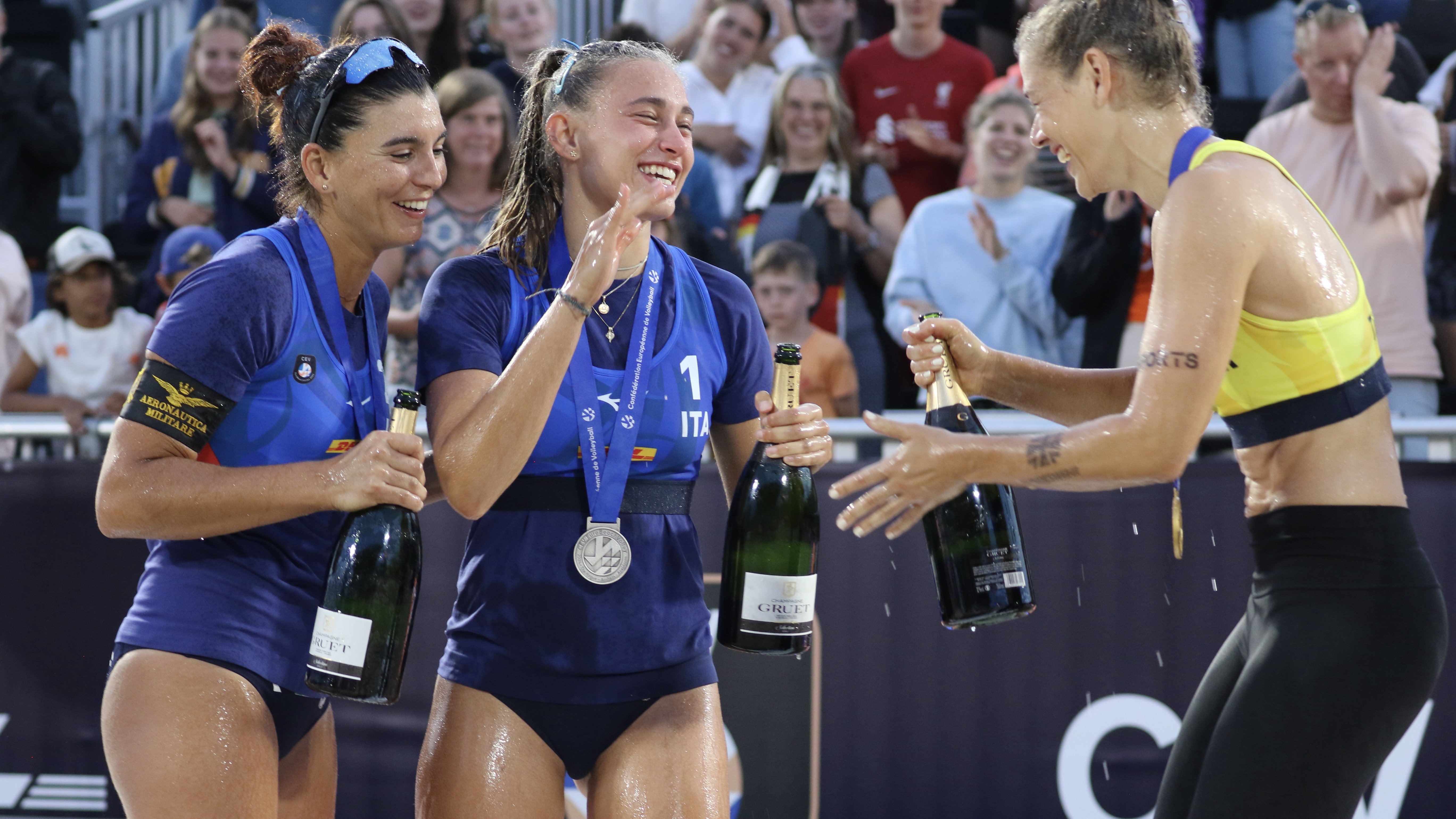
Rising Italian star Valentina Gottardi chases a ball off the court to save a point … And finds it a price worth paying en route to a silver medal. Laura Ludwig and new partner Louisa Lippmann came through qualifiers to make a 2024-sized impression.Still fresh out of retirement,Heather Bansley, 35, had a week to remember.
EDMONTON, Alberta — We don’t choose the story in which we’re cast. But we do sometimes control the script.
No one is born with great odds of becoming a professional athlete. But the odds of Esmée Böbner living out the life of an Olympic beach volleyball hopeful would have appeared particularly remote when she entered the world in the weeks before the new millennium.
She was born in Switzerland nearly eight months before the mountain resort town of Gstaad ever thought to host a professional beach volleyball tournament that grew over the next two decades into one of the sport’s signature events and a summer staple in the Alps. She was born nearly five years before Patrick Heuscher and Stefan Kobel earned bronze medals in the 2004 Olympics, the first Swiss medals in the sport (at the same Olympics in which a Swiss women’s team debuted).
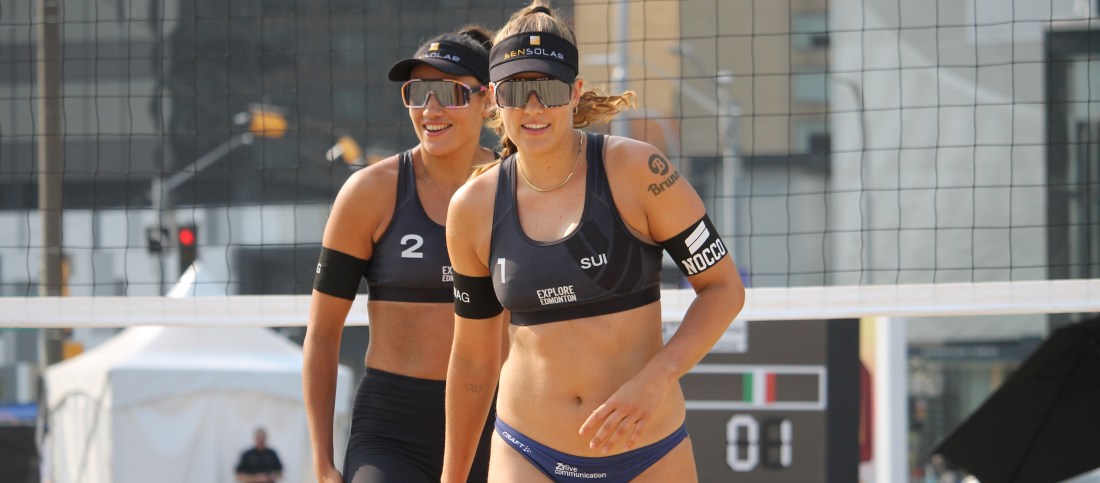
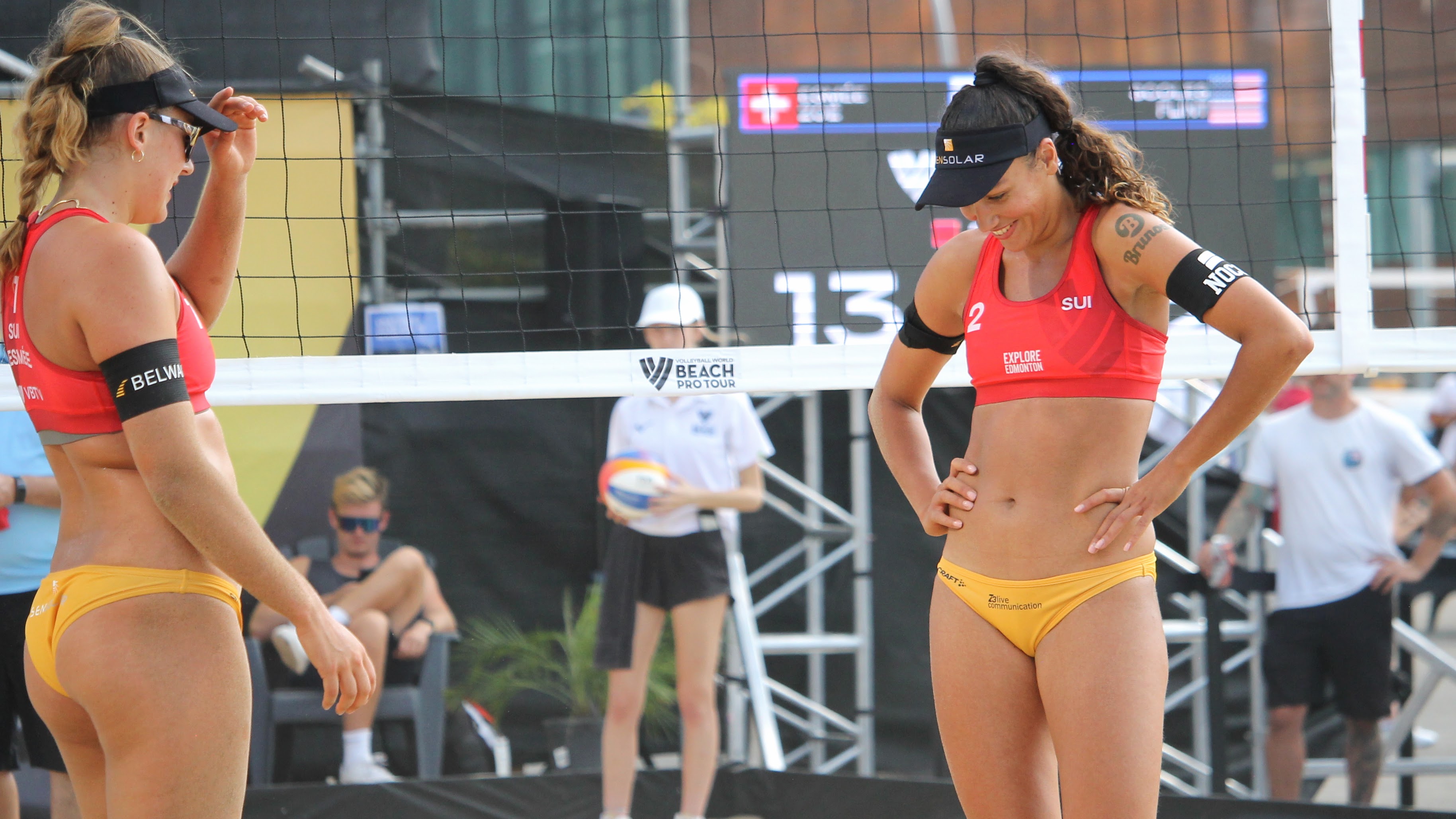
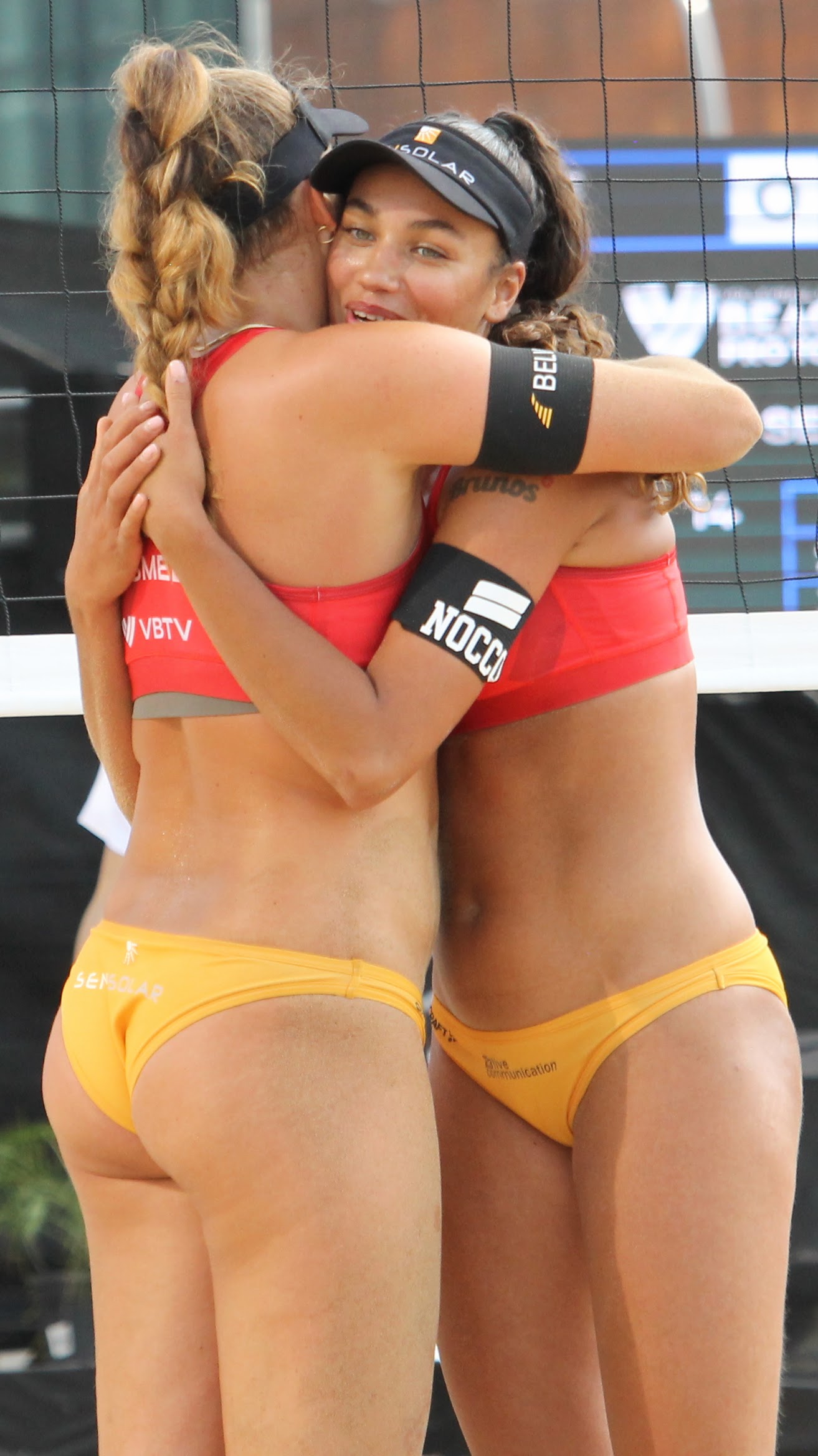
Esmée Böbner, left, and Zoe Vergé-Dépré, right, form one of Europe’s best young teams.
She was born at an inflection point, when nothing became something. She grew up dreaming of something that previous generations didn’t even know to dream about. Half of the first Swiss women’s team to compete in the Olympics, Simone Kuhn was already 20 when she started playing on the sand. Someone called and told her she would make a good blocker. Sure enough, four years after the thought of playing beach volleyball first crossed her mind, she was a European champion and Olympian. That’s how these things begin.
Two decades later, Böbner had her sights set on the sand almost form the start. At 16, she received an invitation to train at Beachcenter Bern, the hub of Swiss beach volleyball. She didn’t need anyone to explain to her what the sport was.
“I think everyone in Switzerland starts indoor, but I knew early on I wanted to play beach,” Böbner said. “I really like the atmosphere here. I think it’s way more fun than indoors.”
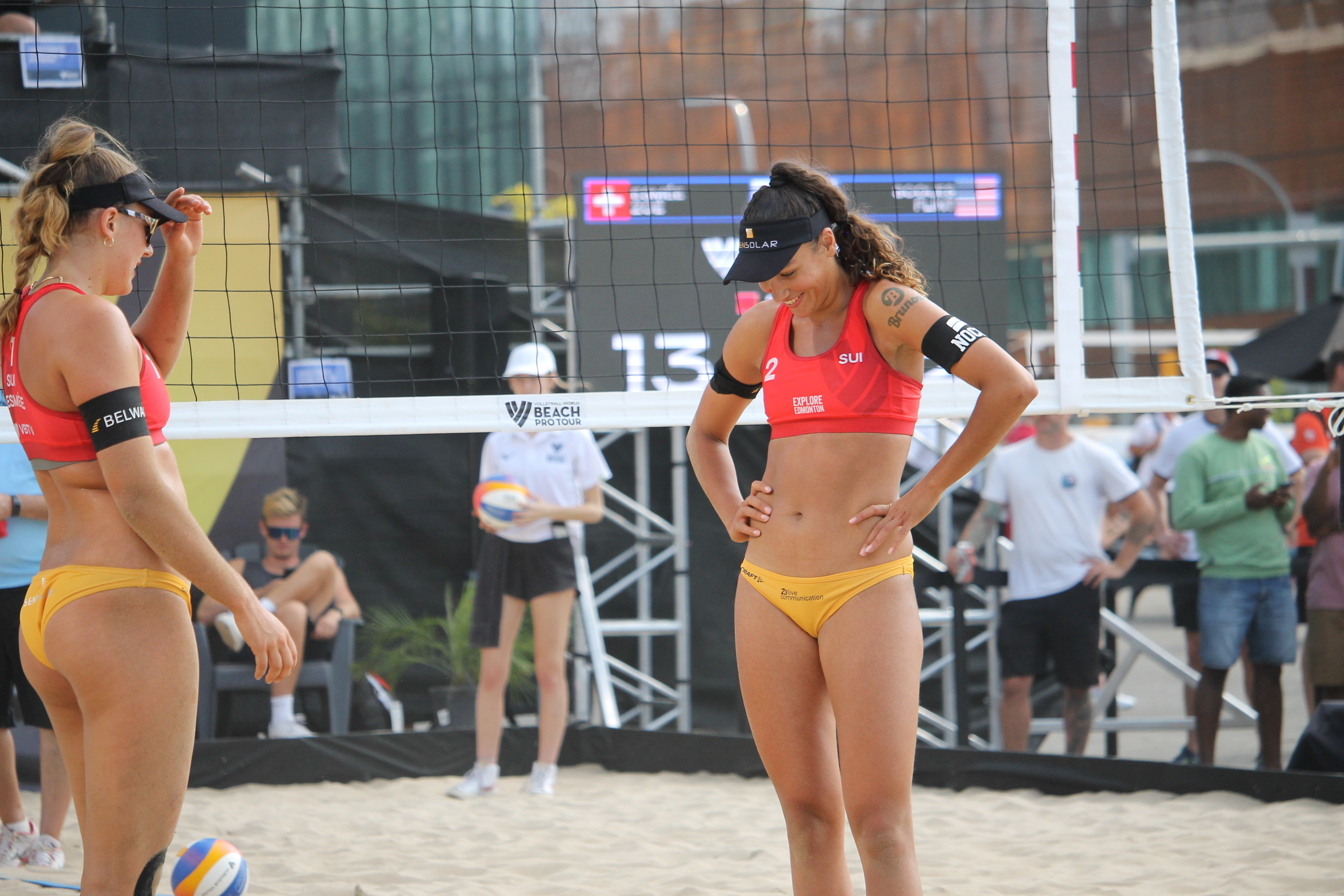
Yet sitting forlornly at one of the dozen or so picnic tables arrayed beyond the outer courts at a recent tour stop in Edmonton, she didn’t look especially happy or blessed by the fortunes of history. Head bowed, she looked broken. Like someone who had traveled nearly five thousand miles and crossed eight time zones just to be miserable and jet lagged. She and partner Zoe Vergé-Dépré had just lost to Americans Kelley Kolinske and Hailey Harward. It wasn’t so much the loss against a credible, if new, American team that rankled. It was that she lost meekly, caught up in her own frustrations as mistakes, to borrow an Alpine metaphor, snowballed.
Two weeks earlier, the Swiss had lost valiantly—and memorably—on home sand in Gstaad. Down a set and trailing by double digits against a surging German team, the Swiss duo rallied to win the second set 25-23 before falling 15-12 in the final set. The loss still stung, denying them a place in the knockout rounds. But cheered off the court by the home crowd, their resiliency said plenty about one of the most upwardly mobile young European teams.
In Edmonton, there was no such valor to be found. And Böbner knew it.
Approached before the match about speaking with Böbner when all was said and done, the Swiss coach indicated it would be no problem. After the match, the tight-lipped, pained smile on his face as he walked past said more than enough. This might not be the best day to chat, after all. The postgame team meeting stretched on and on before Böbner and Vergé-Dépré faded away into the night.
“I had a hard day and I didn’t like my attitude on the court,” Böbner recounted a day later. “I had to restart and refocus and kind of search my identity again. … I’m really happy I could reset and start a new day.”
The chemistry (or is it alchemy?) of beach partnerships isn’t easy to comprehend. Not to an outsider. But Böbner pointed out that she’s fortunate to have a partner who understands her. Someone with whom there is open dialogue and encouragement, a true partner rather than a mere colleague. That helped in Edmonton, to not be trapped in her own head. But so did some decidedly universal Hollywood inspiration. Böbner watched King Richard, the 2021 Oscar nominee about the improbable rise of Serena and Venus Williams and their father.
The improbable rise of two women who very much took control of their own scripts in life.
A day later, entering the knockout round, the Swiss played on center court for the first time in the event—evident when they prematurely blew threw the public address announcer’s solo introductions and took the court together, left to stand somewhat awkwardly through the rest of the preamble.
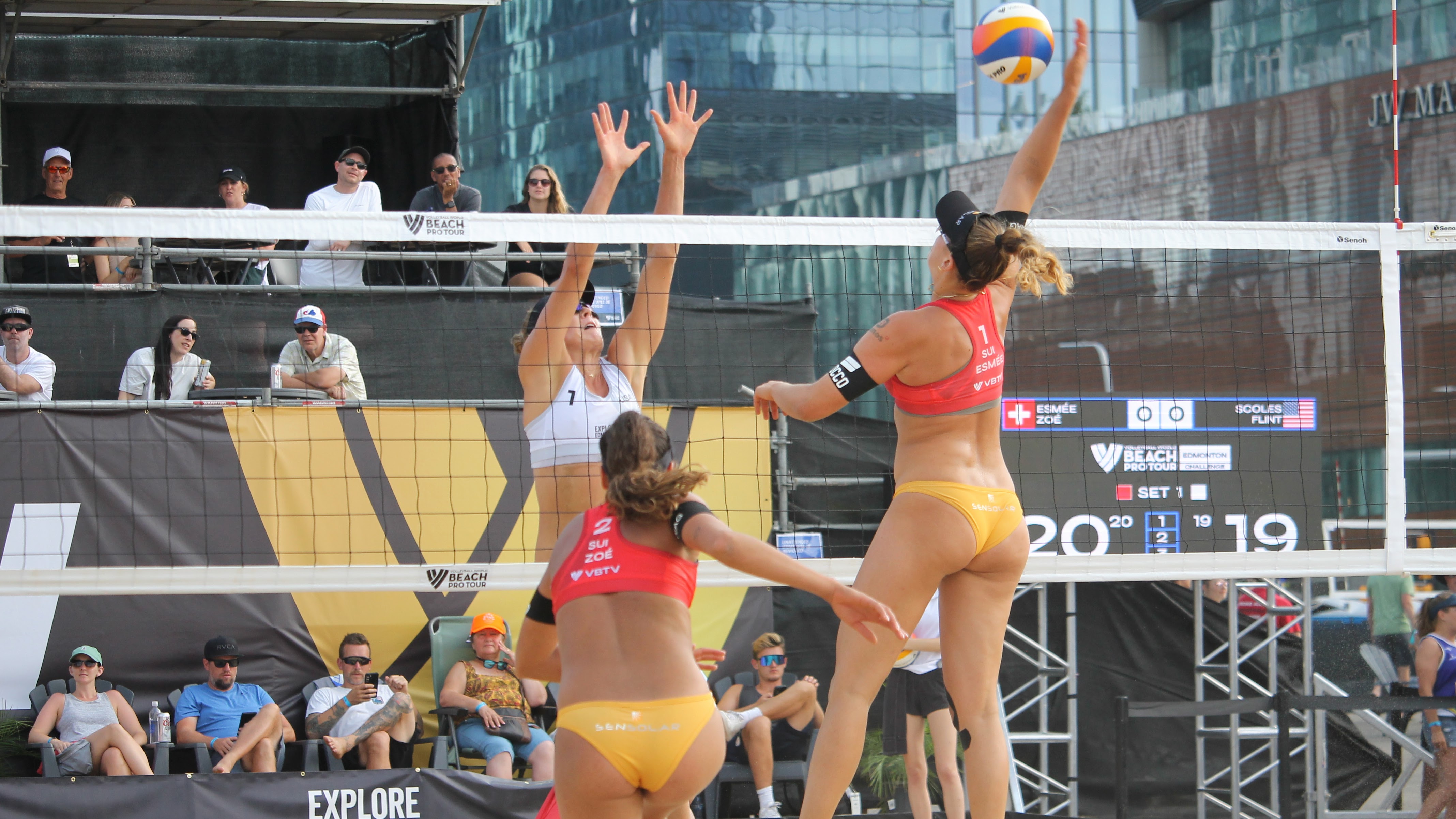
Playing the last remaining Canadian team in front of a crowd that made no secret of its rooting interest, Böbner and Vergé-Dépré won in straight sets. Böbner wasn’t perfect. The serve that can be such a weapon never quite found the mark. She made some errors. But they didn’t linger. They didn’t prevent her from doing her part on the next point. After a quick trip back to the hotel to escape the sun, they returned and beat Americans Betsi Flint and Julia Scoles in the quarterfinals. A day after despair, they earned their second semifinal berth this summer.
The Swiss were again off their game in the semifinal, losing to Italy. And then they were valiant again, dropping a three-setter against the Czech Republic for bronze, 26-24 in the second set and 15-13 in the final set of a match that stretched well over an hour.
It wasn’t a dream ending, but they played through the end of the tournament. For a young team trying to climb the ladder, pushing ahead of schedule to displace one of the established Swiss giants—reigning Olympic bronze medalists Anouk Vergé-Dépré (Zoe’s older sister) and Joana Mader or former European champions Nina Brunner and Tanja Hüberli—that itself is a victory.
Zurich to Edmonton is a long way to travel with no guarantee of anything more than a day of volleyball. Yet for Böbner, the arduous journey was from the forlorn figure at that picnic table to the fighter playing through the tournament’s final hours.
Beach volleyball has a vibe all its own—the atmosphere that first appealed to Böbner all those years ago. But it’s also a grind, a life of unforgiving travel, the finest of competitive margins and ceaseless pressure for results. It can beat you down and rob you of your identity, if you let it. If it’s your passion, and has been for as long as you can remember, it can also lift you up.
“For me, it’s not the traveling,” Böbner said of her joy. “That’s cool, but I also like to be at home. It’s the passion you can give to something. It’s important to me to keep that passion. As long as I’m having fun doing it, I think I’m the best part of myself.
“That’s really important. It’s what I enjoy about beach volleyball.”
It was her good fortune to be born at precisely the right time to live out a dream.
What she or any of us do with tomorrow is ours to decide.











 Graham Hays