
From the road …

Recovering ESPN person. Still writing about women's sports (and other things).
SULPHUR, La. — This is the right part of the world to visit if you want to eat well. It’s also the right place to be if you want to experience the essence of rivalry.
And while, sure, the end of crawfish season puts a damper on the former, the sight of Cat Osterman and Monica Abbott peering in from the pitching circle means the latter isn’t waiting for football season to peak.
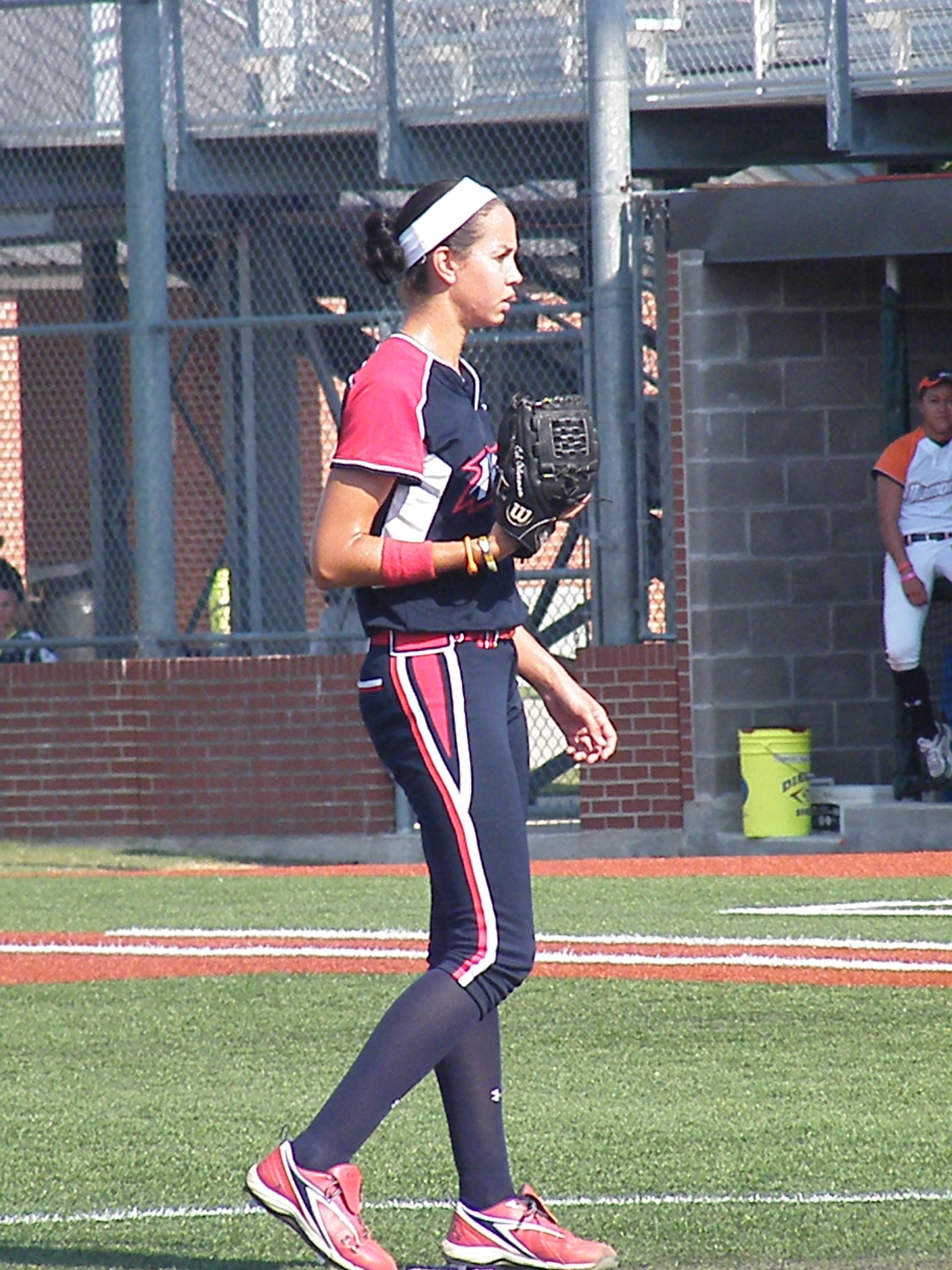
With apologies to Japanese ace Yukiko Ueno, no two women on the planet throw a softball better at this particular point in time than the USSSA Pride’s Osterman and the Chicago Bandits’ Abbott. Which makes it all the more intriguing to know with certainty that one of them is going to lose before the end of the weekend.
For the second season in a row, the Pride and Bandits will play for the NPF championship, with the best-of-three final series getting underway tonight at McMurry Park. A year ago, Osterman bested Jennie Finch and cemented her status as the closest thing the icon had to an heir apparent as the face of softball. But as good as Finch still was at the time of her retirement, including a gem for the Bandits in that series that forced a decisive third game, the more compelling contest for on-field dominance in recent years has been between Osterman and Abbott.
In 2007, Abbott punctuated her rookie season by leading the Washington Glory to a title against Osterman’s Thunder. Two years later, still with the Thunder, Osterman returned the favor by beating the Pride, then featuring Abbott in the circle, twice in one day to clinch a championship. Their first meeting this season, back in June, went 10 innings back, with both pitchers going the distance in a 3-2 win for Osterman and the Pride.
They bring out the best in each other, which is a little frightening considering what the league’s co-pitchers of the year do the rest of the time.
No wonder the Bandits had a simple rallying cry as Friday’s semifinal against the Akron Racers dragged into Saturday morning and Abbott’s pitch count mounted after she came on in relief of Nikki Nemitz. A loss would have meant a winner-take-all game Saturday morning to even have a chance to face the Pride in the finals.
As coach Darrick Brown explained, “A lot of the girls were saying, ‘Let’s win it this inning for Monica’s left arm.’”
Nemitz obliged with a walk-off three-run home run in the bottom of the ninth.
Of course, with Osterman and Abbott on the marquee, the rest of the rosters are more than merely supporting characters.
For one thing, the Pride don’t need to rely on Osterman in the circle if things go awry or they want a different look. You wouldn’t get very far on the aforementioned list of the best pitchers in the world before coming to Pride No. 2 Danielle Lawrie. Veteran Sarah Pauly added to a long and successful postseason resume by nearly no-hitting the NPF Diamonds on Friday. And despite a rough relief stint in an earlier game Friday, Jordan Taylor helped Team USA win the World Cup of Softball in July and can hold her own in any setting.
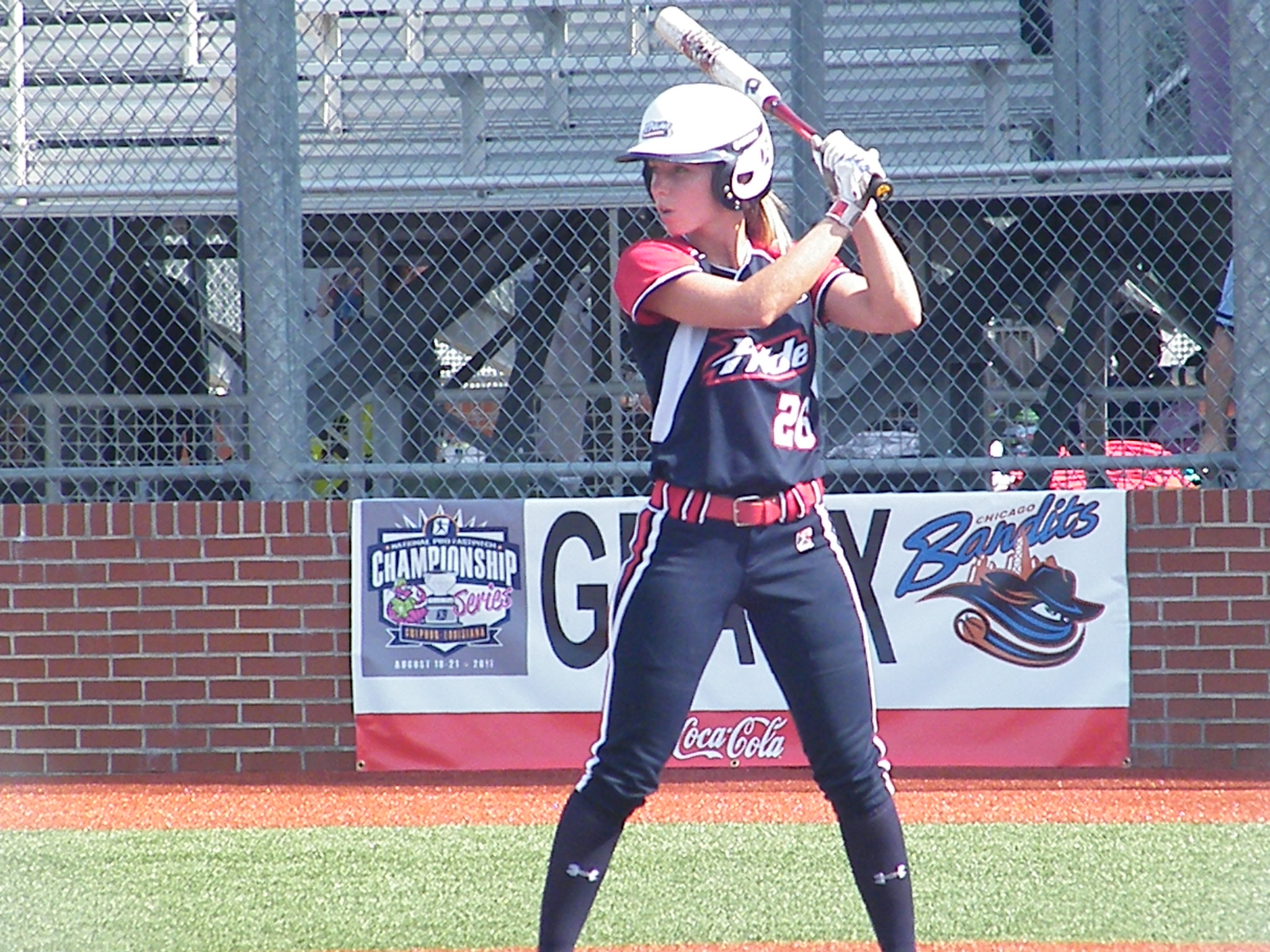
It’s that sort of embarrassment of riches that defines the Pride as the FC Barcelona of professional softball. At any given time, the lineup likely contains seven former Olympians, including the world’s best hitter in Jessica Mendoza and it’s most dangerous top of the order in Natasha Watley and Caitlin Lowe. And that’s without mentioning the Olympians coming off the bench, like Jenn Salling, or the non-Olympians good enough to crack coach Tim Walton’s lineup card, like first baseman Charlotte Morgan and outfielder Francesca Enea.
Pep Guardiola should be so lucky.
The only thing bigger than the team’s star power is the target on their collective back.
“I think that coming out, you’re going to be rivals with them,” Bandits shortstop Tammy Williams said. “They’ve been the team to beat, and you want to play them in that final round and prove that you’re the best.”
The Bandits weren’t the second-best team in the league in the regular season, and it’s worth pausing for a second to note the success the Racers enjoyed this season before falling in the semifinals. Coach Jake Schumann said after those losses that it was the group that most embodied team during his 12 years of coaching. To their credit, the Racers may have been more than the sum of their parts, grinding through the regular season and coming up with two more wins than the team from Chicago.
But if we’re talking parts, the Bandits are easily the most compelling foil for the Pride for reasons that go well beyond Abbott. It oversimplifies things to say the Pride are the team that assembled prefabricated stars, while the Bandits are the team that benefitted most from the opportunities a pro league offers to develop stars. But there’s at least a grain of truth there. In Williams, a standout at Northwestern who has blossomed into an international-caliber star since finishing school, the versatile Nemitz and even rookies like Alisa Goler and Megan Wiggins, the Bandits are loaded with players in need only of name recognition to qualify as stars.
That’s a list headlined by Stacy May-Johnson, the two-time NPF MVP who came out of retirement (and national team duty) to rejoin the Bandits for the stretch drive.
“She’s obviously a big plus because you’re never going to have a bad at-bat with Stacy,” Brown sad. “She’s going to go up and battle. She’s going to compete, and you’ve got to have someone like that after your best hitter, your hottest hitter. Goler bats in the three-spot, so you’ve got to have somebody in that four-spot.”
It’s the championship series. And the qualifications of the other aspirants notwithstanding, it’s the championship series the league needed, even if it couldn’t be said.
“I don’t think it really changes our preparation,” Walton said of the alternatives before an opponent had been determined. “It won’t change who we pitch. It won’t change who we bat. It will all be the same.”
But in its own way, that’s the essence of a rivalry. Take two teams that know each other well and see if their best can beat your best. It just happens this one also comes with the two best pitchers in the world.
If six softball games played in a tournament of debatable significance prove anything, it’s that even for a roster of players closer in age to the “Twilight” generation than the twilight of their careers, there is no time like the present.
Thrown into the deep waters of international competition at its highest level, albeit under the relatively benign conditions of the World Cup of Softball, a six-team tournament that is more than a series of exhibition games but less than a major championship, an inexperienced Team USA did more than stay afloat, claiming the championship with a 6-4 win against Japan on Monday night.
Over the span of five days, a team showed it has a future together.
Is that enough?
An American roster comprised almost entirely of current collegians and those for whom the ink on the diploma is still drying looked its age when it struggled to put away the Czech Republic in its opener, suffered a rare loss against Canada (rarer still without Canadian ace Danielle Lawrie on the roster) and struggled to maintain momentum and master execution throughout the weekend in Oklahoma City.
The dugout’s preferred gesture of moment, hands crossed in a reverse wave that mimicked the wings of a bird, was playfully light-hearted. It was also the kind of thing 20-year-olds come up with if left to their own devices for hours on end.
But if a team can act its age, it must also be possible to act its ability. That the latter trait is more extensive than the former is limited became apparent as the weekend continued. First came a late rally Friday after squandering a lead against Australia, Team USA capitalizing on Australian mistakes, such punishment for even minor transgressions a familiar hallmark of previous national teams. Then the United States put away Japan with a five-run sixth inning in an 8-4 win in preliminary play, erasing the sting of three losses against its rival in the previous week’s Canada Cup and responding to pressure after the loss earlier in the day against Canada made missing the title game for the first time in the event’s history a very real possibility.
What Team USA is at the moment landed it in some trouble through five-plus innings of Friday’s game against Australia. Young, unsteady and perhaps even a little unsure of themselves, collectively if not individually, the Americans squandered a lead and allowed their opponents to pull even at 2-2 in the top of the sixth.
And unlike a night earlier, when an overmatched Czech Republic team hung around but never really threatened to pull the upset against the United States, the opponent on this night, having already taken Japan to extra innings earlier in the day, was entirely capable of walking out of Hall of Fame Stadium with a win.
What Team USA could eventually be took over from there.
Facing Australia’s Justine Smethurst, who first appeared in the World Cup in 2005, pitched Hawaii to a super regional trip to Knoxville in 2007 and earned a bronze medal in the 2008 Olympics, momentum seemed headed Down Under. Instead, the United States benefitted from a few Australian misplays in the field behind Smethurst but also seized the initiative in taking full advantage of the good fortune to push across three runs and hold on for a 5-2 win.
There is some truth to the idea that great teams are those which bounce back from adversity. (There is also a great deal of truth to the idea that great teams don’t give themselves many opportunities to prove it). This United States team has a long way to go to be great, but after spending the opening game and the Czech Republic and much of the early innings against Australia looking like a team a little daunted by the uniform it was wearing, it went out in the bottom of the sixth and acted like a team that realized it had the pieces in place to do the intimidating.
You aren’t going to play flawlessly in the field? Team USA has the speed to make you pay. You’re going to intentionally walk Brittany Schutte to get the Valerie Arioto? Team USA has the depth to make you pay.
Some days will be two steps backwards and one step forward. Other days will see the latter outnumber the former. Either way it’s nice when the last step is one in the right direction.
Especially with a long day against Canada and Japan ahead on Saturday.
Player of the Game
Stacey May-Johnson turned in another good game, driving in the game’s first run in the fourth and running out a grounder in the sixth that turned her into the eventual go-ahead run when Stacey Porter misplayed the ball at third. Schutte followed that with a double that nearly cleared the fence in left and held her own behind the plate on defense. Arioto delivered the big hit, a two-run triple to score May-Johnson and Katie Cochran and break the tie in the sixth. But even if she wasn’t part of the drama that eventually won the game, Jordan Taylor gets the nod.
Taylor took a no-decision after being charged with the tying run in the sixth after she was relieved by Keilani Ricketts, but give the former Michigan star credit for a steady, workmanlike effort. That doesn’t exactly sound like a ringing endorsement (and admittedly, “workmanlike” isn’t the first adjective that generally comes to mind for Cat Osterman or Monica Abbott), but it is. Working with the team’s least experienced defensive catcher in Schutte, at least in terms of college service behind the plate, Taylor navigated her way out of trouble when it arose, showing the must-have ability in international play to get strikeouts in big spots, and held her own in the heat. She wasn’t perfect, but she looked comfortable from the outset.
When her teammates followed that lead, the win came, even if Taylor didn’t get it.
The Czech Republic acquitted itself rather well, all things considered, in a 7-2 loss against the United States. The European side worked out of some jams, showed some defensive playmaking ability and had the tying run on deck as late as the sixth inning. But among the aforementioned things to consider are that this is not a team in the same class as Australia, Canada or Japan, and it was playing its second game of the day (having lost to Australia 11-0 in the heat of the day). All of which added up to what felt like, from the distance of a television screen, a very exhibition-esque vibe for Team USA. which made plenty of use of its roster over seven innings.
It wasn’t the most convincing win ever earned in Hall of Fame Stadium. In this instance, it didn’t need to be. Strictly from a softball point of view, what was on display in Oklahoma City didn’t match up to what was being played in Florida between the USSSA Pride and Chicago Bandits, and that’s going to take some getting used to. But rough edges and all, it’s still a national team, and it’s still loaded with a lot of talent and a lot of potential to entertain.
Player of the Game
Let’s go with Stacy May-Johnson. Sluggish as the game felt at times, Team USA didn’t really need a virtuoso individual performance from one player to gain control, and there was enough lineup shuffling to keep most from getting many opportunities for encores. But May-Johnson’s name kept popping up through the course of the action. She went 3-for-4 at the plate, including a home run to push the lead to 6-2, but she was equally notable in the field at shortstop. Good all night out there, she was best when she needed to be. With the Czech Republic threatening in the top of the sixth (you read that right), runners on first and second and no outs, she covered well at third base on a ball down the line to Jenae Leles and made a strong throw to first to complete the 5-6-3 double play.
If I was writing in Oklahoma City tonight, I would definitely be heading for Jessica Shults in search of some good stories about any fun had at the expense of the team’s oldest player — and, jokes aside, what kind of effect a player with both college coaching and professional playing experience has on such a young Team USA.
Random moment
I have a tendency to gush when the conversation turns (often at my insistence) to Val Arioto and plate discipline. Suffice it to say, if I was in a band, “Val Arioto’s Plate Discipline” would undoubtedly come up in the list of potential names (although “Etch A Sketchy” or “The Knights Who Til Recently Said Ni” would be tough to edge out).
One at-bat in the third inning of Thursday’s game showed why she may have the best eye in the sport.
The first two pitches weren’t particularly close — most hitters, certainly those at the national team level, would have been up 2-0 in the count. But a lot of those same hitters might have swung at the third pitch, a rise hanging tantalizingly in front of someone expecting something close. Arioto was tempted but checked her swing almost as soon as her hands started back, passing on a pitch that, in all likelihood would have produced nothing more than a foul ball. After the obligatory strike on the 3-0 pitch, she again held off on a 3-1 pitch low and inside that was definitely out of the strike zone but close enough to draw its fair share of swings.
A lot of really good hitters would have been in the box with a 2-2 count and largely blameless for it (and, sure, some of the really good ones might have been on base after hitting a pitch they didn’t have much business hitting). Instead, Arioto was jogging to first base to give Team USA runners on first and second with no outs, the start of an inning in which some misplays from the Czech Republic eventually helped the Americans extend a 3-0 lead to 5-0.
I’ve never seen Ben Gibbard tune a guitar or watched Mario Batali shop for vegetables. I’d like to do both before I pass. But I have seen Val Arioto play chess to a pitcher’s checkers, and as master craftsmanship goes, that ain’t bad.
 Graham Hays