Playing With Fierce Joy

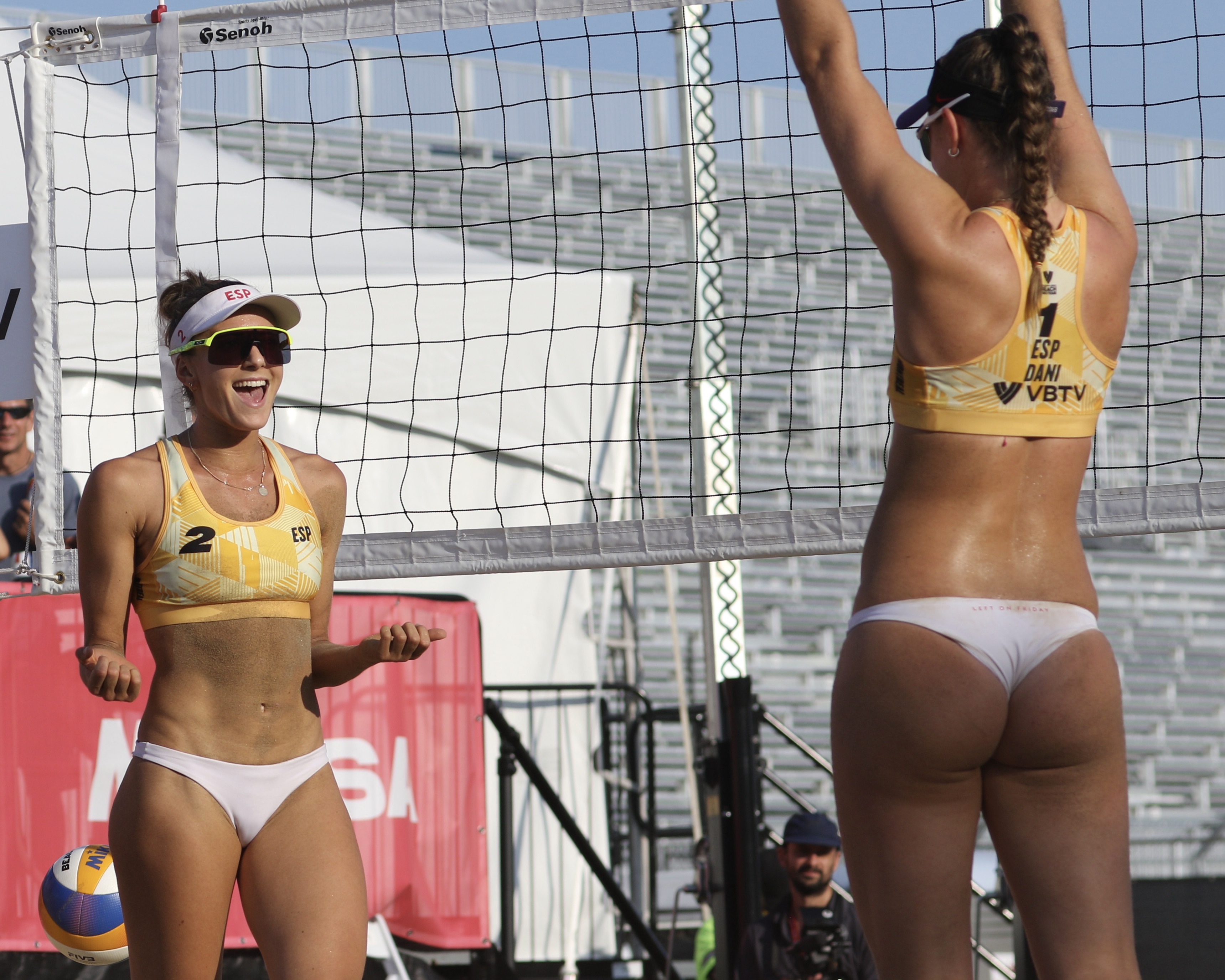
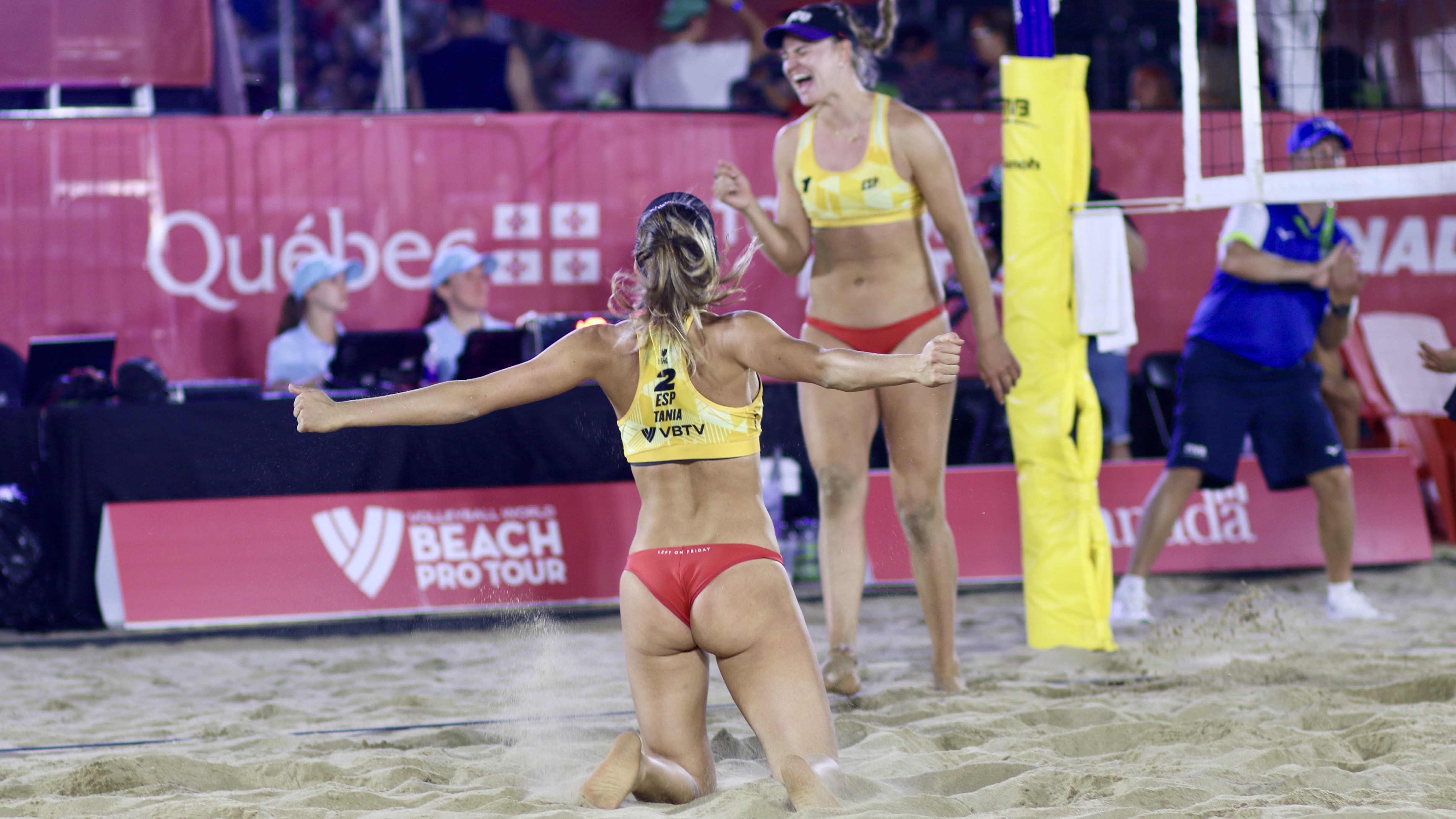
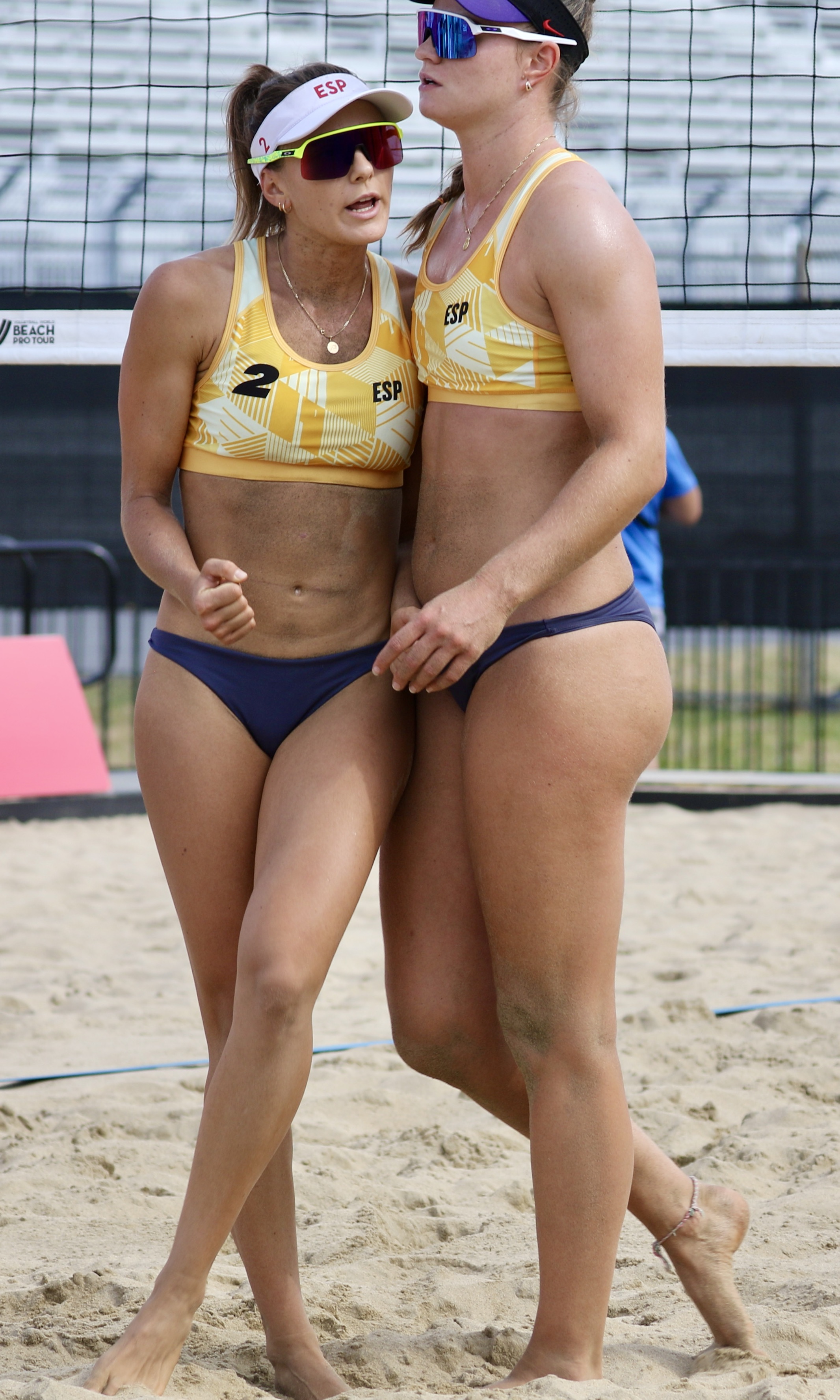
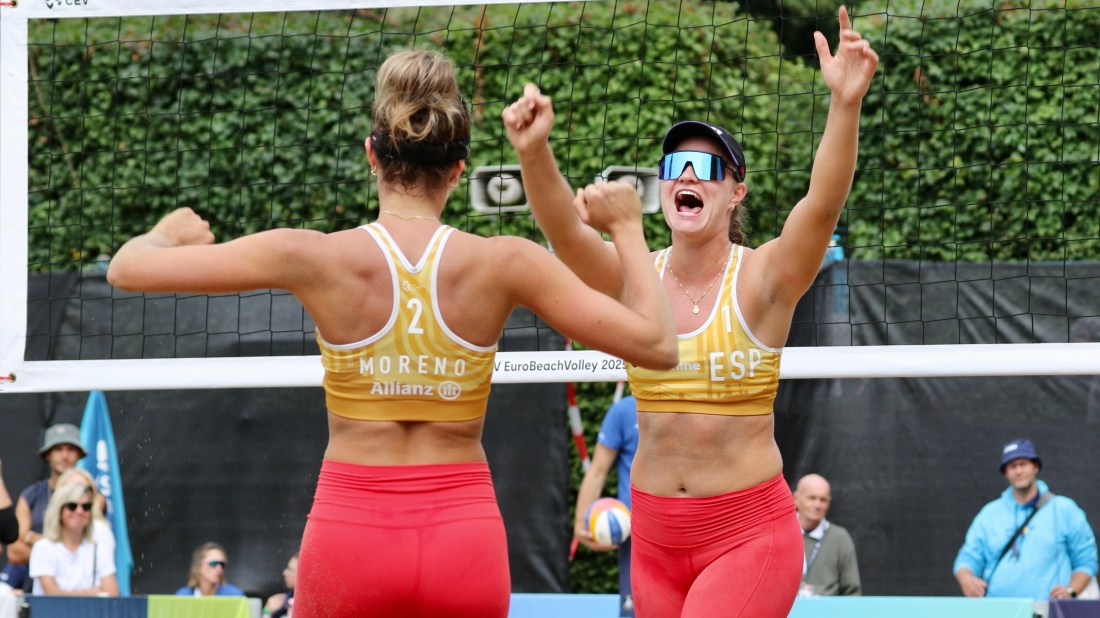
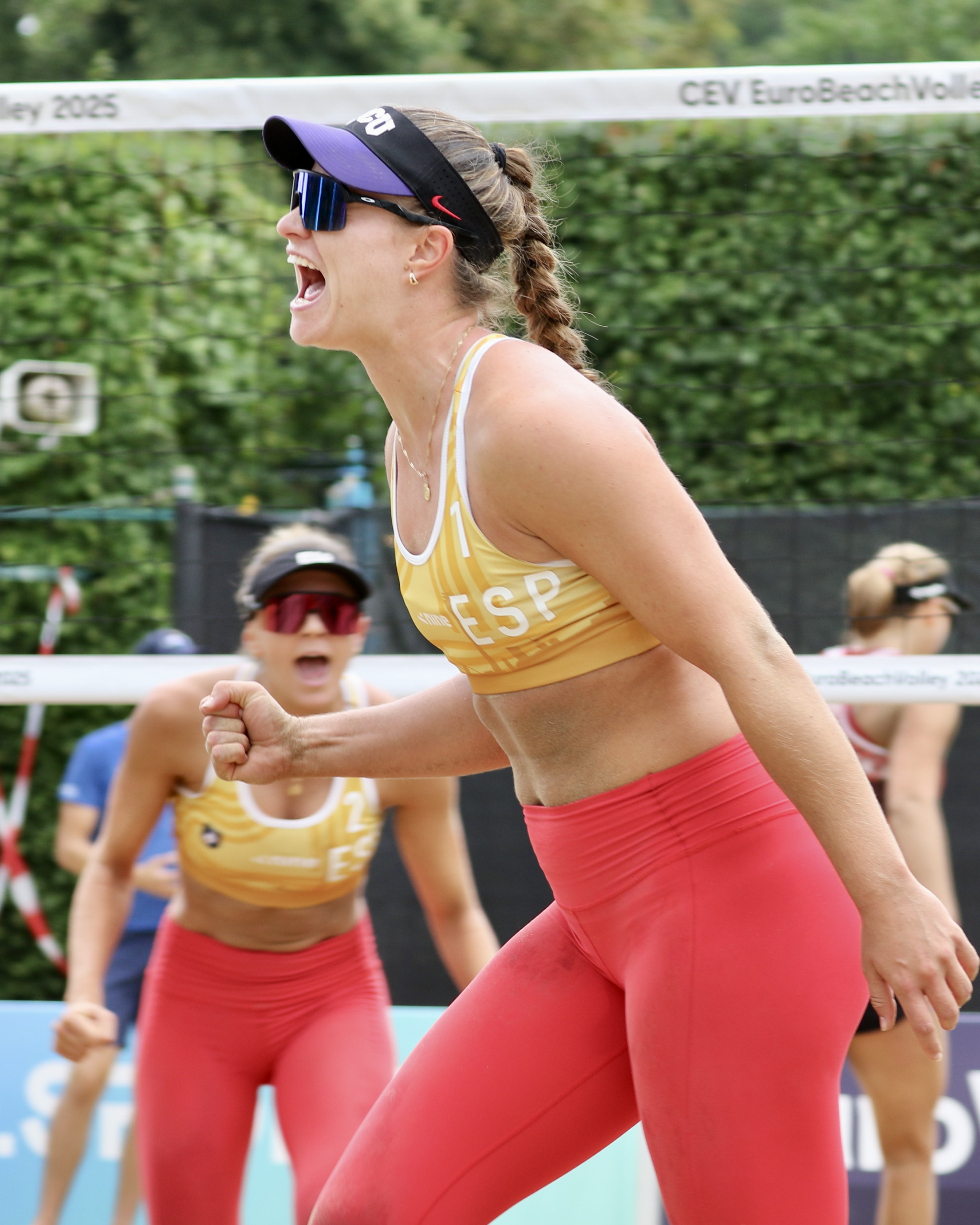
Teams on the rise are easy to root for. In beach volleyball, Spain’s Daniela Alvarez and Tania Moreno fit the bill. Talented enough that it is reasonable to imagine them competing for podiums for years to come, they are not such a sure thing that ultimate glory seems predestined. They will do some serious winning, and there will be some suffering. 
There will be a reward for caring about their results. And a price. 

When it comes to fandom, that’s the sweet spot.

And yet you could say the same about half a dozen up-and-coming teams. Maybe more. You always can. Like the airports in which athletes spend so much of their lives, in sports, someone is always coming. Someone is always going. Anything else is only temporary. 

Neither yet 24 years old, Alvarez and Moreno’s ascent has already taken the talented pair to the Eiffel Tower’s Olympic shadow and an NCAA championship dogpile, to name just two moments. Los Angeles 2028? Brisbane 2032? World Championships? All within reach. Their potential is compelling in its own right. But also not unique. A decade from now, there will be another team on the rise. Maybe Spanish. Maybe Canadian, Dutch or a dozen other nationalities. Maybe they will come through the NCAA system. Maybe not. 

I’m certain of that. Just as certain as I am that Alvarez and Moreno are, in at least one respect, not just the latest iteration of a recurring story.

In a particular tenacious, even fierce joy that is all their own. 

I find myself rooting for these two. Genuine third-set, knot-in-the-stomach stuff. It isn’t just the way Tania launches herself through the air or Dani calmly pulls off yet another a pokey dig. It isn’t just about what they have already achieved and may yet in the future. It is because there is something reassuring in the way they revel in every point together. Watching them compete is like looking through a window at an ever-so-slightly better version of the world.  

Joy can sound like an antiquated word. It’s quaint. Jane Austen characters live in a world where people talk about joy. It’s the story at the end of the newscast, the palate cleanser. You pat joy on the head. In sports, too, it occasionally elicits eye rolls. A moment of joy? Sure, fine. But it’s too soft an emotion to sustain you, immature—childlike joy. As if the notion of it somehow minimizes the hardship and hard work necessary to achieve adult success. 

Yet joy is entirely compatible with sacrifice, even accentuated by it. Made fierce, joy isn’t ephemeral. It’s potent. 

I remember Alvarez speaking on camera after TCU won its first NCAA title this past spring and expressing gratitude that Moreno had the courage to follow the same path she did to the United States—in the midst of a pandemic, no less. Alvarez arrived at TCU in the 2019-20 academic year, a year ahead of Moreno (the two had previously competed together for Spain at age-level events and even in an FIVB four-star event in 2019). 

International athletes coming to the United States for college have always fascinated me. You’ll find profiles about Icelandic basketball players (from TCU, no less), Venezuelan soccer players, French softball players, etc. Although there are plenty of difficult domestic paths to collegiate sports, the idea of choosing to leave behind everything familiar and earn a degree in a second or third language was always a compelling statement of intent. 
Sure, maybe someone is just the adventurous sort. And like Florida State’s soccer program once upon a time, TCU’s beach program certainly knows the infrastructure needed to help international athletes thrive. For goodness sake, the Horned Frogs had more alumni in this year’s Euros than many European countries. But all of this is by way of saying that playing with joy shouldn’t be confused with a lack of ambition or purpose. Or sacrifice. Alvarez and Moreno risked much to seek out the mentorship and environment that would lead to growth. They took the uncommon path. Each has invested a great deal—physically, mentally and quite likely financially—in putting themselves in the best position to succeed. In position to win. To be the best. 

Still, joy rules. Unmistakable joy. Perhaps it’s not as evident in early-morning practices or weightlifting sessions we don’t see. Or when the body hurts, the mind is weary, clean laundry in short supply and you haven’t been home in months. Probably not then. But on the court, when the whistle blows, they seek out those moments when they can celebrate success—and each other—in ways all their own. 

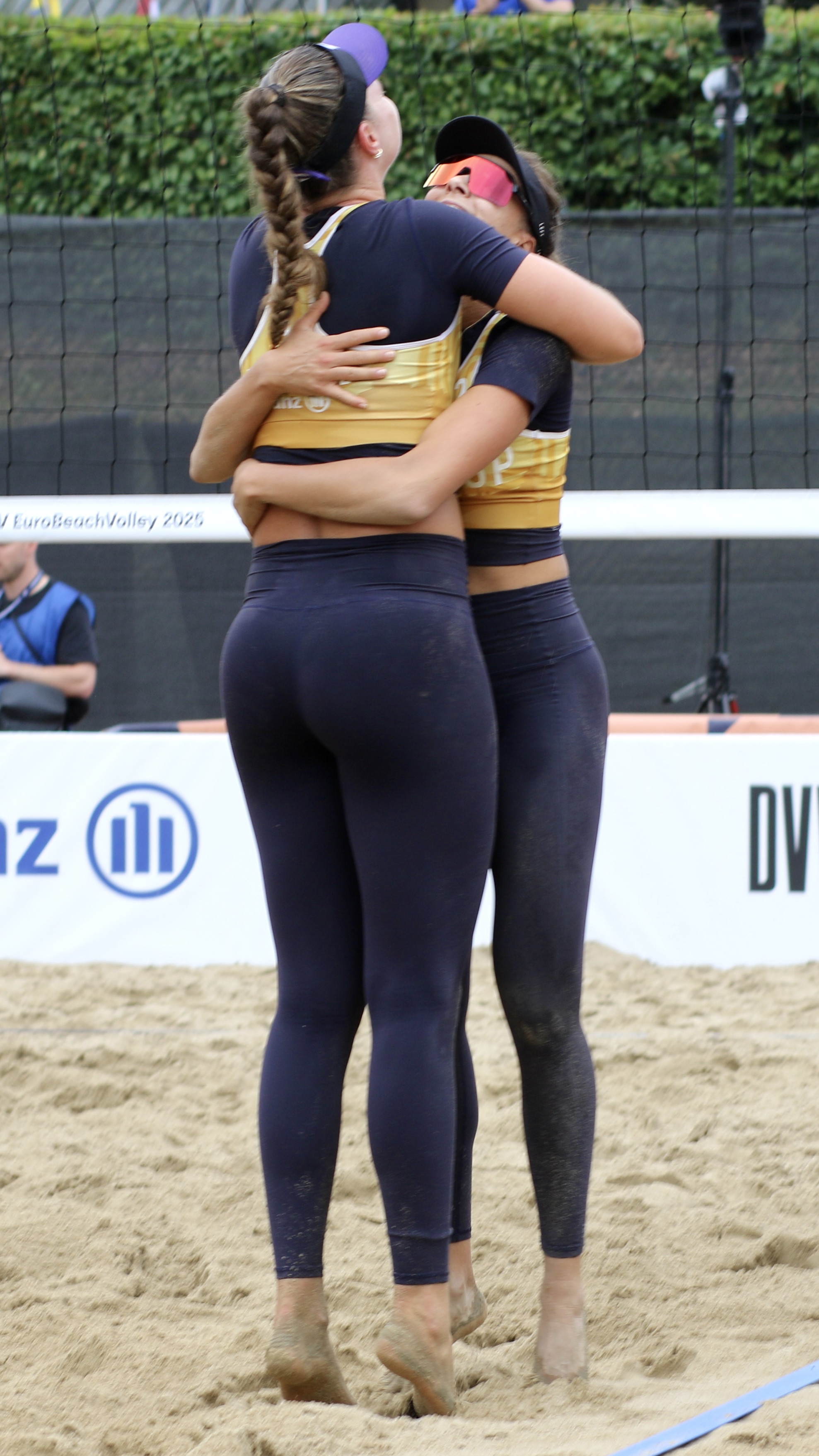
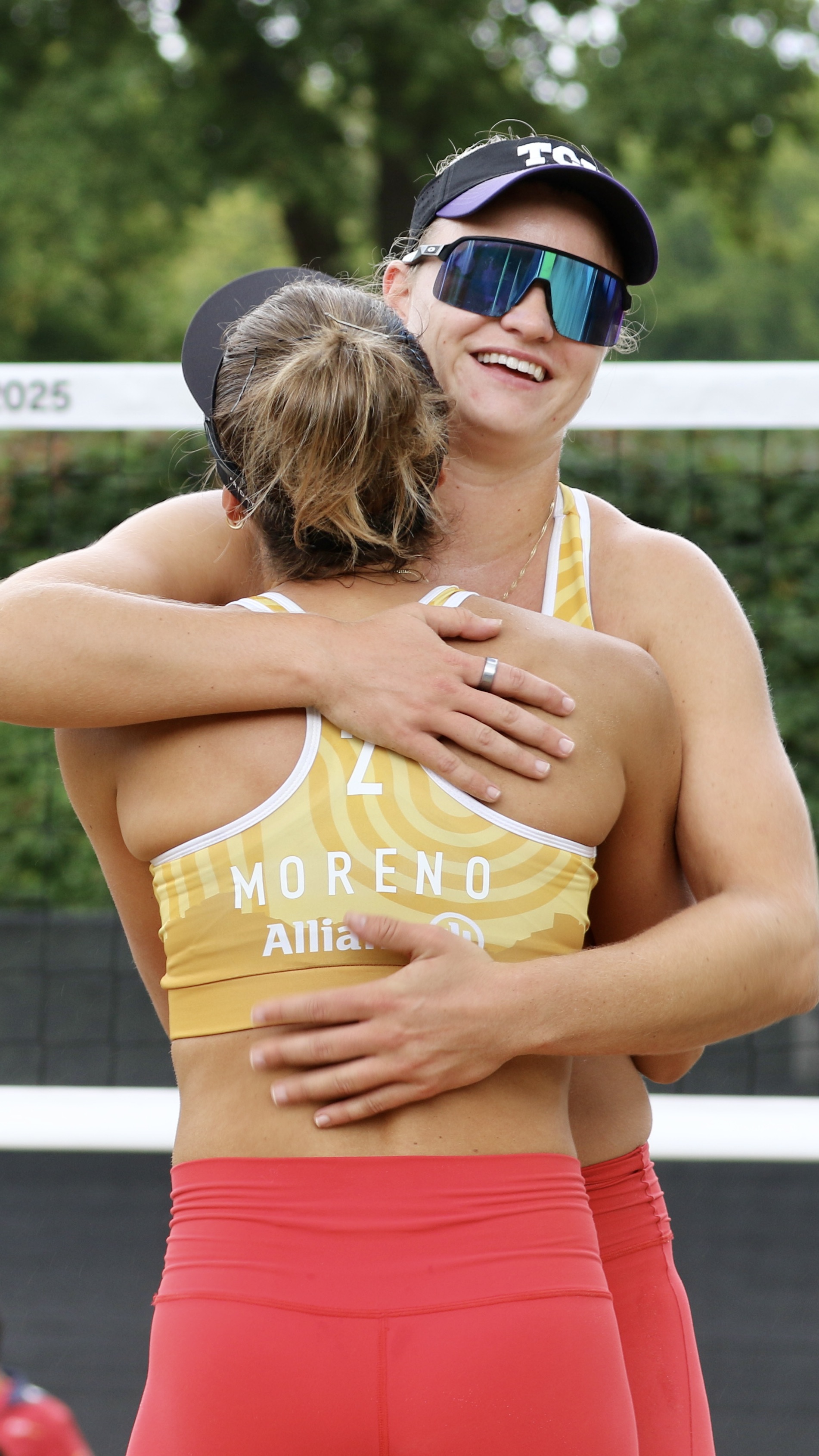
It’s not performative positivity. It’s not a show for fans or showing up opponents. They reset with an embrace. They let loose a spontaneous guttural yell, fist pump or chest bump. Again and again and again, they find confidence, comfort and camaraderie in competing together.

“¡Vamos, Dani!” 
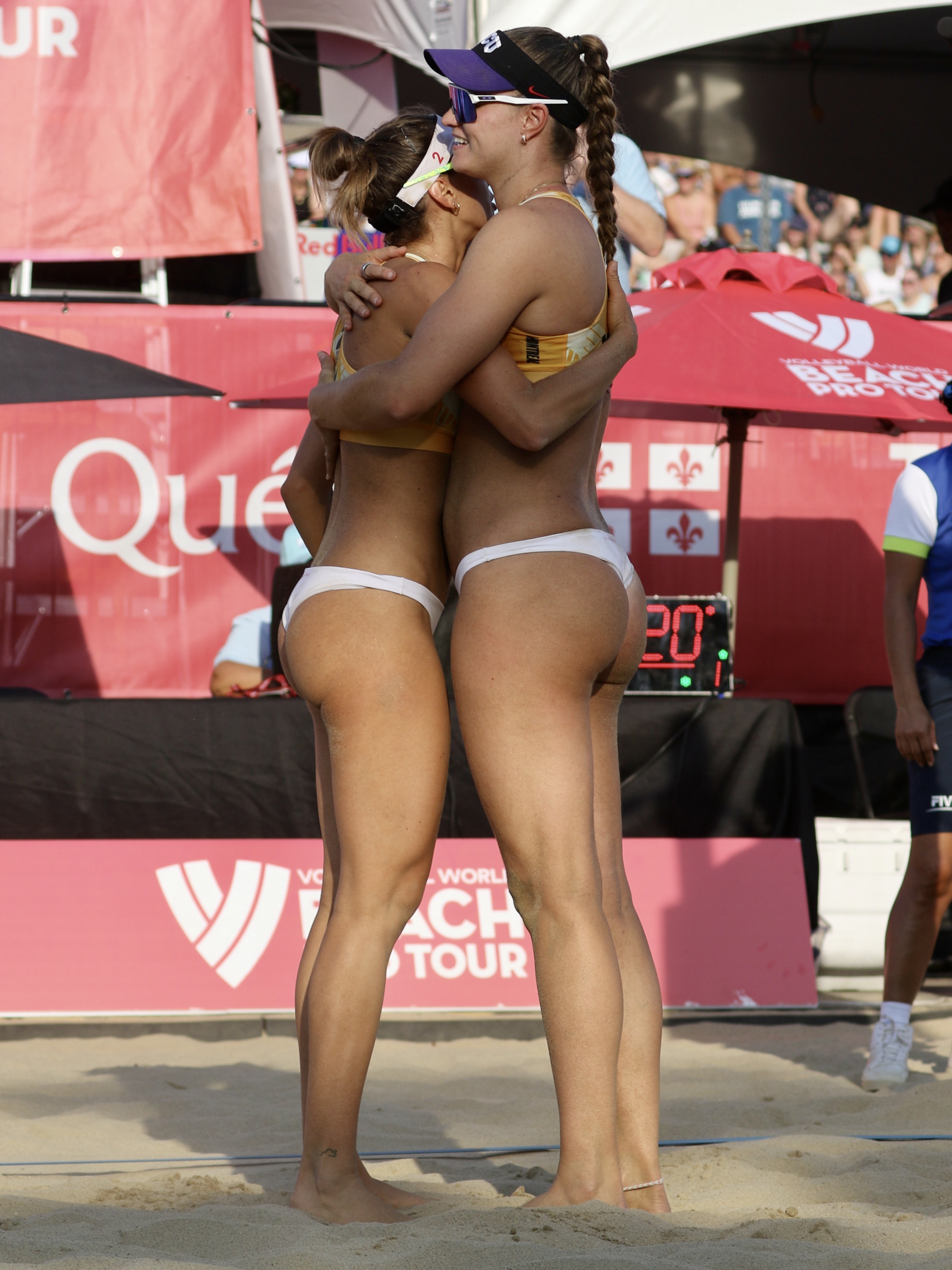
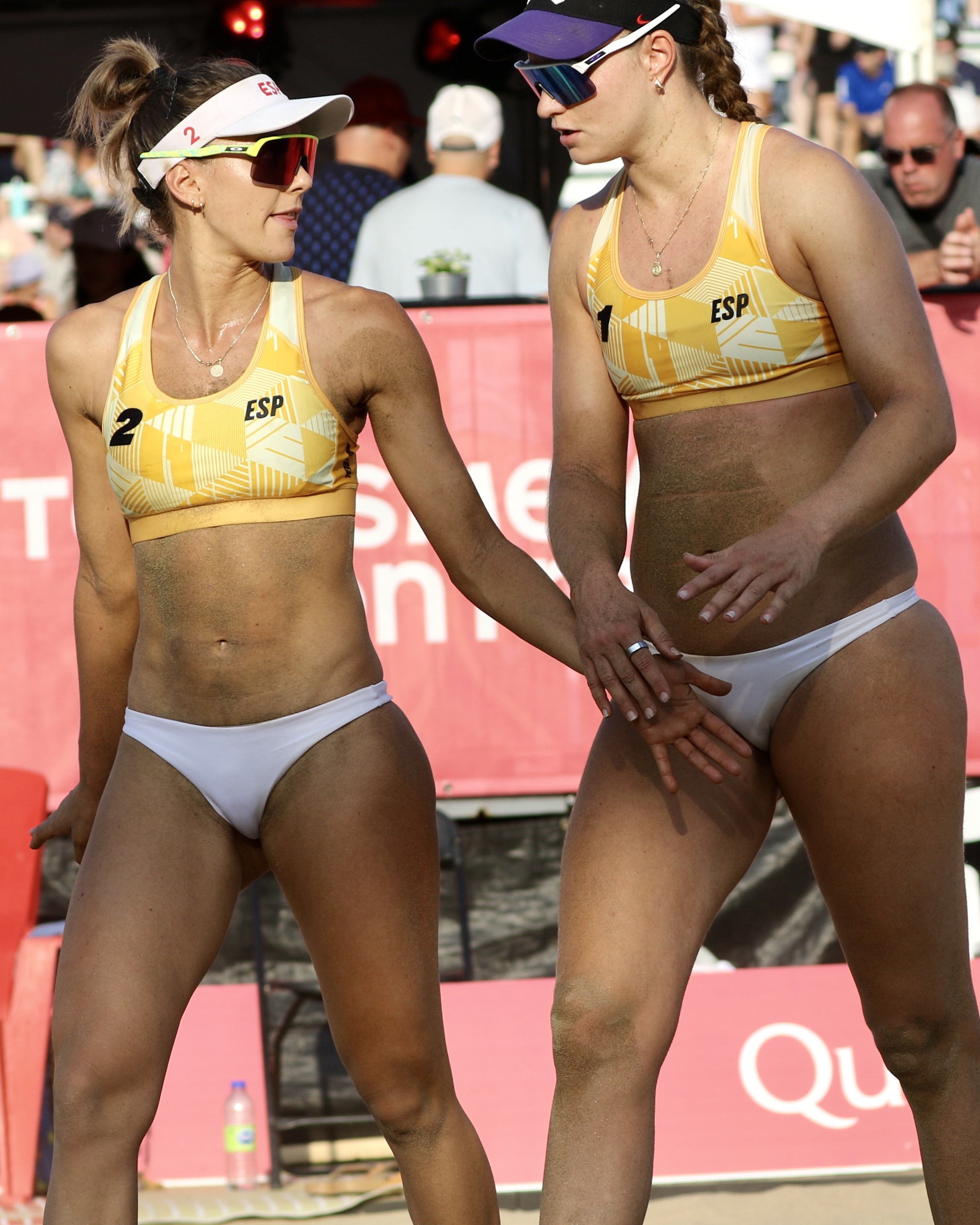
Theirs is a tactile partnership of high fives and hugs—of contact. The gestures are so second nature and form such a drumbeat that they don’t always seem aware of them. Perhaps reminders of each other’s presence, reminders that it’s their collective joy that has power.

They don’t turn their backs on each other. They don’t leave each other alone in the harsh light of failure. In their math, one plus one is not addition but exponential multiplication. 

Together, they seem to genuinely believe, they can do anything. 
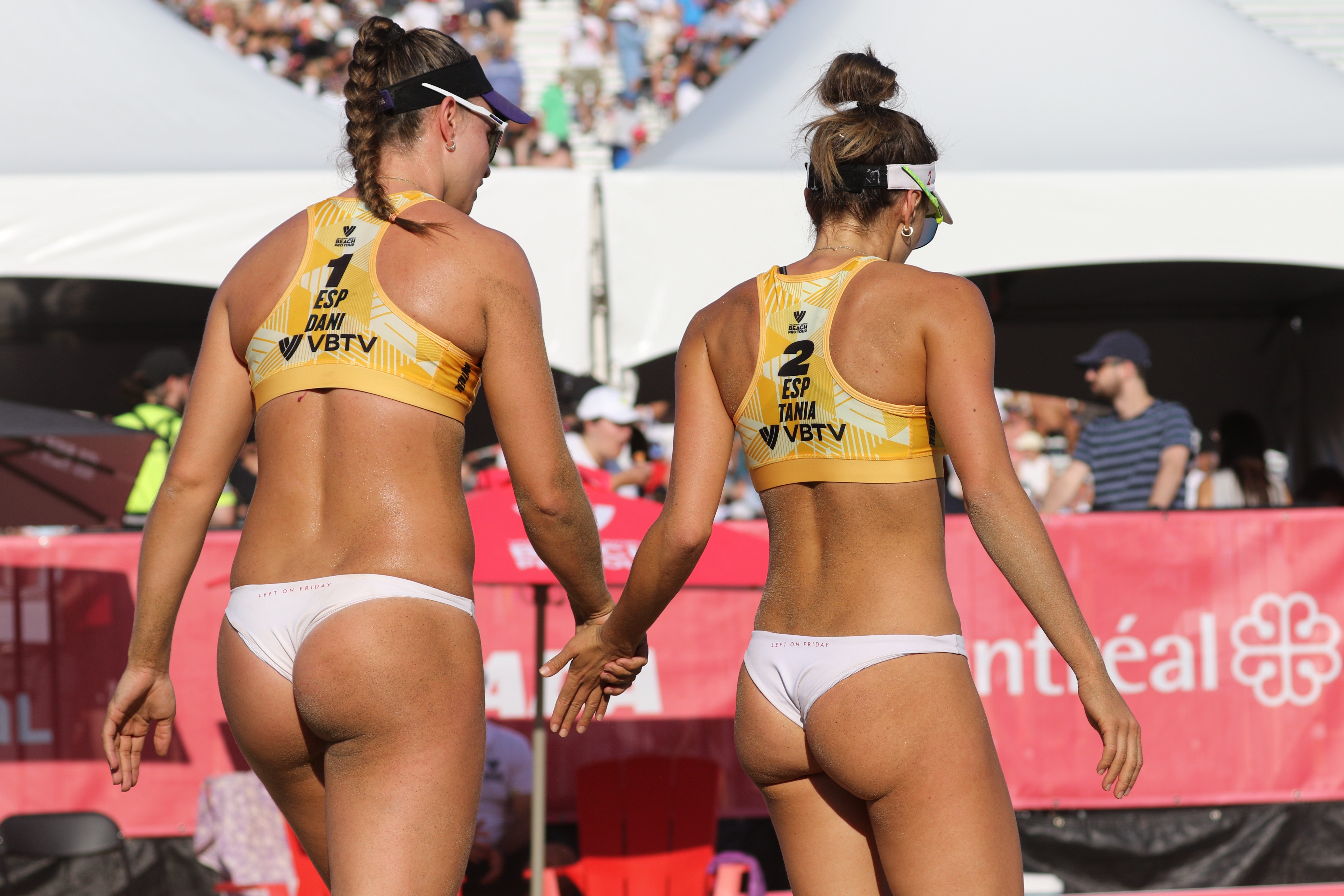
One small illustration from our summer paths crossing at a number of tournaments. In trying to pick their poison, opponents most often served Tania. Even my limited volleyball mind grasps the logic. If the serve is good enough to pin Tania, taking a second-ball option out of play, opponents limit their exposure to each Spanish player’s greatest strengths. But with Spain playing for first place in its pool during the recent Elite 16 event in Montreal, Canada’s Bélanger and Monkhouse went after Alvarez with regularity. For a time, the change of routine worked. The Spanish struggled to establish a side-out rhythm and Canada won the opening set with surprising ease.  

The Spanish duo trailed at the technical timeout in the second set, too. But neither the demeanor nor the non-verbal communication changed. Rather than either one playing like she was trying to save a match, focused on the final outcome, they played like they always do—searching for those moments of joy that are only possible together. 

Down 11-10, Dani handled a serve, heard her partner’s call and executed a nifty shot across her body for the point—eliciting a two-fisted shout of encouragement from Tania. 

After serving on the next point, Dani denied Canada a quick answer with a pokey dig, then hammered the ball through the opponent for the point and the lead. This time, Tania exploded with two fist pumps, pointing at her partner with her other hand, and a chest bump. Walking back to serve again, Dani couldn’t suppress a grin.  

A few points later, after her own brilliant one-hand dig and Tania’s deft set while avoiding the net, Dani was skipping across the sand to celebrate again retaking the lead—a lead they never again relinquished in the set en route to a three-set victory. 

Some teams are defined by machine-like efficiency or detached precision. Others by a chip on the shoulder or a showman’s instincts in playing to the crowd. Whatever works for you—whatever is true to who you are. For Alvarez and Moreno, it’s fierce collaborative joy.

This isn’t about a feel-good factor. Joy fuels them to endure and outlast, as they did in winning three consecutive three-set comebacks in Montreal or rallying from a rough first set to win their quarterfinal against Switzerland in the European Championships. 

It’s who they are. When their run in Montreal (which included two qualifying wins) finally ended in a 22-20, 22-20 soul-crusher of a quarterfinal against Lativia, they ducked under the net to embrace Tina Graudina and Anastasija Samoilova. Alvarez wrapped her arm around Graudina’s shoulder and the two walked off the court together. It didn’t mean the loss didn’t hurt. It didn’t mean she wouldn’t rue missed chances and review lessons. It just meant there is joy in competing—across a match, across a tournament, across a life. 

To maintain that connection, even at their young age, across so many years and multiple continents is remarkable. The energy it takes—not to mention the strength of character required—is enormous. How that took root must be quite the story.    

Pat Riley famously said there is winning and there is misery, a more contemporary update of the line often attributed to Vince Lombardi that winning isn’t everything; it’s the only thing. Both strike me as sad reductions of life’s complexity to a binary state. A self-defeating binary state, at that. Scarcely less addictive than heroin. And scarcely healthier. 

Sport reflects back the world around us, condensed into games and seasons instead of lifetimes and often simplified into heroes and villains but still recognizable. 

From the youth sports industrial complex to college athletics to professional leagues, the present moment is no exception. Our sports reflect a world changing at breakneck speed. Some of that is unquestionably good—scientific and medical advances that help athletes be faster and stronger, play longer and return from injury sooner. Some is worrying—the all-consuming drive to prioritize profit over product and concentrate wealth. Much is a mixed bag. But even when that reflection is hard to look at, it’s us. 

There’s still room for joy. Despite everything, joy redeems sports. As it redeems us. It means all of this isn’t a story written by a fool, full of sound and fury, signifying nothing. 

It’s just that, more and more, finding it feels like searching for fireflies. A flash of light out of the corner of the eye, vanishing just as quickly amid the darkness.

So two people committed to finding the fierce joy in every point they play together? 

That seems rare enough to be worth rooting for. 
When Genius Shares the Sand

You hear your share of oohs and aahs around a beach volleyball court. That’s all the more true the week of an Elite 16 event, the Beach Pro Tour stops with the smallest fields and greatest concentration of world-class talent. The crowd, as one, gasps or vocalizes their appreciation for athletic dexterity, strength or daring do. That’s sort of the point of it all. 

It’s just that you rarely hear the crowd gasp like that in warm-ups. 

Then again, you players like Valentina Gottardi and Ana Patricia come around rather, well, rarely. Making it all the more special to get them on the same court. Even when it’s Court 2. 

Imagine Shohei Ohtani and Aaron Judge trading swings on a side field next to Dodger Stadium. Or Caitlin Clark and Sabrina Ionescu launching 3-pointers in a practice gym in the depths of Gainbridge Fieldhouse. 

That’s putting Gottardi and Ana Patricia on a side court, as they were Thursday. 

Once you get past the curious scheduling of it all, it’s actually kind of cool. It’s the music legend dropping in unannounced to play a set at the local bar. It’s feeling like you were in the right place at the right moment in time to enjoy something sublime. 

People can argue all day about the best players in the sand. You have your list, I have mine. 

Actually, I don’t—I’m not smart enough. But I do know the players I most enjoy watching. Not the team, mind you, the duos in whose fortunes I’m most invested and for whom I may or may not occasionally even cheer out loud after years of professional neutrality. No, instead these are individuals who rarely go a seven-point end change, let alone a match, without doing something that makes you grin and shake your head. 

Gottardi is the 22-year-old Italian so physically explosive that she might cut to the chase one of these days and leap over the net. Ana Patricia is the 27-year-old Brazilian and reigning Olympic gold medalist, who manages to combine jaw-dropping athleticism with the wily old-soul game of someone a decade her senior. 

To be clear, these aren’t one-woman teams. Woe to anyone who doesn’t give Duda her due, and Reka Orsi Toth is paired with Gottardi for a reason. 

It’s just that Gottardi and Ana Patricia do things that no one else does—whether because the rest of the world lacks the imagination, the athleticism or, frankly, the recklessness. 

They’re glorious. In our age of hyper-efficiency, they play as if to see what’s possible. 

As they warmed up for Thursday’s pool opener, they traded hammer blows that brought the crowd to life—it’s worth noting there usually aren’t even crowds for side-court warm-ups. Maybe they fed off each other in that brief moment. Just a little. They wouldn’t be the first to do so, and plenty of people have suggested Ana Patricia is a star who needs a challenge to hit her stride. 

Sadly, the match never quite turned into an epic. Ana Patricia and Duda managed their way to a tight, first set win and then eased to the finish line, 21-17, 21-15. The stakes were as low as they can be in this high-stakes world, the opening match of three for each team in the pool—with 12 of 16 teams advancing to the knockout rounds.   

Center Court gets the pyrotechnics, the music and the “Monster Block” and “Fireball” cues on the sound system. Court 2 generates its own noise. Thursday, it didn’t take a three-set thriller to make it as loud as just about any match on any court over the first two days. 

There was the roar when Gottardi, at something approaching full sprint toward the end line, slowed for the briefest of seconds to blindly set a ball for Orsi Toth at the net. 

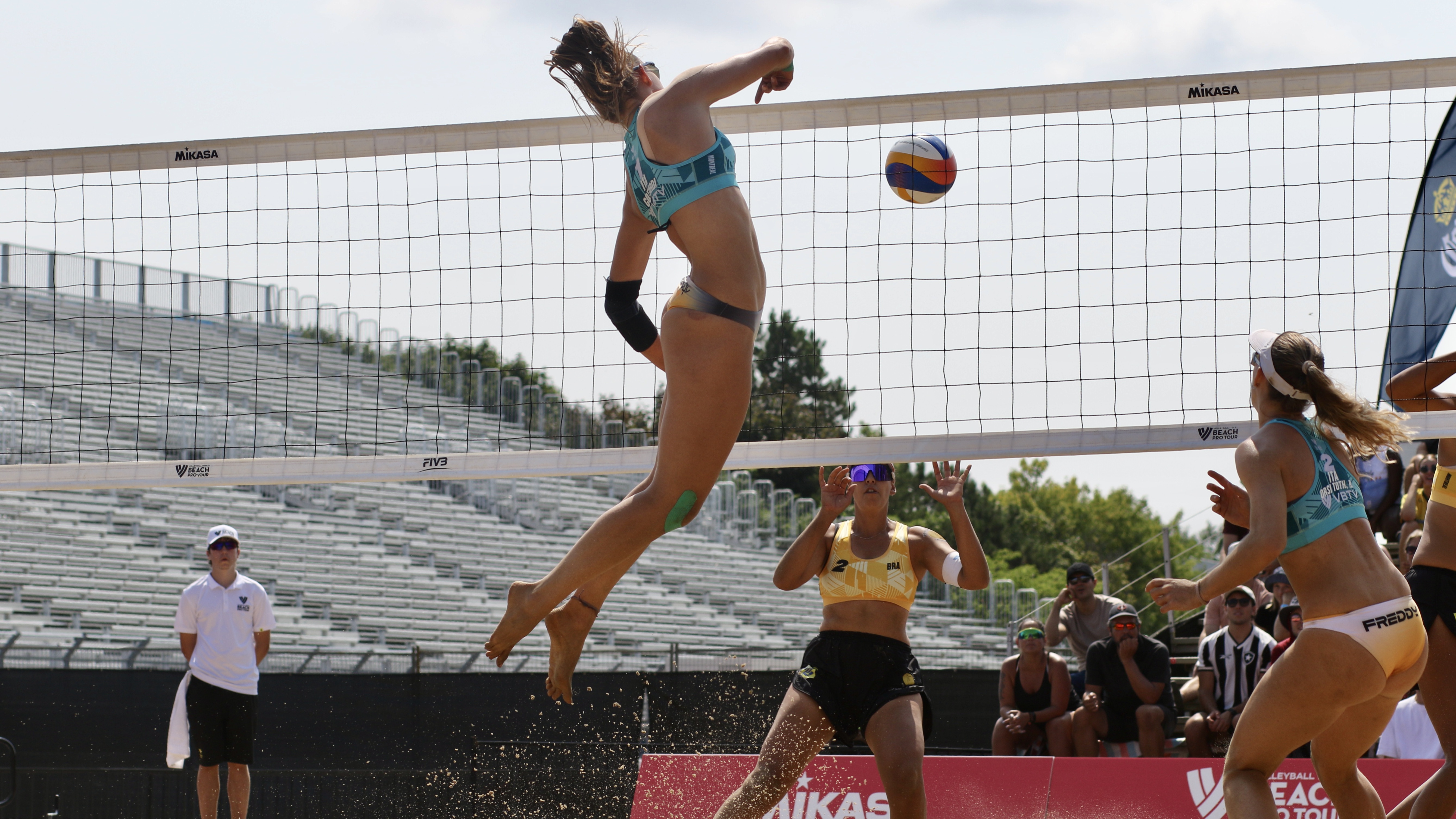
Or when she sprinted to the net after a serve, tipped an attempted block skyward and, falling to her right, contorted her body to sweep the ball into the far corner for a point.

Or the reaction put-away, Ana Patricia’s block caroming off Gottardi’s shoulder and into the net before Orsi Toth set it for what is one of her partner’s trademark moves. Shoulders squarely facing two o’clock, she contorts her upper body and, in one sweeping motion, whips the ball back toward about 11 o’clock—in this case catching even Duda off guard. 

And there were “super spikes” aplenty. There are always super spikes, Gottardi’s vertical and power combining to punish the ball as few peers can. 

Now playing with her peer, Gottardi seems to play with more self-assured command. She still chases everything, sprints to the bench at timeouts and sometimes just bounds up and down in place when she can’t do anything else. But she’s evolving from someone with dreams to someone with goals, real, tangible goals that involve beating a lot of people. 

Someone who has been to places Ana Patricia has visited. The Brazilian might have ceded the spectacular to Gottardi more often than not on this day, but she found answer after answer. Well-timed blocks, perfect sets and ball after ball just drifting out of Italy’s reach. 

When Italy held a three-point lead in the first set and Gottardi went for the no-look option behind her head, there was Ana Patricia to calmly dig it and set up Duda. 

On set point, she blocked Gottardi, starting a sequence that finished with Duda going over on one for the point. 

It was Ana Patricia. Doing Ana Patricia things. Most days there are no ways through that. Even when you’ve got the body, mind and soul to try things no one else would dare. 

And as the noise from Center Court took over and stands emptied, the best show in volleyball came to a close on Court 2.

Ukrainian Resolve Makes Euros History

Beach volleyball is a niche sport. I get that. For some, it’s of interest once every four years, a summer spectacle set against increasingly grand Olympic backdrops. For others, it’s no more relevant than equestrian events or cricket are to me—I respect that people love them but they are foreign languages that I have neither the time nor patience to learn. 

That’s the way the world works. It’s a crowded place. What keeps me glued to streams week after week, and too occasionally for my liking sends me trekking across oceans, is the almost unique way the sport challenges an athlete’s mental commitment. It’s Shakespeare with feats of athleticism, Cirque de Soleil with a plot. 

An infielder who makes an error in a key moment feels the eyes of the world on him or her, but in reality, the next ball is more likely to go to any of eight other players on the field. A tennis player who makes an unforced error isn’t responsible for derailing anyone but him or herself if they let the mistake fester until it ruins a game, a set and a match. 

A beach volleyball player lives squarely in the middle. With the exception of aces, or if you were playing with Laura Ludwig, you’re involved in every play. There is no retreating into anonymity for a few plays to gather yourself. You are simultaneously entirely responsible for your team’s fate and entirely dependent on your partner accepting the same burden. 

It’s at once individual and collaborative. 

Without diminishing the tactics and strategies I grasp with only rudimentary expertise, my hunch is this is why beach volleyball matches are often such roller coasters. A match can shift from a seemingly never-ending exchange of side outs into a rout in the blink of an eye, one team suddenly unable to gather its confidence and at the mercy of its opponent. Then, just as suddenly, focus slips and the pendulum swings back the other way. 

I believe it’s VBTV analyst Travis Mewhirter who loves to cite the adage that a team that loses a set by double digits will inevitably win the next set. I covered women’s basketball for decades. When Geno Auriemma’s UConn Huskies made one of their trademark runs, the other team stayed beat. In beach volleyball, among elite teams, that’s rarely true. At some point, you will be on top of the world. At some point, you will feel the weight of the world on your shoulders. In the same match. The sport is how you respond in those moments. 

Which brings me to Ukraine and a Euro Beach Volley final for the ages (my editors over the years had a point about it taking me a long time to get to the, well, point). 

Leading 20-15 in the first set of the Euro Beach Volley final, Maryna Hladun and Tetiana Lazarenko could surely see the finish line. One more point and they would be in firm control of the biggest match of their lives—certainly their beach volleyball partnership. 

Scarcely five minutes later, they trudged off the court after losing eight of the next nine points and playing their part in France’s miraculous comeback to win the set 23-21. 

In a world of writing deadlines, this is when I would have started thinking about how to frame what a title meant for France. I would have sketched out a lede to have ready. 

But that’s not beach volleyball. Hladun and Lazarenko gutted through an inconsistent start to the second set, eventually gathering momentum and winning 21-18 to force a third set. 

Six years earlier, without the crowd or the stakes, I’d seen a different story unfold. 

The Gstaad tournament is a bucket list must for beach volleyball fans, one I thankfully achieved a couple of days after the end of a long month covering the 2019 Women’s World Cup in France (great sporting experience, miserable professional experience). 

The main court in the middle of the village in the Swiss Alps is all atmosphere, loud and rollicking. The side courts are more sedate, a 10-minute walk to a local tennis club. That’s where I first saw Hladun play, and it surely wasn’t a day she would want to be reminded of. 

A tough day in Gstaad in 2019.

She and her then-partner lost their opening qualifying match to a Thai team they probably should have handled. Their Gstaad stay was over almost before it began. The aftermath featured, shall we say, a frank exchange of views followed by some frosty silence. That’s hardly uncommon in any sport. In beach volleyball, especially on the side courts, it just plays out in front of anyone and everyone on hand. Still, it has remained lodged in my brain as the standard by which I judge teammate volatility and negative body language. Was it as tense as that afternoon in Gstaad?

As best I can tell, Hladun and that partner, Diana Lunina, didn’t play together again after that year. That, too, isn’t necessarily much of a tell. They did have four World Tour podiums in smaller events early in 2019. For every team that stays together for a decade, there are probably 10 that don’t last more than a year or two. It’s not always chemistry. (Case in point, I was sure body language in that tournament foretold the end of the Swiss partnership between Anouk Vergé-Dépré and Joana Mader. They went on to win Olympic bronze two years later. Shows what playing psychologist gets you.) 

I don’t think I had seen Hladun play in person since then, In Dusseldorf, I was struck from the outset by how much she seemed to enjoy playing with Lazarenko, who was all of 15 years old and far from the picture on that day in Gstaad in 2019. Success helps, of course, and the pair had already turned heads by winning a Beach Pro Tour Challenge event in Poland and earning more podium finishes than Hladun had in the preceding decade. 

Life changes, too. Just 26 when I saw her endure a day to forget in Gstaad, she is now 32. She married and had a second son, whose birthday ironically falls during or around the annual stop in Gstaad. From Sumy, a city just miles from the Russian border, she’s also endured a war brought on by that country, like millions of her fellow Ukrainians. Lazarenko is from Zaporizhzhia. Along with all of the typical social media content they share in common with their peers, Ukrainian athletes often also share videos and images of missiles and drones raining down on the cities they call home—homes that now take days to return to by bus and train. 

Experiencing life off the court, the joys of family and the sorrows of war, doesn’t necessarily correlate to anything on the court. Being a great athlete and a grounded person are far from synonymous. A cynic might even argue they are at odds more often than not. Still, watching Hladun alternately mentor and lean on her young teammate, I couldn’t help but see an appreciation to still be living this life and making the most of this opportunity. 

Perspective doesn’t preclude bad moments or bad tournaments. It doesn’t preclude blowing a 20-15 lead in one of the biggest matches of your life. It does provide resolve, which is no less important than Lazarenko’s blistering serve or Hladun’s sneaky vertical. 

I couldn’t help myself after the first set. I thought France was bound to win. I thought losing the first set the way Ukraine lost it, giving it away when they seemed in control, would break them. But after nine errors in the opening set, Ukraine made just two errors in the second set and three in the fraught final set—half as many as France across those sets. 

When France successfully challenged a net touch that turned an apparent three-point lead in the final set into a one-point lead, the Ukrainians just kept going, siding out and winning a point as Lazarenko’s served pinned France out of system. 

France challenged again as Ukraine reached 14-13, this time unsuccessfully. Vieira and Chamereau staved off the first championship point, tying the set 14-14 and forcing extra time in the win-by-two format. Ukraine again sided out to earn its second championship point, handing the serve back to Lazarenko. 

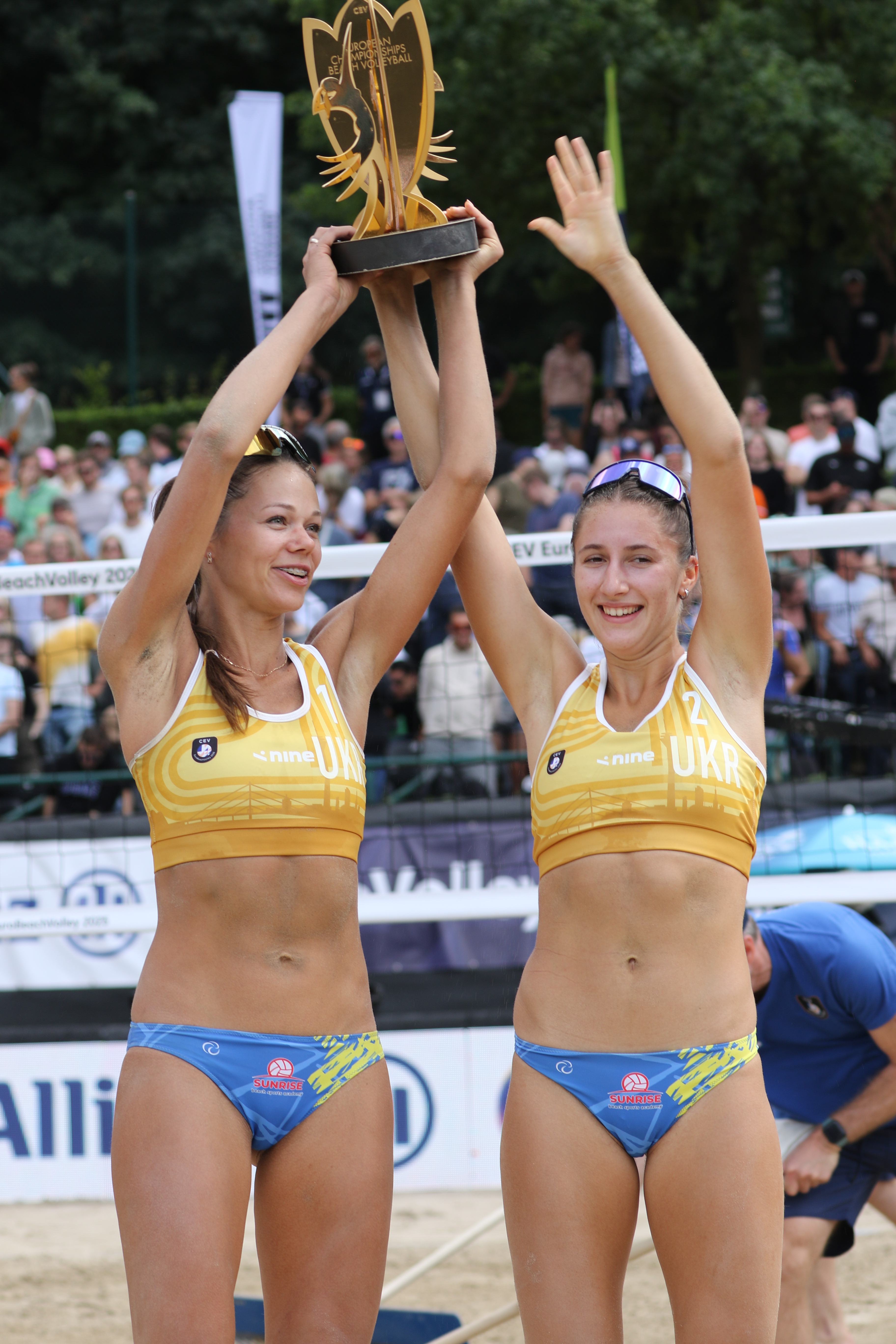
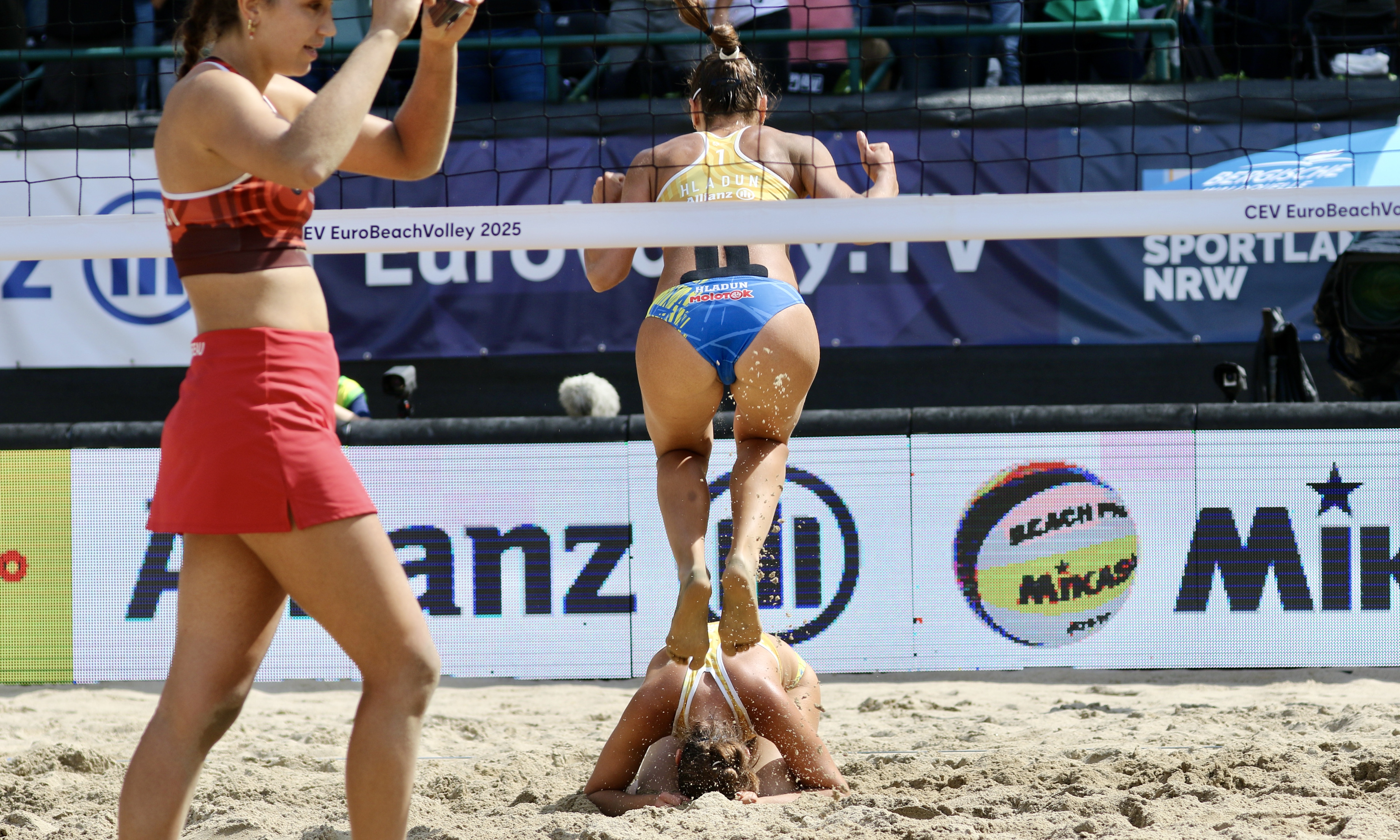
And then it was over, Lazarenko dropping to the sand and Hladun leaping into the air after the first European beach volleyball title for any Ukrainian women: 21-23, 21-18, 16-14. 

If I’m honest about the weekend, I was rooting for Spain’s Daniela Alvarez and Tania Moreno, the engaging NCAA champions and three-time Euro semifinalists who Ukraine eliminated in another three-set thriller in this year’s semifinals. But that only makes me more certain that what I saw unfold will remain among my favorite sporting memories. As I tried to focus through the viewfinder after the final point, surely a piece of sand responsible for the slight mistiness in my eye, I couldn’t have wished to witness any other result.

Beach volleyball tests who you are. Maryna Hladun and Tetiana Lazarenko answered as emphatically as they knew how. They are Ukrainians. And they are champions.