To Thine Own Self Be True

Maybe more than most of us, athletes grow accustomed to believing their fate rests in their own hands. Their talent. Their will. Their confidence. Maybe more than most of us, they also understand deep down that such control is forever an illusion. 

They don’t control injuries. They don’t control a bad call in a big moment. They don’t control an unfavorable draw. They don’t control a pandemic. In beach volleyball, where a career can be defined by where someone is from, they don’t control who else in their age cohort happens to share a passport, complementary skills and compatible personalities.  

All they really control, and it’s no small task to do so, is their own sense of self. 

For Esmée Böbner, that meant the courage to walk away at 24 years old. For Laura Ludwig, that meant the grace to walk away after one more afternoon in the (proverbial) sun. And for Marta Menegatti, at least for another week and another round, it meant finding the drive to continue. All within the span of roughly 24 hours this weekend. 

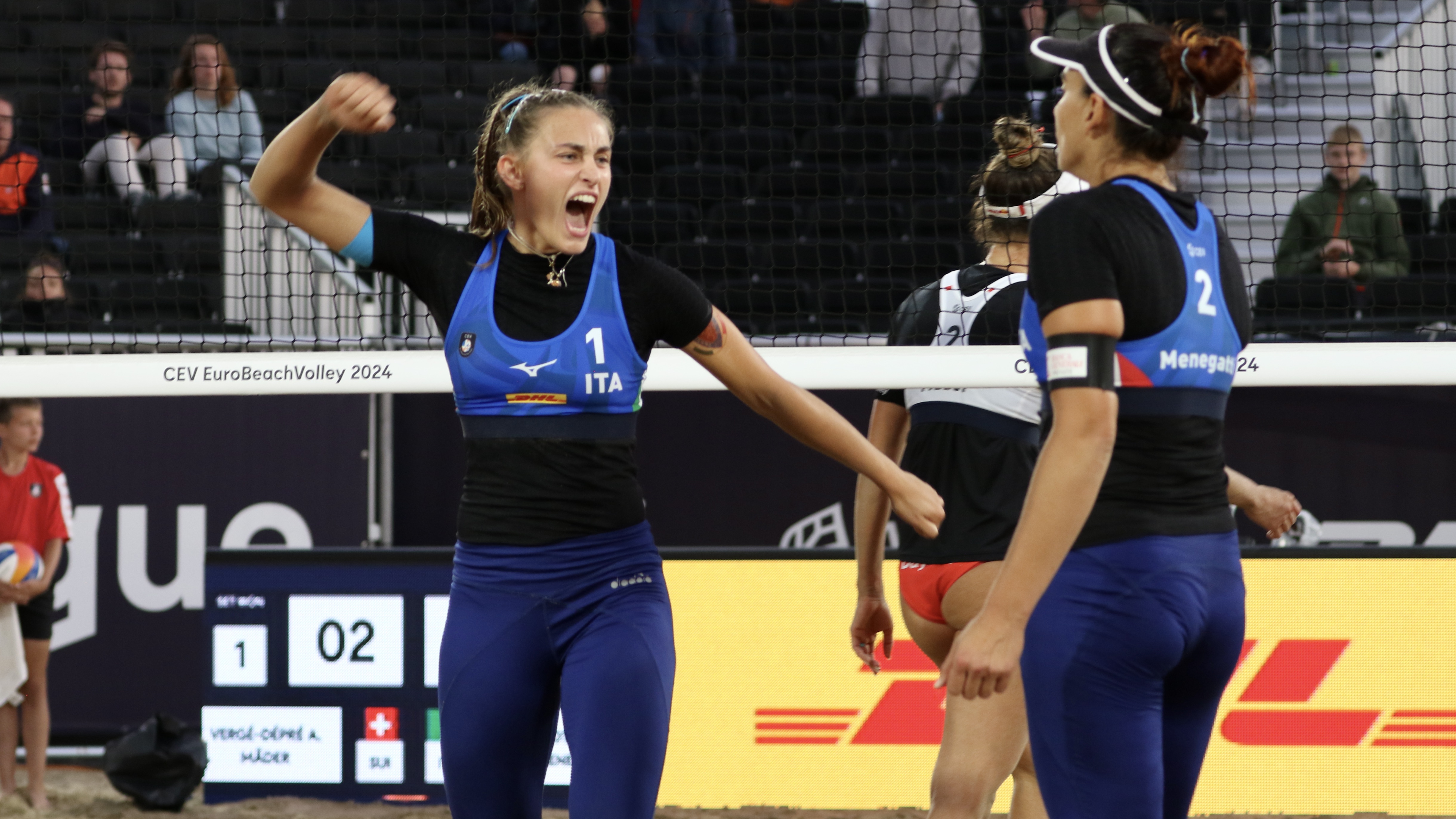
Saturday morning, early enough that bakeries were still doing brisk business for breakfast shoppers, Italy’s Marta Menegatti and Valentina Gottardi were already deep in the third set against Finland in Hamburg. At stake was a place in the quarterfinals of the Elite 16 event, the reward for an unrelenting schedule that few peers undertook—the Olympics, European Championships and Elite 16 in successive weeks. 
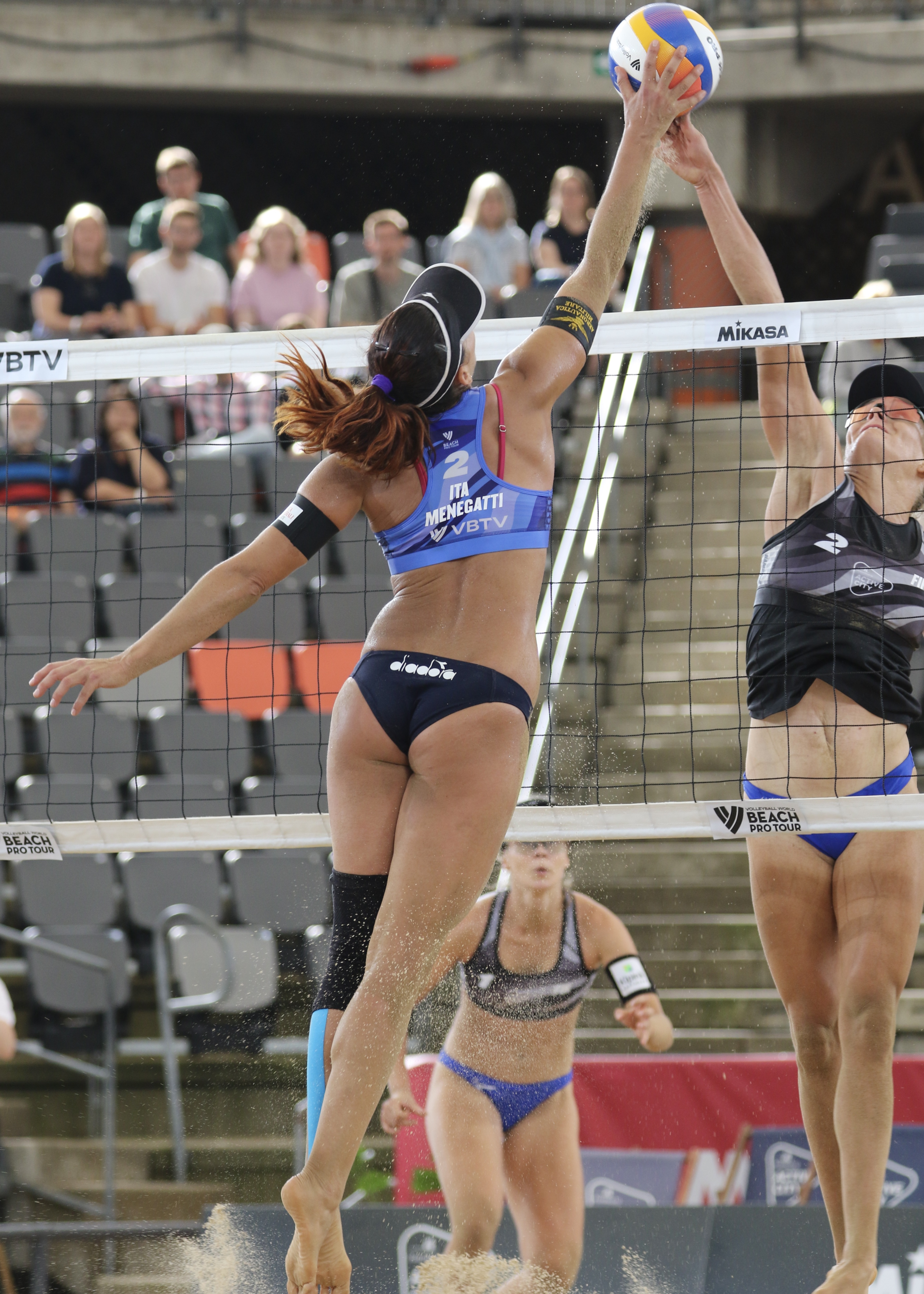
As they had in the Euros in the Netherlands, Menegatti and Gottardi lost their opening match in Hamburg—dropping a 19-21 third set marathon against Brazil. As was also the case en route to a silver medal in the Euros, they recovered and still made it out the pool. But against Finland, Italy flirted with disaster, losing 21-11 in the second set and then trading point for point in a third set that stretch beyond regulation. Match point after match point slipped away until Menegatti served at 18-17 to try and close it out for a fifth time. 

Having celebrated her 34th birthday shortly before Hamburg, Menegatti is closer to two decades than one into a pro career spanning four Olympics. She picks her moments, the wisdom of all those points, sets and years—decidedly non-artificial intelligence— allowing her to calculate what’s worth chasing and how to finagle a few extra seconds of recovery time. 

On match point No. 5, Menegatti served and had to move quickly toward the net, diving to defend a Finnish cut shot. After chasing down that dig to keep the point alive, Gottardi then got a fingertip on an attempted block when Finland tried again to end the point. The ricochet left Menegatti no choice but to launch her body at the ball for the second time in the point, this time propelling herself toward the sideline on the other side of the court. 

The ball and the point still improbably alive, Gottardi somehow kept her bearings as she flicked the ball over her head for the winning point. 

Sprawled on the sand where she had landed, Menegatti didn’t move. She just grinned—telling enough from someone who rarely wastes energy on such on-court frivolities.   

Just a few hours later, under an unforgiving sun on far and away the hottest day of the week, the Italians outlasted the Dutch duo of Katja Stam and Raisa Schoon in three sets to reach the semifinals. As in the Euros, this one ended with Menegatti jumping up and down for joy.

For all I know, this could be Menegatti’s valedictory tour, culminating with the upcoming Italian Championships. Los Angeles, certainly, feels a long way off. At the same time, after something of a rotating cast of partners and a stretch of years as she neared 30 in which podiums were hard to come by, there must be something invigorating about playing with arguably the most talented young player in the world in 21-year-old wunderkind Gottardi.
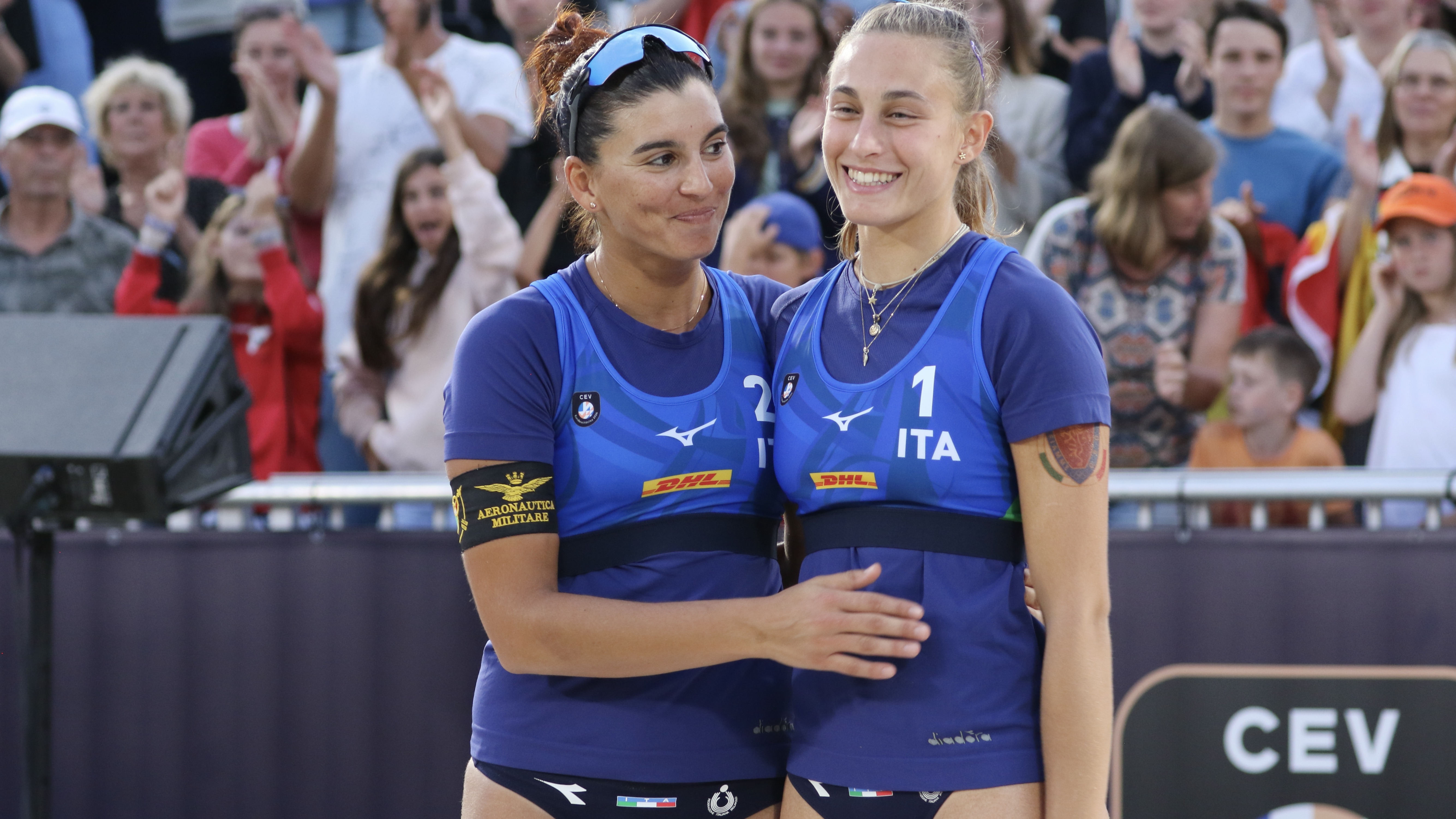
The Euro silver was her first medal in that competition since winning it in 2011. The World Tour Challenge event she and Gottardi won last year was her first in five years. A medal of any sort in Hamburg would be her sixth on the world tour in the past three seasons with Gottardi. Menegatti’s long career has already been more than a tad star-crossed. Gottardi’s arrival on the scene offers her a tempting opportunity for a Hollywood ending. 

Or as Menegatti put it on Instagram after the Euros, quoting Paolo Coelho, “It’s the possibility of having a dream come true that makes life interesting.” 

She will have to decide, or far more likely already knows, if her next dream involves sand. 

Meanwhile, Laura Ludwig’s life—certainly her biography—has been interesting since the beginning.  She was born in a city and country that officially no longer exist—East Germany and East Berlin, three years before the fall of the Berlin Wall. It’s a short train trip from Hamburg to the capital these days. It was the other side of the world when she was born.  

It’s strange to think of her as part of a past that feels so distant, mostly because she’s for so long helped define the present. Decades changed, world tours changed, partners changed, rules changed. Ludwig was always just there. She was named FIVB Most Improved Player in 2007, the same year Birgit Prinz led Germany to its second consecutive Women’s World Cup title and just five years after the likes of Gottardi and Spain’s Tania Moreno were born. 
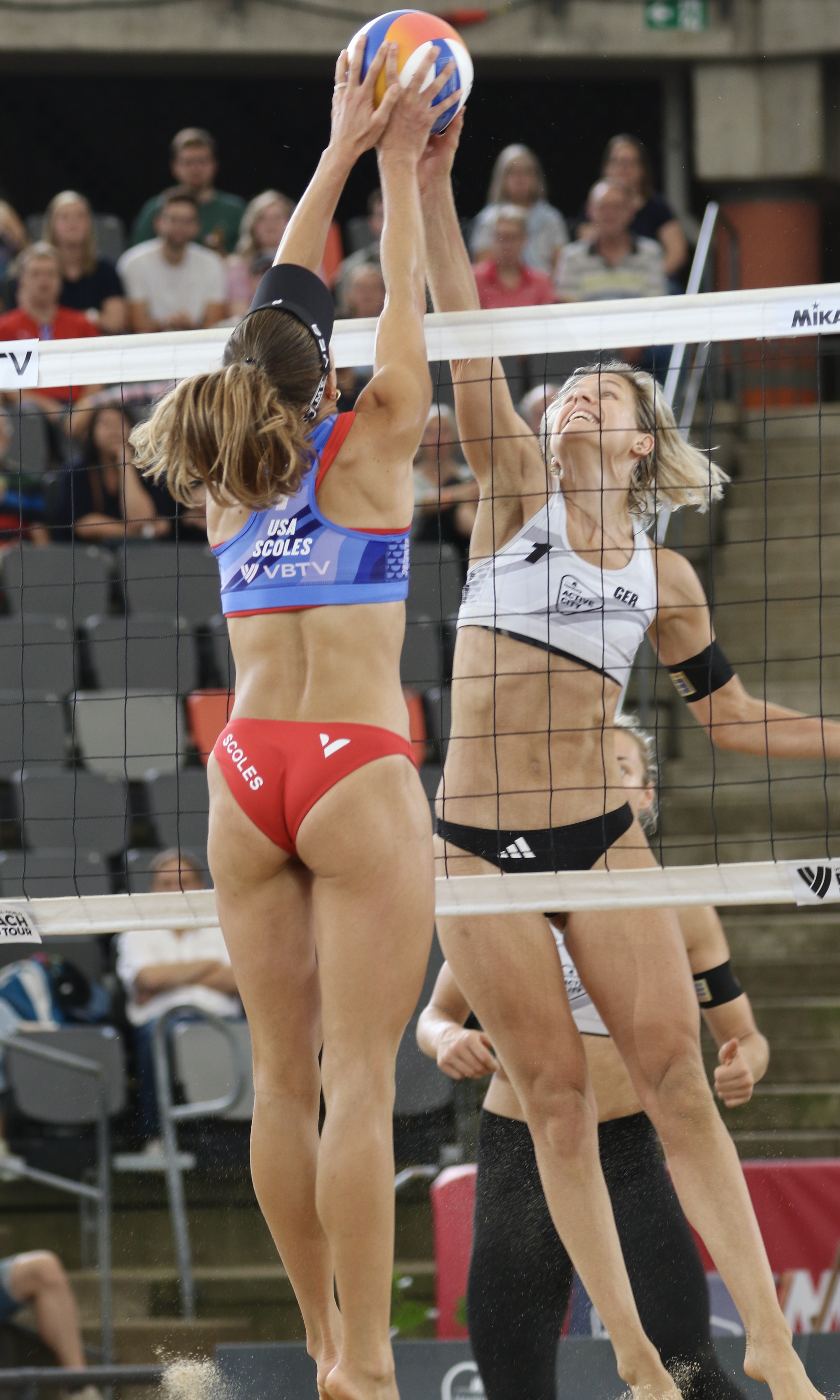
I remember watching her in the qualifying rounds in Gstaad in 2019, seemingly incongruous surroundings for the Olympic champion just three years earlier and world champion just two years prior. But with a new on-court partner, Margareta Kozuch, and a new child off court, she willingly retreated down the ladder to begin anew. Two years later, having outlasted even a pandemic, she was back in the Olympic quarterfinals. 

It was the same story when I saw her again in Edmonton last year, the great champion again grinding her way through qualifying at a Challenge event. Again, she had a new partner, indoor great Louisa Lippmann. 

It isn’t easy to get to a North American latitude more northern than Hamburg, but there she was deep into Alberta, surrounded by a tournament field that collectively struggled to match her trophy case. With her son whizzing around the courts on a scooter and her partner in life Morph Bowes alongside, she coaxed, corrected and coached up Lippmann—celebrating with her when they won their qualifying matches to reach the main draw. A year later, they were there under the Eiffel Tower in Paris for Ludwig’s fifth Olympics. 

So many aging athletes understandably seem to be trying to hold onto something. The field of play is where they’ve enjoyed their greatest success and felt most alive. As the end nears, they want to turn back the clock, to be who they were. Up to the final points she played Saturday in Hamburg at 38 years old, Ludwig was never hanging on. Something propelled her forward. She didn’t play or carry herself as if she was looking for that 2016 or 2017 version of herself. She was driven to discover what she could do next. 
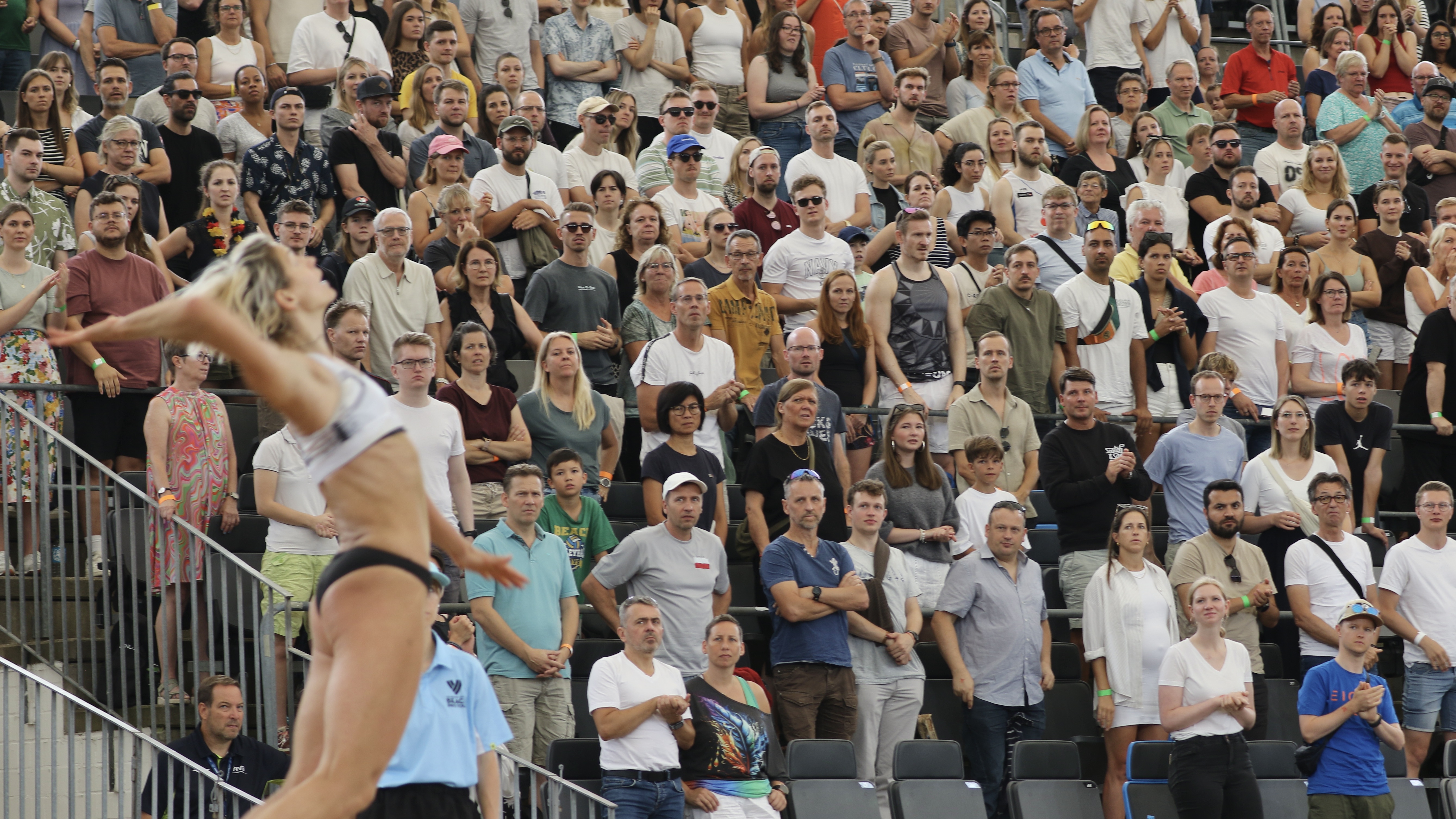
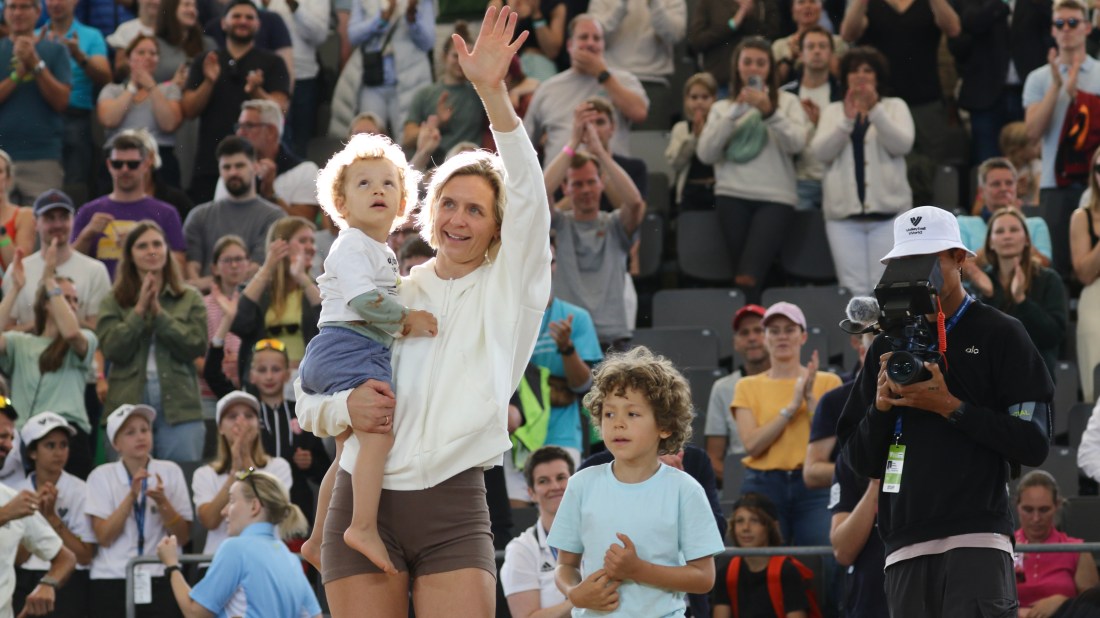
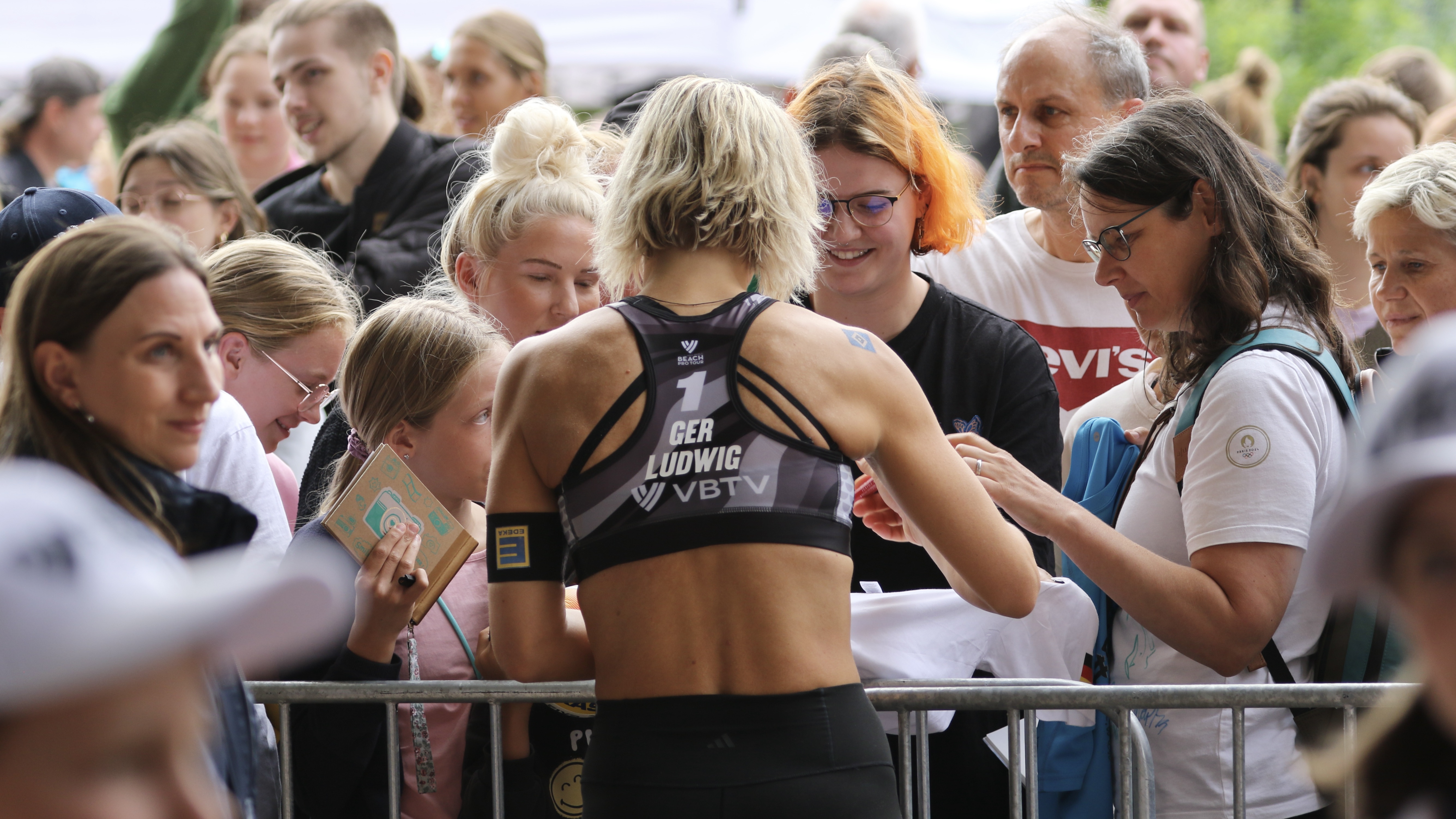
People came to see her for her final tournament. The crowds thronged the warm-up court before her matches. They forced organizers to reconfigure the mixed zone to stave off the crush of well-wishers seeking photos, selfies or simply to stand in her presence. They filled the lower bowl of the modified tennis arena the same way they would have for Steffi Graf all those years ago. And she acknowledged it, not exactly basking in the attention but clearly appreciating the affection and going along with the occasion with a smile and a wave. 

But facing elimination after losing her first two matches in pool play, she also won back-to-back matches to reach the quarterfinals, pulling out plenty of her trademark on-one Ludwigs along the way. 

She had more past than anyone. She was better than everyone at living for the present. 

It isn’t easy to keep playing volleyball, physically, emotionally or financially. But in any walk of life, it’s sometimes easier to keep doing what you’ve always done. It’s the path of least resistance. Perhaps the most remarkable thing about Ludwig at the end, and it’s a lengthy list, is that she still seemed to know exactly who she was and why she did what she did.
It’s no less remarkable to know yourself well enough at 24 to walk away from potential greatness in the thing that has defined so much of your young life. That’s the third part of the weekend triumvirate, the only one that left me staring at my phone in astonishment. 
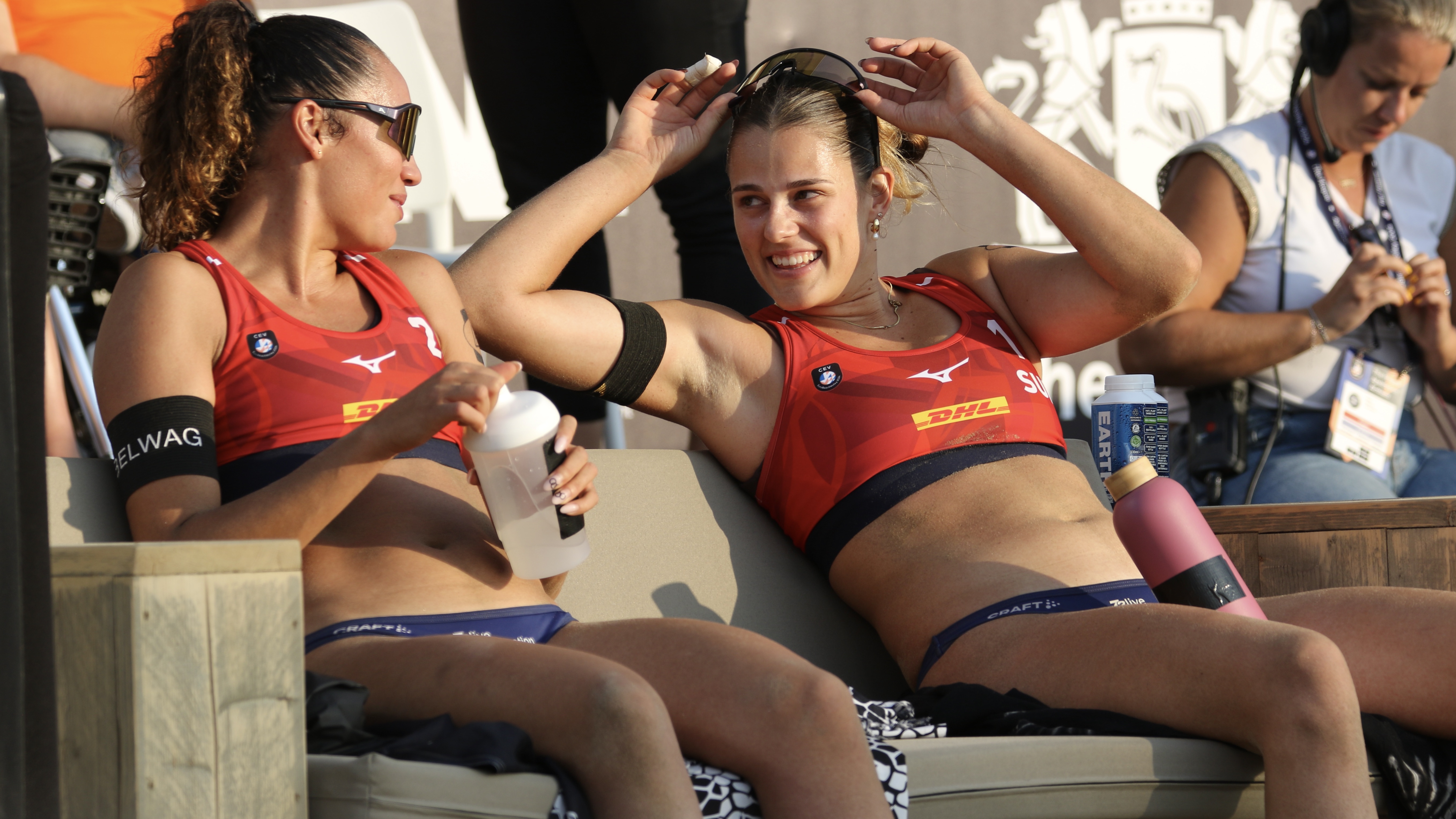
At 24, coming off the Olympic quarterfinals and a bronze medal in the Euros, Esmée Böbner retired. In an Instagram post, she described a growing realization over past weeks and months that she wanted something else. Elite beach volleyball players see more of the world than almost any of their peers, traveling from continent to continent. Yet in their own way, they also live in the confined space marked out by the tape on a sand court. It must be all too easy for the latter to begin to dominate the former, to want a world that is geographically more limited but emotionally more expansive and explorable. 

Speaking briefly with Böbner in Edmonton last year, she put that in perspective that sounds almost prophetic in hindsight. 

“For me, it’s not the traveling,” Böbner said. “That’s cool, but I also like to be at home. It’s the passion you can give to something. It’s important to me to keep that passion. As long as I’m having fun doing it, I think I’m the best part of myself.

“That’s really important. It’s what I enjoy about beach volleyball.”
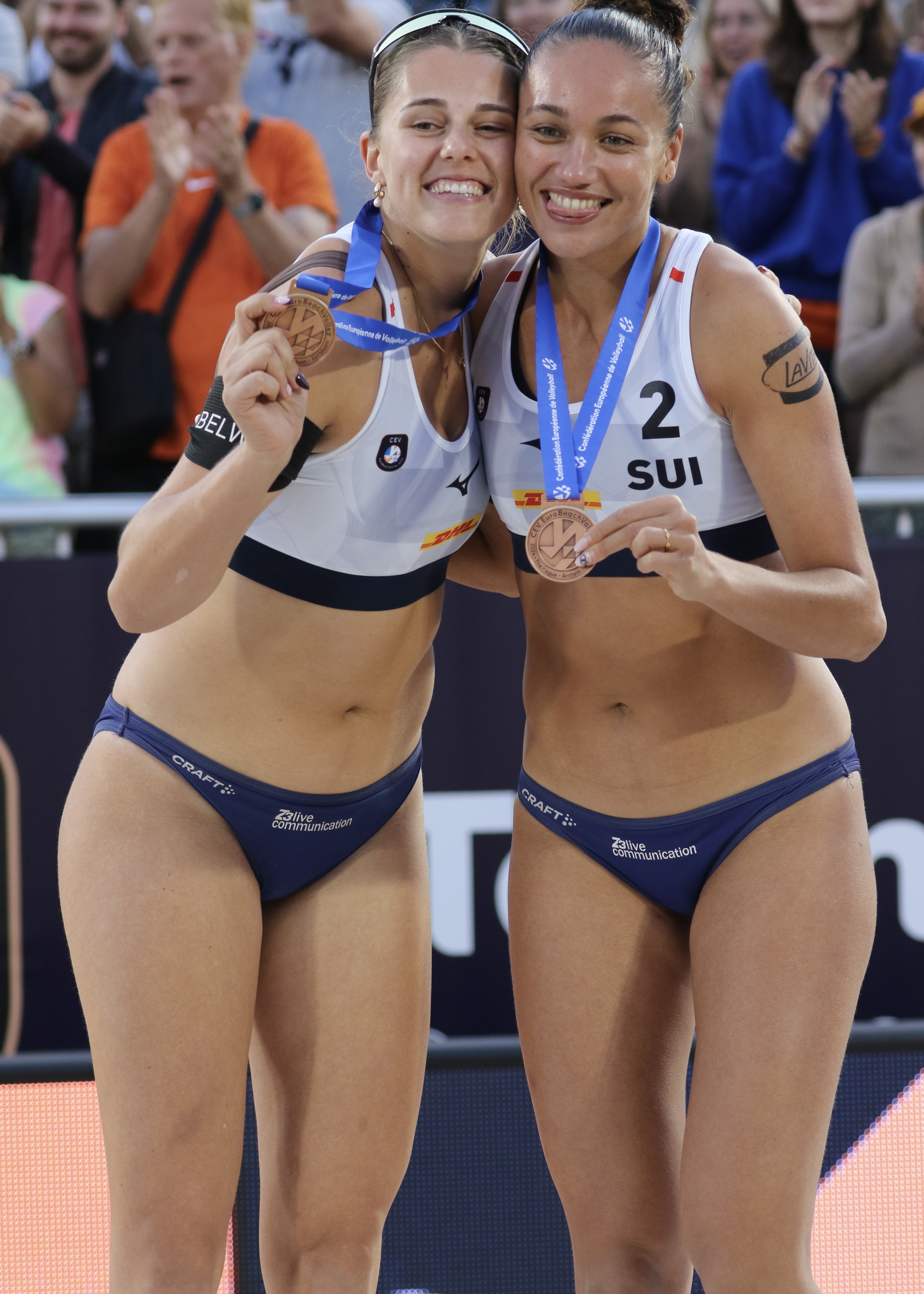
From almost that moment on, Böbner and partner Zoé Vergé-Dépré were a rocket ship, hurtling toward the elite of the elite in the sport. You couldn’t watch a broadcast without an announcer describing them as the most improved team or the best young team—and all for good reason. Böbner was a brilliant server—go back and look at how much she did to win the pair’s first world tour title with her serve in Mexico last year. And she had a knack for coming up with runs of blocks in big moments. 

The young pair, by their own and all other accounts good friends off the court, beat out former bronze medalists Joana Mäder and Anouk Vergé-Dépré for the second Swiss Olympic spot. They excelled in Paris. There was every reason to believe that they would grow into gold medal contenders in Los Angeles and even Brisbane, just as Nina Brunner and Tanja Hüberli had between the Tokyo and Paris Olympics. 

How many athletes keep playing long past when their love for the game has faded, simply because they were addicted to chasing the success that was already in Böbner’s grasp? 

How easy would it be to feel you owe it to someone else to keep going? 

Far harder is to never lose sight of, as she put, what she enjoys about beach volleyball—about life, because that’s what it becomes. 

At 24, she’s allowed to change her mind someday. And perhaps, after the toll of the past year fades, that passion might return. But Böbner didn’t express herself in a manner that suggested a decision impulsively made. She sounded like someone with a remarkably mature understanding of self. 

Knowing when to go. Knowing when to push on. It’s only possible by knowing yourself. 

As Esmée Böbner, Laura Ludwig and Marta Menegatti reminded this weekend, that knowledge—and the courage to act on it one way or another—is the rarest of qualities. 
Uniquely Valentina Gottardi

One of the first times I saw Valentina Gottartdi play in person, she ran through the advertising boards, off the raised court and into metal barricades below in pursuit of a ball. She managed to keep it in play before disappearing into the abyss. After a short medical timeout to patch her up, she kept playing—and diving after everything she could that afternoon in Edmonton. 

Sometimes people just play the game differently. 

It’s one of the wonderful things in sports, when an athlete at the highest level manages to stand out as something different. It’s not necessarily about dominance, although the two aren’t mutually exclusive. Katie Ledecky, Femke Bol, Sydney McLaughlin-Levrone—and in those long ago days when she was just getting started, Marta. They stood out from the start, partly because they were usually so far out in front.

But an athlete doesn’t have to dominate to captivate. Not right away. Allen Iverson was simply different in how he played the game. Not necessarily better than the best of his peers but unmistakably mesmerizing. The same for Rose Lavelle in her days on the soccer field at Wisconsin or Angel McCoughtry on the basketball court at Louisville. 

To me, no expert, the epitome of this in volleyball is Brazil’s Ana Patricia. Watch her play a match and you’re almost guaranteed to see something you won’t see anyone else try. Usually, but not exclusively, that works out to Brazil’s benefit. 

Any sport at the elite level breeds conformity. Even more in the age of data, there is an efficient way to play, a right way to play. There is flexibility only within that spectrum. To borrow an analogy from the world of wine, you can choose what kind of pinot noir you want to be. You can’t choose to be a gewürztraminer. On the other hand, Ana Patricia’s size, skills and languid creative genius allows her to play a game all her own. 

In a quite different way, so, too, does Gottardi’s unbridled and unrelenting energy. 

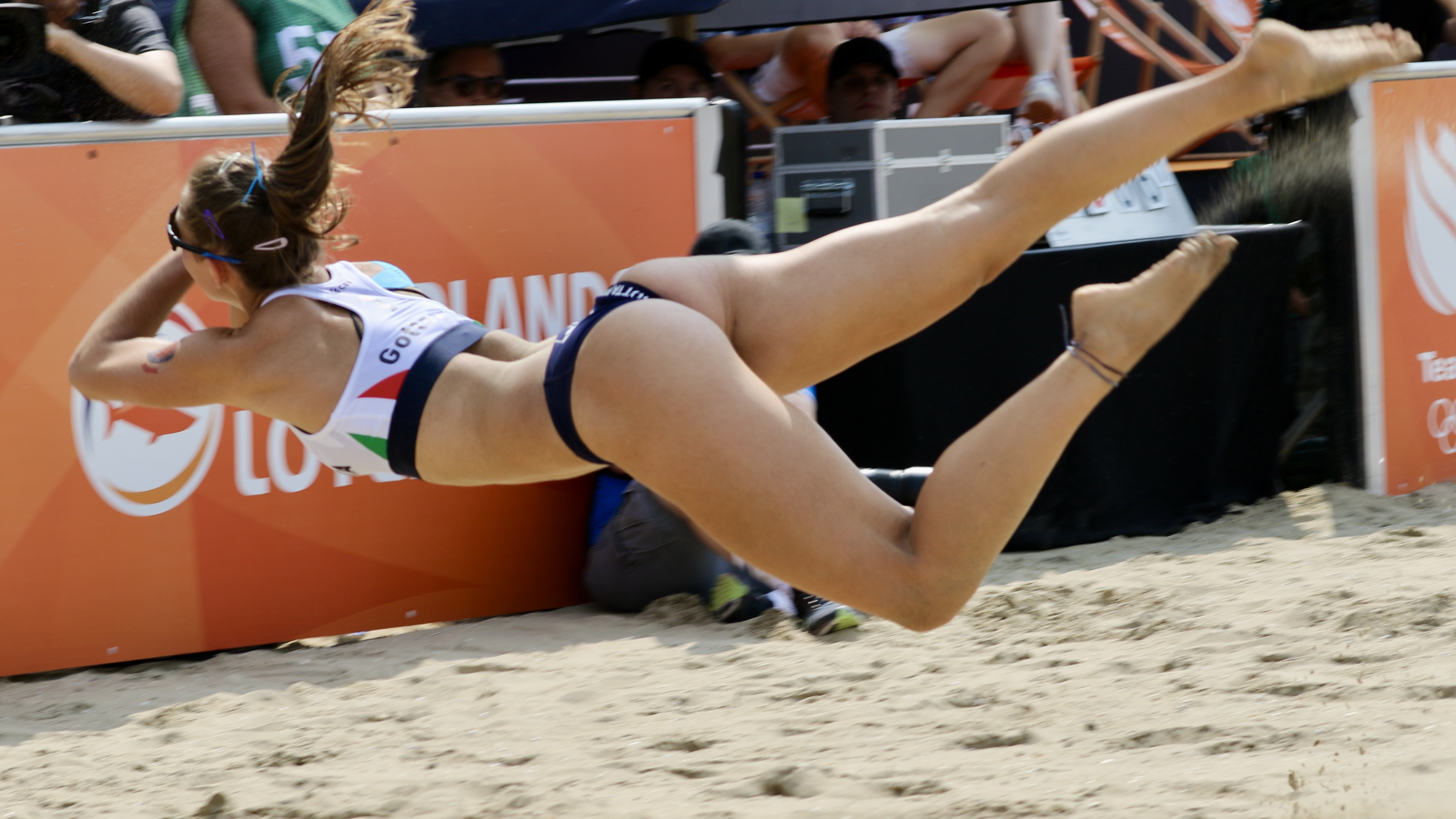
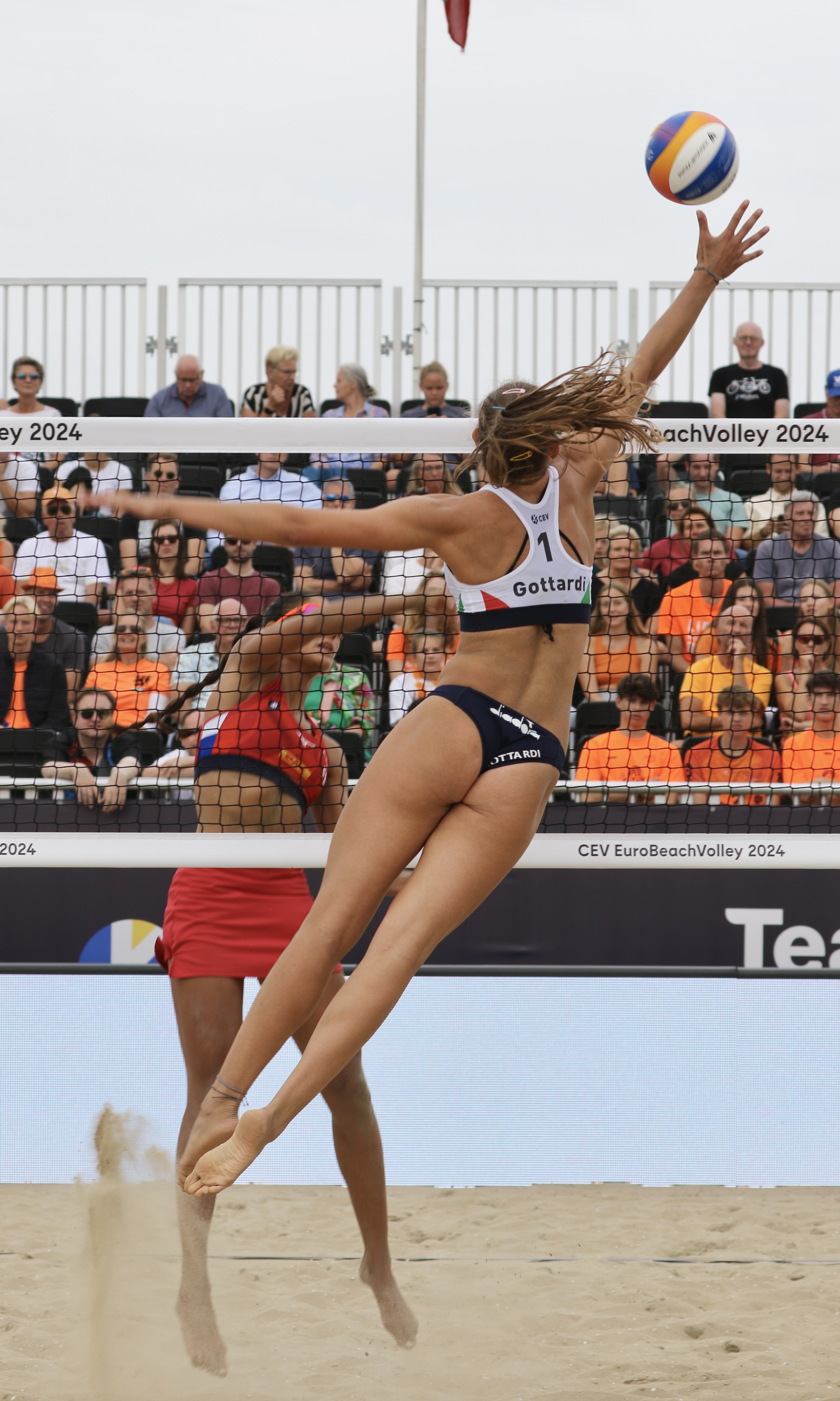
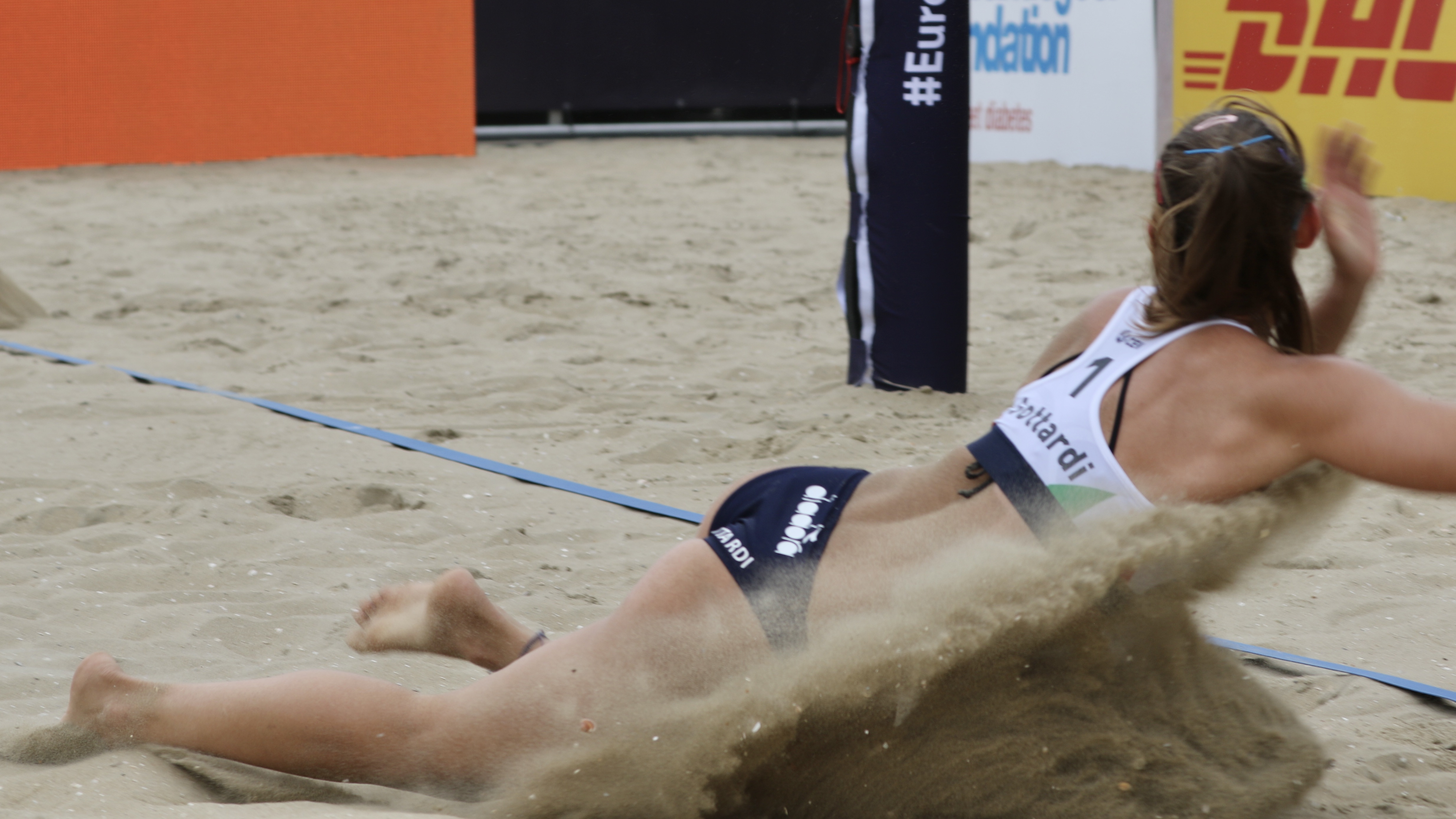
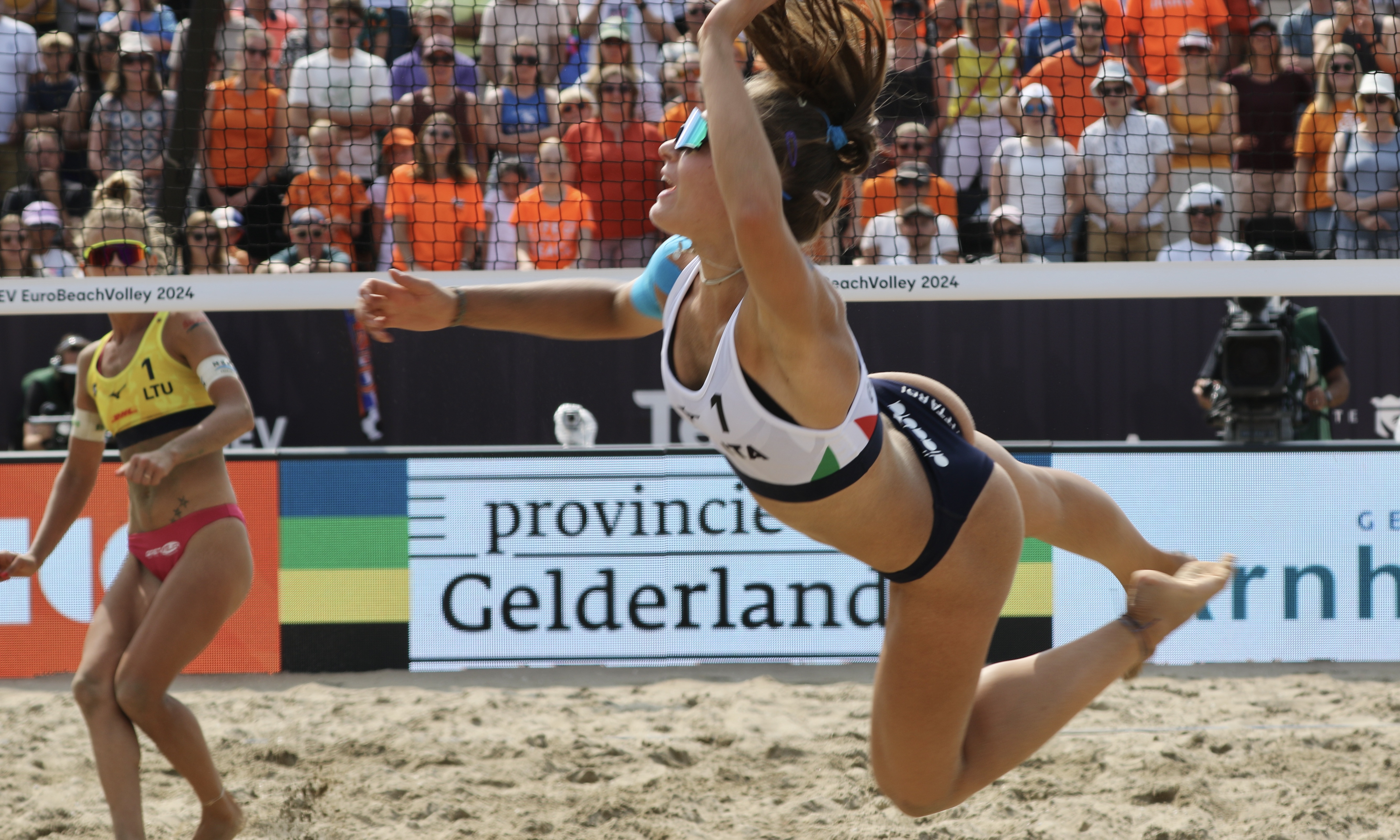
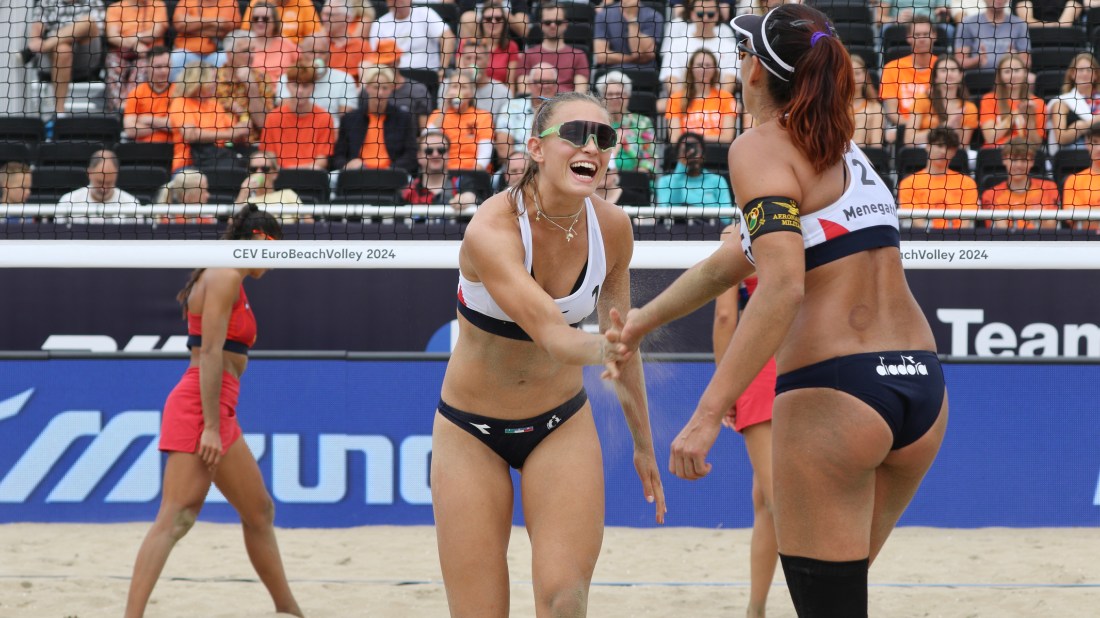
Gottardi will chase the ball into harm’s way. She’ll sprint under the net and dive almost to the opponent’s bench in pursuit of keeping the point alive. Where other players land on the sand when they dive, Gottardi comes back to ground with such force that sand explodes around her. She climbs higher for a kill and drives the ball harder and flatter with her serve. Everything that happens on a volleyball court happens a little bit more when she’s involved.

In the 21-year-old Italian’s case, some of this might come down to youth. Again, people who know the sport far better than I do may say that, however well intentioned, there’s really no need to chase a ball to the bench on the far side of the net. Save your energy. It’s all the more striking watching Gottardi play alongside four-time Olympian Marta Menegatti. At 34 and in occasional need of “magic spray” for her knee during breaks in play, Menegatti has turned the acts of wiping off sunglasses, bickering with referees and challenges into art forms in pursuit of a few extra seconds of rest. She’s all about controlled movement. 

In the most complimentary way possible, Gottardi is like a young golden retriever bounding after her partner, wanting nothing more than to play. She jogs to the bench for timeouts. Her energy bubbles over after big points, released in primal screams of intensity or joy.  

With time, maybe Gottardi will begin to play a bit more like everyone else. But I hope not. 

The Joy of Third Place

(Update August 23: Esmée Böbner’s surprising—stunning—announcement that she will retire after the upcoming Swiss Championships puts the scenes below in a new light. I think back on how she struggled with her passing in the first set of the bronze medal game and her ability to turn things around in the closing points of that set. All of it with the knowledge that it would be the last time she had a chance at the podium in an international setting. Maybe there is more to write, but for now, I’m rather sad the game won’t have her for another decade—and extremely grateful that I got to see her with a medal around her neck before she exited).

THE HAGUE, Netherlands — International beach volleyball doesn’t do participation trophies. Those who play it don’t inhabit a warm and cuddly, “everyone tried their best” environment. Competition for sponsors, funding, coaching, even fans can be downright Hobbesian, brutish and short.

Consider the Elite 16 events, the premier tournaments in the current iteration of the world tour. There are perhaps seven or eight a year. Only 12 teams are guaranteed places in the main field, mostly based on ranking (the host nation typically gets a courtesy place among the dozen). For everyone else, and the list of teams nominally entered usually runs into several dozen, the math is harsh. Pay your own way halfway around the world—anywhere from Doha, Qatar, to Montreal, Canada—for one day of qualifying. And not just one qualifying match. You have to win two to make the main event, 16 qualifiers whittled down to four for the main draw. 

Not long ago, Austria’s Klinger sisters—frequently one of those teams trying to qualify for the Elite 16—offered an informative inside look on social media at how the costs add up. 

All of which is preamble to the idea that, yes, the women and men on the third place podium at the end of tournaments deserve their place in the celebration. 

Third place matches in any sport rarely held much interest for me. Nor am I alone. When I covered the 2007 Women’s World Cup in China, ESPN wanted me to fly home after the U.S. lost to Brazil in the semifinals (the infamous “Hope Solo speaks to CBC game” in Hangzhou). Never mind that changing the flight would have cost more than the additional nights of hotel (granted, this also says something about what the powers that be at ESPN.com thought of women’s sports at the time). I stayed, but I can’t claim that the U.S.-Norway game lingers in my memory. 

At other World Cups and Olympics, the third place game was in a different location than the final. I never saw them in person. NCAA championships don’t bother with third-place games. That never struck me as odd. Now it feels like a missed opportunity. 

America has a winner-take-all mentality in just about everything. We put it aside every couple of years for the Summer-Winter Olympic cycle, almost grudgingly valuing silver and bronze. But that’s easier to process in events in which everything is settled at once. Long jumpers don’t go back out and compete for bronze after missing out on gold. In team sports, watching teams play for third often felt anticlimactic. An afterthought. 

After the past two weekends, particularly this past weekend’s European Beach Volleyball Championships in The Hague, consider me converted. And it’s the Swiss who convinced me to cast aside my third place neutrality. 

First came the Olympics, watching Nina Brunner and Tanja Huberli win bronze against Australia. Bronze was bittersweet, to be sure. After they had match point against Canada in the semifinal, the ball in the air asking to be killed, a sense of what might have been loomed large. Still, the focus with which they played and the joy that swept over them after the final point was unmistakably moving. No team in the tournament had been together longer, and bronze was career-affirming and life-changing in a country whose athletes earned eight medals in Paris. 

The rooting interest notwithstanding, physical distance meant some measure of emotional distance as a fan. I felt as if I was on a roller coaster with each point in the semifinal. I was pleased for them in the bronze medal game, but my emotional investment was kinder on my blood pressure.

Being there in person in The Hague was different, even with a team still vying to succeed Brunner and Huberli as my team of choice when the latter eventually exit the scene. In Esmee and Zoe’s early days as partners, it was next to impossible to watch their matches in the domestic or lower-tier prove-your-worth tournaments that feed the top of the international game. You followed them much same way you followed a baseball team in the box scores back in the day. Gradually, you began to see them try and qualify, usually via feeds with a single stationary camera at the back of the court. Finally, along with seeing them in person in Edmonton and Montreal, they’ve become fixtures in the main draw and their matches are regularly part of the multi-camera, professional-production streams.

The Swiss played their group and early knockout matches in Apeldoorn, moving to The Hague for Saturday’s semifinals and final after a late night win against local favorites Stam and Schoon the previous night (which, in turn, followed a three-set Round of 16 match earlier Friday). They looked the part of a tired team in the semifinal. Germany’s Muller and Tillman were all over them from the outset. They were unforgiving on a tough passing day for Esmee, serving her exclusively. They also denied the Swiss, one of the most prolific serving teams, any aces. 

On the heels of a three-set semifinal thriller between Italy and Lithuania, the second semifinal lasted barely 40 minutes. The Germans prevailed 21-13, 21-16. Rarely have the Swiss ever looked as discombobulated and overmatched. From an American perspective, it was difficult to imagine how they would summon the passion to turn around three hours later and play another match for bronze. How much did it really matter?

For almost the entirety of the first set of the that match for third place, they, too, appeared to struggle for motivation. Or at least, any improved cohesion. Following the German script, the Lithuanians served Bobner early and often, while the Swiss struggled to cope with 6-foot-5 blocker Aine Raupelyte. Trailing 20-18, Esmee and Zoe were on the brink of losing their third consecutive set of the day. They rolled off four consecutive points to steal the set, a Verge-Depre ace instrumental. As is often the case in a sport where psychology plays such a key role, and by attacking Raupelyte’s dwindling confidence with the serve, it was all Swiss after that. 

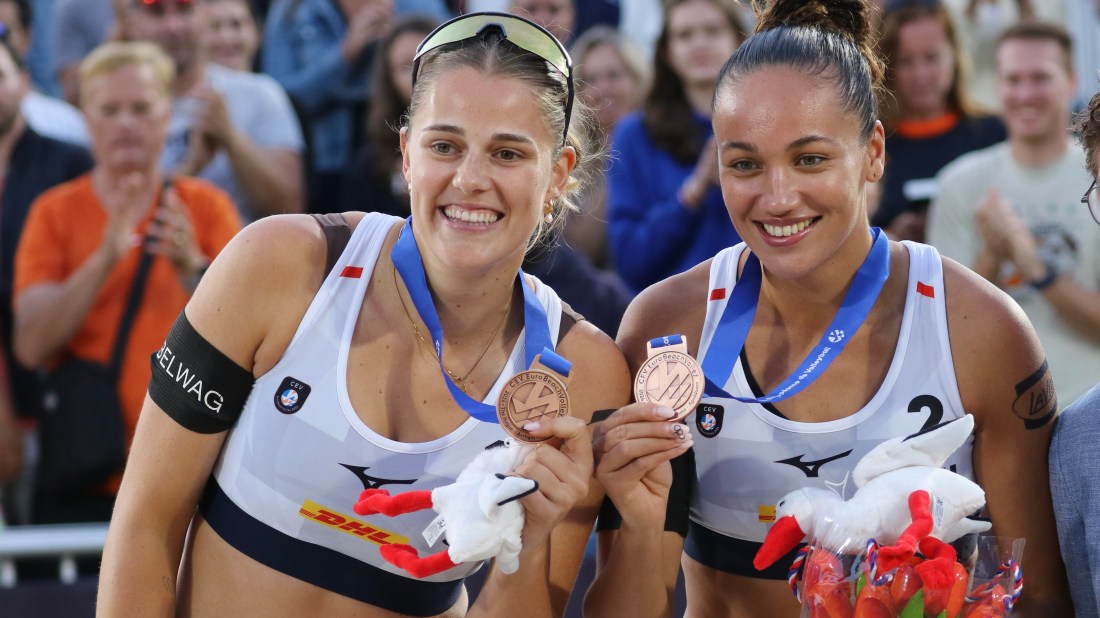
It wasn’t the result they wanted when the day began, to be third among the four remaining teams. But that’s also third out of 32 teams in the tournament. Third out of all the teams on the continent. Third after fourth place seemed inevitable late in the first set. Third after the emotional and physical exertion of reaching the Olympic quarterfinals a week earlier. Third after more than a year chasing Olympic qualification around the globe, in Zoe’s case going toe to toe with her older sister, Anouk, for the final Swiss spot in Paris. 

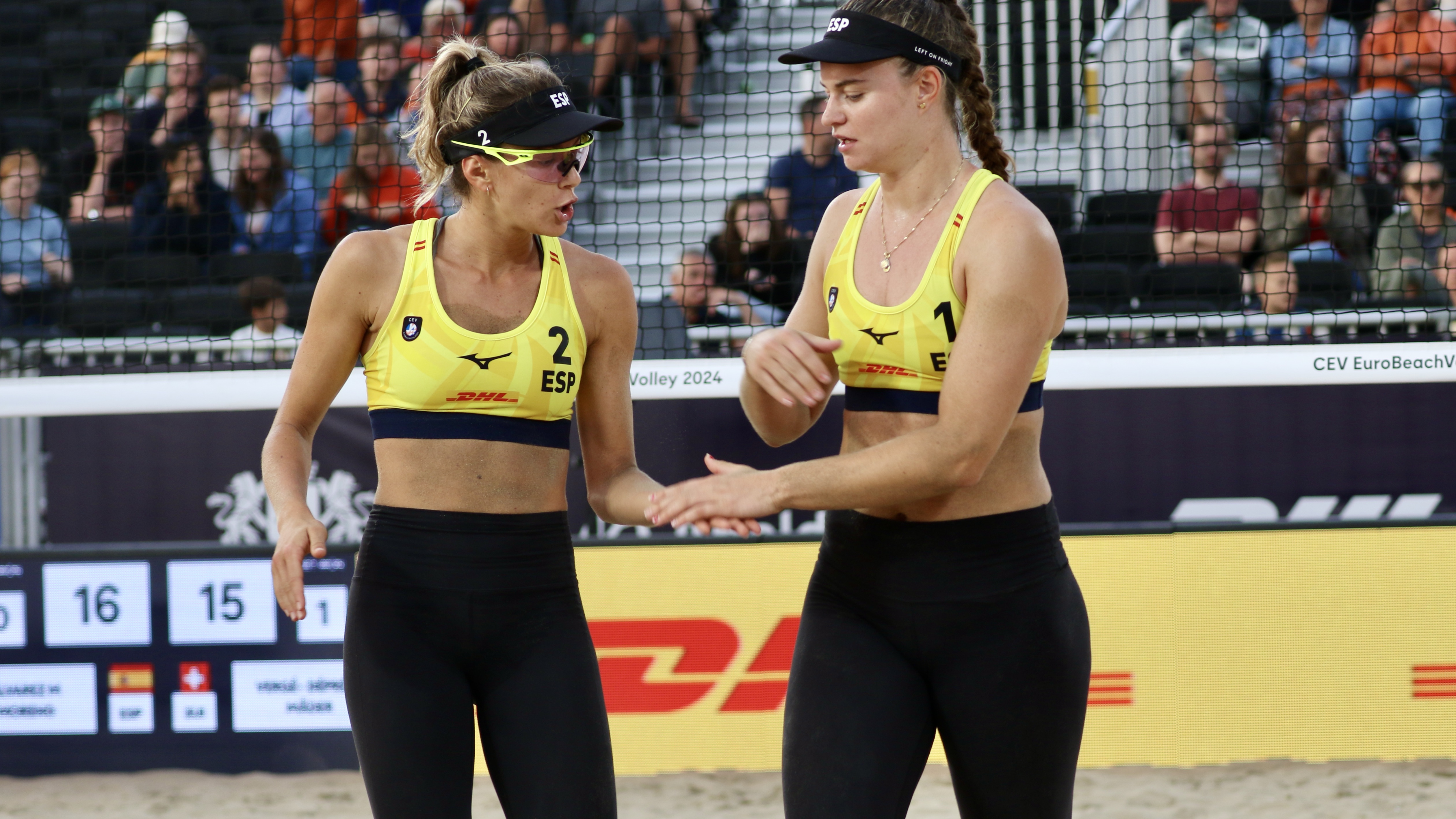
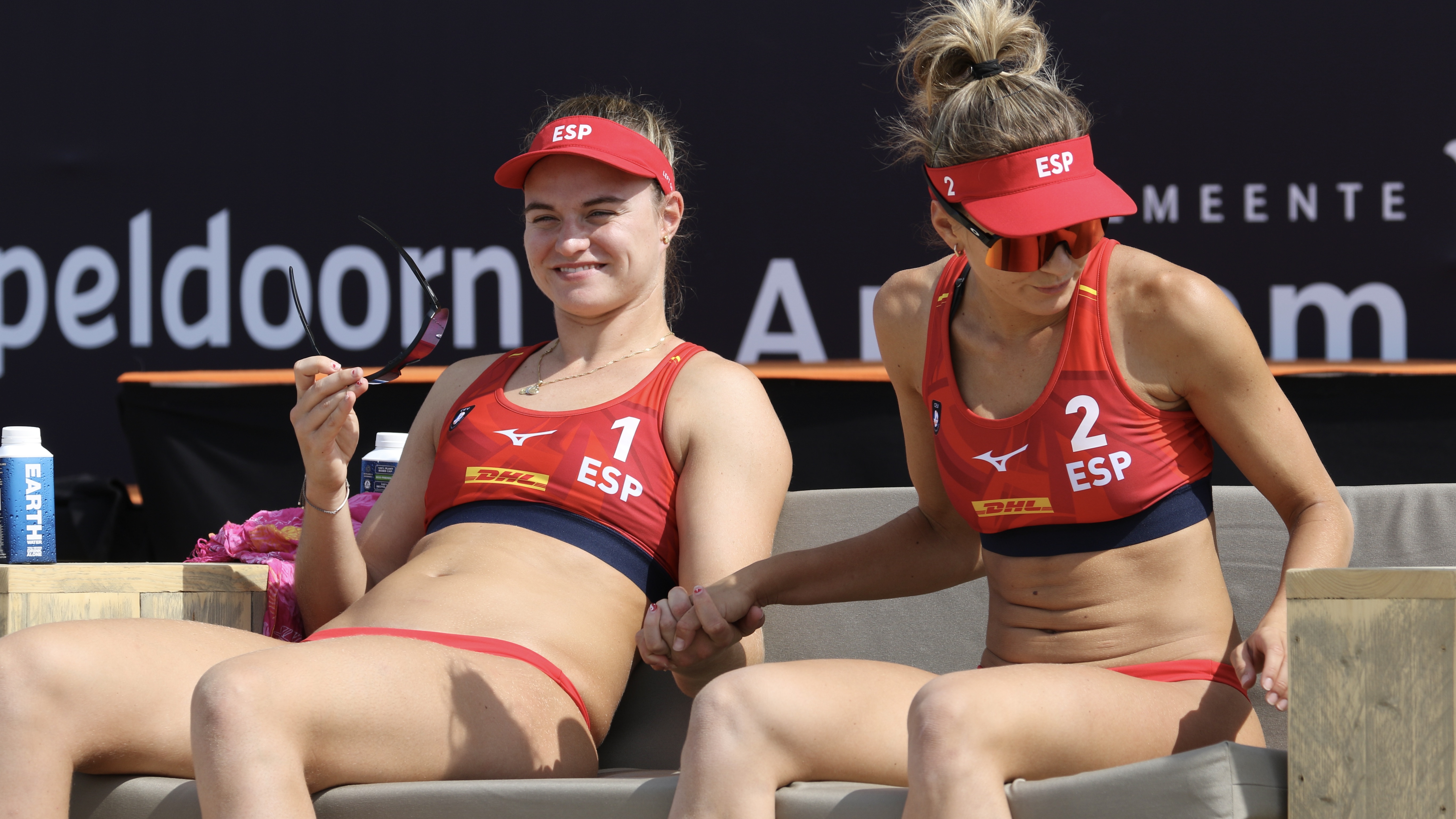
I wrote earlier in the tournament about the Spanish team of Daniela Alvarez and Tania Moreno and the not-insignificant challenge of learning how to come down from similar heights. The Swiss are similarly up and coming, but they have a couple of years on the Spanish pair. The German champions, so comprehensively impressive in the semifinal and final after a disappointing Olympics, have quite a few years on the Swiss. Everyone enters a tournament and takes the court to win. That’s the point of competing. But if you treat life or sport as a zero-sum game, in which one team winning means everyone else loses, you miss out on a lot.

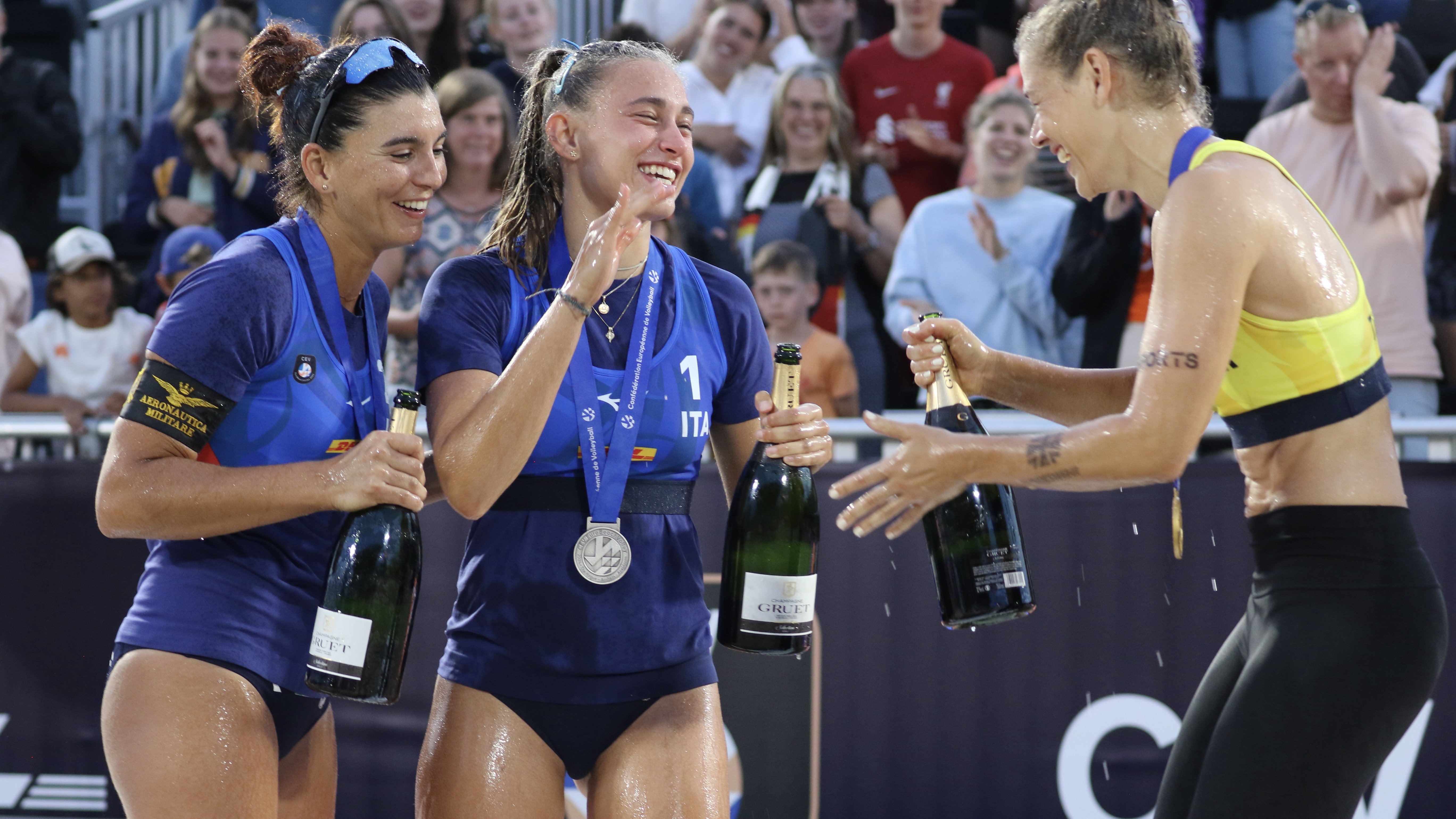
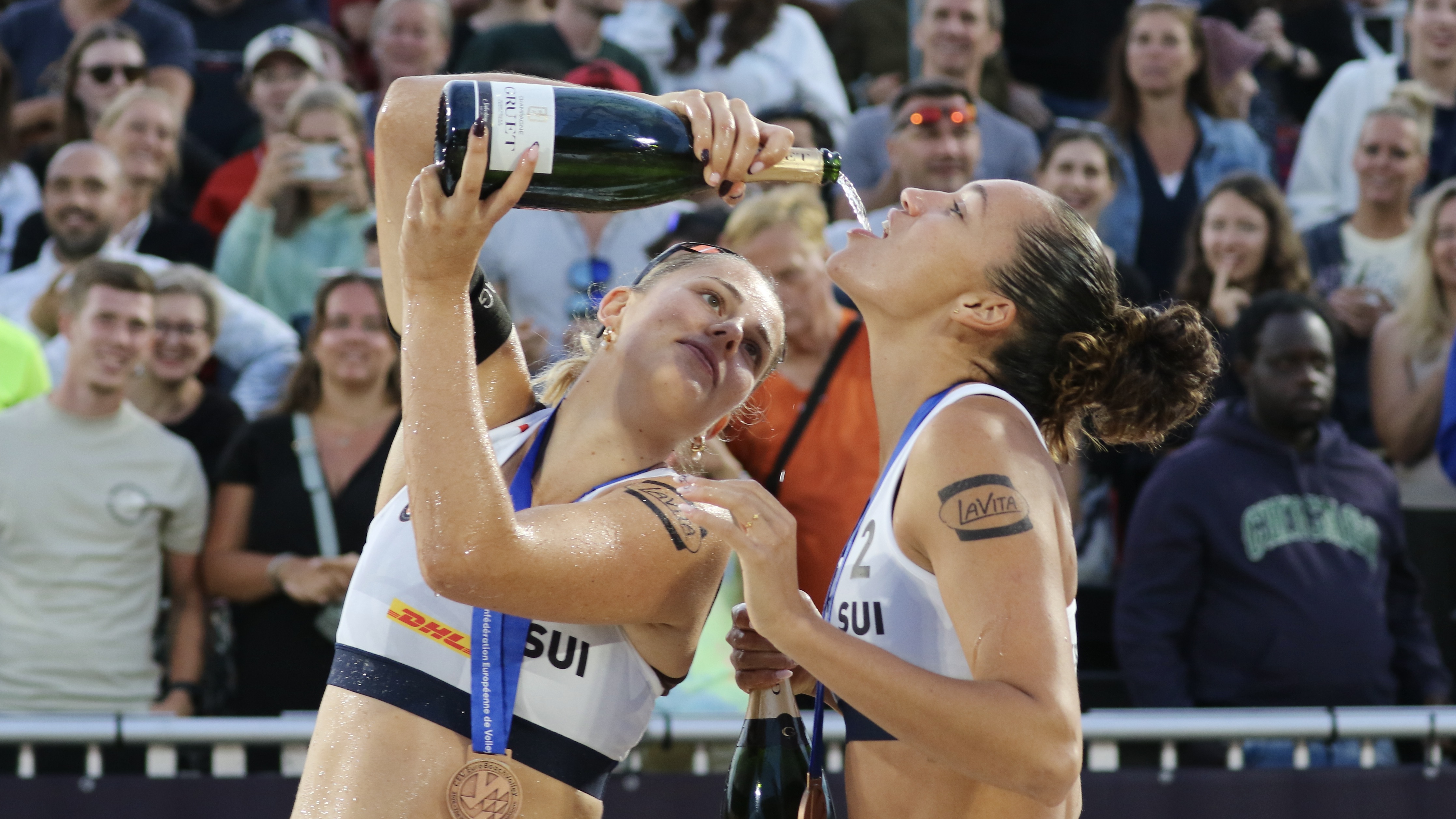
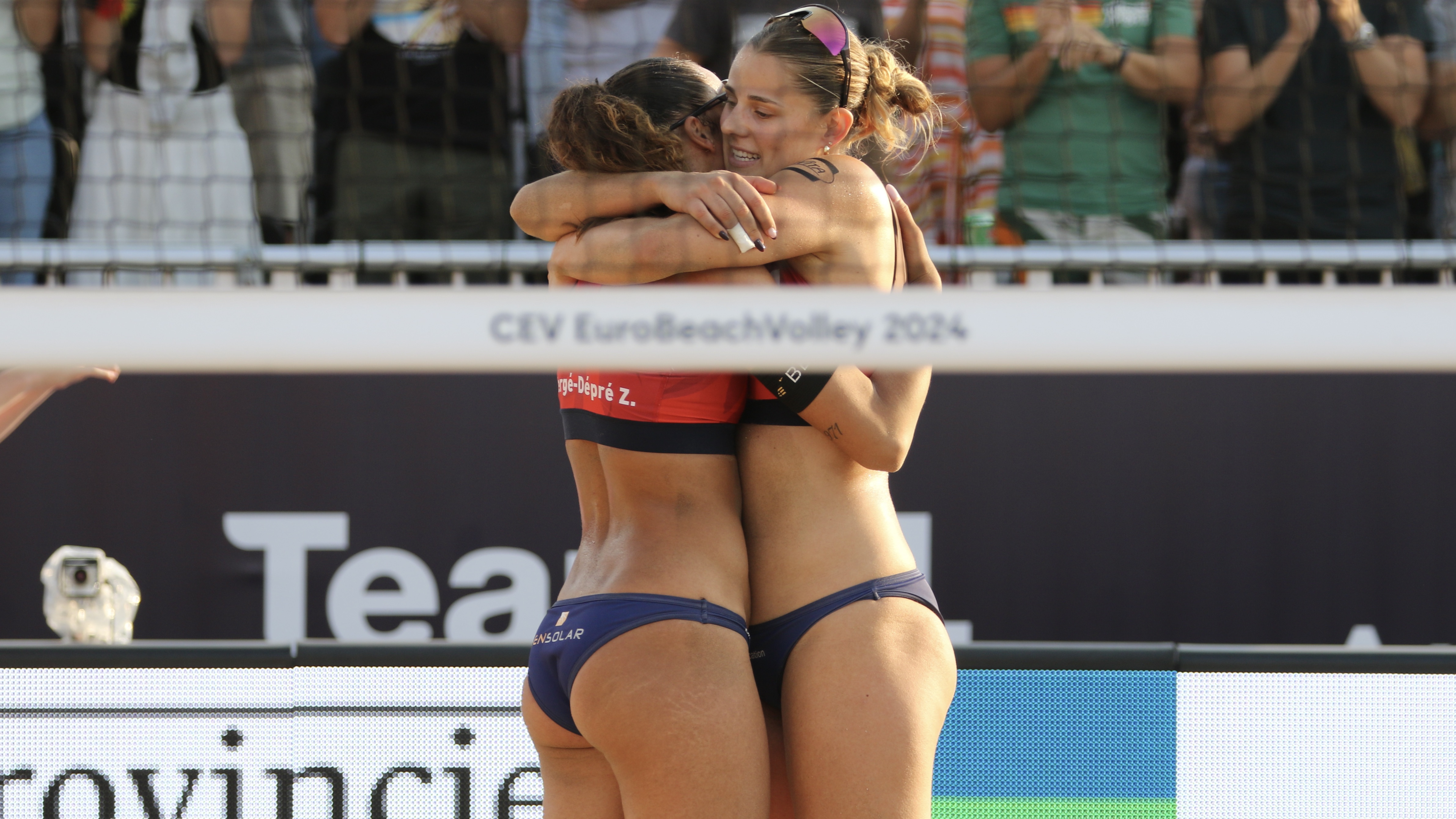
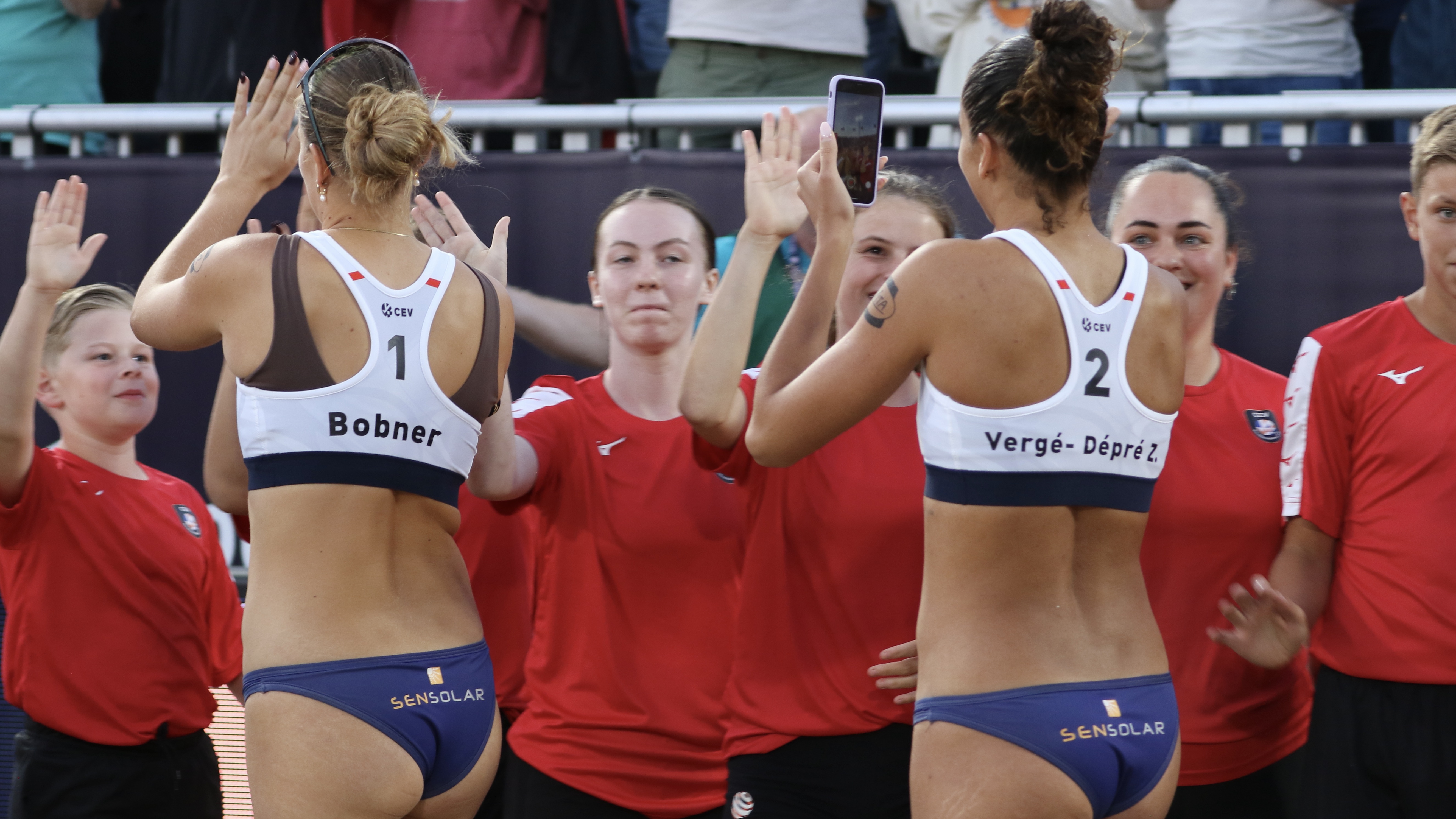
The hour that the Swiss had to wait for the medal ceremony didn’t diminish the emotion visible in the immediate aftermath of their victory—both on the court and hugging anyone and everyone in the Swiss traveling party near the mixed zone. Returning to the court for the ceremony following the gold medal game, Zoe carried her cell phone to capture everything from high-fiving the volunteer kids to the awarding of the medals. Esmee looked giddy, teaming with Italian silver medalist Valentina Gottardi in nearly crashing the first place podium prematurely to celebrate en masse, and first out of the blocks to spray champagne. 

Consolation carries a negative connotation in the language of sports. A consolation point or goal is too little too late. We use “small consolation” for something that makes no difference. Third place is a consolation place. But the word itself means comfort received after a disappointment. Consoling someone is an act of kindness. Earning your own consolation by winning the bronze medal match should be celebrated. 

Sometimes even with champagne. 

I can’t promise I’ll watch the third place match in the 2026 World Cup. It’s different when you have a rooting interest. It’s different when you’re there. Maybe it’s not necessary at Wimbledon or in the Champions League. Perhaps we live in an increasingly winner-take-all world (one more American gift). All I know is I’ve seen a lot of championships I didn’t enjoy as much and won’t remember as long as watching a team celebrate the bronze medal in Den Haag.

Coming Down the Mountain

THE HAGUE, Netherlands — The ascent is everything in sports. Athletes and teams rise to the occasion. They climb the mountain and scale the summit. Many of us just invested two weeks binge watching the phenomenon in its most concentrated form. From archery to volleyball, the Olympics are all about ascent—the four year journey to qualify and the handful of moments when, like Swedish pole vaulter Mondo Duplantis, someone literally soars to unmatched heights. 

The descent gets less attention. Not a decline or fall, mind you. There is as much drama in calamity as in greatness. People will watch a comeuppance with glee. They’ll shed tears over genuine misfortune. But for most athletes who ascend to some achievement or moment of excellence, the necessary descent is more mundane.

People write books about climbing Mt. Everest. What happens the day after they return home gets an afterword, at best. 

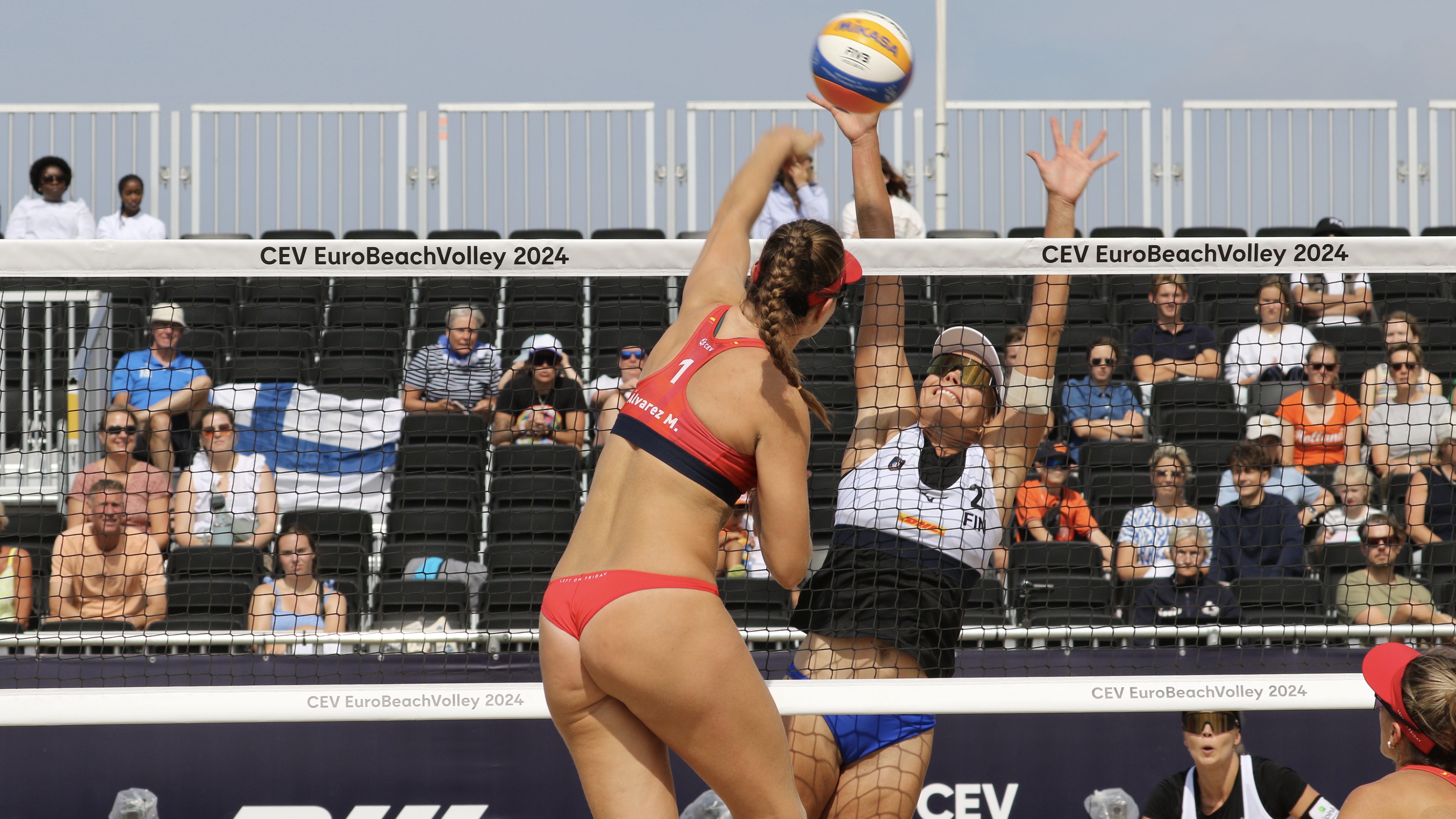
Thursday, the Spanish team of Daniela Alvarez and Tania Moreno exited the European Beach Volleyball Championships in a two-set loss against Finland in the Round of 24. The result was an upset, perhaps even of the stunning variety. Silver medalists in the same event a year ago and coming off a run to the Olympic quarterfinals, Spain was the fifth-best remaining seed in the field. Finland was seeded 29th. If that felt a little low for the familiar pro tour pairing of Niina Ahtiainen and Taru Lahti-Liukkonen, it wasn’t off by orders of magnitude. 

To those of us unapologetically rooting for the Spanish duo on the shores of the North Sea, perhaps muttering a quiet riff, ram, bah zoo under our breath to honor their TCU ties, it was quite a bummer. Even more so to Alvarez and Moreno, presumably. With two full days of the women’s tournament still to play in the Hague, the Spanish were cut adrift. 

This event was in some ways where Alvarez and Moreno announced themselves at the elite level of beach volleyball a year ago. In Vienna, they took out reigning champions Tina Graudina and Anastasija Samoilova in the quarterfinals and former Olympic bronze medalists Anouk Vergé-Dépré and Joana Mader in the semifinals, settling for second place only after losing in the final to Nina Brunner and Tanja Huberli. Each Spanish player barely 21, it was an audacious run. It marked them, in the language of ascent, as a team on the rise—and on the move. 

Taking a year off from NCAA beach volleyball to commit themselves to Olympic qualifying, Alvarez and Moreno proceeded to play in the following locales between the end of last year’s Euros and this year’s Olympics.

  • Hamburg, Germany
  • Paris, France
  • Tlaxcala, Mexico
  • Goa, India
  • Haikou, China
  • Chiang Mai, Thailand
  • Nuvali, Philippines 
  • Doha, Qatar
  • Recife, Brazil
  • Saquarema, Brazil
  • Guadalajara, Mexico
  • Tepic, Mexico
  • Xiamen, China
  • Espinho, Portugal
  • Gstaad, Switzerland
  • Vienna Austria 

And that’s with a couple of months offseason. 

Add it up and even without any trips to Fort Worth, they probably spent about as many hours in the air over those 12 months than most people commit to exercise in a given year. The longest trips provided some of the most memorable moments—and valuable points. In almost unbearable heat and humidity, they finished third in the event in India (despite losing to a certain pair of Finns along the way). They reached the quarterfinals in Thailand four weeks later and finished second in the Philippines at the beginning of December.  

By the turn of the year, their Olympic resume was in pretty good shape, but they kept up with the relentless pre-Olympic schedule. In the span of 55 days in March and April, they played in Qatar, back-to-back events in Brazil, back-to-back events in Mexico and China. They had enough left to take the bronze in the last of those in Xiamen, their fourth medal in a world tour event (three in what would now be the Elite 16/Challenge levels). 

And after losing their Olympic opener rather comprehensively to former Euro foes and eventual Paris medalists Brunner and Huberli, the Spanish team rolled off three wins in a row, beating one of the home teams from France, German former gold medal winner Laura Ludwig and pre-tournament top contenders Raisa Schoon and Katja Stam. 

Alvarez gives up an inch or two to many of her counterparts at the net. She makes up for it by embodying the athletic persona of a crafty lefty. Physical and athletic enough to get her share of blocks, she also has a pool shark’s sense of angles, dropping off the net as much as almost any blocker and playing a variety of shots. Off the court, Moreno, too, isn’t likely to stand out in the land of giants that is a beach volleyball tournament. It’s a different matter on the court, where there may not be a better inch-for-inch athlete and she utilizes a second-generation beach volleyball brain to see the future. 

They are an ideal team to adopt. Young and unimposing enough from a country with mixed results in the women’s game to be underdogs of sorts. Talented enough, with their transatlantic training, to need neither fairytales nor favors to compete with anyone.

Arriving in the Netherlands, it was easy to be optimistic—it’s always easy for those watching from afar. Three years ago, after an Olympic knockout exit, Brunner and Huberli won the European title the following week. With that Swiss team electing not to defend its more recent Euro title after an Olympic medal run, perhaps the door was open for Spanish duo to take the next step. Never mind the toll that the past couple of weeks, let alone the past 12 months, must have taken on weary bodies and exhausted emotions. 

They dropped the opening set of their first match, played against the third-best Spanish team on the venue’s breezy secondary court–a far cry from the shadow of the Eiffel Tower. They rallied to grind out a three-set win in the opener, then benefitted from a morning off with a walkover win against a German team dealing with illness. 

But with first place in the pool and a bye to the Round of 16 on the line, Alvarez and Moreno lost to Verge-Depre and Mader in two sets on center court Wednesday evening. That loss—their first in more than a month against a team that didn’t eventually medal in Paris—set up Thursday’s Round of 24 now-or-never clash against Finland. 

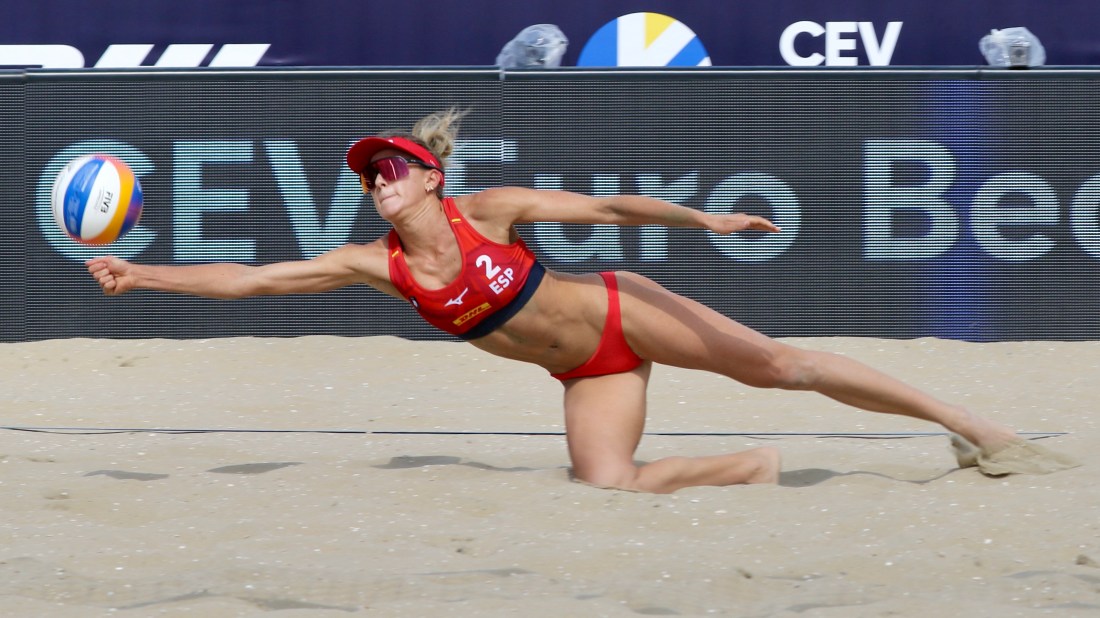
It wasn’t to be. Spain wasn’t bad. Alvarez and Moreno just weren’t quite themselves. Serves missed the line by inches. Alvarez couldn’t get the blocks to go down. Moreno got only a mouth full of sand for her diving dig attempts. In an otherwise back-and-forth affair, the Spanish lost something like 10 of 14 points across the end of the first set and beginning of the second set. When Moreno finally got a serve to drop onto the line in the second set, Ahtiainen somehow came up with a one-handed dig that promptly turned into a kill. The Spanish never went on a run.

As the crowd quickly turned its attention to the all-Dutch match that followed, the Spanish quickly packed up their belongings on the bench and exited. It marked just their second finish outside the top 16 in their last nine events. 

Fans of the Spanish, and I wasn’t the only one on hand, didn’t get to see the young team win its first major title. We still might have seen them begin to take the next step. 

For a year, beginning with last year’s Euros, Alvarez and Moreno committed themselves to the ascent. They traveled the world, exhausting themselves physically and mentally, in pursuit of an opportunity few ever earn. In coming within a win of playing for an Olympic medal, not to mention standing on other medal stands along the way, they thrived where the competitive air is thinnest. 

But no one gets to stay at the top. Well, maybe Ana Patricia and Duda have a time share. But even the Brazilian gold medalists are fallible. We celebrate athletic excellence as what people do in the biggest moments. It’s just as much about what you do next. 

When the adrenaline of a yearlong or seasonlong quest fades. When the world’s attention gradually drifts away. When you reach your goal or come closer than you ever imagined. 

To be great, you’ve first got to figure out a way to the top. You’ve also got to be able to come back down. If only so that you can begin the next ascent.  

NCAA champions, assuming they return as anticipated for one more season at TCU? European redemption next summer? World champions next fall in Australia? The 2028 Olympics? The 2032 Olympics, when each will still barely be 30 years old? There are plenty of mountains still to climb. 

It would have been fun to see a Spanish celebration in The Hague. Being there to see a down payment on future medals may yet make for a pretty good story.