The moment is everything in sports. It’s their redeeming virtue.
It’s the tradeoff for the soap opera and scandal. It makes it worth putting up with the hot take industrial complex and overhyped snoozefests. Sports can still squeeze the past and future out of the picture and slow down a present that otherwise never seems to stick around very long.
We watch athletes try to remain in the moment, try to harness its energy. Every now and again, they find the sweet spot between the certainty of expectations—of what should happen—and the overwhelming realization of what might happen. Keep both at bay and that’s when remarkable things actually happen. In the moment.
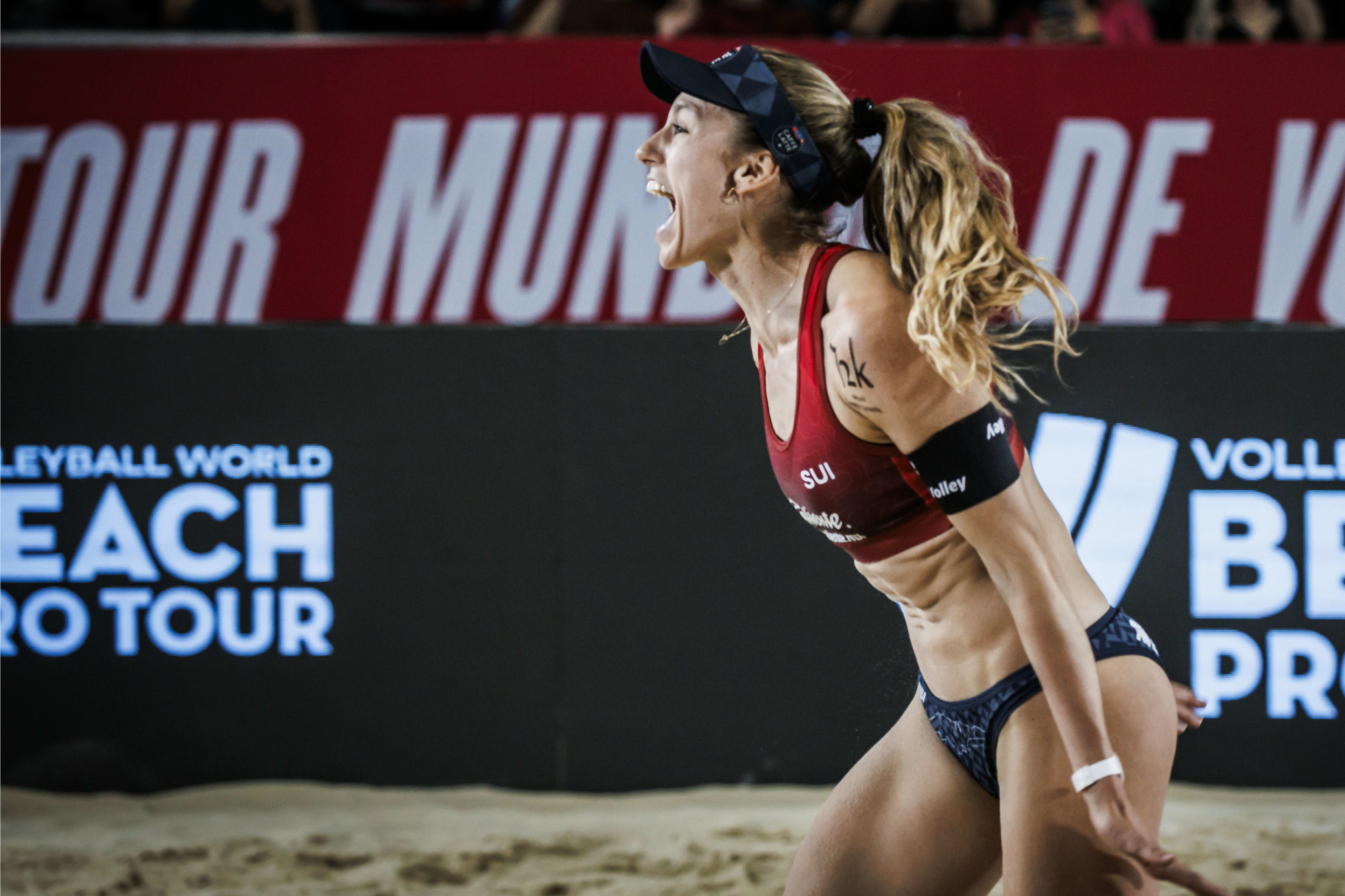
Nina Brunner and Tanja Huberli first played together in an international pro event, the equivalent of the current Beach Pro Tour, in April 2016. Huberli was 23 years old and Brunner 20. They finished tied for 17th. Within little more than a year, they made it to the podium with a third-place finish at a major event in Porec, Croatia.
A few more third-place finishes followed, as well as a semifinal appearance in the 2019 World Championship. Over the past two years, they finished second in Elite 16 events—the highest level in current iteration of the pro tour—in Hamburg and Doha. They played in the delayed 2020 Olympics, narrowly missing out on the medal round. And, of course, they made history as the first Swiss women to win multiple European Championships, in 2021 and 2023 (nearly the first women’s team from any country to win three in a row, settling for silver in 2022).
But across eight years, 19 countries and nearly 100 events together, they never won a title on the international pro tour. Until Sunday in Tepic, Mexico, when they defeated the Dutch team of Katja Stam and Raisa Schoon, 21-14, 19-21, 19-17, to win the year’s second Elite 16 event.
For four days, the Swiss were brilliant. Huberli led the field in blocking. Brunner hit cut shots at impossible angles and reacted on defense as if everyone else was playing on a delay—never tipping her hand but somehow always just where the opposing player tried to hit. In six matches, they beat five of the eight teams seeded ahead of them. They didn’t lose a set until the final. And when it was over, the reaction said everything.
Entering the reckless speculation portion of this post, I’ve wondered quite a bit about whether or not the Paris Olympics might be the end of the road for one or even both of the partners.
They haven’t played much over the past year and half compared to many in their peer group. Granted, they haven’t needed to—in a three-way race for two Swiss Olympic spots, their success when they do play means they maintained a steady and largely untouchable lead throughout that time. They didn’t need to trek to Challenge events in India, the Philippines or, much to my chagrin, Edmonton. But Huberli has also visibly battled foot issues for some time—at least twice in Tepic, she had to stop mid-match and re-tape toes. It might be a manageable annoyance. Athletes manage plenty of them as years of competition take their toll. But maybe second only to bad backs, foot woes can rapidly degrade your entire quality of life.
On the other side of 30 years old, with two European Championships and two Olympics to her credit, would she really want to keep putting in hundreds of hours in the sand and leaving family and friends for volleyball’s arduous, expensive and nomadic lifestyle?
If not, would Brunner want to take on a new partner? On one hand, she’s in the prime of her athletic life and the peak of her talents. From afar, she appears driven to play the sport to a degree that would make it difficult to walk away. On the other hand, as something of a youth prodigy who won a junior world title at 16 years old, she’s already been doing this for more than a decade. Unless one of Anouk Vergé-Dépré or Joana Mader also retired after this year, splitting up that Swiss team, there’s no obvious new partner if Huberli leaves—not at the level to which Brunner is accustomed. Would she set her sights on LA 2028, when she would be 32? Beach volleyball produces some impressively long careers, but it’s not as if it comes with the opportunity to accrue generational wealth.
Again, it’s all idle speculation. And as something of a pessimist, likely born of nothing more than me worrying my favorite team won’t be around forever. The way they’re playing right now, they would be among the top contenders to win any Elite 16 event they entered, along with World Championships and World Tour Finals, for at least the next two years. The Olympics are a big prize, but one quadrennial tournament doesn’t determine everything in a volleyball career. There are other goals to play for.
That’s a hyper-specific look at possible future scenarios in the careers of two Swiss volleyball players that most people haven’t heard of. It’s also an inherently universal theme. Not just in sports—where Bayer Leverkusen supporters, even amid current joy, must wonder how much time they have left with Xavi Alonso and Florian Wirtz—but life.
Future concerns always intrude on the present. For athletes. For the fans who watch them. What’s coming down the road? What if a company downsizes to please investors? What if a house’s plumbing needs replacing? And it’s not always about dread. Job opportunities, relationships, spending splurges, people stand at mini-crossroads every day, trying to figure out what awaits down one path over another. Living in the present feels like a luxury, almost irresponsible. But it’s where life happens.
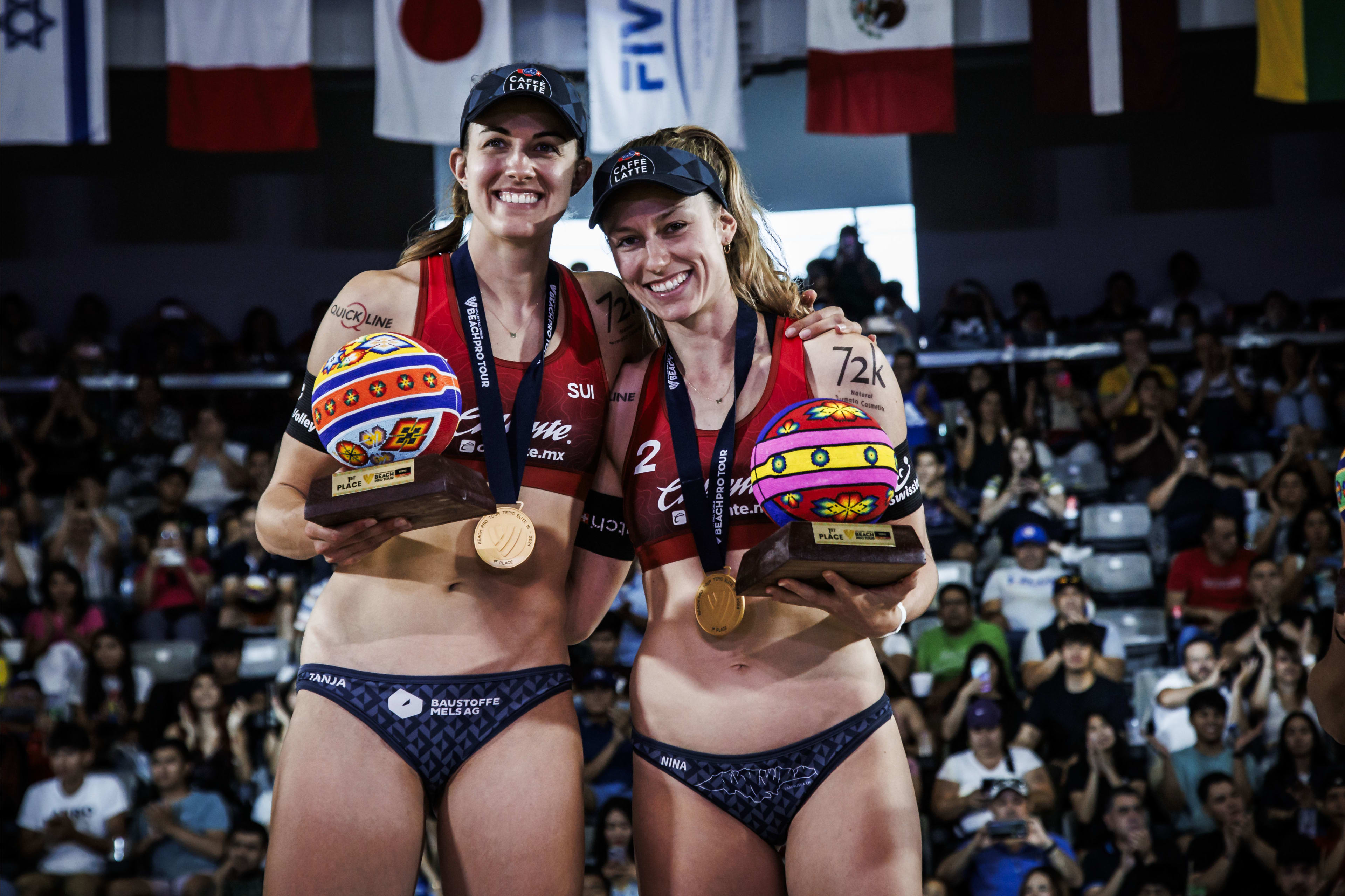
That’s where my mind went during the tense third set, thinking about these two individuals with so much history behind them, the same uncertain future that we all confront and, here, suddenly, the opportunity of a lifetime if they could just stay in the moment.
As mentioned, Brunner and Huberli didn’t drop a set in their first five matches. They were in control—in the zone, in sports parlance. And then the second set slipped away. The Swiss didn’t play all that poorly in the second set. Huberli’s serve got away from her a few too many times. Brunner’s seemingly unerring accuracy hitting shots down the seam suddenly erred. But mostly it was just a really good Dutch team rising to the occasion in the sort of back-and-forth set that turns on a couple of points—the normal run of things at the back end of a major tournament.
The Swiss took a 5-1 lead in the third set, forcing the Dutch to take their only timeout to regroup. And regroup they did. Schoon got to everything, Stam met Huberli at the net, and the lead slowly but methodically evaporated. In a race to 15 in the final set, the Netherlands took its first lead at 11-10 and again at 13-12. Had Huberli’s subsequent high line shot over Stam drifted a few inches wide instead of smacking off the line, the Dutch would have had two match points.
Instead, it was 13-13 and Betschart’s sensational defensive read and arcing high line shot on the next point gave Switzerland its first match point.
Match point after match point then came and went, the tension rising with each opportunity. The Dutch sided out again and again to prevent the Swiss from getting the two-point margin needed to claim the set. In turn, any slip when it was Brunner and Huberli’s turn to side out—and the Dutch allowed opponents to side out less than 40 percent of the time en route to the final—would have put them on the brink.
Finally, after two great digs from Betschart—time seemingly standing still as Huberli sprinted across the court to keep one of them alive—they found the winning point.
The Swiss stayed in the moment. And for an hour and change on a Sunday evening, I was right there with them. Past and future forgotten, savoring only the present.

 Graham Hays