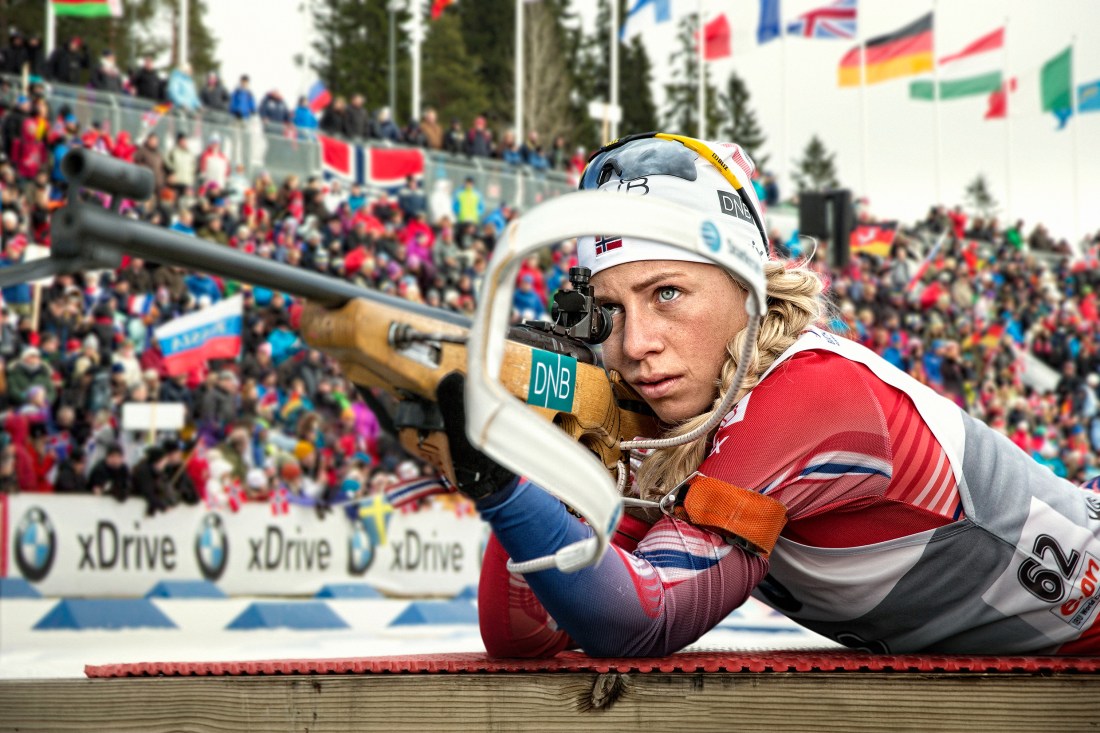
(Photo above of Tiril Eckhoff, courtesy of BillyBonkers/Norges Skiskytterforbund)
It used to be that setting the alarm for 4 a.m. meant an early morning trip to the airport. These days, my only travels are to the living room to watch the women’s 15 km individual race, the opening individual event of Olympic women’s biathlon competition. At least I don’t even have to put on my shoes, let alone take them off for TSA. And the coffee is cheaper.
I love biathlon enough to set the alarm, and I’m not sure why. I have no more expertise in the sport than the person who calls AAA to change a flat tire (also me) has watching Formula 1.
I love skiing, but all I know of the cross-country version is more or less limited to trying to get from one lift to another at the base of a (downhill) ski resort.
And that’s still vastly more experience than I possess in trying to hit five targets from 50 meters with a .22 caliber rifle. In the wind. And the cold. I mean, it looks difficult? And given my accuracy when I try to throw a shirt in a laundry basket that is considerably closer than 50 meters, I’m guessing I wouldn’t hit biathlon’s 1.8 inch target (from the prone position) or 4.5 inch target (when standing) more than 80 percent of the time, as Olympic athletes do.
Despite that deep reserve of ignorance, the sport always intrigued me during the Olympics. And since discovering that NBC (now Peacock) streams World Cup events, I watched more or less every women’s World Cup race the past three seasons. Returning from an early morning walk, settling in with a cup of coffee and “traveling” to snow-covered forests in Oestersund, Sweden or Hochfilzen, Austria makes a week of stress disappear for an hour or two.
Until recently, those streams were just the raw video production without any commentary. While I eventually noticed that replays on the Olympic Channel included announcers, learning the sport while hearing only natural sound added something to the experience. At least for the World Cup circuit, there are microphones immediately below some of the shooting stations. It is mesmerizing hearing how hard the athletes are breathing when they arrive, only to slow their heartbeats and manage their breathing in a matter of seconds to begin shooting. That gets lost if someone is talking over it.
Some of my favorite people in media are announcers, and for all the grief they get, they work extremely hard to pass on knowledge and information. But biathlon is visually captivating. I never understood how people made sense of all the information constantly flashing across the bottom and side of the screen on CNBC. But watching biathlon, you slowly learn to speak a similarly unique language — reading time splits at the same time you’re watching a dozen shooters on the range. There’s a lot going on, and it’s entirely possible that some of attraction was in learning (an ongoing process) to piece together the puzzle and what it all meant.
That also leaves a lot of room for mistaken impression. Believe me, after “doing my own research” on biathlon, I’ll yield to the experts when it comes to strategy, technique, rules, history and, well, just about everything. But sports isn’t just about understanding technical excellence or athletic prowess. It’s also a story. It’s drama. Not manufactured drama or hot air debates but genuine drama — as in theater.
That’s what any sport really is over the course of a season or seasons, a recurring production with the same characters and ever-changing plot lines. Go see Othello in the theater and you’re going to see amazing characters tell an amazing story. But while brilliant, it’s the same story every time. In sports, it’s different every game or every race. And sure, some of the stories end up being duds. But each one has the potential to be the best story ever told.
After several years, I’ve come to know the characters who will compete in the biggest races of their lives over the next two weeks. They’re rivals and friends, alternately heroic and hapless. I can’t help you much on the nuances of the sport. I can’t tell you anything about which team has the best wax technicians. The announcers in the opening mixed relay event, won by Norway in a dramatic finish, said the venue in Beijing has slow snow. I don’t think they meant slushy, given the frigid conditions, so I can’t really help you with what that actually means.
But the characters? If you’re interested in a new story, I can help you there. Consider this your theater program, a list of the cast that might win you over if you tune in.
It’s worth it. Coffee tastes better before the sun comes up.
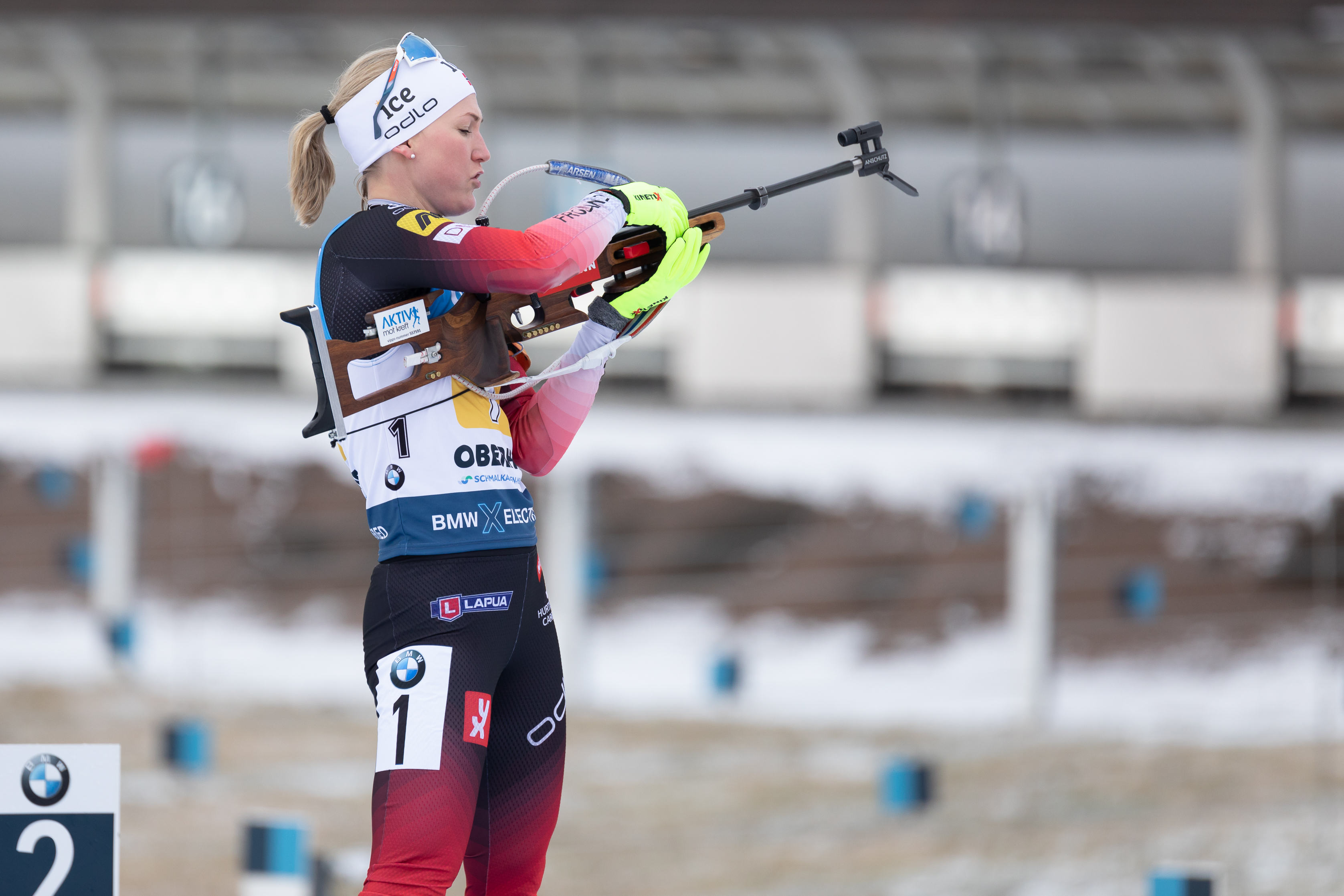
Those likable Norwegians
The Norwegians should be the ones who the casual fans root against. They’re the Yankees or UConn. Historically speaking, at least according to some of the sport’s origin stories, it’s their sport. But darned if the current Norwegian team isn’t likable to a fault.
At least if you aren’t the ones trying to keep up with them on the course.
The best biathlete in each of the past two seasons races for Norway, but it isn’t the same person. Current favorite Marte Olsbu Roeiseland and reigning World Cup overall champion Tiril Eckhoff bring very different stories to Beijing.
Roeiseland is a bit of a terminator. This season, she hits the target 92 percent of the time from the prone position and 93 percent from the standing position — the only athlete among the top contenders currently at 90 percent in both. She’s also able to chase just about anyone down on the course. And yet it’s difficult to begrudge her the success. Now 31, she wasn’t the great hope of Norwegian biathlon. She toiled on the fringes of the elite for several seasons before really coming to the forefront during the 2018-19 season. And she speaks and carries herself like someone who appreciates the journey, always eager to congratulate those around her (admittedly easier to do when you’re often congratulating them on finishing behind you).
Eckhoff is no less engaging, often playing the leading role in teammate Ingrid Landmark Tandrevold’s amusing chronicles of life in biathlon. And last season, she was no less dominant, cruising to the overall title and winning 13 races — 10 more than any other athlete. Small even in comparison to her peers, she is explosive on her skis. But the new season hasn’t been as kind to the 31-year-old. She has yet to make an individual podium, let alone win a race, and entered the Olympics hanging on to a place in the top 20 of the overall standings.

Sweden’s Venus and Serena dynamic
Hanna Oeberg was the breakout star of the 2018 Olympics, opening the women’s competition by winning gold in the 15 km individual race without missing any of 20 shots on the range. She won that race before ever winning on the World Cup circuit, but she has six more wins and 25 more podium finishes in World Cup and World Championship events in the years since.
Long and lanky, she seems built for purpose — able to generate tremendous power while appearing to glide. Still just 26 years old, she could rule the sport for years.
But one of the stories of this season is the Serena and Venus dynamic emerging as her younger sister comes into her own. And until this season, Elvira Oeberg was very much Hanna’s younger sister. Just 22 years old (she’ll turn 23 later this month), Elvira hadn’t won a World Cup event until winning the 10 km pursuit in Annecy, France on Dec. 18. Then she won again the next day in the 12.5 km mass start. And three weeks later in Ruhpolding, Germany in the 7.5 km sprint. That matched her sister’s total wins from the past two seasons combined.
The first win was particularly impressive. When I started following the sport, I assumed shooting rules all — that the skiing was just to kill time between rounds on the range. The broadcasts, which focus heavily on the action on the range, often make it seem that way. And shooting is huge. But Elvria, whose 80 percent accuracy from the prone position is still a weak spot, won her first race despite missing two shots. That was one more than viable contenders like Julia Simon, Anais Bescond and Austria’s Lisa Theresa Hauser. Yet the younger Oeberg was so relentless over the 10 km of skiing that it didn’t matter.
So will Elvira complete her ascent in Beijing, leaving Hanna to play the role of Elvira’s sister?
The Belarus conundrum
One of the storylines that hooked me on biathlon was following Darya Domracheva’s roller coaster in 2018. After winning three of the four individual gold medals in 2014, Domracheva missed significant time in the years that followed, due first to illness and later pregnancy. Her attempt to complete the comeback with more Olympic medals was presented as one of the main narratives in 2018. She struggled in the early races but closed out her career by winning an individual silver in the mass start and a gold medal in the relay.
All of which is to say I was inclined to keep an eye on what happened to the Belarusian story following her retirement. Sure enough, Dzinara Alimbekava and Hanna Sola emerged as two of the easiest athletes to root for. Alimbekava is relentlessly steady, quietly going about her business and almost always finishing in the top 10 (if rarely atop the podium). And Sola appears to have come almost out of nowhere to join the elite, a recent dip in form notwithstanding.
It would be great to see either follow in Domracheva’s footsteps — if it wasn’t for the regime currently commandeering their country. Once dubbed Europe’s last dictator, an overly optimistic assessment of the future of democracy, Alexander Lukashenko remains in power and remains an autocratic thug. How much should that matter when it comes to watching sports? Should an athlete be responsible for the sins of a political regime? I don’t know what either Alimbekava or Sola think of Lukashenko. If they want to continue skiing, I don’t imagine it would behoove them to speak out even if they felt as aggrieved as the tens of thousands who protest in Minsk.
Cast agains the backdrop of an entire Olympics swathed in moral and ethical shortcomings, I don’t know how I’m supposed to feel about two imminently likable Belarusians.
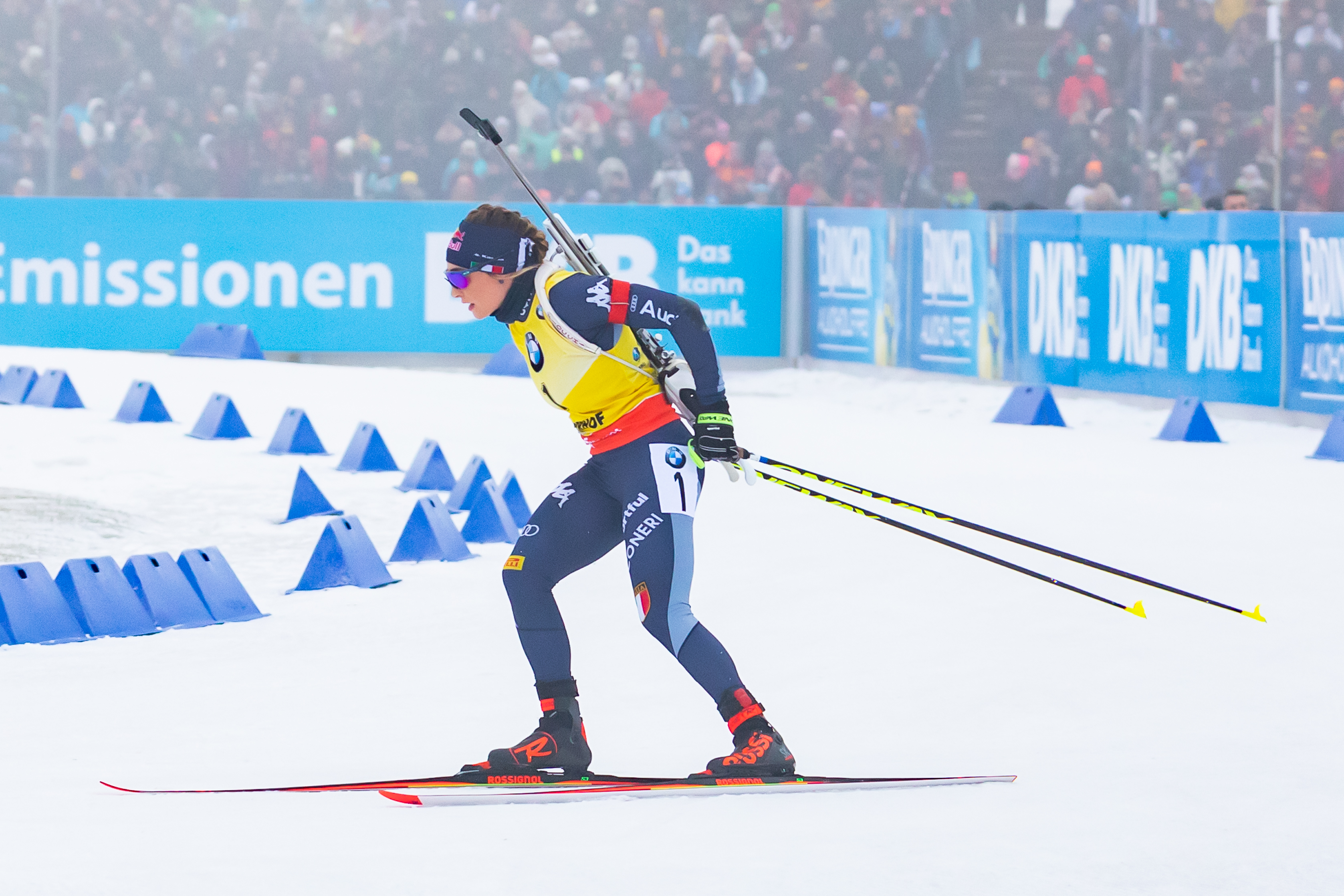
The Italian legend of Dorothea Wierer
Wierer gives off a little bit of an aura of who Hollywood would cast in a movie about biathlon — when Wierer was late for a press conference, Eckhoff joked that she had probably already left the venue by helicopter. But with three golds from the World Championships and 15 World Cup podium finishes, Wierer is more substance than style.
She’s a good skier relative to the bulk of the world circuit, but she’s not on the same level as the Norwegians or Swedes. She’s not going to chase down an Oberg. But when she’s at her best, no one is more fun to watch on the range. She rolls through five shots in the blink of an eye with unnervingly accuracy. She wasn’t as accurate or as quick early this season, which seems like it could be the 31-year-old’s farewell campaign. But she won the 12.5 km mass start on Jan. 23, the final race before the Olympics (admittedly when several top peers were already in high-altitude training for Beijing). Her first Olympic individual medal would be a fitting capstone.
The French Connection
The French are excellent in biathlon. They’re the only country with three women ranked in the World Cup overall top 10 at the moment. I am quite fond of France in general. Given that Denmark, my first rooting interest in all things, is the Scandinavian outlier when it comes to biathlon (not enough snow), I ought to default to cheering for the French.
Here’s the thing. I have a difficult time telling the French skiers apart. They don’t look alike, mind you, but to my untrained eye, Anais Bescond, Justine Braisaz-Bouchet and Julia Simon seem to take turns contending one week and fading into the pack the next week. I’ll start to think that Simon is clearly the best of them, only for Bescond to end up on the podium the next time out. Like Arizona State or Rutgers in women’s basketball back in the late 2000s or early 2010s, they’re impossible not to respect but somehow also not consistently memorable.
Perhaps because she’s the least consistent of them, Braisaz-Bouchet is the most compelling. She’s a dominant skier; she can make up 30 seconds on most of her peers in the span of a lap. She’s also a supremely inconsistent shooter — 74 percent accuracy from the prone position this season, which is 20 percent worse than a model of consistency like Alimbekava. I assume this keeps the French coaches up at night, but it makes her an intriguing boom-or-bust wild card.

The German Two-Sport Surprise
I didn’t even mention Germany’s Denise Herrmann initially because, let’s face it, this is already longer than anything without chapters needs to be. Then the 33-year-old went out and won gold in the 15 km individual, missing just one of 20 shots.
A former cross-country skier who even won an Olympic medal in that sport in 2014 and then shifted to biathlon, Herrmann was overshadowed by countrywoman Laura Dahlmeier before the latter retired after winning double Olympic gold in 2018. I think I often underestimated Herrmann because she wasn’t as prolific as Dahlmeier. She wasn’t the best German I’d seen. To be fair, Monday’s win also came against form. Herrmann entered these Olympics just 18th in the overall World Cup standings and hadn’t won an individual race at any distance during the pandemic.
Herrmann’s final appearance before the Olympics hardly hinted at what was to come. Most of the German team skipped the final World Cup stop in order to train at high altitude. But Herrmann had to leave that training and enter the final race in Antholz, Italy to try and save her place in the top 15 in the overall world standings — those athletes automatically qualify for the mass start in the Olympics. It didn’t work, a poor finish in Antholz cost Herrmann the final place in the top 15 (which went to Norway’s Landmark Tandrevold). After Monday’s gold in the individual, it’s safe to say she found another way into the field for next week’s mass start.
All evidence suggested an athlete entering what is presumably her final Olympics and who had missed her window for glory. Instead, after two difficult years, Herrmann completed the journey that began when she changed sports by winning the biggest race of her life.
Again, you never know what role a character will play when a new story begins.
And here are the women’s individual competitions.
Monday: 15 km individual. Five laps with four shooting stops, two prone and two standing. Skiers start one at a time, 30 seconds apart. The fastest overall time wins.
Friday: 7.5 km sprint. Three laps with two shooting stops, one prone and one standing. Skiers start one at a time, 30 seconds apart. The fastest overall time wins.
Feb. 13: 10 km pursuit. Five laps with four shooting stops, two prone and two standing. First to the finish line wins. The start is based on times in the sprint. So if you finished 20 seconds behind the sprint winner, you start 20 seconds after she does in the pursuit.
Feb. 19: 12.5 km mass start. Five laps with four shooting stops, two prone and two standing. As the name implies, the top 30 skiers start at the same time. First to the finish line wins.
 Graham Hays