The world has changed quite a bit for all of us in the past three years. For few of us more than Alyssa Naeher.
In 2019, she wins a World Cup as the starting goalkeeper for the United States.
In 2020, along with the rest of us, she endures a pandemic unprecedented in our lifetimes.
In 2021, she plays in her first Olympics, five years after being an unused sub behind Hope Solo.
There is a scratch on one of the walls in my apartment I’ve been meaning to patch for three years. Naeher, on the other hands, watched her whole life change in that span. The latest entry was Friday’s penalty shootout against the Netherlands. Her two saves — including the stop against the seemingly unstoppable Vivianne Miedema — helped the U.S. reach the semifinals.
Watching the drama unfold over a cup of coffee in the still-breakfast hours stateside, I couldn’t help but think back to something she said during the team’s training camp back in 2018. It was a lengthy interview, but Naeher in my experience was always very (understandably) careful to say only as much as she wanted to say. She wasn’t going to take a question and stroll off on a five-minute stream-of-consciousness digression about her inner thoughts and aspirations.
Yet if hardly revelatory (I don’t remember if it even made it into the profile, but I don’t think it did), one answer struck me as a glimpse into her real self. Not revelatory, just transparent.
“Something that I found that was helpful in all the chaos of being on the move was if I could at least start my day the same way, then it would give me some semblance of normalcy,” Naeher said that day in Manhattan Beach. “For me that became waking up, having some quiet time, grabbing a coffee, doing a crossword, reading a book — just having that quiet time to myself in the morning, I can do that anywhere and that starts my day.”
Maybe it just resonated because it felt familiar. The first cup (or three) of coffee in the morning is life at its most peaceful. I don’t like waking up when it’s still dark outside, but I love being awake while the rest of the world snoozes. The subsequent chaos these days is created by email and Slack, rather than the decidedly more intense competition, travel and training that Naeher talked about. Still, the sentiment is the same.
Maybe extroverts feel this way, but it feels more like a refuge of the introvert.
“She knows herself very well,” Julie Ertz said of Naeher back then. “She’s very introverted but is an extrovert at the same time. She enjoys her alone time and she’s huge in crossword puzzles and very intelligent and smart, but has a huge heart and cares for everyone.”
The temptation to contrast 2016 and 2021 is tempting. Two quarterfinal shootouts, one in a mostly empty stadium in Brasilia and the other in a necessarily empty stadium in Japan. Two very different personalities in goal making two very different sort of headlines in the end.
At the same time, Solo had less to do with the U.S. exit that day in Brasilia than Naeher did with U.S. survival in this game. Solo’s infamous comments after that game against Sweden were inelegant, but I never really felt they were damning. They were just the final piece of a much bigger puzzle. Yet speaking purely about performance, Solo’s personality served her extraordinarily well. It served the national team extraordinarily well for a long time.
Just as Naeher, whether or not she wins universal acclaim as starter or keeps her spot through the next cycle, has now served this team quite well through three-plus challenging years.
Good for her.
I’d like to think she started her Friday with a coffee and crossword in Japan.
Better yet, I’d like to think she will again Saturday morning.
She will have a lot to do tomorrow. There are two more games to play, in part thanks to her.
But for those who savor silence and smell of coffee, morning routines are sacred.
It was a January night like any other for Hernan Humana as a new decade dawned in Chile. Which meant it was a night when he knew what the ringing phone might foretell.
“Hernan, I think your time has come.”
The words on the other end of the line that night weren’t meant as a threat. But in Chile in 1980, they chilled Humana to the bone.
The friend on the phone, a doctor, had been at a Chilean Olympic Committee meeting. A man in military uniform had opened his briefcase and taken out a Canadian newspaper critical of Augusto Pinochet, the dictator who seized power in a 1973 coup. Humana’s father, who fled Chile several years before, was the newspaper’s publisher. The military officer suggested that instead of praising Humana, a Chilean volleyball international and a coach in the youth national system, someone should cut his throat.
“When a military man in Chile at the time said that, it’s not a figure of speech,” Humana recalled. “It’s a threat. In less than two weeks, I was out of the country. That’s how I left Chile.”
These days a professor in York University’s School of Kinesiology and Health Sciences, he arrived in Canada four decades ago with few marketable skills beyond the volleyball court and no command of English. But in Chile at that time, you didn’t ignore warnings. Leaving was better than disappearing.
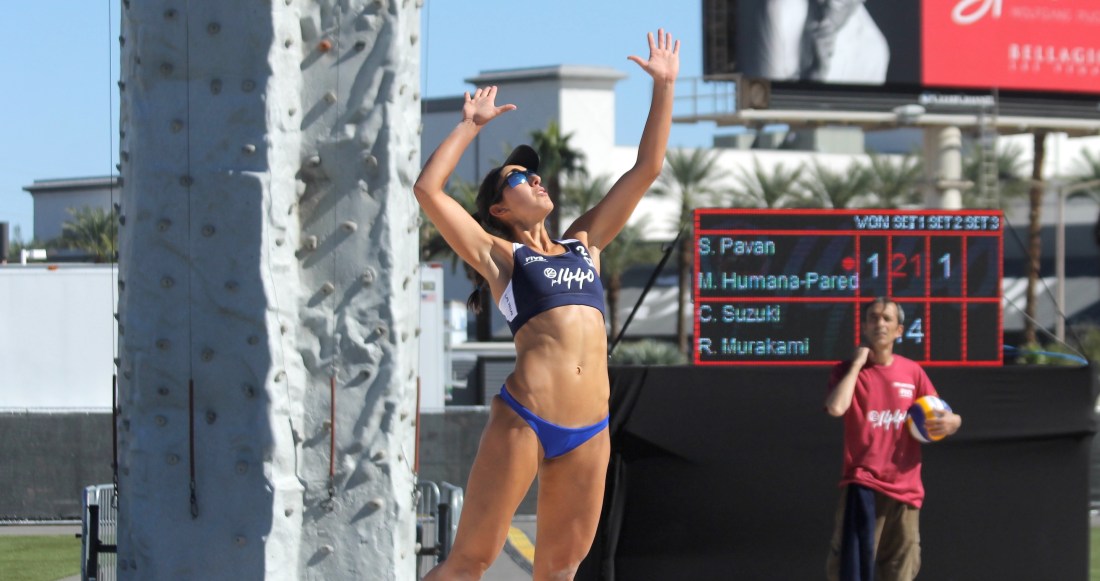
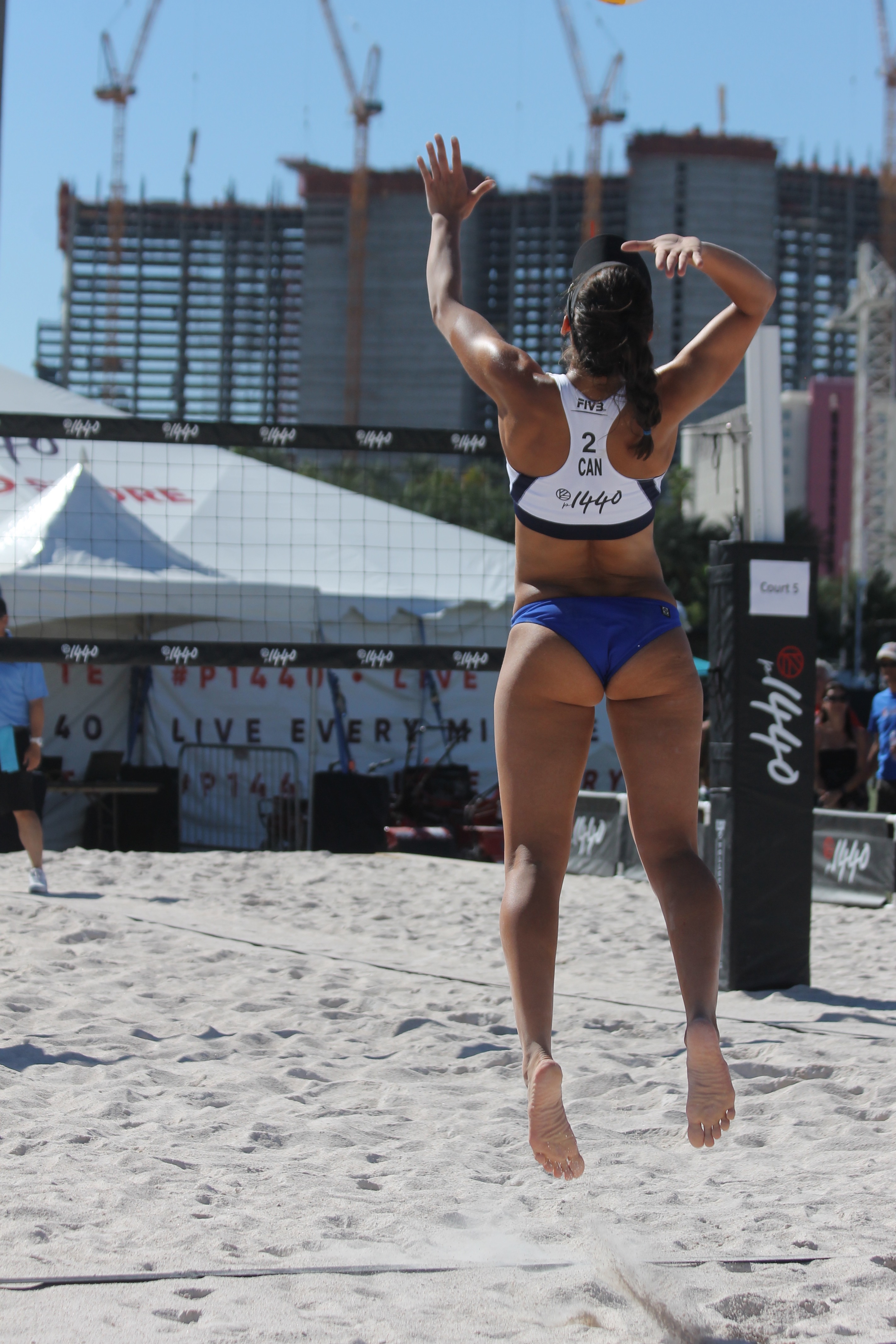
His daughter, Melissa Humana-Paredes, was born a little more than a decade after he arrived in Toronto. She knew little growing up about the dark years her parents lived under a dictatorship. She heard nothing about the inner turmoil her father felt when he represented Chile in international competition. Instead, she learned to share her father’s passion for a sport that ultimately shaped both their lives. Along with partner Sarah Pavan, she is a reigning beach volleyball world champion and among the gold medal favorite in the Olympics.
Love grows back stronger after heartbreak. Joy means more after sorrow. One of beach volleyball’s best players and most ebullient souls, joy for life and sport may lead Humana-Paredes, 28, to Olympic gold in Tokyo. They were also all her father took with him when he fled Pinochet’s Chile at 27.
“I was the same age as them when they were going through the coup and dictatorship,” Humana-Paredes said. “To put myself in those shoes, I can’t fathom it. I can’t relate to everything they went through at my age. And they came through and persevered and came to a new country and created a new life. My parents are just the happiest people and have this zest for life. You would never know that in their past they saw such horrors and atrocities.
“It made me look at them in a different light. You understand them differently.”
Volleyball under a dictator
Humana had already played for the Chilean national team by the time a coup changed everything about life in the country, including what the flag represented. He was a university student in Santiago on Sept. 11, 1973, when Augusto Pinochet’s military junta seized power from the democratically-elected government of President Salvador Allende. He saw confusion in the streets as people began to learn what was happening. Living in housing for national team athletes, he spent Septermber 12 under curfew and visited by soldiers. He was finally able to venture outside again on September 13.
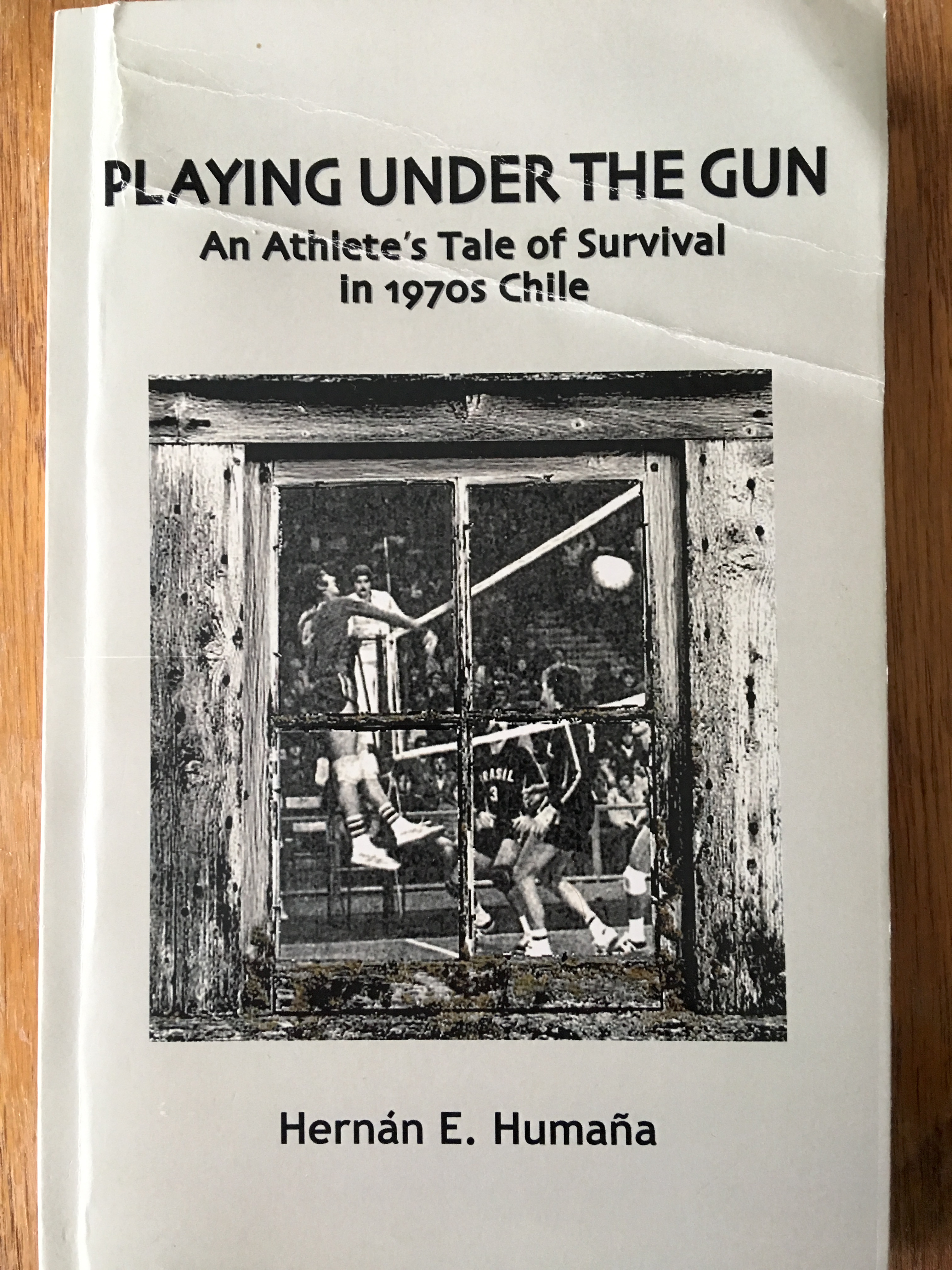
In Playing Under the Gun: An Athlete’s Tale of Survival in 1970s Chile, his memoir, he recounts a conversation with a neighbor limping down the street.
He spoke slowly, as if seeing life around him in some terrible new light. On September 11, he was arrested by a military patrol and taken to the national stadium, where he was tortured. His interrogators wanted to know who was organizing the resistance in his neighborhood. He was burned with cigarettes butts, and electric cattle prods were applied all over his body. He raised his shirt to reveal purple bruises and burns all over his skin. It was shocking. I didn’t know what to say. How could I communicate my compassion for him? Nobody is taught proper etiquette for dealing with victims of torture.
The neighbor’s experience was one endured by far too many Chileans in the months and years that followed the coup, tens of thousands of ordinary citizens who were arrested, tortured, murdered or simply disappeared, their fates unconfirmed but also obvious.
Humana’s experience under the dictatorship was more fortunate by comparison, but it was also emblematic of the fugue that fell over the country. He had close calls. Soldiers searched his dorm room but didn’t notice proscribed books. A friend told him he had been denounced by a neighbor as an Allende sympathizer and militant. He was suspended from university for two years after running afoul of authorities. His father was arrested and detained for months, then blacklisted from any jobs in his former field of engineering. But like the vast swath of Chileans who were neither Pinochet supporters nor suffered the harshest fate in makeshift prisons, Humana mostly tried to find some normal routine in a country he hardly recognized.
In a chapter titled “Playing with Ghosts,” Humana writes about so often playing volleyball in what was then called the Estadio Chile, the national arena in Santiago. Along with the Estadio Nacional, the outdoor soccer stadium, it became a concentration camp and place of torture and execution following the coup (it was subsequently renamed in honor of Victor Jara, the poet who was tortured and murdered by Pinochet’s forces in the regime’s earliest days).
On one occasion, when he was playing particularly poorly, a friend cajoled him to do better for those who died there.
I remember looking straight into his eyes and silently wondering how he couldn’t understand what I was feeling. This was just a meaningless volleyball game. The real issue was the horrors so many had endured in this place. I did not say anything, and my game didn’t change drastically. I think that I had reached some kind of critical point. Perhaps I was more vulnerable that day, overcome by a profound sense of hopelessness for my country. All I know is that I didn’t want to play that day. Or better put, I couldn’t play that day.
Almost from the moment Pinochet seized power, when his volleyball team was dragooned into a farce of a youth festival at the national stadium, Humana and other athletes faced a dilemma familiar to those living under repressive regimes. Play on and offer what silent or subtle protest they could? Or refuse, risking the safety of friends and family and leaving spaces that would be filled by toadies all too willing to praise Pinochet and belt out the national anthem?
And when I didn’t play well, perhaps it was because I was on some level confronting the horrors, and confronting my own complicity through my role as the symbolic representative of the perpetrators.
His parents and siblings finally left for Canada in 1975. He remained in Chile to finish university, delayed by the suspension and the loss of purposeful destruction of records under the new regime. He continued to play the sport he loved. Although even that was forever changed.
By then, the beachfront club Trauco was long gone. Located in the city of Quintero, on the Pacific Ocean northwest of Santiago, Trauco was the spot where Humana fell in love with beach volleyball. He spent summers there at the invitation of the club owner, nominally working in the evenings but mostly playing for the club’s beach volleyball team. The club and volleyball carried on for a couple of years after the coup, but then Pinochet’s soldiers showed up one summer and destroyed all of it.
The Chile in which such things thrived was a fading, bitter memory.
A new life in Canada
So when the warning phone call finally came in 1980, the friend’s account of the Olympic Committee meeting quickly confirmed by another present, it was hardly a surprise. He made it through more than six years, but no one who wasn’t subservient could make it forever. There wasn’t any midnight run for the border, but within a week or two, he was in Canada.
His younger brother helped Humana make inroads in the volleyball community — and helped translate initially. Humana received an advanced coach certificate from York in 1983 and his Master’s from the school in 1993. He coached both men’s and women’s volleyball for York at various times.
In 1995, John Child approached Humana, his former youth indoor coach, about coaching beach volleyball. After appearing as a demonstration sport in the 1992 Olympics, beach volleyball was added to the regular program for the 1996 Olympics in Atlanta. Calling on his experience in the sand in Chile, Humana took on the new challenge. Child and partner Mark Heese went on to win the bronze medal.
That remains Canada’s only Olympic medal in men’s or women’s beach volleyball. But that may be on the verge of changing. Humana-Paredes was still a few months shy of her fourth birthday in 1996, but she spent a lot of time in the sand while her dad continued to coach indoors and outdoors following the Olympics. Yet Humana recalls that far from him dragging her to practice, it was more often Melissa knocking on his door early on Saturday mornings to go and play.
“By no means was it pushed on us by our dad,” Humana-Paredes concurred. “He exposed us to the sport, and it was always around because we would be at the beaches to watch him practice and whatnot, but he never forced us into anything.
“For me, it was an immediate attraction. I started playing as soon as I could.”
Melissa Humana-Paredes goes for gold
While the picture may be changing with the growth of beach volleyball as an NCAA sport, notably including current Latvian Olympian Tina Graudina and former UCLA standouts and Canadian twins Megan and Nicole McNamara, it was still unusual 10-to-15 years ago for a teenager like Humana-Paredes to train almost exclusively for beach volleyball.
“She was by herself the whole winter playing beach volleyball alone,” Humana said. “It was a lonely, lonely battle. I was there with her, but it was a lonely battle. She would miss indoor, the social aspect and the friends that you make. She’s a very social person. But she loves beach volleyball. That’s her sport.”
She ultimately played four successful indoor seasons for York, where Hernan had previously coached the women’s volleyball team. But even then, the beach was her focus. After her freshman year at York, she and partner Taylor Pischke won a silver medal at the 2011 FIVB Junior World Championship in Halifax, losing to Switzerland’s Nina Betschart and Joanna Heidrich in the the final match (a decade later, three of the four are in the Olympics).
“I love beach because the incredible mental, physical and emotional challenges that it brings,” Humana-Paredes said. “You’re more involved in the game, you have more control of the game — you’re more independent.”
She played her first major pro event while still in college. A few months after finishing at York, she and Pischke reached the quarterfinals of a full-fledged FIVB event in Sao Paolo.
But it was while serving as a training player for the Canadian teams that qualified for the 2016 Olympics in Rio de Janeiro that she got to know Pavan, the former NCAA indoor All-American at Nebraska. A few months later, back in Rio, they finished second in their first FIVB tournament together. They won a five-star event later that summer and soared up the rankings, Pavan’s prowess at the net a perfect complement to Humana-Paredes’ defense and passing.
In 2019, they won the World Championship in Hamburg, Germany, beating April Ross and Alix Klineman in the final and losing just two sets in five knockout round matches. That win came with the added bonus of automatic Olympic qualification, which proved all the more valuable as most other teams scrambled to adjust the pandemic-dictated qualification process this year.
Hernan coached her in the early years. He certainly had the resume for it, from the Olympic success in 1996 to running a beach volleyball club in Ontario. But he said that both agreed when she was a teenager that it would be better for her to work with the coaches then in the Canadian national program. Besides, the professional circuit that takes her from Asia to Europe to South America on a near-weekly basis wouldn’t fit a university professor’s life very well.
Still, when the frequently California-based Humana-Paredes returns to Toronto, it is her father serving her ball after ball in the otherwise empty gym. Just like always.
“My dad will always be my coach,” Humana-Paredes said of his influence nonetheless. “With his knowledge and background and passion and love for the game, I always respect and care for everything he tells me — whether I agree with it or not. I’ll always take what he says to heart.”
All the more after his memoir, which Humana dedicated to Melissa and her brother Felipe, and shared with them while writing it. Although they visited Chile on multiple occasions growing up, Pinochet finally ousted in 1988, they knew few of the details of their father’s life in Chile.
It is a story about the resiliency of joy. The same joy evident when Humana-Paredes plays. The joy she will feel listening to the Canadian anthem if she and Pavan stand atop the podium. It will sound far sweeter than the Chilean anthem did to her father by the end.
Maybe too much happened to too many to speak of winners and losers. But joy survived.
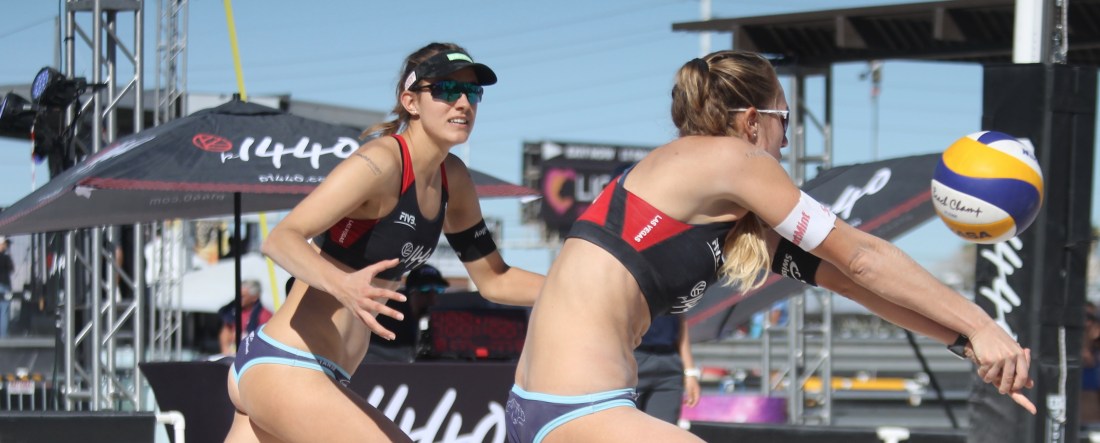
An airborne Nina Betschart and Tanja Hüberli during a match in Las Vegas (2018)
Unless this sentence somehow finds its way to someone in the Swiss volleyball community, there is a good chance you’ve never heard of Nina Betschart and Tanja Hüberli. They did something rather remarkable Saturday — decidedly early Saturday if you happened to reside in the predawn darkness of our easternmost time zone.
They won a beach volleyball match.
Maybe that doesn’t sound all that remarkable. Betschart and Hüberli win quite a lot of matches. They enter the Olympics in a good run of form and seeded seventh in the field of 24 teams.
Nor is it wholly remarkable that they won despite handing their opponents a five-point lead in the opening set. Or that they beat Germans Laura Ludwig and Margareta Kozuch after losing that first set (23-25, 22-20, 16-14).
Even winning their Olympic debut after all three sets needed extra points to settle — in blistering heat and humidity — is, at best, mildly remarkable for top-tier professionals.
What they did was remarkable because getting to the Olympics is remarkable. Any Olympics. But these Olympics more than most. On some level, everyone knows this. But we know it on a macro level, the way we know running a marathon is remarkable without knowing exactly what goes into running 26.2 miles. Saturday, I understood. After five years of web streams, scoreboard refreshes and occasional days in the hot sun — after five years of being a fan — I understood how two remarkable athletes got there.
Beach volleyball captured me in the 2016 Olympics. I was in Rio de Janeiro, which apparently is to beach volleyball what Paris is to restaurants. I also wasn’t as busy as expected as those Olympics carried on, the U.S. soccer team having bowed out in the quarterfinals and my employer sadly ambivalent about stories on Dzsenifer Maroszan and the remaining teams. Watching volleyball replays and reading stories became a routine on the long bus rides to the Maracana.
Among the first revelations was that Switzerland played beach volleyball. Yes, that Switzerland. In fact, the decidedly landlocked mountainous country didn’t just play — it had two women’s teams in Rio. Having spent one of the best stretches of my life studying in Switzerland many years ago (without ever seeing a sand volleyball court that I can recall), I couldn’t help but adopt the Swiss and their quirky mismatched marriage of geography, climate and sport.
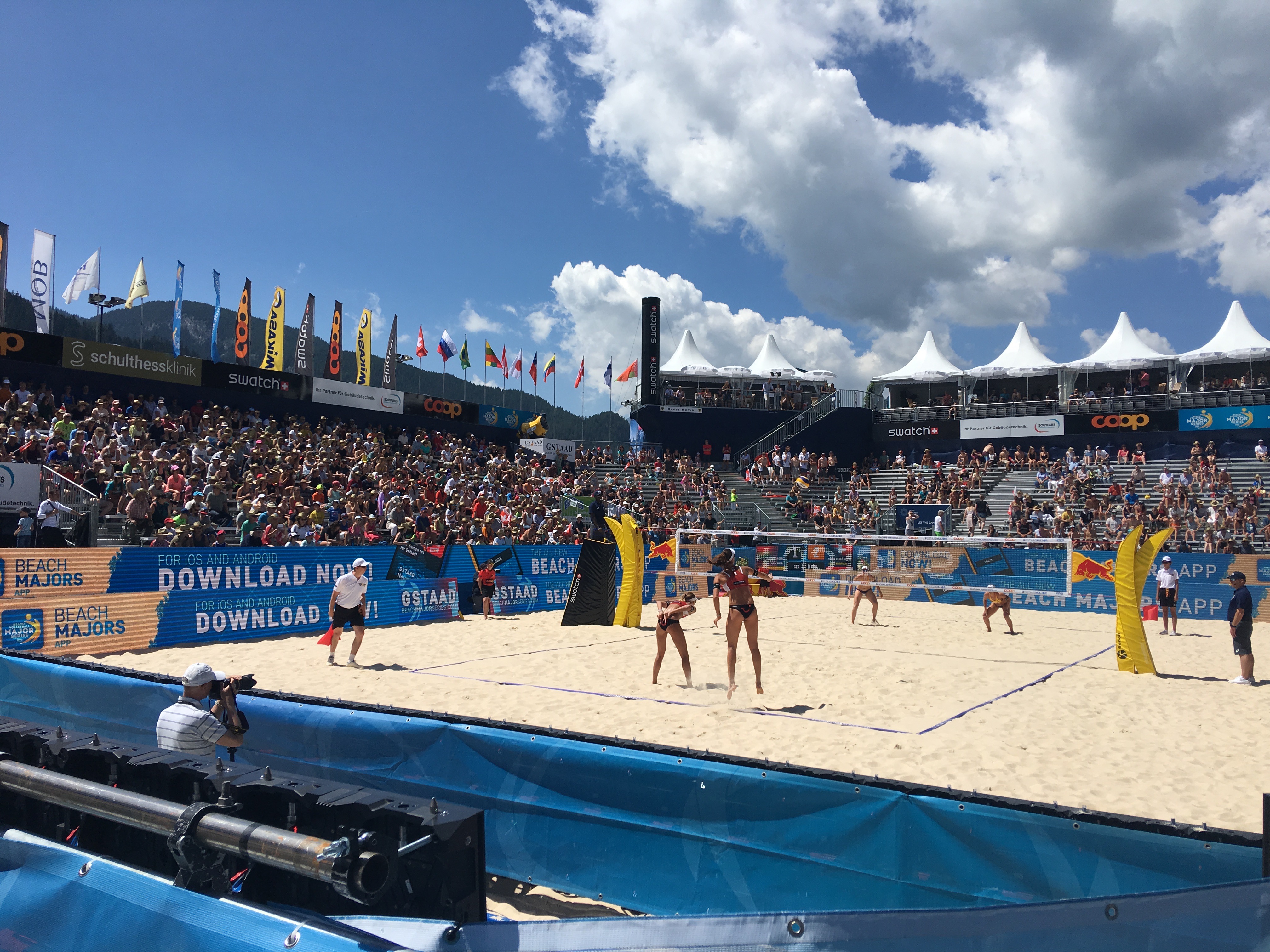
Court 1 at Gstaad
It’s not as if Switzerland is a powerhouse in indoor volleyball, which might logically feed the beach success that has seen it amass one of the best Olympic qualification records among countries beyond the obvious giants like Brazil and the United States. The Swiss are just really good in the sand.
Among my biggest regrets is I never could talk ESPN into letting me dive into the story of why. But current Swiss Olympian Anouk Vergé-Dépré once proposed (after I hijacked an interview ostensibly about Kerri Walsh Jennings’ then-latest project) that it may be a perfect storm of early success leading to locals staging the annual FIVB Major in Gstaad, which in turn birthed a generation of beach talent. (She and partner Joanna Heidrich, whose brother is also in these Olympics, also won their opener Saturday).
Stefan Kobel and Patrick Heuscher won bronze in the men’s competition in the 2004 Olympics, the best of four trips to at least the quarterfinals for Swiss men’s or women’s teams. That’s half as many as Germany, a country with roughly 10 times as many people.
“Players who were dreaming about competing internationally indoors went to beach because indoors is not that big in Switzerland,” Vergé-Dépré said. “And it’s another lifestyle indoors.”
She was laughing as she said the last bit, as you might, too, if your office was often a beach instead the fluorescent lighting and floor burns of some second-rate gym.
I still think that’s a story worth at least a few thousand words, if anyone is taking pitches.
But both Swiss teams from the 2016 Olympics broke up after the tournament, both Vergé-Dépré and Heidrich losing a partner to retirement before the two holdovers teamed up. Getting in on the ground floor as a fan of a new team was appealing, all the more after discovering Betschart. She seemed like a phenom. How else to describe someone who won junior world titles in 2011 and 2012 — when she was 15 and 16 years old, respectively, in an event that was open to players as old as 21? Sign me up.
The nuances of beach volleyball strategy are still largely beyond me. Not as much as five years ago, to be sure, but enough to leave me well aware of my ignorance. It doesn’t matter. The sport is narrative heaven. It is a perfect blend of team and individual. There aren’t any role players. There is nowhere to hide on a bad day. It’s all the spotlight and pressure of an individual sport like tennis with all the demands of the teamwork necessary in the sports I more often covered. The mental pressure of partnerships that last longer than some marriages is profoundly interesting.
The sport is full of compelling characters. Vergé-Dépré working to get a players union up and running. Humana-Paredes learning from a father who came to Canada from Chile amid the calamitous Pinochet years and helped build Canadian beach volleyball into a legitimate power. Dutch standout Sanne Keizer returning from a four-year retirement and traveling the world the past four years, often with her kids in tow, to chase another Olympic opportunity. And on and on.
No rooting interest is necessary to find much of it fascinating. But in the case of Betschart and Hüberli, it was fun to be a fan again. I root for Fulham, but that’s largely self-inflicted misery. I root for the Danish national teams in soccer, but they don’t play very often. Rooting for Betschart and Hüberli is a chance to be irrational again after years of trying to be rational (if still often wrong) about sports.
Betschart and Hüberli on familiar ground after a match in Gstaad (2019)
Forgive the soccer analogy in lieu of a good volleyball comparison, but Betschart is a hybrid of N’golo Kante and Julie Ertz. She’s a defensive marvel, reading plays and digging the ball. But like Ertz, she’s also coiled aggression and power waiting to be turned loose. She goes for broke, whether exploding into spikes or deftly going for the tightest of angles on fluttered cut shots.
Hüberli is like a Sam Mewis, this seemingly genial, lanky soul who transforms into a multi-faceted warrior on the court.
Plus, her mom runs a small restaurant. Or cafe. I’ll be honest, I’m not entirely sure. It’s sometimes difficult to follow social media posts in German. But come on, that’s fun.
They didn’t make it out of pool play the first time I saw them in person in Fort Lauderdale in 2017, their second year together (although they finished third in a five-star event later that year). Even my untrained eye could see a work in progress, Hüberli still just 24 and Betschart only 21. From the start, they had chemistry. The only bad body language from either was after her own mistake — never after a partner’s error. They were easy to root for that way. But each was also clearly her own worst critic, one error leading to another miscue and a set suddenly getting away from them. That changed quickly.
By 2018, they made an unforgettable run to the gold-medal match in the European Championship before finishing second.
In 2019, they made it to the semifinals of Gstaad, signaling their arrival as at least the equals of Swiss counterparts Vergé-Dépré and Heidrich (Betschart’s youth world titles came alongside Heidrich in 2011 and Vergé-Dépré a year later).
Runners-up in a recent tournament in Sochi, Russia, Betschart and Hüberli are legitimate contenders to medal in Tokyo, if not quite in the group of favorites that includes Brazilians Agatha and Duda, Canadians Melissa Humana-Paredes and Sarah Pavan and Americans April Ross and Alix Klineman. Some in Midwestern states where such things are now legal may even have placed a small wager on a medal. Out of hope if not absolute conviction.
It was a pleasure to see two athletes realize a dream Saturday morning. It made it all the sweeter to understand all the waking hours they spent earning the chance.
Collecting some links to features from the D1Softball Road to Tokyo series. There isn’t a woman on this team who doesn’t have an interesting story to tell. At the highest levels of sports, where success sometimes forces people to lead one-dimensional lives, that’s rare.
These should all be free to read, thanks to the good folks at Wilson.
Cat Osterman never expected to be pitching at 38 years old. But one more chance to take on her oldest rival called her back.
"I would fight to the death for her after what she’s put on the line for this team." What makes teammates say that about @USASoftballWNT's Ally Carda? An Olympic journey everyone can identify with. (from @D1Softball) https://t.co/h5PQHGcTFT
Team USA is full of powerful people, but @hayliemac8 has long struck me as a custodian of softball's past and an ambassador for its future. In how she plays and how she interacts with the world. Hopefully this explains something of why. https://t.co/t3BADmq882




 Graham Hays